





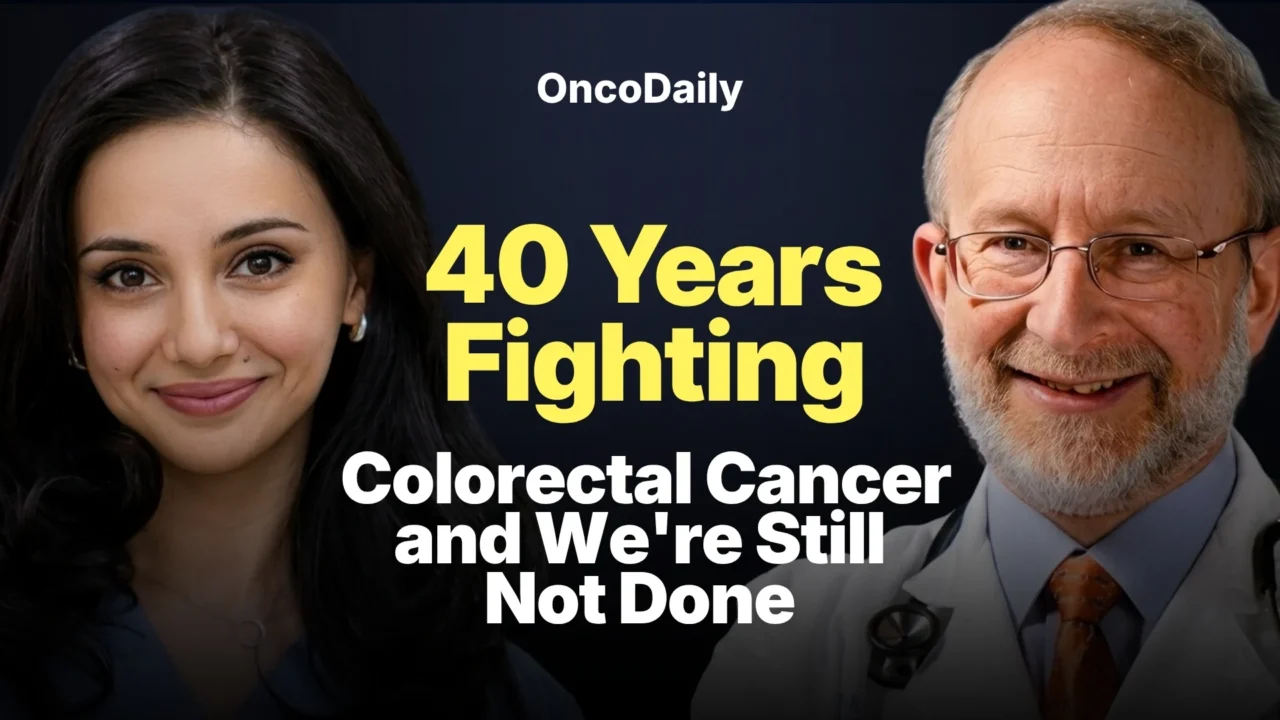
In this interview, hosted by Dr. Amalya Sargsyan, renowned GI oncologist Dr. Richard M. Goldberg, Director Emeritus of the West Virginia University Cancer Institute and Professor Emeritus at West Virginia University in Morgantown, explores the evolving landscape of colorectal cancer treatment, with a particular focus on the growing challenge of young-onset disease.
This episode is dedicated to the memory of Asal Sayal, a young friend of Dr. Goldberg, who died of early-onset colorectal cancer on April 22, 2026. Sayal worked for Senator Amy Klobuchar and at ARPA-H, and was an active advocate with Fight CRC.
With over four decades of experience, Dr. Goldberg reflects on how far the field has come, from the early days of limited chemotherapy options like 5-FU to the development of regimens such as FOLFOX, and why progress still isn’t fast enough. The conversation dives into the urgent need for innovation, highlighting the promise and limitations of immunotherapy, particularly in MSI-high versus MSS colorectal cancer patients.
The discussion goes beyond science, addressing critical issues in drug development, regulatory challenges, and the need to rethink traditional criteria used to evaluate treatment success.
Dr. Goldberg emphasizes that metrics like overall response rate may not fully capture the benefits of immunotherapy, advocating for broader measures such as long-term survival and durability of response, which he also recounted in a recent op-ed for The Cancer Letter.
A major focus of the episode is the importance of clinical trials, both for advancing treatment and giving patients access to potentially life-changing therapies. The conversation also underscores the importance of proper tumor testing (MSI, RAS, BRAF) to guide treatment decisions and improve outcomes.