Key takeaways
- Menin inhibitors are transforming treatment options for relapsed/refractory AML. Revumenib and ziftomenib offer new targeted approaches for eligible patients with NPM1-mutated AML, while revumenib is also approved for KMT2A-rearranged acute leukemia.
- Combination therapies may help overcome treatment resistance. Early results from the KOMET-007 and SAVE trials demonstrate promising activity, but larger studies are needed to establish long-term efficacy and safety.
- The ASAP trial is challenging traditional transplantation strategies. Selected patients with relapsed/refractory AML may proceed to allogeneic stem cell transplantation without first achieving a second complete remission through intensive salvage chemotherapy.
- Immunotherapy remains promising but challenging in AML. CAR T-cell therapies, bispecific antibodies, and antibody-drug conjugates face limitations related to shared antigens, toxicity, and modest response rates. MRD-directed approaches may offer future opportunities.
- Equal access to advanced AML treatment remains a major challenge. Differences in molecular diagnostics, targeted drug availability, and transplantation services highlight the importance of international collaboration, standardized protocols, and shared clinical research.
At LeukO 2026: Global Virtual Congress on Leukemias, organized by OncoDaily, Natalia Baran, Associate Professor of Haematology and Oncology at Inselspital Bern, University Hospital Bern; Agnieszka Wierzbowska, Head of the Department of Hematology at the Medical University of Lodz and Head of the AML Section of the Polish Adult Leukemia Group (PALG); and Marta Sobas, Head of the Department of Hematology at Collegium Medicum, Nicolaus Copernicus University, and University Hospital No. 2 in Bydgoszcz, examined advances and ongoing challenges in treating relapsed/refractory AML (acute myeloid leukemia).
Their discussion addressed three connected areas:
- The arrival of menin inhibitors and molecularly targeted salvage therapies,
- The changing role of allogeneic stem cell transplantation and immunotherapy,
- The differences in treatment access that persist between healthcare systems.
The discussion also reflected an important change in AML practice. As frontline treatment increasingly incorporates venetoclax-based regimens and targeted agents, clinicians are encountering patients whose disease relapses after therapies that were previously unavailable.
For these patients, the next treatment decision depends on more than whether another chemotherapy regimen can be administered. Molecular findings, prior drug exposure, transplant eligibility, and access to specialized services all influence the options available.
A Patient Named Maria: Relapse After Venetoclax and Azacitidine
Prof. Natalia Baran introduced an illustrative clinical case to frame the session.
Maria was a woman with NPM1-mutated, FLT3-ITD-positive AML who received frontline azacitidine and venetoclax. She achieved complete remission but experienced relapse 14 months later.
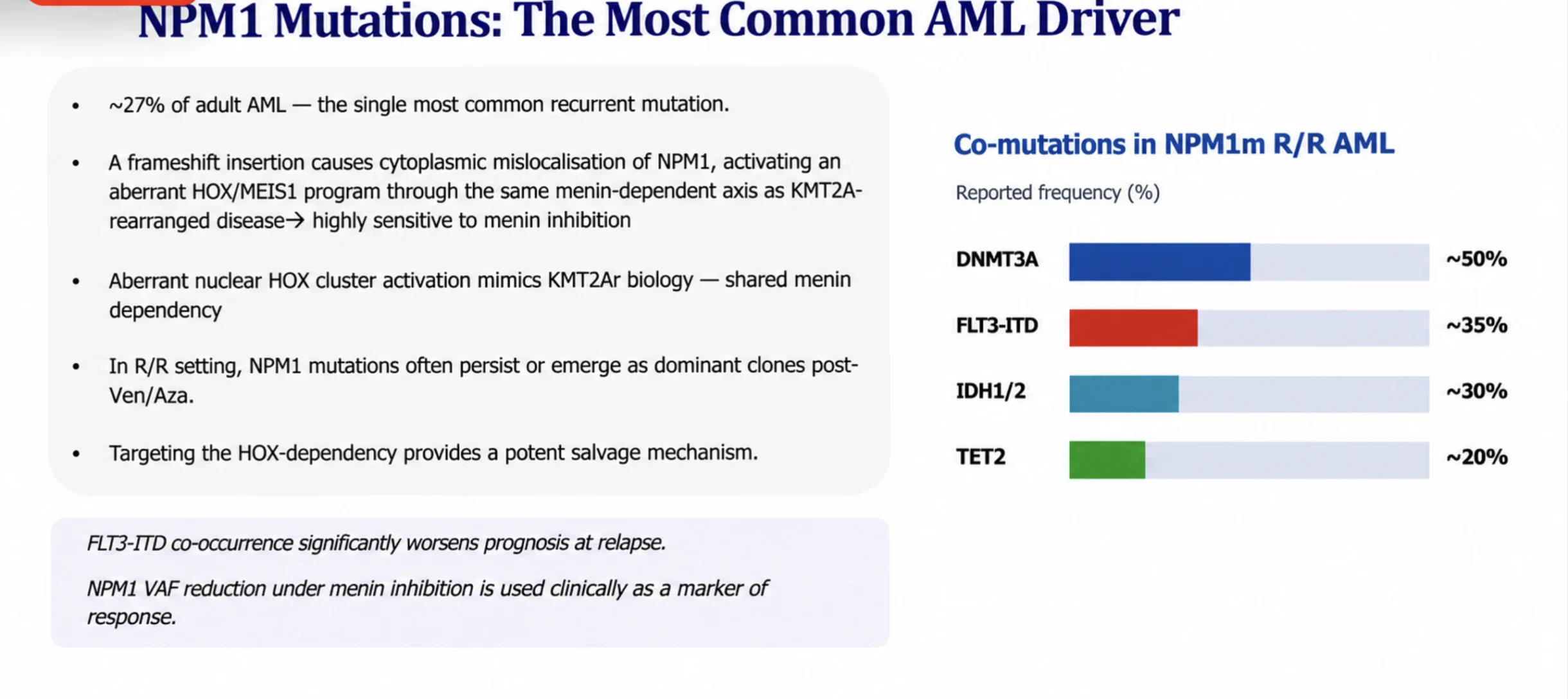
Source: Presentation by Prof. Natalia Baran at LeukO 2026: Global Virtual Congress on Leukemias, organized by OncoDaily.
Her medical comorbidities contributed to a high Hematopoietic Cell Transplantation Comorbidity Index (HCT-CI), raising concerns about her suitability for allogeneic transplantation.
The case reflects a difficult and increasingly familiar clinical situation.
Azacitidine plus venetoclax has substantially improved treatment options for older patients and those considered unsuitable for intensive chemotherapy. However, outcomes following relapse after this combination remain poor, and there is no single salvage regimen that reliably benefits all patients.
Baran cited survival estimates of only a few months in post-venetoclax/azacitidine relapse populations, illustrating the urgency of finding more effective treatment strategies.
Maria’s NPM1 and FLT3 alterations offered potential therapeutic targets. But the presence of actionable mutations did not resolve every question.
Would targeted treatment produce a sufficiently durable response? Could it make transplantation feasible? And if transplantation remained too risky, could a targeted therapy provide meaningful disease control on its own?
Baran used these questions to explain why repeat molecular assessment is essential at relapse.
The genetic characteristics of AML can change during treatment. Clones present at diagnosis may disappear, expand, or acquire additional alterations under therapeutic pressure.
Consequently, selecting salvage treatment solely from the original diagnostic profile risks overlooking newly acquired targets or resistance mechanisms.
“We can no longer treat relapsed/refractory AML as a monolith.”
Menin Inhibitors: A New Treatment Option for Molecularly Defined AML
Baran identified menin inhibition as one of the most significant recent developments in relapsed/refractory AML.
Menin is a protein involved in maintaining transcriptional programs that support leukemia development in certain genetically defined subtypes.
In KMT2A-rearranged leukemia, abnormal KMT2A fusion proteins contribute to the activation of genes such as HOXA9 and MEIS1, which help maintain an immature leukemic cell state.
A related transcriptional dependency is found in NPM1-mutated AML, extending the therapeutic relevance of menin inhibition to a much larger patient population.
By disrupting the interaction between menin and KMT2A-associated transcriptional machinery, these drugs can suppress leukemia-associated gene expression and promote myeloid differentiation.
The approach has moved rapidly from early clinical development into regulatory approvals.
In November 2024, the US Food and Drug Administration approved revumenib for eligible adults and children with relapsed/refractory acute leukemia harboring a KMT2A translocation.
In October 2025, its indication expanded to relapsed/refractory NPM1-mutated AML in adults and children aged one year and older who have no satisfactory alternative treatment options.
A second menin inhibitor, ziftomenib, received FDA approval in November 2025 for adults with relapsed/refractory NPM1-mutated AML who have no satisfactory alternatives.
These approvals established menin inhibition as a clinically available targeted approach for selected patients, rather than an exclusively experimental strategy.
Other compounds, including bleximenib and enzomenib, continue to be investigated.
Baran also described emerging evidence of menin dependency in NUP98-rearranged AML, a rare leukemia subtype associated with unfavorable outcomes. However, clinical development in this population remains investigational.
For a patient such as Maria, the NPM1 mutation creates a rationale for considering menin-directed treatment, although individual eligibility, drug availability, concurrent mutations, and previous therapies must all be assessed.
What the AUGMENT-101 Trial Tells Us
The clinical development of revumenib provided an important foundation for Baran’s presentation.
In the phase I/II AUGMENT-101 trial, revumenib demonstrated antileukemic activity in heavily pretreated patients with molecularly defined acute leukemia.
The reported overall response rates were:
- 63.2% in the KMT2A-rearranged acute leukemia cohort.
- 46.9% in the NPM1-mutated relapsed/refractory AML cohort.
These figures represent overall response rates, which include outcomes beyond complete remission. They should not be interpreted as complete remission rates or evidence that every response will be durable.
Nevertheless, the findings demonstrated that disrupting a specific transcriptional dependency could produce meaningful activity in patients with limited treatment options.
Baran also emphasized two clinically important toxicities.
The first is differentiation syndrome, which can occur when leukemic blasts begin differentiating in response to treatment.
Symptoms may include:
- Fever,
- Respiratory distress,
- Edema,
- Other manifestations of systemic inflammation.
Reported rates vary between studies and treatment populations, but differentiation syndrome occurred in approximately one-fifth to one-quarter of patients in the relevant revumenib cohorts discussed.
Early recognition is essential. Management may require corticosteroids, supportive care, and temporary interruption of the menin inhibitor in severe cases.
The second concern is QTc prolongation, particularly with revumenib, requiring electrocardiographic monitoring and careful attention to interacting medications.
For clinicians, these adverse events are important because the mechanism responsible for the drug’s antileukemic activity also introduces treatment considerations that differ from those associated with conventional cytotoxic chemotherapy.
Can Menin Inhibitor Combinations Improve Outcomes?
Although single-agent menin inhibitors have established clinical activity, Baran noted that resistance and relatively short response durations remain major concerns.
One strategy under investigation is combining menin inhibition with therapies that act through complementary mechanisms.
She discussed the KOMET-007 study, which evaluates ziftomenib in combination with established AML treatments, including azacitidine and venetoclax.
The rationale is particularly relevant for NPM1-mutated AML, where menin inhibition may disrupt a critical transcriptional program while venetoclax and hypomethylating agents target additional mechanisms supporting leukemia survival.
Baran also presented results from the SAVE trial, which investigates an all-oral combination of revumenib, venetoclax, and decitabine/cedazuridine in relapsed/refractory AML with susceptible molecular alterations.
Published early-phase results reported an overall response rate of 88% and a composite complete remission rate of 71% in the studied population.
Although these results are encouraging, both approaches remain investigational. Larger studies are needed to establish whether combination therapy can produce more durable remissions, improve transplantation outcomes, and maintain an acceptable safety profile.
The need for these strategies becomes particularly important when considering how leukemia cells escape menin inhibition. Acquired mutations in MEN1, the gene encoding menin, can interfere with drug binding, while alternative transcriptional programs may allow leukemia cells to become less dependent on the HOXA9-MEIS1 pathway.
Resistance may also develop through activation of signaling pathways such as FLT3 and RAS. In addition, persistent leukemia stem cells can exploit alternative epigenetic and survival mechanisms, allowing malignant populations to survive despite targeted treatment.
Understanding these mechanisms is guiding the development of next-generation menin inhibitors and additional combination strategies involving FLT3 inhibitors, IDH-directed agents, BCL-2 inhibition, and emerging epigenetic therapies. Many of these approaches remain experimental, but they offer potential ways to address different resistance pathways.
Baran also emphasized the future role of measurable residual disease (MRD) assessment and molecular monitoring. Identifying emerging resistant clones or persistent leukemia at an earlier stage could help clinicians recognize patients at increased risk of relapse and potentially adjust treatment before overt disease progression.
Transplantation in Relapsed/Refractory AML: Predicting Outcomes and Choosing the Right Strategy
Prof. Agnieszka Wierzbowska continued the discussion by examining one of the most important treatment decisions in relapsed/refractory AML: whether and when to proceed to allogeneic hematopoietic stem cell transplantation.
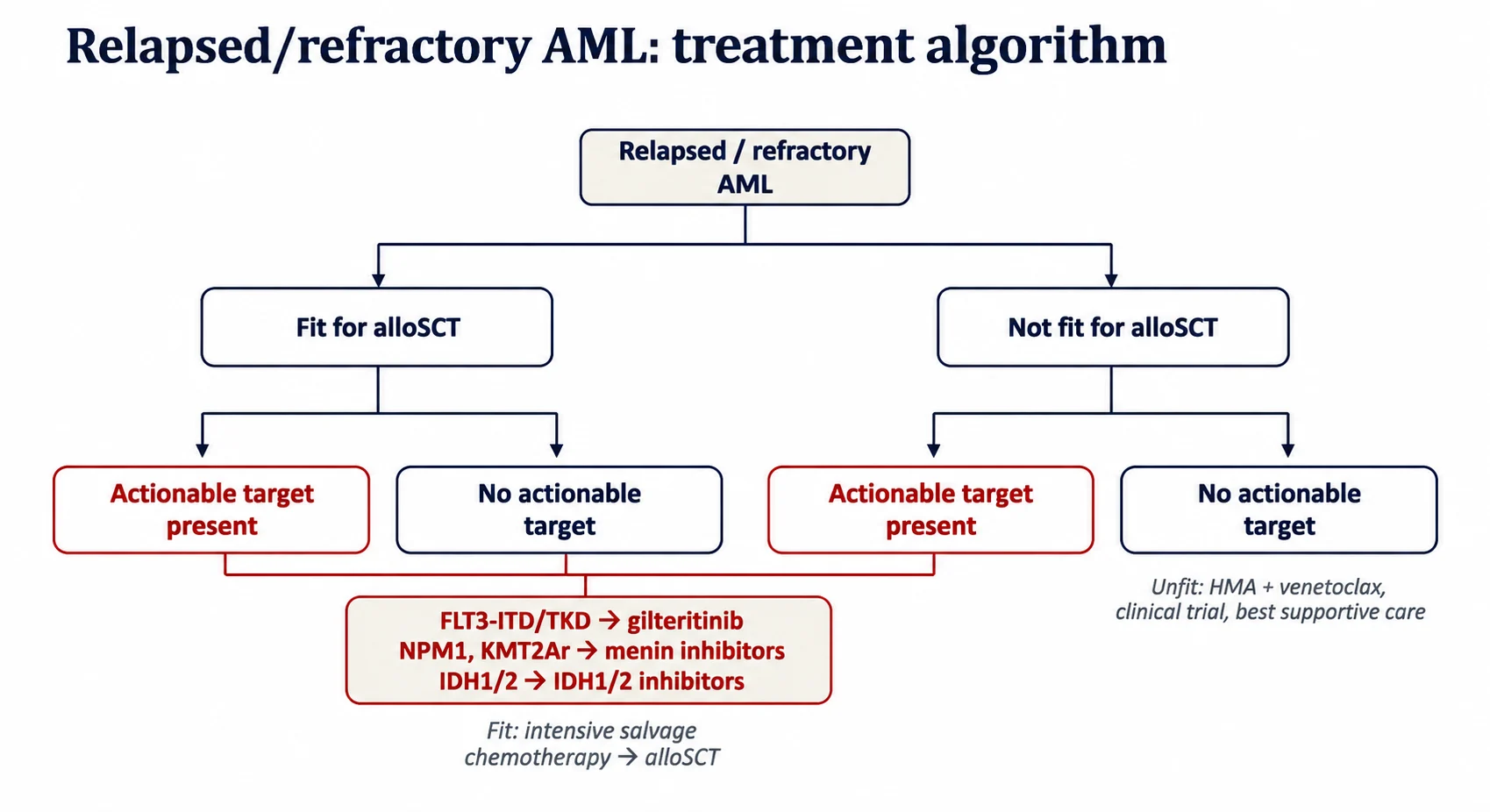
Source: Presentation by Prof. Agnieszka Wierzbowska at LeukO 2026: Global Virtual Congress on Leukemias, organized by OncoDaily.
Despite advances in targeted therapy, allogeneic transplantation remains the principal established treatment with curative potential for eligible patients with relapsed/refractory AML. Determining transplant eligibility is therefore an essential early step in planning salvage treatment.
For patients who are suitable candidates, treatment has traditionally focused on achieving a second complete remission before proceeding to transplantation. However, the optimal salvage strategy depends on several factors, including actionable mutations, previous therapies, disease characteristics, and the patient’s clinical condition.
Wierzbowska explained that patients with actionable mutations may benefit from molecularly targeted therapies, while those without identifiable targets are generally considered for intensive combination chemotherapy or hypomethylating agent-based regimens, sometimes incorporating venetoclax. Because no single non-targeted salvage regimen has consistently demonstrated superiority across the heterogeneous relapsed/refractory AML population, clinical trial enrollment remains particularly important.
Alongside treatment selection, accurately assessing prognosis after relapse can help guide decisions about transplantation. Wierzbowska reviewed an updated prognostic model developed using HOVON-SAKK AML trial data, which incorporated patient age, relapse-free interval, cytogenetic characteristics, and molecular alterations to identify patients with different expected outcomes.
In the development cohort, one-year overall survival was approximately 51% in the favorable-risk group, compared with only 14% in the adverse-risk group. This substantial difference demonstrates the importance of individualized risk assessment when considering further treatment.
Wierzbowska also reviewed evidence supporting transplantation in patients who achieve a second complete remission. However, she noted that selected patients with active leukemia may still benefit from allogeneic transplantation, even when another complete remission cannot be achieved beforehand.
This introduces an important clinical question: Is intensive salvage chemotherapy always necessary before transplantation, or could selected patients proceed directly to transplant without first achieving a second remission?
That question provided the basis for Wierzbowska’s discussion of the ASAP trial, which directly examined the role of salvage chemotherapy before allogeneic transplantation.
The ASAP Trial Challenges the Traditional Transplant Sequence
One of the central studies in Wierzbowska’s presentation was the phase III ASAP trial.
Historically, patients with relapsed or poorly responsive AML have frequently received intensive salvage chemotherapy to achieve remission before allogeneic transplantation.
ASAP investigated whether this additional chemotherapy step was necessary for selected patients with a planned transplant.
Participants with non-favorable-risk AML who had not achieved remission after initial induction or had an untreated first morphological relapse were randomized between two approaches.
One involved remission-induction chemotherapy followed by transplantation.
The other used a disease-control strategy followed by earlier transplantation with sequential conditioning, without requiring conventional salvage chemotherapy to achieve remission first.
The trial found no overall survival advantage from routine intensive salvage chemotherapy before transplantationin the studied population.
Among patients evaluated according to the per-protocol analysis, treatment success was achieved in approximately 84% of those assigned to the disease-control strategy and 81% of those assigned to remission induction.
The results support reconsideration of the assumption that every eligible patient must first achieve a second complete remission through intensive salvage chemotherapy.
Wierzbowska explained that an earlier-transplant strategy may reduce additional chemotherapy exposure and shorten the period before transplantation.
However, the findings do not establish that all patients with active AML should proceed directly to transplantation.
The ASAP trial enrolled a selected population with a planned transplant pathway. Disease control, donor availability, patient fitness, leukemia biology, and transplantation resources remain essential considerations.
Its importance lies in providing randomized evidence that the optimal sequence of salvage treatment and transplantation may be more flexible than previously assumed.
Why CAR T-Cell Therapy Has Been More Difficult in AML
Wierzbowska then turned to the potential of immunotherapy.
The success of CAR T-cell therapy and T-cell-engaging antibodies in B-cell malignancies has created considerable interest in extending similar approaches to AML.
However, AML presents distinct biological obstacles.
A central problem is the lack of an ideal target antigen that is consistently expressed on leukemic cells but absent from normal hematopoietic stem and progenitor cells.
Targets such as CD33, CD123, and CLL-1 are expressed on AML cells, but their presence on healthy myeloid populations can create substantial toxicity.
Eliminating cells expressing these antigens may produce prolonged or profound bone marrow suppression, potentially requiring subsequent transplantation to restore normal hematopoiesis.
Wierzbowska presented findings from a pilot study of anti-CD123 CAR T cells in 12 adults with relapsed/refractory AML.
The treatment demonstrated that manufacturing autologous CAR T cells was feasible, but clinical efficacy was limited.
Only three patients achieved a clinical response, corresponding to 25%, while cytokine release syndrome (CRS) occurred in 10 of 12 patients, or approximately 83%.
Two deaths were associated with probable severe CRS.
The study also identified a potential resistance mechanism specific to the myeloid leukemia environment.
Cytokines released during CAR T-cell activation, including GM-CSF, interleukin-3, and FLT3 ligand, can support the survival of AML blasts through pathways such as JAK–STAT signaling.
This creates a situation in which inflammatory signals generated during treatment may simultaneously promote leukemia cell survival.
Persistent leukemia cells can then contribute to CAR T-cell dysfunction and exhaustion.
The findings help explain why the effectiveness of CAR T-cell therapy in B-cell malignancies cannot simply be reproduced in AML.
They also provide a rationale for investigating combinations that interrupt leukemia-supporting cytokine signaling.
For now, AML-directed CAR T-cell therapy remains investigational.
Antibody Therapies and the Possibility of Treating Lower Disease Burden
Wierzbowska also reviewed other immune-based approaches under development.
One was vibecotamab, a bispecific antibody that binds CD123 on leukemia cells and CD3 on T cells, bringing the immune cells into contact with their targets.
In a phase I study, approximately 59% of patients developed cytokine release syndrome, generally grade 2 or lower.
However, the overall response rate was approximately 9% among 111 evaluable patients, demonstrating the difficulty of producing substantial antileukemic activity in heavily pretreated disease.
Another approach involves antibody-drug conjugates.
Pivekimab sunirine targets CD123 and delivers a cytotoxic payload to antigen-expressing cells.
A phase I/II study in relapsed/refractory AML reported a composite complete remission rate of 17% at the recommended phase II dose.
The agent has also been investigated in combination with azacitidine and venetoclax.
Wierzbowska discussed briquilimab, an anti-CD117 antibody evaluated as part of a transplantation conditioning strategy.
Because CD117 is expressed on normal hematopoietic stem cells as well as malignant populations, its therapeutic application must account for the resulting effects on marrow function.
In a phase I study involving 32 older adults with AML or myelodysplastic syndromes, briquilimab was combined with fludarabine and low-dose total body irradiation before allogeneic transplantation.
The findings supported further investigation of antibody-based conditioning, although they do not establish briquilimab as an independent salvage treatment for relapsed AML.
Finally, Wierzbowska presented data on FLYSYN, an Fc-optimized antibody directed against FLT3/CD135.
In an early-phase study involving patients with MRD-positive AML, 35% achieved a molecular response according to the study’s predefined criteria.
These responses should not be equated with conventional complete remission or proven survival benefit.
Nevertheless, they suggest an important potential direction for antibody-based treatment.
Rather than attempting to eliminate large amounts of established leukemia, future immune therapies may prove more useful when directed against small residual leukemic populations.
Wierzbowska suggested that MRD-directed immunotherapy could become an important area of future AML research.
The Access Problem: When the Right Treatment Is Not Available
After the molecular and clinical presentations, Prof. Marta Sobas brought the discussion back to Maria.
A patient with NPM1-mutated AML might have access to comprehensive next-generation sequencing, menin inhibitors, clinical trials, and specialized transplantation services at a major academic center.
The same patient treated in another healthcare system might have access to only some of these options.
Sobas emphasized that these differences are not limited to comparisons between high-income and low-income countries.
They can also exist within a single country.
She described the situation in Poland, where major academic centers have made substantial progress in molecular diagnostics and specialized leukemia treatment, but access to transplantation services remains uneven.
Her hospital in Bydgoszcz, for example, has advanced diagnostic capabilities, including next-generation sequencing.
However, it does not have its own allogeneic transplantation department.
Patients requiring transplantation must therefore be referred to another center, often outside their immediate region.
The arrangement introduces logistical and organizational challenges for both clinicians and patients.
Even when an actionable mutation has been identified and effective salvage therapy is available, the overall treatment pathway may depend on the capacity of another institution.
For a disease in which timing can be critical, these differences in infrastructure have practical consequences.
Sobas argued that improving AML care requires coordinated diagnostic services, common treatment protocols, reliable referral pathways, and stronger collaboration between hematology centers.
Poland’s Collaborative Approach to Relapsed/Refractory AML
Sobas described the work of the Polish Adult Leukemia Group (PALG) as an example of how national collaboration can improve research and clinical practice.
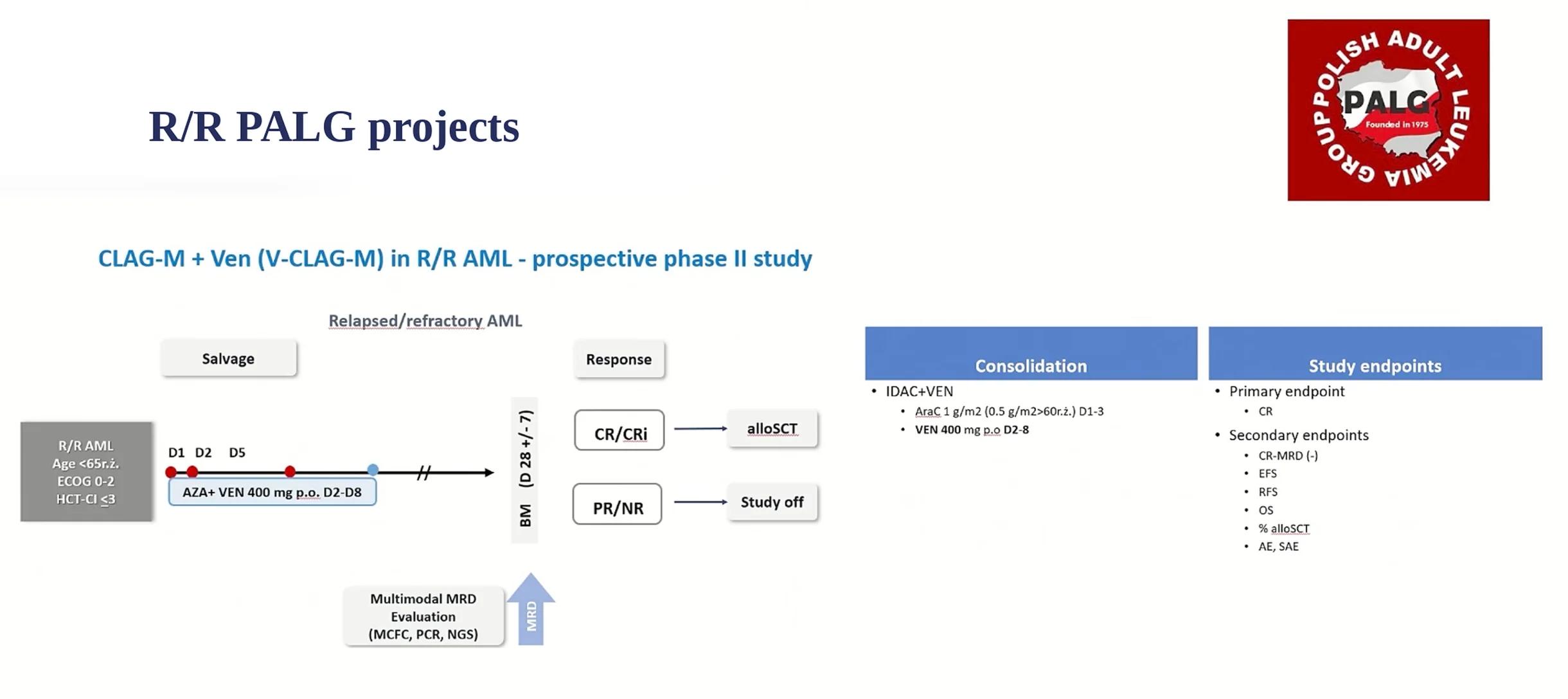
Source: Presentation by Prof. Marta Sobas at LeukO 2026: Global Virtual Congress on Leukemias, organized by OncoDaily.
The group supports multicenter studies, shared treatment protocols, and efforts to standardize molecular and flow cytometric assessment.
One area of investigation is whether established chemotherapy agents can be used more effectively in relapsed/refractory AML.
Sobas presented findings from the PALG AML-1/2018 study, which evaluated the addition of cladribine to CPX-351 in patients with relapsed/refractory disease.
Early-phase results showed a composite complete remission rate of approximately 50%, with MRD negativity reported in around 60% of responders.
These findings suggest clinically meaningful activity, although the study’s early-phase design means that larger prospective comparisons are needed before drawing conclusions about superiority over established regimens.
Sobas also discussed the importance of the CLAG-M regimen, which combines cladribine, cytarabine, granulocyte colony-stimulating factor, and mitoxantrone.
She described plans to investigate the addition of venetoclax to CLAG-M in a prospective phase II study.
The approach reflects an effort to improve salvage treatment using combinations that build on existing chemotherapy experience, rather than relying exclusively on newly developed targeted agents.
For centers where access to innovative drugs remains restricted, rigorous research into established therapies may have particular importance.
Sharing Data and Expertise Across Borders
Sobas expanded the discussion to European and international collaboration.
She described the HARMONY platform, which supports the harmonization and analysis of clinical and molecular data from patients with hematologic malignancies.
Pooling data across institutions creates opportunities to study molecular subgroups and treatment outcomes that may be difficult to assess within individual hospitals.
This is particularly important for uncommon leukemia subtypes and molecularly defined populations.
Sobas also discussed the PETHEMA group and its experience coordinating treatment protocols, molecular analysis, and clinical research across participating centers.
She described examples of collaboration involving Spain, Portugal, Chile, and Colombia, including arrangements in which specialized diagnostic testing could be performed through partner institutions.
These partnerships offer a way for hospitals to access expertise and laboratory capabilities without each center having to independently develop every service.
Sobas noted that collaborative data collection is especially important for rare hematologic malignancies, including acute promyelocytic leukemia, mixed-phenotype acute leukemia, and blastic plasmacytoid dendritic cell neoplasm.
Patients with these diseases may be underrepresented or excluded from prospective trials.
International registries, shared diagnostic assessment, and coordinated clinical studies can help generate more reliable evidence for treatment decisions.
For relapsed/refractory AML, the same principles apply to rare molecular subgroups and patients who have already received multiple lines of targeted therapy.
Can There Be One Global Standard for Relapsed/Refractory AML?
The closing part of the session returned to a question raised throughout the presentations: how can healthcare systems work toward consistent standards when their resources differ so substantially?
The scientific direction of relapsed/refractory AML treatment is increasingly molecular.
Menin inhibitors have created new options for patients with NPM1-mutated and KMT2A-rearranged disease. Repeat genetic testing is becoming essential for identifying targets at relapse, while advances in transplantation are prompting clinicians to reconsider the sequence of salvage treatment.
At the same time, cellular immunotherapy has not yet achieved the results seen in B-cell malignancies, and many emerging approaches remain limited to early-phase trials.
For patients such as Maria, these developments offer new possibilities, but the treatment pathway remains complex.
Her molecular profile may support menin-directed or FLT3-targeted treatment, depending on the leukemia’s findings at relapse. Her comorbidities may limit transplantation, while access to targeted agents and clinical trials may vary by location.
Sobas emphasized that improving outcomes requires healthcare systems to share expertise, harmonize diagnostics, and participate in collaborative research.
The objective is not necessarily to apply an identical treatment regimen in every hospital. It is to ensure that patients can be evaluated according to reliable standards and offered appropriate treatment pathways, including referral when needed.
The three presentations also identified several questions that remain unresolved: how to overcome resistance to menin inhibitors, which patients benefit most from transplantation with active disease, whether MRD-directed immunotherapy can prevent relapse, and how to make effective treatments accessible outside major academic centers.
For relapsed/refractory AML, progress will depend on connecting molecular advances with clinical decisions and the infrastructure needed to deliver them. A treatment target can only improve a patient’s outcome when it is identified, an effective therapy is available, and the surrounding healthcare system can support the next step in care.
Written by Eliz Baloyan, MD, Features Writer and Editor at OncoDaily and CancerWorld