





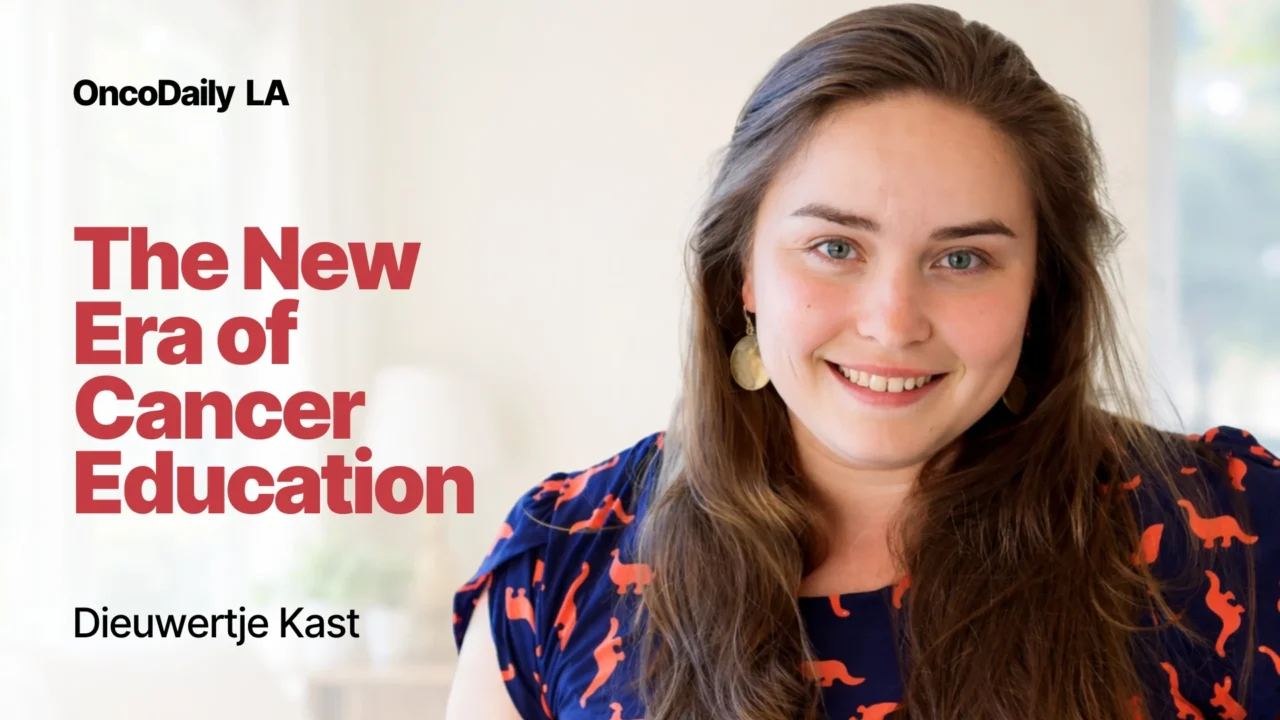
Cancer is one of the most feared words in medicine. In one Los Angeles classroom, it becomes the beginning of a science lesson. The contrast is striking: where most children encounter cancer through silence or crisis, these students meet it with curiosity, hands‑on learning, and a sense of calm understanding. This shift reflects a growing recognition that cancer education for children is not only possible but essential—and that early literacy may be one of the most powerful tools in public health.
At the center of this movement is the Medical STEM Program at the University of Southern California’s Joint Educational Project. Led by educator and scientist Dieuwertje (DJ) Kast, the program brings medical and cancer‑related lessons into elementary schools for twenty weeks each year. It is a model built on clarity, creativity, and the belief that children deserve honest explanations about the world around them.
A New Model for Early Cancer Literacy
The idea behind the program is simple. Children are capable of understanding far more than adults often assume. When cancer is explained through clear language and tangible models, fear gives way to comprehension. This is the foundation of cancer education for children, and it is reshaping how young students learn about the human body.
The program began in 2018 as a collaboration between Dr. Dieuwertje (DJ) Kast and her father, Prof. W. Martin Kast, inspired by the USC Norris Comprehensive Cancer Center’s commitment to community outreach. They recognized that children were often left without the tools to understand cancer, even when it affected their own families. The early pilot tested lessons in a few classrooms, and the response was immediate. Students asked thoughtful questions. Teachers saw engagement they had never witnessed before. Families expressed relief that their children finally had language to describe what they were experiencing.
Today, the program reaches nineteen classrooms each week. USC undergraduate instructors, trained in science communication, guide students through units on oncology, pulmonology, audiology, dermatology, radiology, genetics, and more. The curriculum is free for partner schools, and all materials are provided by USC.
Turning Complex Science Into Something Children Can Hold
The strength of the program lies in its ability to turn complex medical concepts into something children can see and touch. This is where cancer education for children becomes not only understandable but memorable.
Students explore 3D printed tracheostomy tubes and cochlear implants. They build skin models that show how cells change. They watch food coloring move through a hydraulic lymphatic system to understand metastasis. They use grabbers and a webcam to perform a simulated remote surgery. They navigate a soft human model filled with glitter tumors using a makeshift endoscope.
These tools are not simply props. They are bridges between scientific complexity and childhood understanding. They allow students to ask questions without fear and to see cancer as a biological process rather than an unknowable threat.
A Book Series That Extends the Classroom
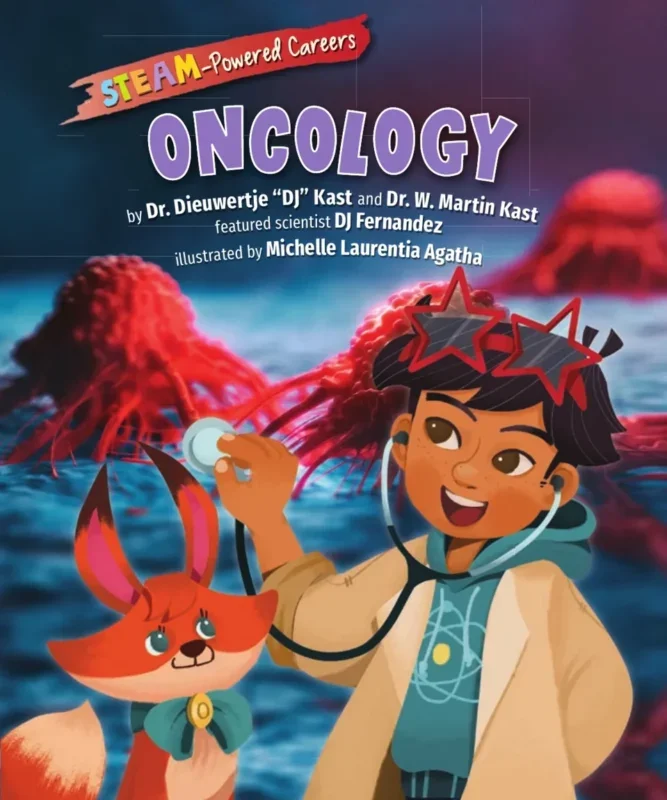
The Wonder Kids bilingual book series grew from the same mission. Co‑authored by DJ Kast and her father, the oncology volume mirrors the curriculum. It explains what cancer is, how treatments work, how genetics influence risk, and how families can support one another. It is one of the most accessible examples of cancer education for children available today.
Each book features a real scientist, portrayed not only through their research but through their everyday life. Children see scientists as people with pets, hobbies, and families. Careers become imaginable. Science becomes human.
Ninety thousand copies of the series were distributed to families across Los Angeles, making it one of the largest STEM literacy efforts in the region.
The series has quickly become a valuable resource for teachers, curriculum committees, and community education programs seeking age‑appropriate cancer literacy materials.
Why Early Cancer Literacy Matters
Cancer education for children is more than a classroom activity. It is a public health strategy with long‑term implications. When children understand what cancer is and how it is treated, they grow into adults who are less afraid, more informed, and more proactive about their health.
Early literacy supports a clearer understanding during family illness. It reduces stigma and misinformation. It encourages healthier long‑term behaviors. It builds trust in healthcare. And it sparks interest in medical and scientific careers.
Some of the students who learn these lessons today may become oncologists, nurses, researchers, and public health leaders of tomorrow. This is the quiet but profound impact of cancer education for children.
How Cancer Education for Children Is Expanding the Future of Medical STEM Education
The Medical STEM Program is entering a new phase of growth. New units in radiology and lymphology are moving from pilot testing into regular rotation. Pediatric oncology teams are beginning to explore ways to integrate the curriculum into their own patient‑education efforts. Universities and cancer centers across the country have expressed interest in adapting the model for their communities. What began as a local initiative is steadily evolving into a framework that could support a full kindergarten through twelfth-grade pathway in medical and cancer literacy.
The curriculum remains fully open access, giving educators the freedom to use it, adapt it, or build upon it. This openness reflects the belief that cancer education for children should not be limited by geography or institutional boundaries. It is a resource meant to strengthen communities, support families, and help young people understand the science shaping their lives. A detailed look at the program’s early teaching methods appeared in an NSTA Connected Science Learning article, showing how hands‑on models make complex medical ideas accessible to young students. The early stages of this work were also captured in an earlier OncoDaily LA feature, highlighting how the program has continued to expand in scope and ambition.
A New Cultural Narrative About Cancer
For generations, cancer has been a word spoken quietly—a diagnosis that arrives without preparation, a topic adults avoid in front of children. This program offers a different narrative, one where understanding replaces fear and where children learn that cancer is not a mystery but a biological process that science can explain and medicine can treat.
In a Los Angeles classroom, a child holds a model of a cell and watches it change shape. They ask a question. They learn something new. They feel less afraid. In that moment, the future of cancer education begins to shift.
This new era of cancer education is reshaping how young people learn about health and is emerging as one of the most meaningful public health priorities of our time.
Cancer enters most children’s lives without preparation, yet it does not need to remain a source of confusion or fear. When science is introduced with honesty, care, and imagination, children respond with clarity and confidence. The work happening in these classrooms shows that cancer education for children can be both gentle and rigorous, both emotionally supportive and scientifically grounded. It offers a path toward a future where families feel more informed, communities are more connected, and young people are better equipped to engage with medicine and public health in meaningful ways. Sharing this story honors that future and the educators and scientists who are helping shape it.
As more K–12 educators and science committees look for ways to strengthen public health literacy, this model of cancer education for children offers a clear, compassionate, and practical path forward.
Martin Harutyunyan
OncoDaily LA