Key takeaways
- Preventing AML relapse after allogeneic transplantation remains a major clinical challenge, with up to 40% of patients experiencing recurrence and limited effective treatment options once leukemia returns.
- Cellular immunotherapies beyond CAR-T offer promising strategies to strengthen graft-versus-leukemia activity, including modified donor lymphocyte infusions, leukemia-specific T cells, TCR-engineered T cells, natural killer cells, and gamma delta T cells.
- Timing and precision are critical to relapse prevention. Early intervention guided by measurable residual disease (MRD) may help control leukemia before overt relapse, while more selective immune-cell products aim to reduce graft-versus-host disease.
- Early clinical results support further investigation of NK-cell and gamma delta T-cell therapies. A randomized Phase II NK-cell study reported lower disease progression, while Moffitt's Phase I gamma delta T-cell trial observed only two relapses among 12 treated high-risk AML patients, although definitive efficacy remains unproven.
- The next priority is turning promising early findings into durable clinical benefit, through larger controlled trials, improved patient selection, assessment of cellular persistence, and scalable manufacturing that could make these therapies more widely accessible.
At LeukO 2026: Global Virtual Congress on Leukemias, organized by OncoDaily, Nelli Bejanyan, Program Leader of Blood and Marrow Transplant and Cellular Immunotherapy at Moffitt Cancer Center and Professor of Oncologic Sciences at the University of South Florida, explored emerging cellular immunotherapies designed to prevent acute myeloid leukemia (AML) relapse following allogeneic hematopoietic cell transplantation.
Allogeneic transplantation offers curative potential for many patients with AML. Yet, even after undergoing this intensive treatment, up to 40% of patients may experience relapse, often within the first year. Once leukemia returns, effective treatment options are limited, and survival remains poor.
Against this backdrop, Bejanyan explored how emerging cellular immunotherapies could strengthen the donor immune response after transplantation and prevent leukemia from returning. Drawing on advances in donor lymphocyte infusions, engineered T cells, natural killer cells, and gamma delta T-cell therapies, including research conducted at Moffitt Cancer Center, she examined a promising shift in AML care: moving beyond treating relapse toward preventing it, while minimizing the immune complications that have traditionally limited these approaches.
Why AML Can Return After Transplantation
Allogeneic transplantation works through more than the high-dose or reduced-intensity treatment administered before the procedure.
It also relies on the graft-versus-leukemia (GVL) effect, in which immune cells from the donor recognize and eliminate residual malignant cells.
However, leukemia can escape this immune surveillance.
Relapse is particularly common in patients with adverse-risk genetic abnormalities, including TP53 mutations, and those with measurable residual disease (MRD) before or after transplantation.
Patients receiving reduced-intensity or nonmyeloablative conditioning may also face substantial relapse risk, although these approaches are essential for many older adults and patients with comorbidities who cannot tolerate more intensive conditioning.
AML relapse after transplantation can occur through several mechanisms:
- Immune escape: Leukemia cells may lose human leukocyte antigen (HLA) expression or develop defects in antigen presentation, making them less recognizable to donor-derived immune cells.
- T-cell exhaustion: Donor T cells may lose their ability to effectively recognize and eliminate leukemia cells.
- Immunosuppressive microenvironment: Regulatory T cells and myeloid-derived suppressor cells can inhibit the antileukemic immune response.
- High residual disease burden: Patients entering transplantation with substantial residual leukemia may relapse before the donor immune system can establish an effective graft-versus-leukemia response.
“Relapse is a reflection of failure of GVL.”
Cellular immunotherapy offers several potential ways to address that failure.
Infusing additional immune cells may increase the number of leukemia-fighting cells available. Selecting or engineering cells with stronger antileukemic activity may improve the quality of the immune response, while antigen-specific approaches could make that response more precise.
The challenge is achieving these benefits without triggering serious immune complications.
Donor Lymphocyte Infusions: Strengthening Immunity at a Cost
Donor lymphocyte infusion (DLI) is one of the oldest cellular immunotherapy strategies used following allogeneic transplantation.
The approach involves administering lymphocytes from the original stem cell donor to reinforce the graft-versus-leukemia effect.
DLI can be used in three distinct settings.
- Therapeutic DLI is administered after leukemia relapse, often following additional treatment to reduce disease burden.
- Preemptive DLI is considered when warning signs such as detectable MRD or mixed donor chimerism suggest an increased likelihood of relapse.
- Prophylactic DLI is given to selected high-risk patients before there is measurable evidence of recurrent leukemia.
Bejanyan emphasized that timing is critical.
Once AML has returned with a substantial disease burden, conventional DLI is often insufficient to achieve lasting remission. The opportunity for intervention may be greater when residual disease is minimal or relapse has not yet developed.
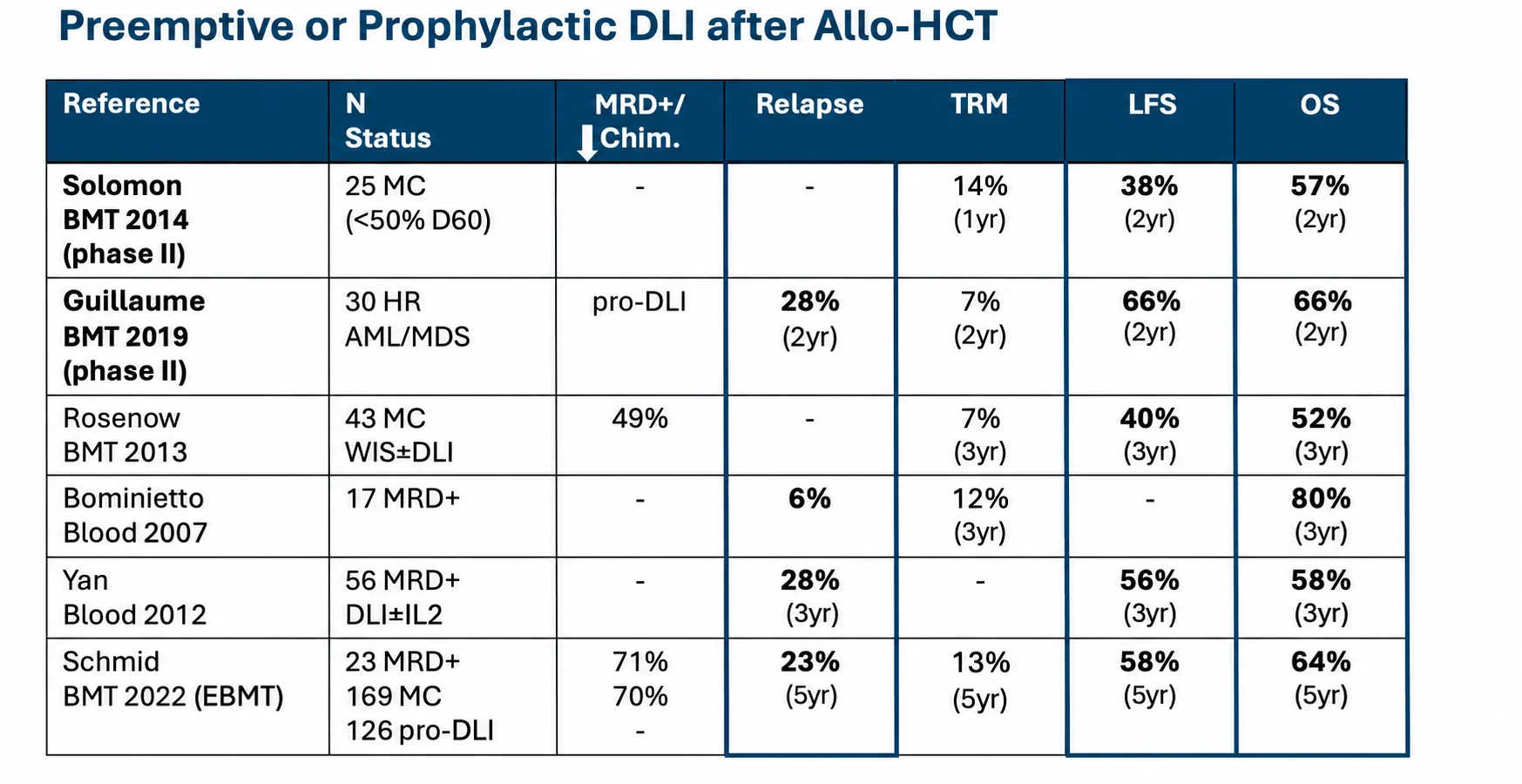
Selected studies of preemptive and prophylactic DLI have reported encouraging leukemia-free and overall survival outcomes, suggesting that additional donor immune cells can improve disease control in some patients.
But conventional DLI carries a major limitation: graft-versus-host disease (GVHD).
Because the infused lymphocytes are not specifically directed against leukemia, they may also recognize healthy recipient tissues as foreign.
In some prospective studies discussed by Bejanyan, chronic GVHD affected approximately 50-60% of patients.
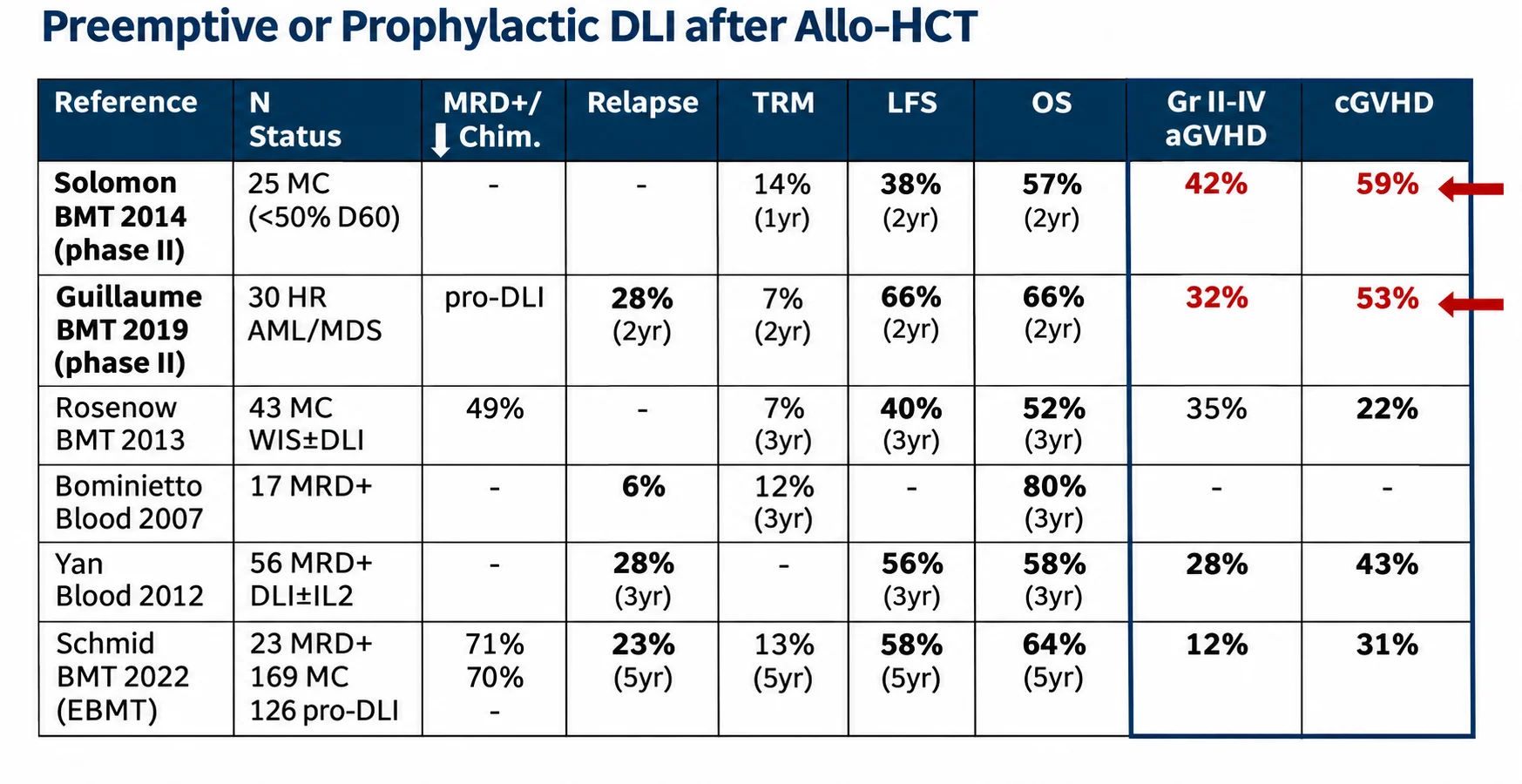
Although it does not always lead to death, chronic GVHD can cause significant long-term complications and substantially affect quality of life.
The next challenge, therefore, is to retain the antileukemic activity of donor lymphocytes while reducing their potential to damage healthy tissues.
Can Modified Donor Lymphocytes Improve the Balance?
Researchers are investigating several approaches to make DLI more selective.
These include:
- Removing CD8-positive cells,
- Depleting regulatory T cells,
- Enriching memory T-cell populations while reducing naive T cells that may contribute to GVHD.
Bejanyan highlighted a Phase I study conducted at Moffitt Cancer Center involving CD8-depleted, HLA-mismatched donor lymphocyte infusions.
Unlike the post-transplant prevention strategies discussed throughout much of her presentation, this particular study involved 19 patients who had not previously undergone allogeneic transplantation.
Participants had high-risk myelodysplastic syndrome (MDS) or secondary AML and received chemotherapy followed by modified donor lymphocytes.
The treatment was generally well tolerated, with no dose-limiting toxicities observed.
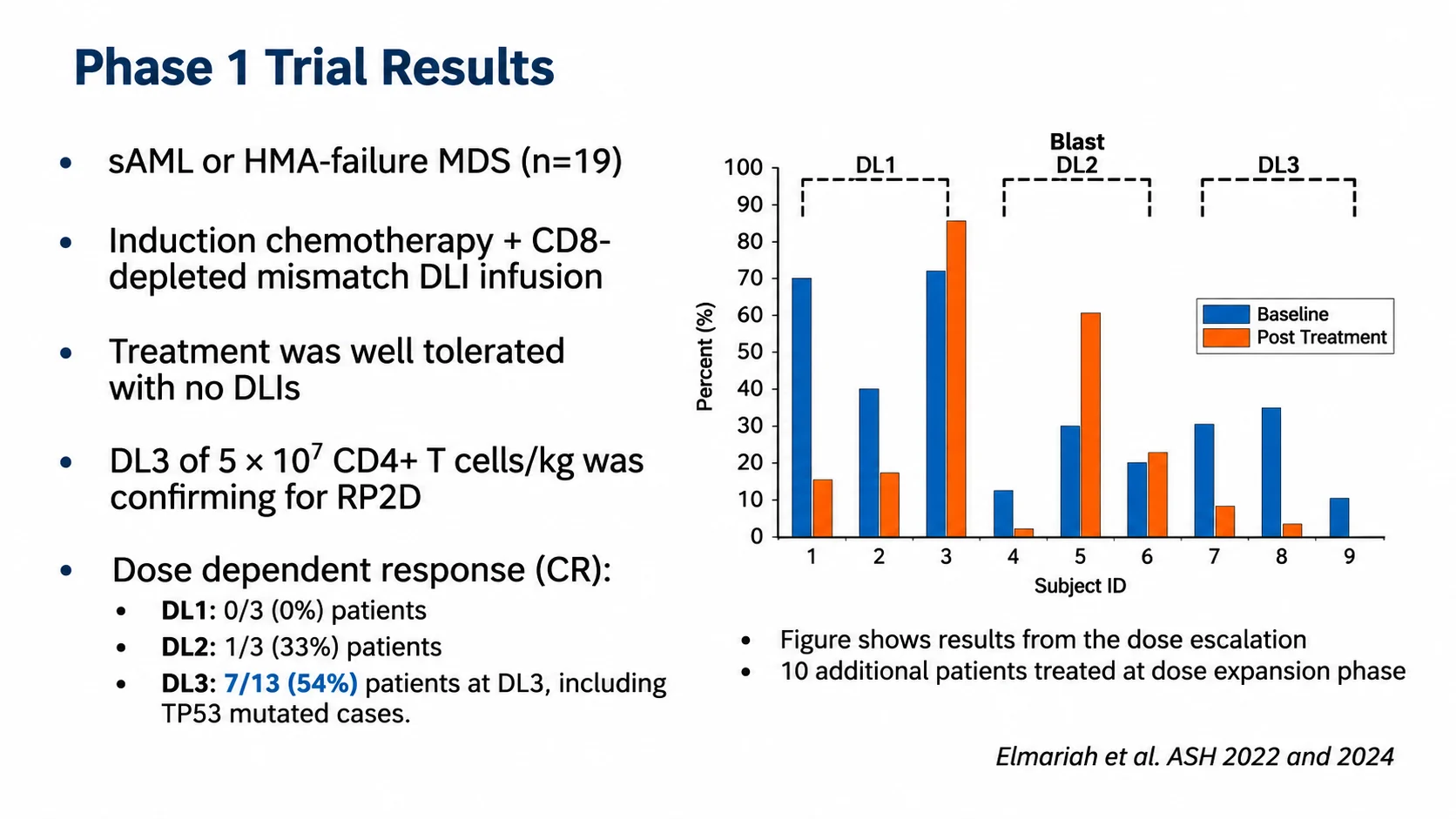
Importantly, responses appeared dose-dependent.
At the highest dose level, 7 of 13 patients achieved complete remission, compared with no responses among the three patients treated at the lowest dose.
The findings demonstrated the potential antileukemic activity of modified donor lymphocytes, although they do not establish efficacy for preventing relapse after transplantation.
For Bejanyan, such studies contribute to a broader effort to develop immune-cell products that preserve useful antitumor activity while limiting harmful alloreactivity.
More Precise T Cells: From Leukemia-Specific Therapy to TCR Engineering
Another approach involves selecting or engineering T cells to recognize antigens associated with leukemia.
Rather than administering a broad population of donor lymphocytes, researchers can expand cells with activity against specific leukemia-related targets.
Bejanyan discussed MT-401, a multiantigen-specific T-cell therapy developed to recognize several leukemia-associated proteins.
The approach aims to strengthen antileukemic immunity while reducing the risks associated with conventional DLI.
In a Phase I study conducted at Baylor College of Medicine, 25 patients with AML or MDS received leukemia-specific donor T cells.
Seventeen patients were considered at high risk of relapse following transplantation, while eight had active relapsed disease.
The treatment demonstrated a favorable early safety profile, with no severe acute GVHD or extensive chronic GVHD reported.
Among patients with active disease, one achieved complete remission and another achieved partial remission.
These findings supported further investigation, leading to the multicenter Phase II ARTEMIS trial.
However, ARTEMIS was discontinued because of practical challenges associated with patient-specific manufacturing, donor collection, and the time required to deliver therapy.
The experience illustrated a problem that extends beyond clinical efficacy.
Even a promising cellular therapy may have limited usefulness if manufacturing delays prevent patients from receiving it in time.
Development has consequently shifted toward off-the-shelf MT-401 products, manufactured using cells from healthy donors and intended to reduce treatment delays.
TCR-T Cells and the ALLOHA Trial
A more targeted approach involves engineering T cells to express receptors that recognize specific leukemia-associated antigens.
These therapies, known as T-cell receptor-engineered T cells (TCR-T cells), can recognize peptide antigens presented by HLA molecules, including targets derived from intracellular proteins.
Bejanyan highlighted the Phase I ALLOHA trial, which evaluated engineered T cells targeting minor histocompatibility antigens after reduced-intensity allogeneic transplantation.
The broader program has investigated HA-1- and HA-2-directed approaches, with the reported TSC-101 cohort targeting HA-2.
The analysis presented included 31 patients with AML, ALL, or MDS, of whom 17 received TCR-T cells and 14 formed a comparison group.
The study included patients with high-risk features, including TP53 mutations and MRD positivity before transplantation.
No dose-limiting toxicities were observed.
Early analyses suggested fewer relapses among patients receiving TCR-T therapy, with three relapses reported in the treated group compared with five in the control group. Relapse-free survival and event-free survival estimates also favored the investigational approach.
Another encouraging observation was the persistence of engineered T cells, including detection beyond one year in some patients.
These findings suggest that antigen-directed cellular immunotherapy may help reinforce immune surveillance after transplantation.
Nevertheless, the study was small and nonrandomized, and the reported differences remain preliminary. Larger prospective trials are needed to determine whether the treatment provides a meaningful survival advantage.
TCR-T therapy also presents practical limitations, including complex manufacturing and the need to match specific antigen and HLA characteristics.
For these reasons, researchers are exploring immune cells capable of recognizing leukemia through less HLA-dependent mechanisms.
Natural Killer Cells Show Encouraging Results in a Randomized Trial
Natural killer (NK) cells provide an alternative to conventional T-cell-based immunotherapy.
As components of the innate immune system, NK cells can recognize and destroy abnormal cells without relying on the same antigen-recognition mechanisms used by conventional T cells.
This makes them attractive candidates for strengthening antileukemic immunity following transplantation.
Bejanyan highlighted a randomized Phase II trial evaluating donor-derived, laboratory-expanded NK-cell infusions after haploidentical transplantation in patients with high-risk AML or MDS.
The study included 76 patients.
Forty were assigned to receive NK-cell infusions on days 13 and 20 after transplantation, while 36 received transplantation without the additional cellular therapy.
The difference in disease progression was notable.
Patients assigned to receive NK cells experienced a substantially lower cumulative incidence of disease progression, with a trend toward improved progression-free survival.
These findings were particularly valuable because they came from a randomized study rather than an early single-arm investigation.
However, the trial did not establish NK-cell therapy as a new standard of care, and larger studies are needed to confirm long-term clinical benefit.
NK-cell approaches also face unresolved challenges involving cellular persistence, the potential need for cytokine support or repeated infusions, and differences between manufactured products.
Nevertheless, the results provide encouraging evidence that augmenting innate immune activity after transplantation may help reduce leukemia recurrence.
Gamma Delta T Cells: The Research Taking Shape at Moffitt
The final and most detailed part of Bejanyan’s presentation focused on a cellular immunotherapy program being developed at Moffitt Cancer Center.
The strategy uses gamma delta (γδ) T cells, an unconventional T-cell population with both innate-like and adaptive immune characteristics.
Unlike conventional alpha beta T cells, gamma delta T cells can recognize cellular stress signals and exert antitumor activity through mechanisms that are not dependent on classical HLA antigen presentation.
This is especially relevant in AML, where leukemia cells may evade conventional donor immune responses by altering antigen presentation.
Gamma delta T cells also have a relatively low propensity to cause GVHD, making them attractive for donor-derived treatment strategies.
One limitation is their low abundance in circulating blood.
To overcome this, researchers at Moffitt developed a method to collect gamma delta T cells from healthy donors and expand them extensively outside the body.
Bejanyan reported that the manufacturing process can achieve more than 2,000-fold cellular expansion in some settings.
The resulting products consist predominantly of Vγ9Vδ2 T cells, with a large proportion displaying an effector or effector-memory phenotype and relatively low levels of early exhaustion markers.
This allows investigators to generate substantial numbers of potentially functional antileukemic cells for infusion.
Early Results in High-Risk AML
Moffitt subsequently conducted a first-in-human Phase I trial evaluating expanded donor-derived gamma delta T cells following reduced-intensity allogeneic transplantation.
The study focused on patients with adverse-risk AML, a group with a particularly high probability of relapse.
Eighteen patients were enrolled, and 12 ultimately received gamma delta T-cell infusions.
Many had additional high-risk characteristics.
Seven of the treated patients were MRD-positive before transplantation, and four had TP53 mutations associated with complex karyotypes.
Three dose levels were evaluated to determine safety and tolerability.
The treatment demonstrated an encouraging early safety profile.
No dose-limiting toxicities, cytokine release syndrome, neurotoxicity, or acute GVHD were observed during the designated safety-assessment period.
The initial efficacy observations were also promising.
Among the 12 treated patients, only two experienced leukemia relapse during the reported follow-up.
Six of the seven patients who were MRD-positive before transplantation achieved MRD-negative remission following transplantation and gamma delta T-cell treatment.
Of particular interest, two of three patients with TP53-mutated AML and persistent MRD after transplantation cleared their MRD following gamma delta T-cell infusion.
These findings suggested that the therapy could have activity even in biologically high-risk disease.
However, Bejanyan emphasized the limitations of the evidence.
“A small number of patients, but encouraging results.”
The trial was designed primarily to evaluate safety, not to prove that gamma delta T cells prevent relapse.
With only 12 treated patients and no randomized comparison group, the contribution of the gamma delta T-cell infusion cannot be separated definitively from the effects of transplantation itself.
Nevertheless, the absence of major early immune toxicities and the observed MRD responses provided a strong rationale for further investigation.
Which Cellular Therapy Works Best, and for Whom?
The growing range of cellular immunotherapies offers several possible strategies for reducing AML relapse after transplantation.
Conventional DLI is accessible and familiar but carries a substantial risk of GVHD.
Modified donor lymphocytes may improve tolerability, although their clinical benefit remains uncertain.
Leukemia-specific T cells and TCR-engineered therapies offer greater precision, but manufacturing complexity and antigen restrictions create practical barriers.
NK cells have demonstrated encouraging results in randomized research, while gamma delta T cells offer the possibility of HLA-independent antileukemic activity with a favorable early safety profile.
No single platform has yet emerged as the definitive solution.
“There is no single platform that dominates as of now.”
According to Bejanyan, the next generation of studies must focus on more than response rates or short-term safety.
Investigators need to determine which patients are most likely to benefit, when cellular therapy should be administered, how long infused cells remain active, and whether treatment can reliably prevent relapse without creating new complications.
MRD assessment will be particularly important for identifying patients at greatest risk and evaluating whether immunotherapy is eliminating residual disease.
Equally important will be the practical feasibility of manufacturing and delivering these treatments beyond a small number of specialized institutions.
For now, most of these approaches remain investigational, and their promising early results require confirmation in larger controlled studies.
But they are beginning to reshape how researchers think about post-transplant AML care.
Historically, much of the effort has centered on treating leukemia after it returns. Cellular immunotherapy raises the possibility of intervening earlier, while disease burden remains low and donor immunity can still be reinforced.
As Bejanyan concluded:
“Prevention is the best cure in a setting of AML.”
The critical question is whether these emerging therapies can make that principle a consistent clinical reality for patients undergoing transplantation.
Written by Eliz Baloyan, MD, Features Writer and Editor at OncoDaily and CancerWorld