Key takeaways
- Surviving cancer is only the beginning, as many childhood cancer survivors continue to face stigma, emotional distress, and challenges returning to everyday life.
- Where a child is born can determine their chances of survival, with unequal access to diagnosis, treatment, and essential medicines.
- Compassionate care can prevent treatment abandonment by helping families overcome financial, emotional, and practical barriers.
- Psychological support must continue beyond treatment to help survivors rebuild confidence, reconnect with their communities, and move forward.
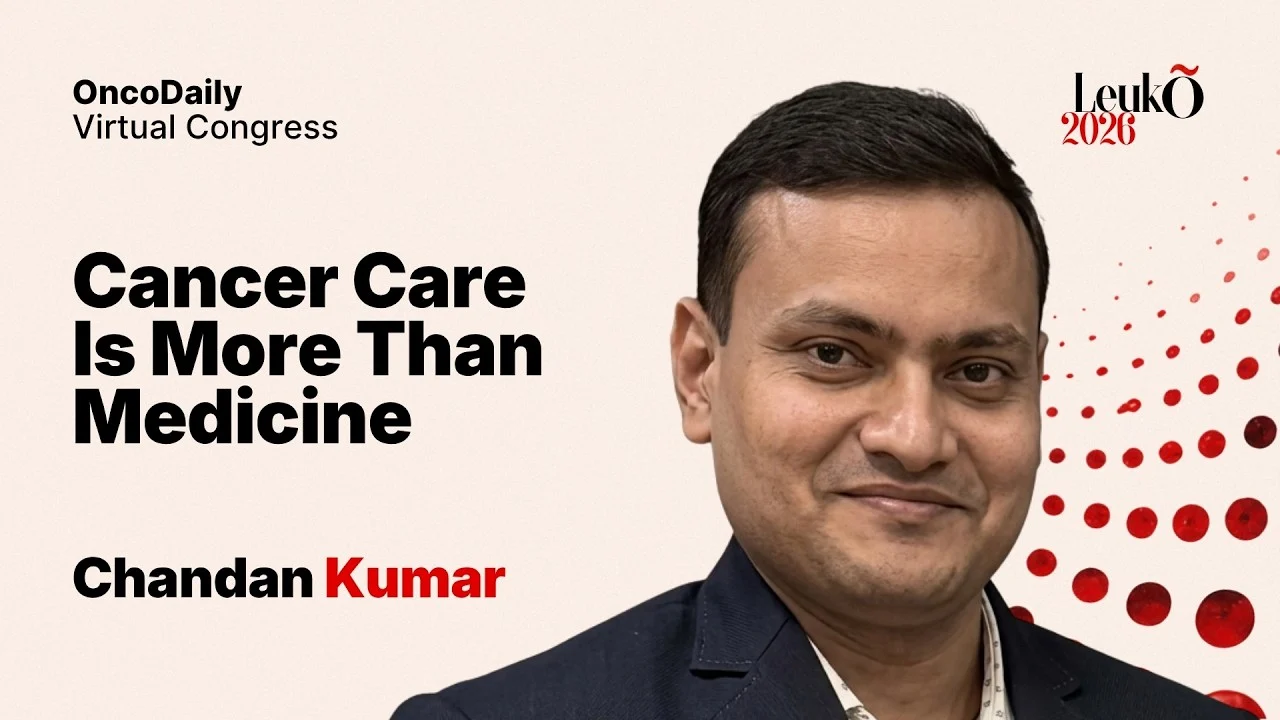
At LeukO 2026: Global Virtual Congress on Leukemias, organized by OncoDaily, Chandan Kumar, childhood acute lymphoblastic leukemia (ALL) survivor and Director of Research and Educational Engagement at Resonance, shared a perspective on cancer care shaped by his own experience as a patient and years of advocacy for childhood cancer survivors in India.
Having survived childhood ALL himself, Kumar understands the challenges that extend beyond medical treatment. Today, through his work with the Indian Childhood Cancer Initiative, KidsCan Konnect, and CanKids KidsCan, he advocates for more comprehensive childhood cancer care.
His presentation centered on a principle shaped by both his personal and professional experience:
“Healing is not complete with medicine alone. It takes compassion, connection and care.”
The Children Who Never Reach a Cancer Center
Advances in pediatric oncology have dramatically improved survival for many childhood cancers, particularly acute lymphoblastic leukemia. But the benefits of these advances remain unevenly distributed.
In high-income countries, more than 80% of children diagnosed with cancer survive. In many low- and middle-income countries, survival remains below 30%.
A child’s chance of surviving cancer can depend heavily on where they are born and whether their family can access appropriate care. In India, Kumar estimates that as many as half of children with cancer never reach a specialized cancer center, leaving many without the opportunity to receive timely diagnosis and treatment.
Delayed diagnosis, limited access to trained pediatric oncologists, shortages of essential medicines, and the financial burden of traveling to treatment centers all contribute to these disparities.
Quality cancer care begins with early, accurate diagnosis and timely access to evidence-based treatment. It also requires trained specialists, appropriate diagnostic facilities, standardized treatment protocols, multidisciplinary teams, and strong infection control and supportive care. These are essential components of effective childhood cancer treatment, yet they remain out of reach for many families.
It also means standardized treatment protocols, infection prevention, supportive care, and coordination between different healthcare professionals.
These are basic requirements for effective pediatric oncology services, yet many families still struggle to access them.
Even when a child reaches a hospital and begins treatment, however, access alone does not guarantee that treatment will be completed. Families may still face months or years of financial pressure, emotional distress, separation from their communities, and uncertainty about the future.
For some, those pressures become overwhelming.
When Compassion Determines Whether Treatment Continues
One of Kumar’s strongest messages concerned treatment abandonment, a major challenge in childhood cancer care in resource-limited settings.
Families may discontinue treatment because of:
- Financial hardship,
- Prolonged hospitalization,
- Travel costs and inadequate accommodation,
- Fear and uncertainty about treatment,
- The emotional and psychological burden of caring for a seriously ill child.
These are problems that chemotherapy cannot solve.
Kumar argued that compassionate care can make an important difference by building trust between families and healthcare teams, helping parents understand treatment, and ensuring that practical and emotional difficulties are recognized before they lead to abandonment.
He referred to experiences at Indian treatment centers where abandonment rates, previously approaching 30%, reportedly fell below 10% following the introduction of comprehensive treatment-support programs.
Such programs can bring together financial assistance, accommodation, counseling, patient navigation, and ongoing communication with families.
The value of this approach has also been demonstrated in published research from India, where holistic support combined with active patient tracking has been associated with substantial reductions in treatment abandonment.
For Kumar, the issue is deeply personal.
“I had to leave my hometown because society did not accept me or my family after my cancer diagnosis. If I had not received compassionate care and treatment support, I might have abandoned treatment too.”
The experience left him aware of how easily social stigma and emotional distress can threaten a family’s ability to continue care.
His experience also illustrates why families need someone who listens to their concerns, helps them navigate unfamiliar healthcare systems, and recognizes the pressures they face outside the hospital.
A treatment protocol may be medically effective, but it cannot help a child who is unable to complete it.
This is where compassionate care becomes especially important. It can help families remain engaged in treatment during some of the most difficult periods of their lives.
The Childhood That Cancer Takes Away
The effects of childhood cancer can continue long after treatment ends.
Kumar’s own experience included losing three years of school because of treatment and relocation. Returning to education and everyday life after such a prolonged interruption brought challenges that extended beyond physical recovery.
For children undergoing cancer treatment, missing school can mean losing friendships, falling behind academically, and becoming disconnected from the routines that give childhood a sense of stability.
Some return to classrooms where they face questions, exclusion, or stigma related to their diagnosis. Others struggle with the psychological effects of prolonged treatment, financial difficulties at home, or uncertainty about their future.
Kumar encountered similar experiences among other childhood cancer survivors.
In a survey conducted within his survivor community, more than 84% of respondents reported having missed at least one full year of school or experienced stigma in their school or community.
The findings reflected a problem extending well beyond the immediate experience of cancer treatment.
Educational disruption can affect future qualifications, employment opportunities, and financial independence. Social exclusion and unresolved emotional distress may continue to influence a survivor’s confidence, relationships, and mental health for years.
These experiences can also affect parents and siblings, whose lives may be disrupted by migration, financial strain, and the demands of long-term care.
Psychological support should extend throughout the cancer journey and beyond active treatment, helping children and families navigate the emotional and social challenges that often persist long after recovery.
Counseling, peer support, coping strategies, and educational assistance can help children and families manage the uncertainty of treatment while maintaining connections to everyday life.
Survivor networks have a particularly important role.
Through initiatives such as KidsCan Konnect, survivors can connect with people who understand the challenges of cancer treatment and life afterward. These connections can provide reassurance, practical guidance, and a sense of belonging that may be difficult to find elsewhere.
Survivors also bring an important perspective to healthcare planning, revealing problems that may be overlooked when success is measured primarily through remission and survival rates.
Cancer Care Should Not End With the Last Treatment
Kumar’s presentation also addressed the responsibility of healthcare systems to make these services available.
Psychological counseling, educational support, financial guidance, and compassionate communication are often delivered through separate charitable programs or support organizations. Their availability may depend on the hospital, region, or resources available to individual families.
Kumar called for these services to be integrated into routine pediatric cancer care rather than treated as optional additions.
This requires multidisciplinary teams that bring together pediatric oncologists, nurses, psychologists, social workers, educators, and patient-support professionals.
It also means investing in training healthcare workers to recognize emotional distress, strengthening community-based support, and involving survivors in the design of services intended for children and their families.
“This is not the responsibility of just one treating center. It is the responsibility of all of us – treatment centers, social support organizations, survivor groups, peer groups, and communities. We must come together to support comprehensive care.”
This collaborative approach is central to his work with the Indian Childhood Cancer Initiative and CanKids KidsCan, where improving access to treatment is closely linked with survivorship, reintegration, and long-term quality of life.
Care must also continue beyond remission.
Helping survivors overcome the educational, social, and economic challenges that can persist long after treatment ends is a part of the problem. The opportunity to return to school, build relationships, and pursue a fulfilling future should be part of what successful cancer care means.
Every Child Deserves the Chance to Survive and Thrive
Kumar’s message at LeukO 2026 was shaped by both his experience of surviving childhood leukemia and his years of working with families facing similar challenges. Having lived through treatment, interrupted education, and social rejection, he understands how much support can matter to a child and their family.
His call to the oncology community was clear: compassionate care and psychological support must be built into cancer treatment, with continued support for survivors as they return to everyday life.
Every child deserves access to quality care, regardless of their background or financial circumstances, and the opportunity to build a future beyond cancer.
“We must ensure that patients who come for treatment survive, but we must also ensure that they thrive in their lives.”
Written by Eliz Baloyan, MD, Features Writer and Editor at OncoDaily and CancerWorld