
Key takeaways
- Treating leukemia in children with ataxia-telangiectasia requires a highly individualized approach, as underlying DNA repair defects and immunodeficiency can make standard intensive chemotherapy and stem cell transplantation particularly risky.
- Blinatumomab demonstrated promising activity in a rare clinical setting, achieving an undetectable MRD result at a reference laboratory in a nine-year-old girl with B/T mixed-phenotype acute leukemia and profound immune dysfunction.
- Immunotherapy may remain effective despite significant baseline immunodeficiency, as this patient achieved a deep leukemia response with only grade 1 cytokine release syndrome reported during blinatumomab treatment.
- Comprehensive genetic testing is essential in hereditary cancer predisposition syndromes, particularly when clinical findings strongly suggest ataxia-telangiectasia but initial sequencing fails to identify both pathogenic ATM variants.
- Sustained leukemia remission is only one part of successful care, as persistent lymphopenia, hypogammaglobulinemia, recurrent infections, and other complications require ongoing multidisciplinary management.
At LeukO 2026: Global Virtual Congress on Leukemias, organized by OncoDaily, Anna Avagyan, Pediatric Hematologist and Oncologist and Head of the Karina Cancer Predisposition Clinic at the Yeolyan Hematology and Oncology Center in Yerevan, presented a rare clinical case of acute leukemia in a child with ataxia-telangiectasia (AT), exploring the challenges of genetic diagnosis, primary immunodeficiency, chemotherapy toxicity, and the use of blinatumomab as an alternative to further intensive treatment.
Treating childhood leukemia is already a careful balance between eliminating malignant cells and managing the toxicity of chemotherapy. But for children with inherited DNA repair disorders, that balance becomes considerably more difficult. The very treatments needed to control leukemia can produce severe complications in patients whose cells are unusually vulnerable to DNA damage.
Through the experience of a nine-year-old girl with mixed-phenotype acute leukemia, Avagyan demonstrated how genetic predisposition, leukemia immunophenotype, and treatment tolerance can shape decisions when conventional protocols are no longer safe to follow.
Two Sisters, One Rare Cancer Predisposition
The patient was nine years old when she developed acute leukemia. But her medical history already suggested a much broader problem.
She had a clinical diagnosis of ataxia-telangiectasia, a rare autosomal recessive disorder characterized by progressive neurological impairment, immunodeficiency, radiosensitivity, and an increased risk of malignancy.
Her symptoms were characteristic of the condition: progressive gait instability, deterioration of fine motor skills, ocular telangiectasias, poor growth, and elevated alpha-fetoprotein (AFP).
The family history made the case even more significant.
Her sibling had also been diagnosed with ataxia-telangiectasia and had developed stage IV Hodgkin lymphoma.
The sibling was successfully treated using a EuroNet-PHL-based chemotherapy protocol. However, radiotherapy, which would otherwise have been indicated, was omitted because of the heightened risk associated with the underlying radiosensitivity.
At the time of Avagyan’s presentation, the sibling remained in remission.
The presence of two affected children raised important questions about the family’s genetic background.
Ataxia-telangiectasia is associated with pathogenic variants affecting both copies of the ATM gene, which plays a central role in recognizing and responding to DNA double-strand breaks.
Yet the genetic investigations did not provide a complete explanation.
Targeted next-generation sequencing (NGS) initially identified a heterozygous ATM variant in the sibling. Whole-exome sequencing did not reveal a second causative alteration.
Subsequent parental testing identified the same variant in the father, while no pathogenic ATM variant was detected in the mother.
Testing in the younger child also identified a heterozygous ATM finding, but the genetic investigations remained incomplete.
Importantly, the team could not fully investigate potential copy-number changes, such as deletions involving the second ATM allele, because of limited diagnostic resources.
This left an unresolved discrepancy between the strong clinical evidence of ataxia-telangiectasia and the molecular findings available to the team.
A single heterozygous ATM variant does not establish the molecular diagnosis of this recessive disorder. Further testing would be needed to identify a second pathogenic alteration or clarify another explanation.
For Avagyan, the case highlighted an important challenge in hereditary cancer medicine: detecting a genetic variant is not always the same as identifying the complete genetic cause of a patient’s condition.
That distinction becomes particularly consequential when treatment decisions depend on understanding an underlying DNA repair defect.
A Leukemia With an Unusual Immunophenotype
At nine years old, the patient presented with leukocytosis, anemia, and thrombocytopenia.
Peripheral blood examination revealed 71% blasts, while bone marrow aspiration demonstrated 75% blasts, confirming extensive leukemic involvement.
However, flow cytometry revealed an unusual finding.
Rather than conventional B-cell or T-cell acute lymphoblastic leukemia, the patient had B/T mixed-phenotype acute leukemia (MPAL).
This is a rare form of acute leukemia in which the malignant cells express lineage-defining characteristics associated with more than one hematopoietic lineage.
The distinction was particularly important in a patient with ataxia-telangiectasia, as T-lineage lymphoblastic malignancies are more commonly associated with the disorder.
What made this case especially relevant for subsequent treatment decisions was the expression of CD19, a surface antigen associated with B-lineage cells.
The local laboratory reported CD19 expression in 58% of the analyzed leukemic population, while testing at a reference laboratory identified 100% CD19 positivity.
This finding would later provide a rationale for considering a CD19-directed immunotherapy.
Additional investigations identified complex hyperdiploid cytogenetic abnormalities. The patient was classified as CNS1, with no leukemic blasts detected in the cerebrospinal fluid.
Although the immunophenotype created a potential therapeutic opportunity, the patient’s underlying immunodeficiency made even established treatment approaches difficult to administer safely.
When Chemotherapy Becomes Part of the Risk
The clinical team initially treated the patient according to an adapted ALL IC-BFM protocol, incorporating recommendations for patients with inherited DNA double-strand break repair disorders.
These recommendations, published in Cancers in 2022 by Agata Pastorczak and colleagues, recognize that patients with ataxia-telangiectasia may experience disproportionate chemotherapy toxicity and often require individualized treatment modifications.
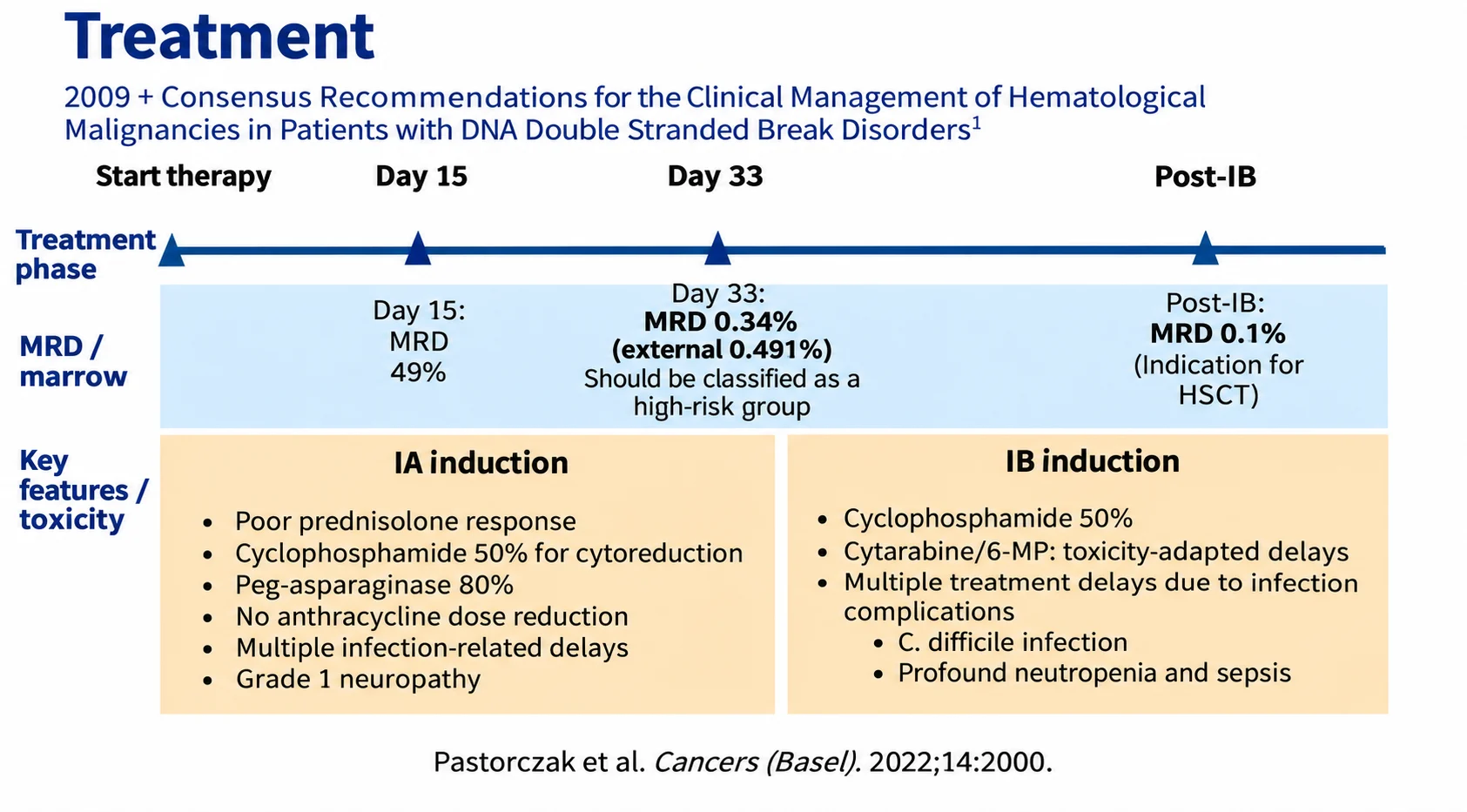
The patient demonstrated a poor initial response to prednisolone.
As treatment continued, cyclophosphamide doses were reduced, and pegaspargase was administered at 80% of the standard dose. Anthracycline doses were not reduced during the initial treatment phase.
Despite these adaptations, complications developed.
The patient experienced multiple severe infections and chemotherapy delays, along with neurological toxicity.
Her immune profile revealed profound abnormalities, including marked hypogammaglobulinemia and persistent lymphopenia.
Even following recovery of peripheral blood counts, lymphocyte levels remained substantially reduced.
These findings were particularly concerning because the patient already had an inherited immune disorder.
At the same time, the response to leukemia treatment was insufficient.
Measurable residual disease (MRD) remained high:
- Day 15: 48% MRD
- End of induction: 0.34% MRD
- After Protocol IB: 0.1% MRD
The persistence of detectable leukemia placed the patient in a high-risk clinical situation.
Under the treatment protocol, these findings supported consideration of more intensive therapy and allogeneic stem cell transplantation.
But both approaches presented considerable danger.
Further intensification risked additional severe infections and potentially life-threatening toxicity. Transplantation also carried substantial risks because of the patient’s DNA repair disorder, neurological condition, and immunodeficiency.
The team faced a difficult decision: how could they deepen the leukemia response without exposing the child to treatment she might not tolerate?
Why Blinatumomab Became an Option
The answer emerged from an important detail in the diagnostic workup: the leukemia expressed CD19.
This made blinatumomab, a CD19-directed bispecific T-cell engager, a potential alternative.
Blinatumomab works by simultaneously binding CD19 on malignant B-lineage cells and CD3 on T cells, bringing the two cell populations together and activating T-cell-mediated killing.
Its activity in B-cell acute lymphoblastic leukemia was already established, and growing clinical evidence supported its integration into pediatric treatment strategies.
However, this patient presented two unusual challenges.
First, she had B/T mixed-phenotype leukemia, rather than conventional B-ALL.
Second, she had a primary immunodeficiency characterized by profound lymphopenia.
Since blinatumomab depends on functional T cells to eliminate CD19-positive malignant cells, there was uncertainty about whether the patient’s compromised immune system could generate an adequate response.
The team also had to consider the possibility of CD19-negative relapse, particularly relevant in a leukemia with mixed-lineage characteristics.
Safety was another concern.
Blinatumomab can cause cytokine release syndrome (CRS) and neurological adverse events, including seizures and immune effector cell-associated neurotoxicity.
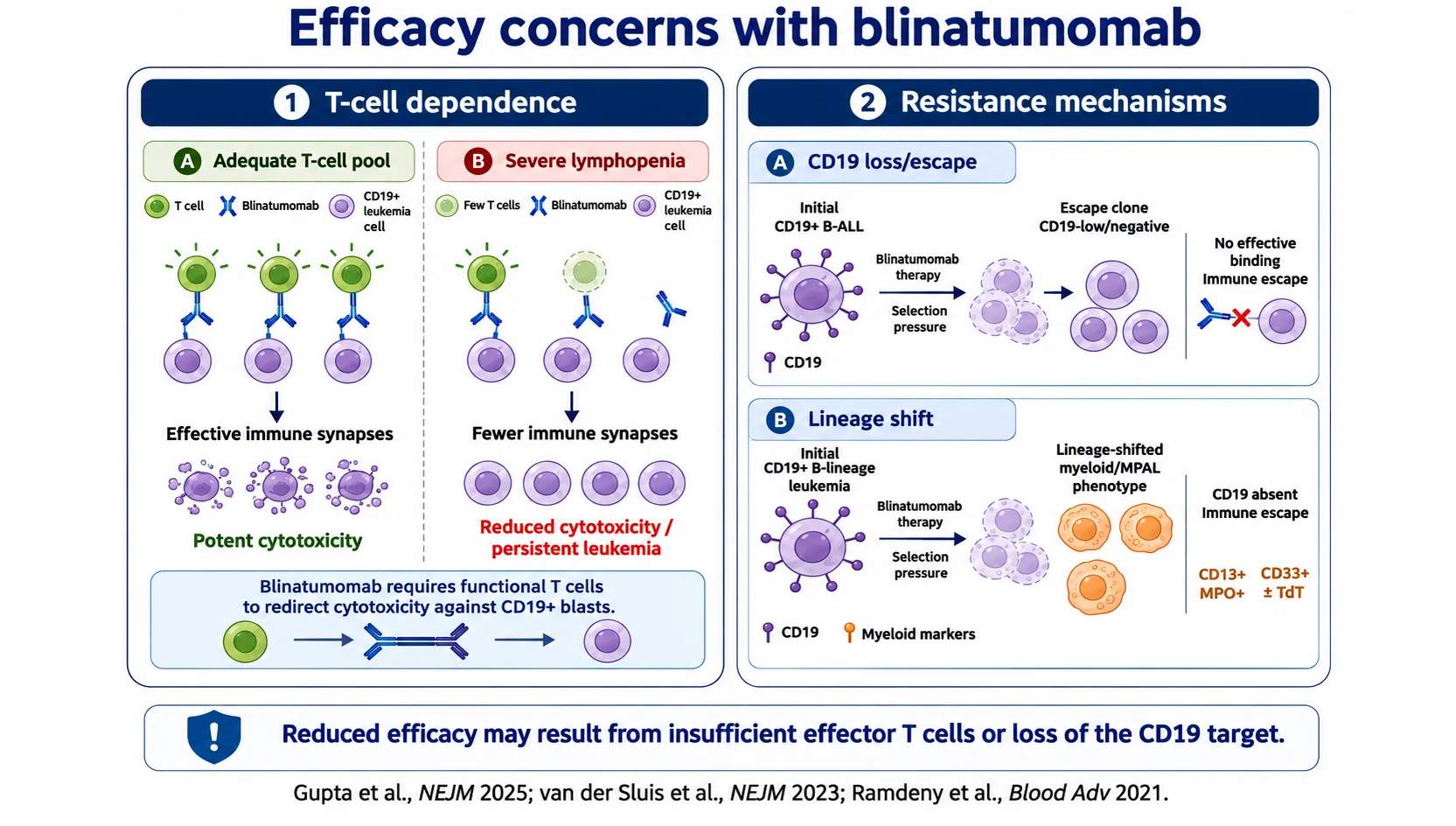
For a child with pre-existing neurological impairment, these complications required particularly careful consideration.
Prolonged hypogammaglobulinemia and infection risk were additional concerns.
Avagyan explained that the team sought advice from international experts while evaluating this treatment strategy.
At the time, clinical experience with blinatumomab in patients with ataxia-telangiectasia was extremely limited.
Nevertheless, continuing conventional intensive treatment was considered too dangerous.
“We decided not to do intensive chemotherapy and of course not to proceed with bone marrow transplantation.”
The team therefore selected blinatumomab as part of a toxicity-adapted treatment strategy, aiming to improve leukemia control without further intensive escalation.
A Deep Response After Immunotherapy
The first course of blinatumomab was administered following Protocol IB, when the patient’s MRD level remained at 0.1%.
The treatment was tolerated considerably better than the preceding chemotherapy.
Avagyan reported that the child developed only fever associated with grade 1 cytokine release syndrome during the initial blinatumomab treatment.
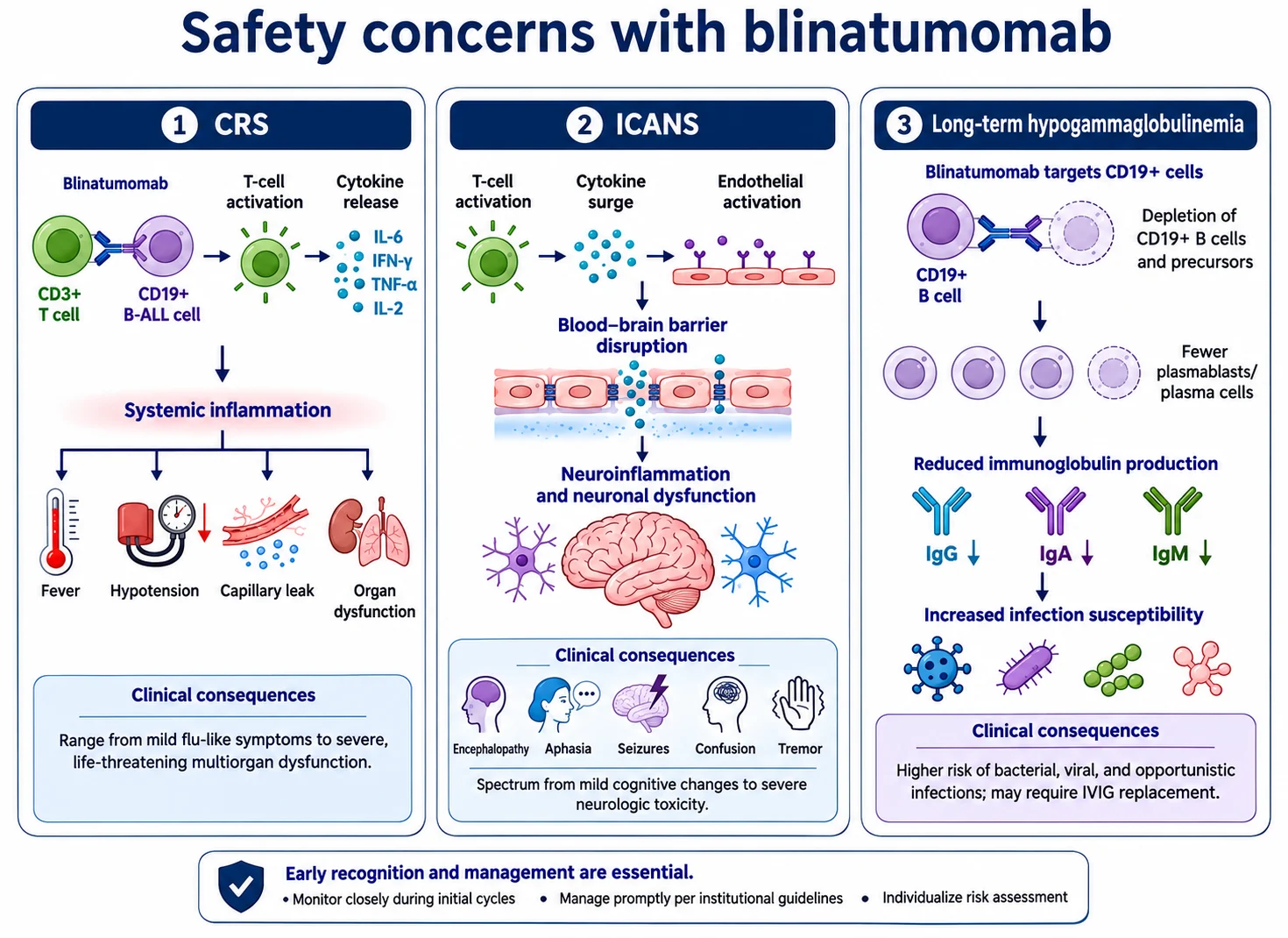
No severe neurological toxicity was reported.
Most importantly, the leukemia response deepened.
After two weeks of blinatumomab, testing at an external reference laboratory showed no detectable MRD.
For the clinical team, this represented a significant change in a patient whose residual leukemia had persisted despite earlier chemotherapy.
The patient subsequently continued treatment using an individualized combination of chemotherapy and immunotherapy.
During Protocol M, methotrexate was initially administered at a reduced dose of 1 g/m². Because of favorable tolerance, the dose was subsequently increased to 2 g/m².
Additional blinatumomab courses were incorporated into the treatment schedule.
In total, the patient received four two-week courses of blinatumomab, alongside modified chemotherapy.
Maintenance therapy was also adapted, with doses reduced to approximately 50% because of persistent lymphopenia.
Crucially, the child did not undergo allogeneic stem cell transplantation.
The MRD response and subsequent disease control were encouraging, particularly given the concerns about impaired T-cell function.
However, this was an individual case involving both blinatumomab and other antileukemic therapies. It cannot establish the effectiveness of blinatumomab alone or define an optimal treatment regimen for patients with similar disorders.
What the case does demonstrate is that clinically meaningful activity from a T-cell-dependent immunotherapy may still be possible in a patient with substantial baseline immune dysfunction.
That finding is especially interesting because immune impairment had initially been one of the principal reasons to question whether the treatment would work.
Remission Does Not Mean the End of the Clinical Challenges
At the time of Avagyan’s presentation, the patient remained in sustained complete remission.
For a child whose leukemia had responded inadequately to initial treatment and whose underlying disorder made intensive escalation particularly dangerous, this was an important outcome.
But Avagyan was equally clear that the child’s medical challenges had not ended.
Persistent hypogammaglobulinemia and lymphopenia continued to place her at risk of infection.
She experienced recurrent respiratory and urinary tract infections, requiring ongoing supportive management, including intravenous immunoglobulin (IVIG) replacement and antibacterial prophylaxis.
Another serious complication was chronic hemorrhagic cystitis associated with progressive telangiectasias involving the bladder.
These problems reflected the continuing effects of her underlying condition and the complexity of managing a child with both cancer predisposition and immunodeficiency.
The case therefore illustrates an important distinction between successful leukemia control and the broader health needs of patients with inherited cancer predisposition syndromes.
Even when leukemia enters remission, the underlying genetic disorder may require lifelong multidisciplinary care, infection prevention, surveillance, and management of organ-specific complications.
What This Case Means for Children With DNA Repair Disorders
Avagyan’s presentation brought together several challenges that rarely occur in isolation: a clinically convincing inherited DNA repair disorder without complete molecular confirmation, unusual leukemia immunophenotype, substantial primary immunodeficiency, and severe toxicity limiting conventional treatment.
The patient’s response to blinatumomab suggests that CD19-directed immunotherapy may provide an option in carefully selected circumstances where intensive chemotherapy or transplantation is considered excessively risky.
However, the experience remains a single case, and it should not be interpreted as establishing blinatumomab as standard treatment for B/T mixed-phenotype leukemia or leukemia associated with ataxia-telangiectasia.
Further clinical experience is needed to understand how baseline immune dysfunction influences treatment efficacy, which patients may benefit, and how best to manage neurological and infectious complications.
The genetic findings also reinforce the importance of access to comprehensive molecular diagnostics.
When a patient’s phenotype strongly suggests an inherited cancer predisposition disorder but initial sequencing identifies only one pathogenic variant, additional investigations may be essential for clarifying the diagnosis and informing family counseling.
Beyond the molecular and therapeutic questions, the case illustrates the value of adapting treatment to the patient rather than relying exclusively on protocol-defined escalation.
Avagyan’s team could not safely follow the conventional high-risk pathway. Instead, they used the leukemia’s CD19 expression to identify another treatment possibility, monitored the response, and adjusted subsequent therapy according to the child’s tolerance.
The outcome does not eliminate the uncertainties surrounding immunotherapy in patients with primary immunodeficiency. But it offers a clinical example of how careful biological assessment can create treatment opportunities when conventional options are limited.
For this child, the decisive question was not simply how to intensify leukemia treatment, but how to achieve disease control without causing further harm.
Written by Eliz Baloyan, MD, Features Writer and Editor at OncoDaily and CancerWorld
Watch the full video on YouTube.