
There is a photograph Anna Rathkopf took of her husband’s eyes in the rearview mirror of their car.
Jordan was driving her to cancer treatment.
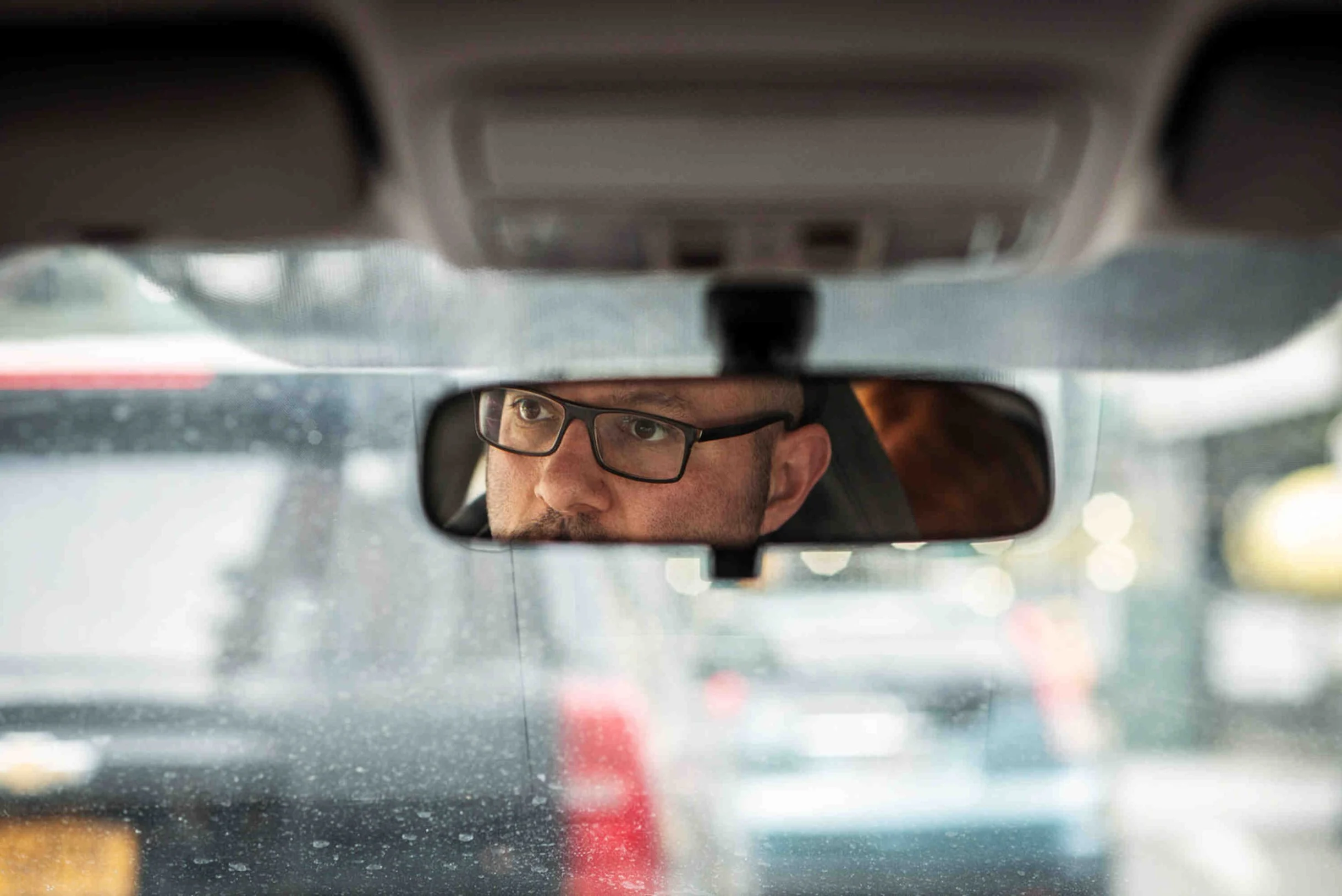
Photo credit: Anna Rathkopf, HER2: The Diagnosed, the Caregiver, and Their Son.
When Anna looked at the photograph, she saw care. She remembered feeling grateful that her husband was beside her, driving her to another appointment and helping her through the demands of treatment.
Jordan had a different reaction.
“I really don’t like this picture.”
When Anna asked him why, he told her something she hadn’t known.
“It reminds me of all the times I used to go to the car to cry because I didn’t want to talk to you and let you see how sad I was.”
For months, the car had been an ordinary part of their treatment routine. Anna had never known it was also a place where Jordan went to be alone.
“You can be together experiencing the same life event, but have totally different feelings and emotions connected to it.”
That realization would come to inform much of Anna and Jordan Rathkopf’s work as photographers and patient advocates.
Both professional photographers, they began documenting Anna’s breast cancer almost instinctively. Initially, the images were private, helping them navigate conversations that were difficult to have otherwise. Years later, those photographs became HER2: The Diagnosed, the Caregiver, and Their Son, a visual account of cancer, caregiving, parenthood and survivorship.
Through the experiences of one family, the project addresses a much broader question about the way illness is documented, whose perspectives are represented and how much of a person’s experience remains invisible, even to those closest to them.
At 37, the Life Anna Expected Changed
Anna was 37 when she discovered a lump in her breast. At the time, she had never heard of dense breast tissue. Her son, Jesse, was two and a half, and she and Jordan were hoping to have another child.
Instead, Anna found herself facing a diagnosis of triple-positive breast cancer.
What followed was a course of treatment that included surgery, chemotherapy, radiation, HER2-targeted therapy and long-term hormone suppression. Yet when Anna speaks about her experience with cancer, much of what stays with her has little to do with the treatment itself.
“All of a sudden everything that you think you will have disappears.”
Before starting chemotherapy, Anna had some idea of what lay ahead, at least physically. Hair loss was among the more familiar side effects, and something she had prepared herself for. Beyond that, she had little frame of reference for what a year of cancer treatment might look like.
“I did not expect that I will be a completely different person coming out of the year of treatment than I was, the person that was coming into the treatment.”
For Jordan, Anna’s diagnosis brought an unfamiliar role: that of a caregiver.
“Your life overnight just kind of changes as a family.”
Between medical appointments, raising Jesse and keeping up with freelance work, Jordan had plenty to occupy his days. Yet there were aspects of Anna’s experience that no amount of practical support could ease.
“There was a certain kind of powerlessness I felt as a care partner, watching someone you love just going through something so intense and not being able to really feel like you know how to help.”
Caring for Anna also meant navigating his own emotional needs, something for which Jordan felt ill-prepared.
“As a guy, I didn’t really know how to find help. And I didn’t have a lot of people to talk to.”
That largely unseen side of caregiving would later find its way into their photographs.
What They Saw Through the Lens
Photography was already part of Anna and Jordan’s professional lives. During treatment, they turned to a medium they both knew well, this time without the demands of a client or an audience.
“For us at the beginning, it was just a life-saving tool.”
For Anna, the fear of dying existed alongside the unsettling experience of watching her own body change. Some of those feelings were easier to express in front of a camera than in an ordinary conversation. The images gave them something tangible to return to, look at together and talk about.
“The photographs really helped to open up conversation between ourselves.”
Much of Jordan’s photography during treatment came from his position as a care partner. But Anna was documenting those same months from an entirely different vantage point.
“I thought I understood her until I started seeing the photos she was taking, and I didn’t understand the photos.”
The self-portraits, in particular, made him curious. He began asking Anna about her choice of subjects, the moments she chose to capture and what had prompted her to pick up the camera.
“Oh, you were doing that because you didn’t know who you were anymore. Oh, you were doing that because you were in so much pain.”
Even someone present for much of the treatment could only understand so much of what it was like to undergo it. Looking back, Jordan puts it succinctly:
“It was so different, what I saw, from what she felt.”
The Woman in the Mirror
Over the course of treatment, Anna took hundreds of self-portraits, many of which Jordan would only discover later.
In one photograph, she wears a pink wig. Knowing that chemotherapy would likely cause her hair to fall out, Anna had started experimenting with wigs, though she ultimately chose not to wear them. The portrait touches on a more personal question:
“I saw in the mirror a person who has cancer, but in my head, I was the healthy one. So how do you put together these two people?”
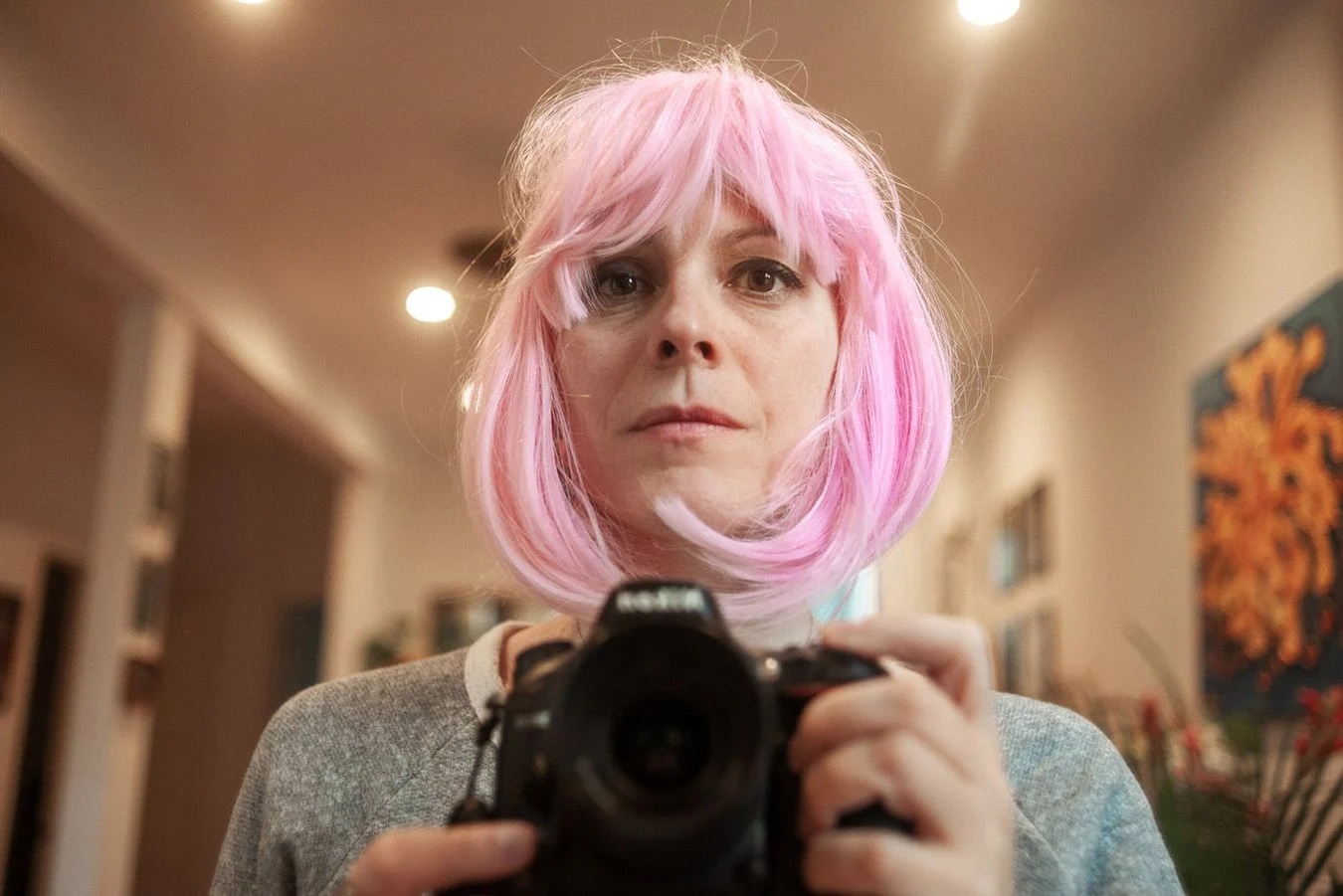
Photo: Anna Rathkopf / RATHKOPF
Behind the camera, Anna could decide how to portray herself, what to reveal and which moments to capture. These were small decisions, but they carried particular significance during treatment.
“It was about control. I needed to show some kind of control to myself in a situation where I felt completely powerless.”
Years later, those self-portraits became a visual bridge between the person she had been before treatment, the person she became during it and the person looking back at those images now.
They also changed the balance of the story Jordan and Anna were telling.
Jordan was conscious of the danger of always making Anna the subject – the woman with cancer being observed by somebody else.
Her self-portraits gave her authorship.
“It was important to us that there was this balance where she was the narrator of her own life.”
That distinction would eventually become central to their advocacy work.
Cancer Does Not End When Someone Looks Healthy Again
The photographs also challenge a familiar narrative of cancer, one in which diagnosis is followed by treatment and recovery marks the end of the story. Much of the work Anna faced, however, extended beyond the treatment room.
“Then comes survivorship, when you have to learn how to live with what happened.”
Survivorship also changes the social dynamics around a person with cancer. Hair grows back, medical appointments become less frequent, and friends and family begin to resume their ordinary lives. Jordan noticed a shift in how people responded to Anna during this period.
“It feels like a lot of the empathy starts to fade away the healthier a person starts to look.”
They have friends living with stage IV disease who may not outwardly appear ill at all. Anna herself continues to live with the effects of treatment and medication years after active treatment.
Appearance can become an unreliable shorthand. Someone looks healthy, so people assume they are healthy. Someone looks happy, so they assume the fear has passed.
But the person living inside that body may be experiencing something entirely different.
As advances in cancer treatment allow more patients to live longer, Anna and Jordan have become increasingly interested in the quality of those additional years.
Chronic pain, the side effects of long-term medication and the psychological burden of cancer have become important considerations in survivorship care. Jordan welcomes the growing recognition of these needs.
“It’s not just the physical side. It’s the emotional and mental side, too.”
The way cancer is portrayed outside the clinic can also shape how patients come to understand their own experiences.
Anna remembers receiving informational brochures during treatment featuring smiling women with shaved heads and immaculate makeup. The images were presumably intended to offer reassurance, but they had the opposite effect.
“I didn’t even open those brochures. I didn’t even look because I was like, that’s not me.”
Jordan describes this tendency as “flattening” illness. Hospitals, pharmaceutical companies and fundraising campaigns each have their own communication goals. In public storytelling, cancer is often framed through suffering, courage or triumph, leaving little room for the contradictions of everyday life with the disease.
“Once you flatten it, you actually lose so much of the truth.”
For Anna, authentic representation also serves a more practical purpose. Seeing something of oneself in another patient’s story can offer a sense of companionship during an isolating period of life. That opportunity is lost when the images bear little resemblance to the experiences of the people they are meant to reach.
Becoming Experts Overnight
Before Anna’s diagnosis, cancer was something the Rathkopfs understood largely from a distance. Anna had little knowledge of the biological differences between cancers or the factors that determine a patient’s course of treatment.
“I thought you just got cancer, received treatment, and then you were cured.”
For Jordan, even the terminology surrounding his new responsibilities was unfamiliar.
“I don’t know that I knew what a caregiver was. I heard the word, but I always thought it meant for old people.”
Within days, the couple found themselves navigating a vocabulary of medical terms, abbreviations and treatment options, all while absorbing the news of Anna’s diagnosis.
“We knew nothing, except we had to become experts overnight.”
Less than a week after the diagnosis, Jordan was already reading medical journals to understand Anna’s prognosis. Meanwhile, Anna was trying to make sense of the information she received from doctors and nurses. They began recording their medical conversations so they could revisit them later.
“It was really overwhelming.”
It was under these circumstances that Anna and Jordan had to make some deeply personal decisions, including one they still think about years later.
A Decision Made in the Shadow of Diagnosis
Soon after Anna’s diagnosis, the couple had to consider fertility preservation. They had been hoping to have another child, but what had once been a private conversation about their family’s future was now part of an urgent medical discussion.
Concerned about delaying treatment and the hormone-sensitive nature of Anna’s cancer, they decided against fertility preservation.
Jordan is careful not to frame their experience as a criticism of the physicians whose immediate priority was Anna’s survival. Nor does he necessarily regret the choice itself.
“I don’t know that we would have done anything different, but I do feel like we made a decision before we fully understood the implications of that decision.”
Anna was also being asked to weigh the future of her family at a time when she was still processing the news that she had cancer.
“I was in such a state of shock that I was not even able to make any decisions.”
As cancer survival improves, conversations about fertility and family planning are becoming an increasingly important part of oncology care. For younger patients in particular, the decisions made before their first course of treatment may have consequences that extend decades into survivorship.
“Those kinds of decisions, especially for people under 40 or 50, can impact people for their entire rest of their lives if they’re fortunate enough to have a long life.”
When Jordan reflects on what a more thorough discussion might have changed for them, he leaves his sentence unfinished.
“I do think that there could have been ways, maybe it was explained a little bit more thoroughly to us so that we would…”
Anna finishes his thought.
“I would feel that I made the right decision.”
What Children Hear, Even When We Don’t Tell Them
The decision about fertility preservation would eventually become a conversation involving someone who had been too young to take part in it at the time: their son, Jesse.
He was two and a half when Anna was diagnosed. Much of the couple’s attention in those early days was directed toward preserving a sense of normality for him.
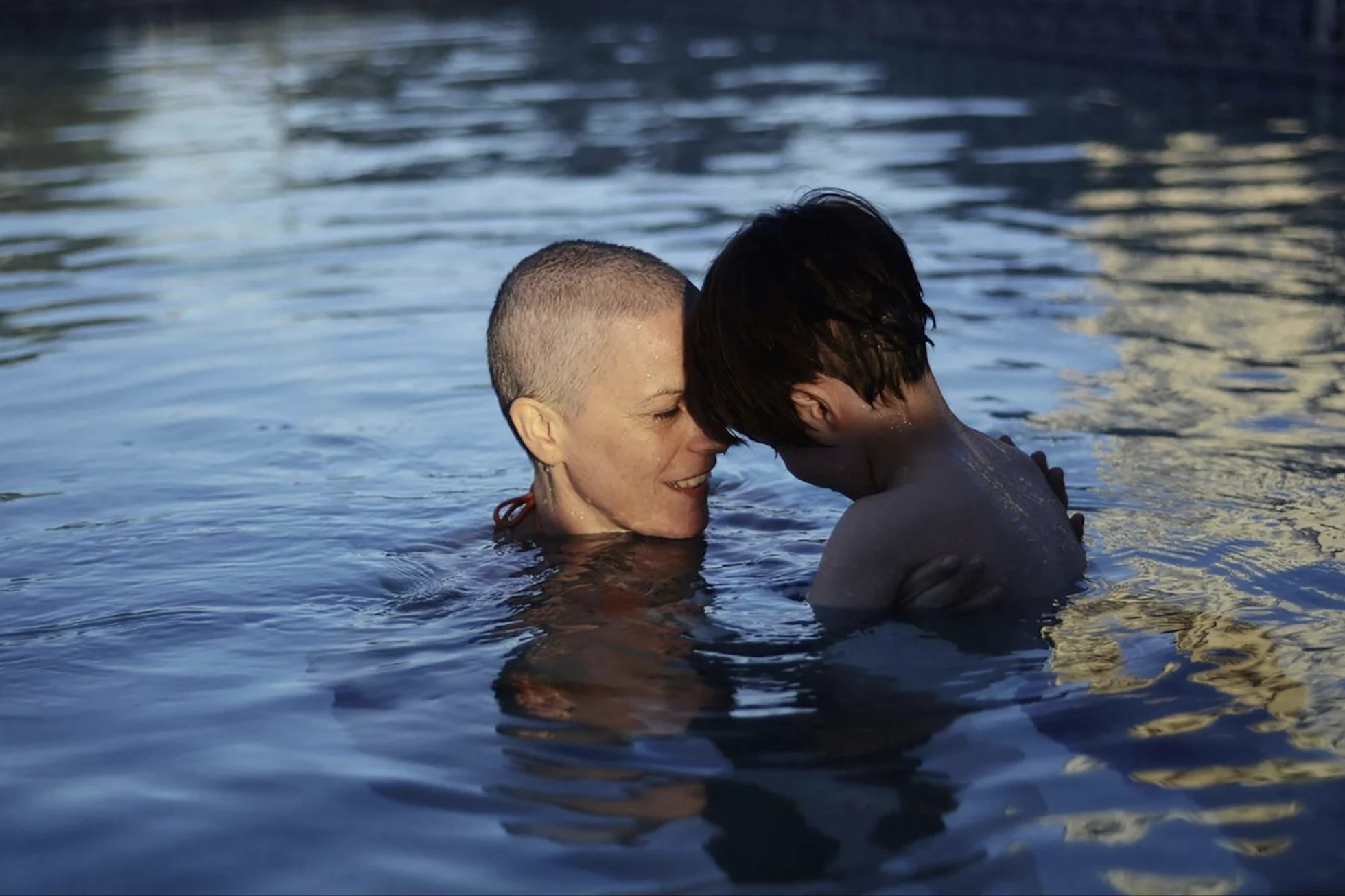
Anna Rathkopf with her son, Jesse, between chemotherapy and radiation treatments for breast cancer. Photo: Anna Rathkopf/LinkedIn
“Our first thought was everything about him. Protect him, save him, make sure that I’m here as long as possible.”
It was only later that Anna began to understand how much Jesse had picked up during treatment.
Her hair had already started growing back when, one day, she read him a children’s book in which an elephant dies from mushroom poisoning. Jesse became hysterical.
“He started to cry that I will die, that the mushrooms will kill me.”
An ordinary moment of reading together had brought to the surface a fear that Jesse had apparently been carrying for some time.
Years later, another conversation caught his parents off guard. One evening, Jesse was crying because he wanted a sibling.
“I would be such a good brother. Is it because of me you don’t want another kid?”
He had known about his mother’s cancer but had never understood its connection to her fertility. In the absence of an explanation, he had come up with one of his own. That evening, Anna told him how much she, too, had wanted another child.
For Jordan, navigating these conversations also meant drawing on his own childhood. He was around 12 when his mother was diagnosed with breast cancer, a subject rarely discussed within his family. It wasn’t until Anna’s diagnosis that he began to appreciate the lasting influence of that experience.
He and Anna have taken a more open approach with Jesse, though Jordan still questions how much a child should be told.
“I don’t know where the line is with children in terms of what is helpful to them versus what could be too much.”
What the Rathkopfs have learned through raising Jesse is that children often form their own understanding of illness long before they begin asking questions about it. Sometimes, those questions come years after the adults think the most difficult part is over.
Who Gets to Tell the Story?
Long before Anna and Jordan began advocating for patients and caregivers, they were using photography to make sense of their own family’s experience with cancer. Sharing that work publicly had never been the original intention.
During the COVID-19 pandemic, Susan G. Komen approached the couple about featuring their story in a campaign. The response made them realize there was an audience for the kind of imagery they had been creating privately – photographs that left room for the complexities of living with cancer.
Today, through their photography studio, the Rathkopfs collaborate with patients, caregivers, advocacy groups, medical institutions and healthcare organizations. Their personal history informs much of that work, though they are careful about the assumptions that can come with it.
“We never assume that because we had our experience, that it’s anything like yours.”
When working with patients and caregivers, Anna and Jordan invite them into the creative process, giving them a say in what is photographed and how their experiences are presented.
“Who else knows the story of their life better than the people who are going through it?”
For Jordan, this is where their profession and patient advocacy intersect.
“For us, the advocacy is really representation.”
That principle now lies at the heart of the Rathkopfs’ work. A photograph can capture a moment, but it cannot fully convey the experience of the person within it.
The camera may frame the moment, but its meaning belongs to the person who lived it.
Written by Eliz Baloyan, MD, Features Writer and Editor at OncoDaily and CancerWorld
Interview by Carmen Monge-Montero, Lead of the OncoDaily Lived Experience Advocacy Hub