
Key takeaways
- Biomarker-based therapy has evolved from early cancer markers to targeted therapies, next-generation sequencing, immunotherapy, and liquid biopsy.
- Liquid biopsy can complement tissue testing by offering a minimally invasive way to capture molecular information from multiple tumor sites and subclones.
- The same biomarker does not always predict the same treatment response across different tumor types, making biological context and tumor heterogeneity important.
- Tumor-agnostic therapy shifts treatment selection from the organ of origin toward the molecular alteration driving the cancer.
At the Community Oncology Global Congress (COGC 2026), organized by OncoDaily, Allen Chen, Oncology Diagnostics and Liquid Biopsy Leader, VP of Medical Affairs and Clinical Development at BillionToOne, gave a scientific primer on biomarker-based therapy, tracing how discoveries made over nearly two centuries have gradually changed the way cancer is classified, tested, and treated.
From the first cancer-associated proteins to next-generation sequencing, liquid biopsy, and tumor-agnostic therapy, his presentation followed the milestones that brought precision oncology to its current point – and the scientific questions that will shape where it goes next.
From the First Biomarkers to Precision Medicine
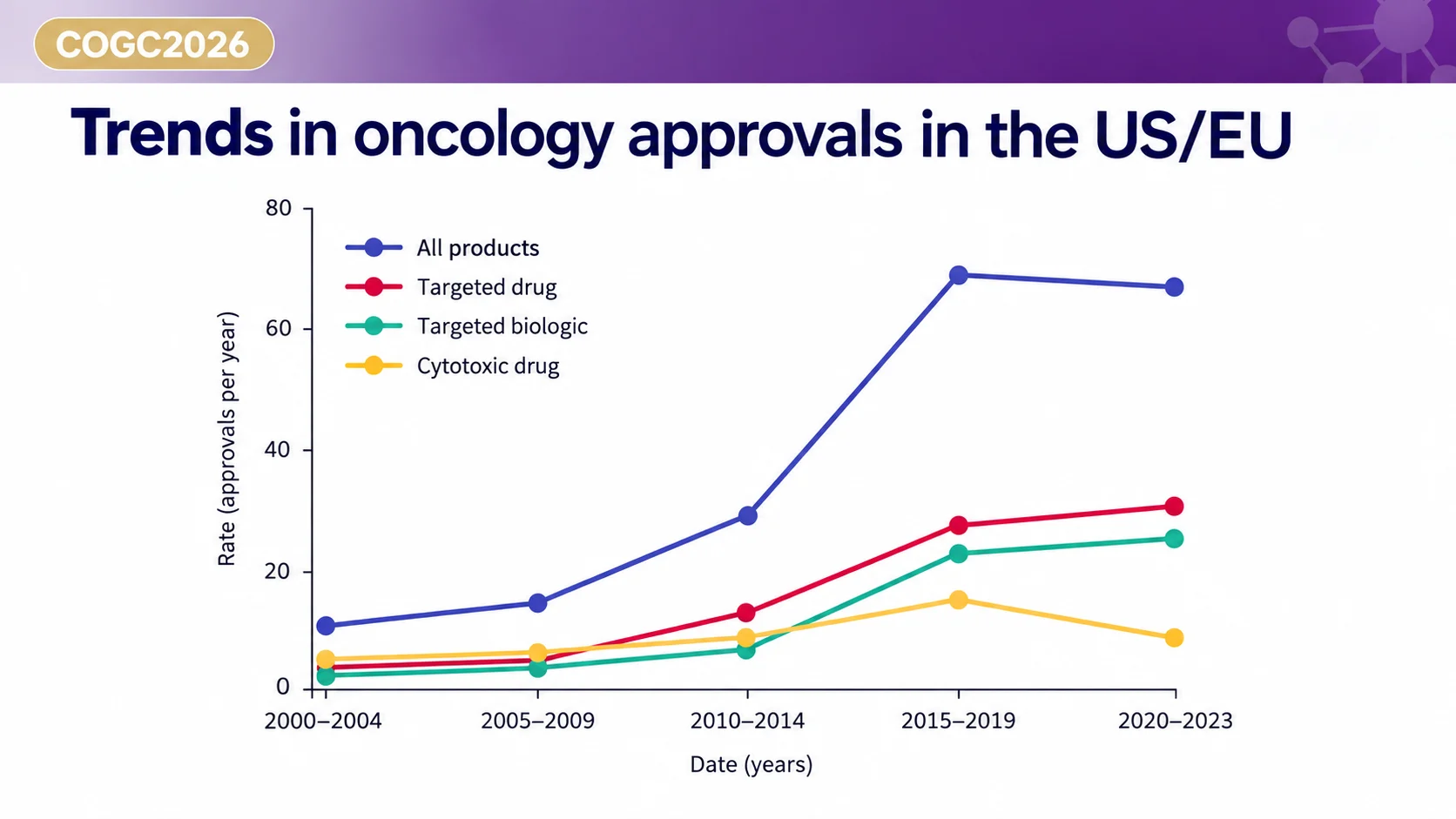
Interest in targeted drugs and targeted immunotherapies has grown rapidly, and these precision medicine approaches now account for a large share of new oncology drug approvals.
The graph below shows the growth in targeted therapies and targeted immunotherapies.
The history of cancer biomarkers reaches back to 1846 and the discovery of Bence Jones proteins – monoclonal free immunoglobulin light chains found in urine and associated with plasma cell disorders such as multiple myeloma.
Nearly a century later, the identification of hormone receptors in breast and prostate cancer helped establish endocrine therapy as one of the earliest examples of treatment being guided by tumor biology.
The 1960s and 1970s brought another group of biomarkers into routine oncology, including PSA, CEA, CA-125, and CA 19-9, many of which remain important for disease monitoring.
The major transformation, however, came during the past three decades. Biomarkers such as HER2, BCR-ABL, and EGFR became linked to specific targeted therapies, helping establish the modern precision oncology model.
That evolution accelerated further with the arrival of next-generation sequencing, which made simultaneous profiling of multiple genes possible, followed by checkpoint inhibitors and increasingly sophisticated molecular testing strategies.
What Liquid Biopsy Adds to Molecular Profiling
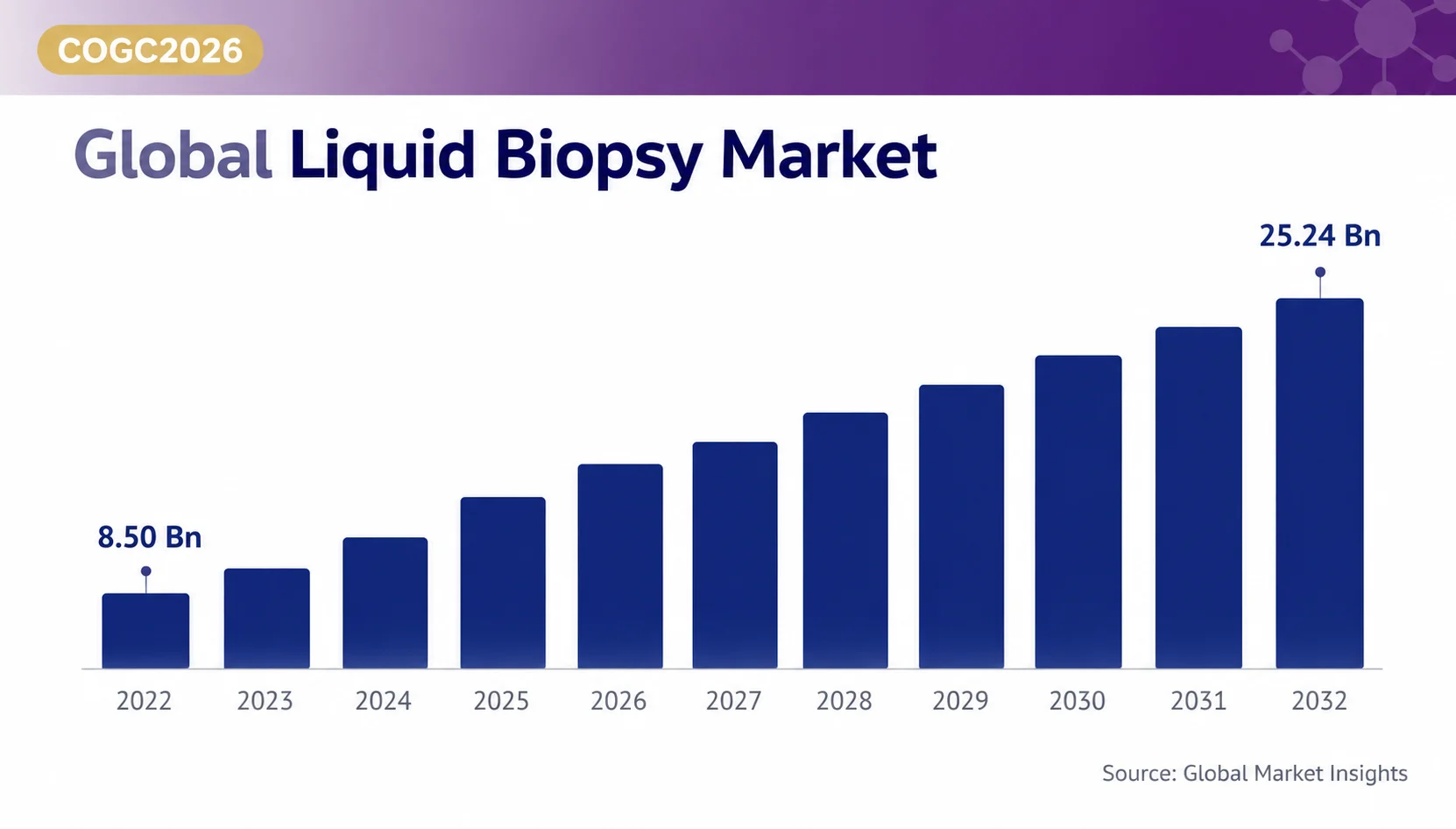
Liquid biopsy has become one of the fastest-growing components of precision oncology because it can obtain molecular information through a minimally invasive blood sample, often with a shorter turnaround time than tissue testing.
Its value also lies in its ability to capture tumor heterogeneity. A single tissue biopsy samples one location at one moment in time, while circulating tumor-derived material can potentially reflect genetic information released from multiple tumor sites and subclones.
The graph below shows the projected growth of the global liquid biopsy market over the coming decades.
The decision to use liquid biopsy still depends on the clinical situation. It can be particularly useful when:
- Tissue is insufficient or unavailable.
- Disease is advanced or metastatic.
- The cancer has progressed through therapy and new molecular information is needed.
- Rapid molecular results are clinically important.
- Minimal residual disease needs to be assessed after treatment in selected settings.
One emerging application is minimal residual disease assessment after surgery, including in early-stage colorectal cancer, where molecular evidence of residual disease may help inform decisions about adjuvant therapy.
The Rise of Tumor-Agnostic Therapy
Over the past decade, precision oncology has moved toward another major concept: tumor-agnostic therapy.
Traditionally, cancer treatment has been organized largely according to the organ where the tumor originated. Tumor-agnostic therapy instead selects treatment according to a molecular biomarker that may occur across several different cancer types.
In this model, the biomarker becomes central to treatment selection regardless of the tumor’s original anatomical classification.
At the time of the presentation, Dr. Chen highlighted eight FDA-approved tumor-agnostic therapies, targeting biomarkers including MSI, NTRK, RET, BRAF, and HER2.
This represents one of the clearest expressions of precision medicine: identifying a biologically relevant alteration and matching it with a therapy designed to act on that pathway.
But moving beyond organ-specific oncology also introduces important scientific questions.
The Limits of a Tumor-Agnostic Approach
The same molecular alteration does not necessarily produce the same biological behavior across every cancer type.
A drug may produce a high response rate in one tumor while showing much less activity in another cancer carrying the same alteration. The molecular target matters, but so does the biological context in which that target exists.
Tumor heterogeneity adds another layer of complexity. Different clones within the same cancer may carry different mutations, while co-mutations and differences in the tumor microenvironment can influence treatment response and contribute to resistance.
Biomarker definitions themselves can also create uncertainty. Tumor mutational burden, for example, does not have a universally consistent cutoff across all assays, and different sequencing platforms or laboratories may classify patients differently.
The evidence supporting tumor-agnostic approvals also needs to be interpreted carefully. Many approvals have been based on single-arm basket trials, sometimes involving relatively small numbers of patients and using surrogate endpoints such as response rate rather than randomized comparisons of overall survival.
Rare or underrepresented tumor types create a further problem. If very few patients with a specific histology are included in the original studies, the true magnitude of benefit for that particular cancer may remain uncertain.
Post-approval evidence is therefore important, because real-world outcomes may not always reproduce the magnitude of benefit observed in the studies that initially supported accelerated approval.
Trial Design Beyond Tumor Type
Tumor-agnostic therapy represents the culmination of decades of progress in biomarker discovery, molecular profiling, and targeted treatment, but the field continues to expand.
Trials are now investigating additional tumor-agnostic approaches involving oncogenic drivers such as ALK, ROS1, NRG1, and KRAS, among others.
Developing these therapies will also require a different clinical trial structure.
Traditional oncology trials are commonly organized around a particular organ or tumor type. Tumor-agnostic drug development increasingly requires cross-tumor basket trials, where patients are enrolled according to a shared molecular alteration rather than the anatomical origin of their cancer.
That shift can make it possible to study rare molecular subgroups that would otherwise be difficult to enroll within individual disease-specific trials.
From Molecular Profiling to Treatment Eligibility
The continued expansion of biomarker-based therapy ultimately depends on the ability to identify patients who carry the relevant molecular alterations.
That makes the broad deployment of next-generation sequencing panels increasingly important. As the number of actionable biomarkers grows, sequential single-gene testing becomes less practical, while broader molecular profiling can identify several potential treatment opportunities at once.
The direction of oncology is therefore moving toward an increasingly integrated model: molecular profiling identifies the biology, biomarkers guide treatment selection, and new trial designs test whether those strategies can work across traditional tumor boundaries.
The scientific challenge ahead will be determining when a biomarker is powerful enough to transcend tumor type – and when the biology of the individual cancer still matters.
Written by Eliz Baloyan, MD, Features Writer and Editor at OncoDaily and CancerWorld
Watch the full video on YouTube.