
Key takeaways
- Kuwait's AML population presents a distinct clinical picture, with a median age of 50 years and a diverse patient population, highlighting the importance of adapting international treatment guidelines to local realities.
- Comprehensive molecular profiling is transforming AML management at KCCC, with approximately 90% of patients harboring at least one detected driver mutation, enabling more precise risk assessment and treatment selection.
- Genetic risk strongly influences treatment response, with intensive chemotherapy achieving remission rates exceeding 90% in favorable-risk AML but approximately 30% in adverse-risk disease in the KCCC cohort.
- Azacitidine-venetoclax offers an important treatment option for patients unsuitable for intensive chemotherapy, demonstrating meaningful activity across genetic risk groups, including adverse-risk disease.
- MRD monitoring is becoming central to personalized AML care, helping clinicians assess treatment response, refine relapse risk, and guide decisions about consolidation therapy and transplantation.
At LeukO 2026: Global Virtual Congress on Leukemias, organized by OncoDaily, Ahmad Alhuraiji, Consultant Hematologist at Kuwait Cancer Control Center (KCCC) and member of the KCCC AML Working Group, presented a practical approach to acute myeloid leukemia (AML) management in Kuwait, drawing on real-world clinical experience, molecular profiling, and risk-adapted treatment strategies.
AML treatment is becoming increasingly personalized, with genetic alterations, measurable residual disease (MRD), and patient fitness playing central roles in clinical decision-making. But translating international recommendations into everyday practice requires understanding the patients being treated, the therapies available, and the limitations of the local healthcare system.
Using data from 192 consecutive patients, Alhuraiji explored how a unified, molecularly informed approach is shaping AML care in Kuwait, where a relatively young and ethnically diverse patient population presents both opportunities and challenges.
A Different Picture of AML in Kuwait
One of the most striking features of Kuwait’s AML population is its age.
While AML is predominantly diagnosed in older adults in many Western countries, the 192 patients treated at KCCC had a median age of 50 years, with only approximately one-third older than 60.
This difference has important implications for treatment planning.
Younger patients may be more likely to tolerate intensive chemotherapy and potentially proceed to allogeneic hematopoietic stem cell transplantation (HSCT), although age alone does not determine treatment eligibility.
The cohort also reflected Kuwait’s diverse population. Approximately 60% of patients were expatriates, primarily from Arab countries and South and Southeast Asia.
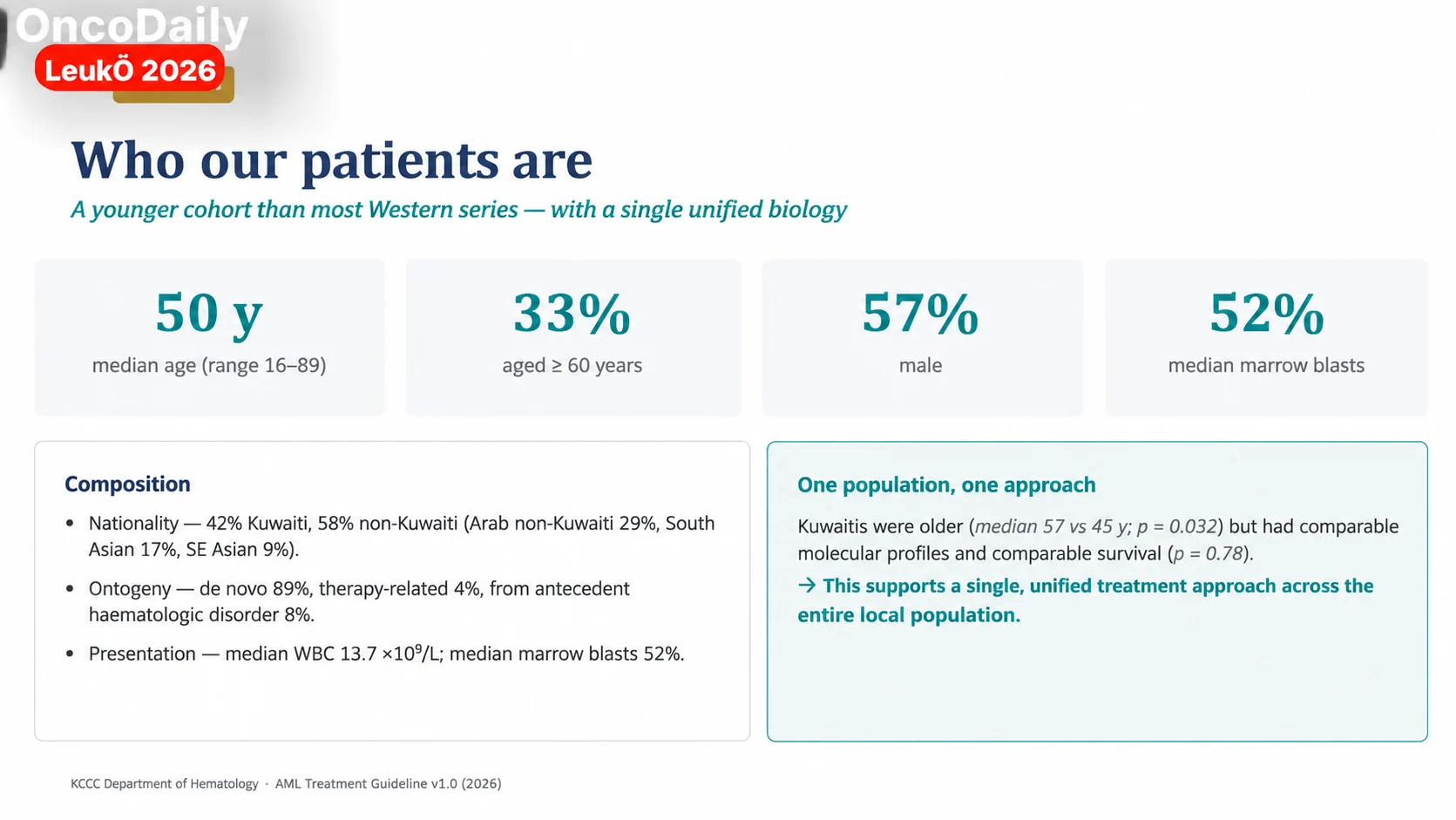
Alhuraiji highlighted an important observation: although Kuwaiti patients were generally older than non-Kuwaiti patients, the investigators found no statistically significant differences in their molecular profiles or survival outcomes.
For the KCCC team, these findings supported the use of a consistent diagnostic and treatment framework across the patient population.
Another defining feature of the center’s approach is the availability of in-house next-generation sequencing (NGS).
Rather than relying exclusively on morphological findings or a limited number of molecular markers, the team uses the Oncomine Myeloid NGS panel to characterize leukemia-associated genetic alterations.
The results demonstrated the value of comprehensive profiling.
Approximately 90% of patients had at least one detected driver mutation, while nearly two-thirds harbored multiple mutations.
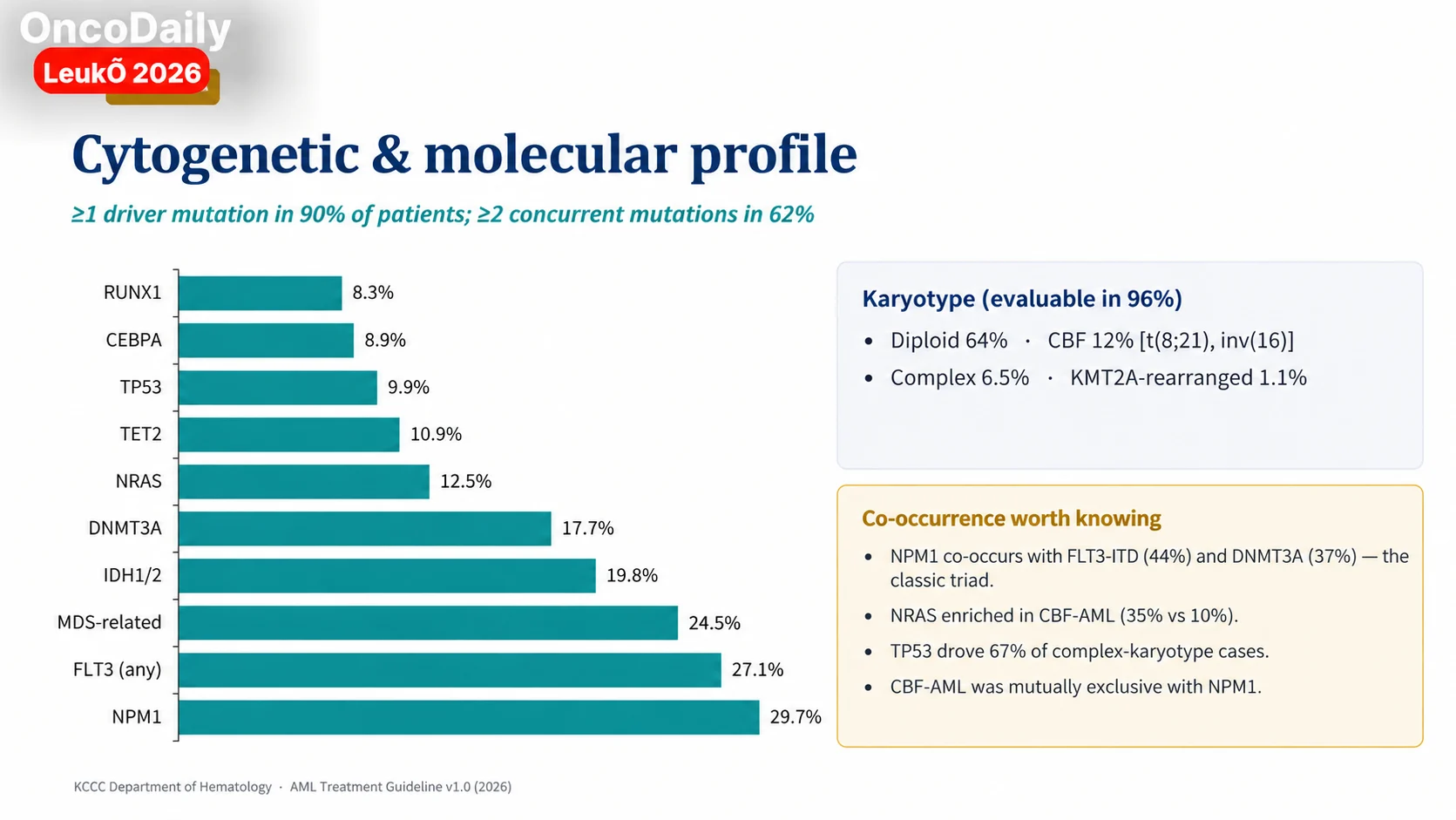
NPM1 was the most frequently identified mutation, occurring in approximately 30% of patients, followed by FLT3 alterations and mutations involving myelodysplasia-related genes.
The investigators also identified associations between particular genetic findings. NRAS mutations were enriched in patients with core-binding-factor AML, while approximately two-thirds of patients with complex karyotypes carried TP53 mutations.
These observations illustrated the biological heterogeneity of AML within the cohort.
They also reinforced why identifying a patient’s genetic profile is essential before selecting treatment.
When Genetics Changes the Treatment Plan
The relevance of molecular profiling became particularly clear when Alhuraiji examined treatment responses across different genetic risk groups.
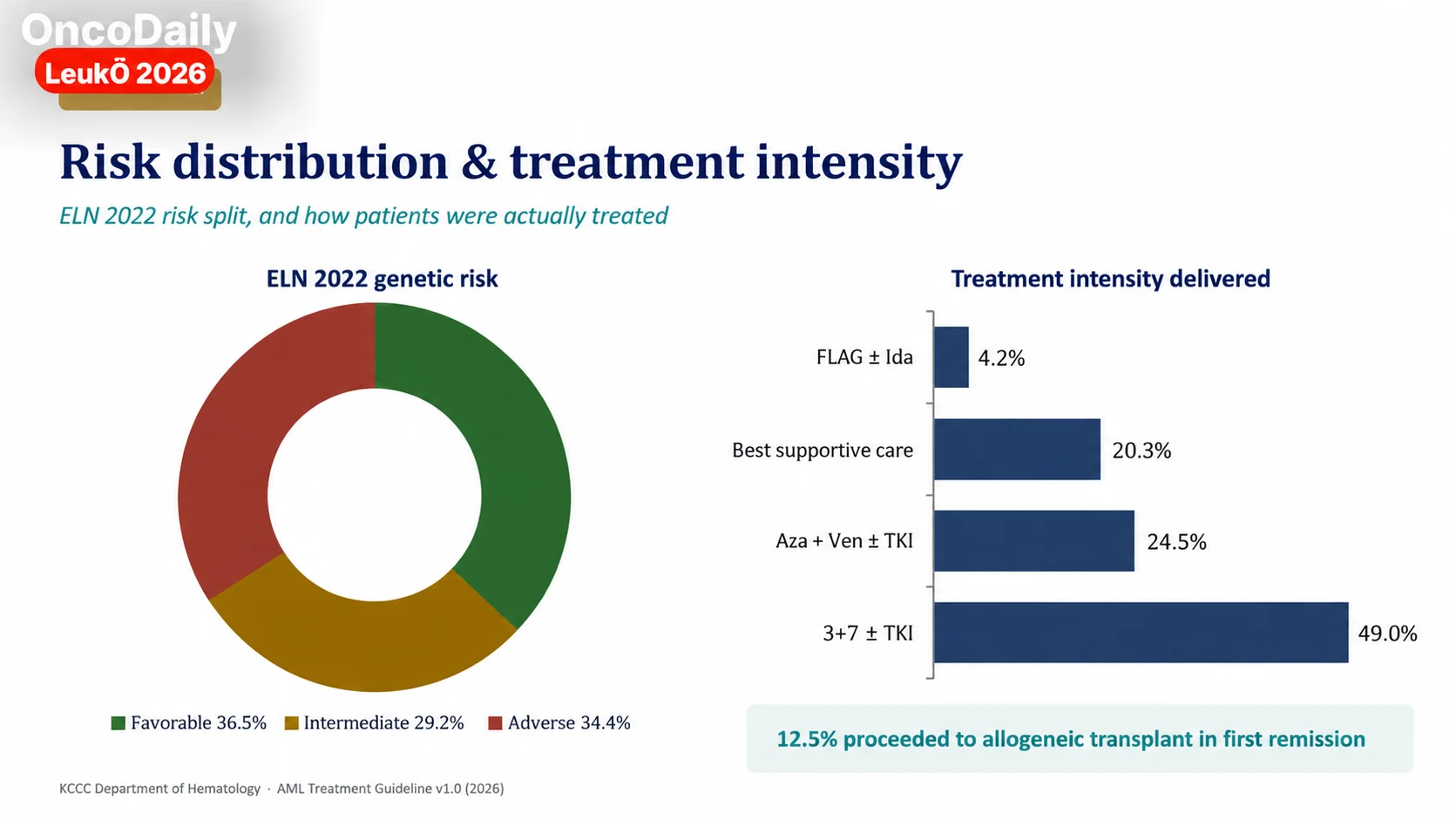
Using European LeukemiaNet (ELN) criteria, approximately one-third of patients were classified as favorable risk, one-third as adverse risk, and the remainder as intermediate risk.
However, the response to treatment differed substantially.
Among patients receiving conventional intensive induction with cytarabine and an anthracycline, commonly known as the 7+3 regimen, complete remission rates exceeded 90% in the favorable-risk group but fell to approximately 30% among patients with adverse-risk genetics.
The difference demonstrated how strongly disease biology can influence response to the same treatment.
Patients with favorable-risk AML may achieve excellent outcomes with established chemotherapy-based strategies, while adverse-risk disease frequently requires a different approach and early consideration of transplantation.
The results with azacitidine plus venetoclax offered another perspective.
In the KCCC cohort, response rates among patients receiving this lower-intensity combination were reported to be approximately 62% across genetic risk groups, including patients with adverse-risk disease.
These observations were encouraging, particularly because azacitidine-venetoclax is generally used in patients who are older or considered unsuitable for intensive induction chemotherapy.
However, the patients receiving intensive and lower-intensity treatment differed in their clinical characteristics, so the institutional results should not be interpreted as a direct comparison of treatment effectiveness.
Alhuraiji emphasized that azacitidine-venetoclax is an active therapeutic option rather than simply a fallback for patients unable to receive intensive chemotherapy.
At KCCC, approximately half of the cohort received intensive 7+3-based treatment, while around one-quarter received azacitidine-venetoclax. Nearly one-fifth received best supportive care, illustrating that even in a relatively young population, some patients present with disease or comorbidities that make antileukemic treatment difficult.
For clinicians, these findings highlight a central principle: the optimal AML treatment depends on both the biology of the leukemia and the condition of the patient receiving it.
Why the First Treatment Decision Cannot Always Be Rushed
AML is a hematologic emergency, but Alhuraiji emphasized the importance of distinguishing situations requiring immediate intervention from those in which a brief period of diagnostic evaluation may improve treatment selection.
In clinically stable patients, waiting for essential cytogenetic and molecular results can help clinicians choose a more appropriate treatment strategy.
This is particularly relevant as AML classification increasingly incorporates disease-defining genetic abnormalities that influence diagnosis, prognosis, and therapeutic decisions.
The diagnostic workup at KCCC combines morphology, flow cytometry, cytogenetics, molecular testing, and assessment of organ function and patient fitness.
However, some clinical situations cannot wait.
Patients presenting with hyperleukocytosis or leukostasis may require urgent cytoreduction and supportive management. Tumor lysis syndrome also demands careful prevention and monitoring, particularly during the initiation of venetoclax-based treatment.
Another essential priority is the immediate recognition of acute promyelocytic leukemia (APL).
When APL is suspected, treatment with all-trans retinoic acid (ATRA) should begin promptly while confirmatory testing is arranged, because treatment delays can have life-threatening consequences.
Alhuraiji noted that KCCC has access to urgent diagnostic testing, including flow cytometry and fluorescence in situ hybridization (FISH), even during weekends.
He also emphasized the importance of responding rapidly to fever and suspected infections in patients with AML, whose immune function may be severely compromised by the disease or its treatment.
These examples illustrate that precision AML care begins before the definitive chemotherapy regimen is selected.
The immediate priorities are to stabilize the patient, recognize dangerous complications, and obtain the information needed to guide treatment safely.
A Risk Score Must Match the Treatment
One of the most clinically relevant distinctions in Alhuraiji’s presentation concerned how genetic risk is interpreted.
Historically, AML risk assessment has relied heavily on the ELN classification developed from patients receiving intensive chemotherapy.
The ELN 2022 recommendations refined this approach by incorporating advances in molecular genetics.
Important changes included:
- Removing the FLT3-ITD allelic ratio from risk classification,
- Recognizing in-frame mutations affecting the bZIP region of CEBPA as favorable-risk alterations,
- Incorporating several myelodysplasia-related gene mutations into the adverse-risk category when applicable.
These changes have direct consequences for clinical decision-making.
A patient previously considered intermediate risk may be assigned a different category once the complete molecular profile is available.
But Alhuraiji highlighted another important development: risk classification should reflect the type of treatment a patient is expected to receive.
The ELN 2024 recommendations introduced a separate genetic risk framework for patients receiving less-intensive therapies, including azacitidine-venetoclax and azacitidine-ivosidenib.
This framework recognizes that the prognostic effects of specific mutations may differ according to the treatment administered.
For example, NPM1 and certain IDH alterations can be associated with favorable outcomes under appropriate lower-intensity regimens, while activating signaling mutations involving FLT3 or RAS may indicate a less favorable prognosis.
TP53-mutated disease remains particularly challenging.
The distinction matters because a genetic alteration associated with poor outcomes after intensive chemotherapy does not necessarily carry the same prognostic implications with a different therapeutic approach.
For Alhuraiji, molecular testing is therefore not simply a method of assigning patients to favorable, intermediate, or adverse categories.
It provides information that must be interpreted alongside the intended treatment, the patient’s fitness, and the clinical objectives.
MRD: The Information That Morphology Cannot Provide
Genetic risk assessment is essential at diagnosis, but it does not fully determine what happens after treatment begins.
Once remission is achieved, clinicians need to know whether small populations of leukemic cells remain and whether those cells may increase the risk of relapse.
This is where measurable residual disease (MRD) becomes especially important.
Alhuraiji described MRD as a central component of treatment planning at KCCC, particularly when deciding whether a patient should proceed to stem cell transplantation.
Depending on the disease’s biological characteristics, MRD may be assessed using multiparameter flow cytometry, quantitative PCR, or appropriately validated molecular sequencing techniques.
Each method has different advantages, sensitivities, and limitations.
For patients with NPM1 mutations or certain recurrent fusion genes, molecular testing can provide highly sensitive measurements of residual leukemia.
The updated 2025 ELN-DAVID MRD recommendations also support ultrahigh-sensitivity NGS-based assessment for FLT3-ITD-mutated AML in defined treatment settings.
Importantly, these recommendations introduce a more detailed interpretation of MRD results through three clinical response categories: optimal, warning, and high risk of treatment failure.
Rather than treating every detectable molecular signal as equivalent, the framework considers the type of marker, its level, and the time point at which it is measured.
This distinction is particularly useful because some mutations can persist after successful treatment without necessarily indicating active leukemia.
Mutations associated with clonal hematopoiesis, such as DNMT3A, may remain detectable even when the original leukemia has entered remission.
Alhuraiji emphasized the importance of interpreting such findings in collaboration with the molecular laboratory rather than automatically treating them as evidence of relapse.
At KCCC, the clinical value of MRD becomes especially apparent in patients with intermediate-risk disease.
When genetic classification alone does not establish a clear need for transplantation, the depth of response can help inform the decision.
MRD may provide the additional evidence needed to distinguish patients who could continue consolidation chemotherapy from those who warrant stronger consideration of allogeneic transplantation.
The same principle applies to patients who remain MRD-positive before a planned transplant.
Persistent MRD is associated with a higher risk of relapse, but it does not automatically exclude transplantation. Instead, it may prompt consideration of additional treatment, closer monitoring, or adjustments to the transplant strategy.
Alhuraiji’s approach places MRD within a broader decision-making process, combining genetic risk, treatment response, and individual clinical circumstances.
The Challenge of Turning Remission Into Long-Term Survival
Although molecular testing has made AML management more precise, choosing the appropriate treatment remains a balancing act.
For patients considered fit for intensive chemotherapy, KCCC generally uses a 7+3-based backbone, incorporating additional therapies according to genetic findings and risk.
Patients with core-binding-factor AML or favorable-risk NPM1-mutated disease may receive chemotherapy-based strategies that include gemtuzumab ozogamicin in selected circumstances, followed by consolidation and MRD-guided assessment.
For FLT3-mutated AML, the treatment approach incorporates a FLT3 inhibitor where appropriate.
Patients with adverse-risk abnormalities, including certain KMT2A rearrangements or TP53 mutations, present a greater challenge and frequently require early consideration of transplantation or clinical trials.
For patients who are unsuitable for intensive chemotherapy, azacitidine-venetoclax forms an important treatment backbone.
However, the choice of regimen also depends on access to targeted agents, anticipated myelosuppression, and the patient’s ability to tolerate treatment.
Alhuraiji acknowledged a practical limitation of translating international recommendations into local practice: not every recommended therapy is necessarily licensed, available, or reimbursed in Kuwait.
Consequently, treatment decisions sometimes require multidisciplinary discussion and selection among available alternatives.
Supportive care is equally important.
Preventing and managing infections, providing appropriate transfusion support, monitoring metabolic complications, and adjusting treatment according to blood count recovery can all influence whether patients complete therapy successfully.
Yet one of the most important findings from the KCCC cohort concerned transplantation.
Only approximately 12% of patients proceeded to allogeneic stem cell transplantation in first complete remission (CR1).
Alhuraiji identified this as an important area for improvement.
Although not every patient with AML requires transplantation, it remains a major potentially curative option for selected patients with adverse-risk disease and those whose MRD results suggest a substantial risk of relapse.
The relatively low transplant rate therefore raises important questions about how patients are identified, evaluated, referred, and ultimately able to proceed to transplantation.
For Alhuraiji, early transplant assessment should be integrated into AML management rather than postponed until after treatment response is established.
This is particularly relevant in patients whose genetic risk or subsequent MRD findings suggest that chemotherapy alone may be insufficient.
From International Guidelines to a Practical AML Pathway
Alhuraiji’s presentation brought together two perspectives: the rapidly evolving international standards of AML care and the experience of implementing them in a national referral center.
The KCCC cohort demonstrated that comprehensive molecular profiling can be incorporated into routine clinical practice in a relatively young and diverse patient population.
It also showed how the same treatment can produce markedly different outcomes depending on leukemia genetics, reinforcing the need for individualized therapeutic decisions.
But the importance of the data extends beyond identifying mutations or documenting response rates.
The findings point to practical opportunities for improving care, particularly through consistent molecular risk assessment, access to targeted treatment, standardized MRD monitoring, supportive care, and earlier transplant planning.
Alhuraiji organized his clinical approach around a straightforward sequence: establish the diagnosis, obtain relevant genetic information, assess risk and patient fitness, integrate MRD into subsequent decisions, and consider transplantation early.
The framework is designed to make complex evidence usable in everyday practice while allowing treatment to be adapted to available resources.
Kuwait’s experience also illustrates why locally generated clinical data matter.
International guidelines provide the foundation, but real-world cohorts reveal the characteristics of the patients receiving treatment, the outcomes achieved, and the areas where healthcare delivery can improve.
For AML care in Kuwait, the next step is to build on an established molecular diagnostic foundation and ensure that the information it provides translates into the most appropriate treatment, timely transplantation when indicated, and better long-term outcomes for patients.
Written by Eliz Baloyan, MD, Features Writer and Editor at OncoDaily and CancerWorld