Access to cancer treatment is not just about delivering medicines. It is about ensuring that those medicines can be safely and effectively used within systems that are prepared to support them. This includes trained healthcare professionals, established clinical pathways, reliable infrastructure, and long-term integration into national care frameworks.
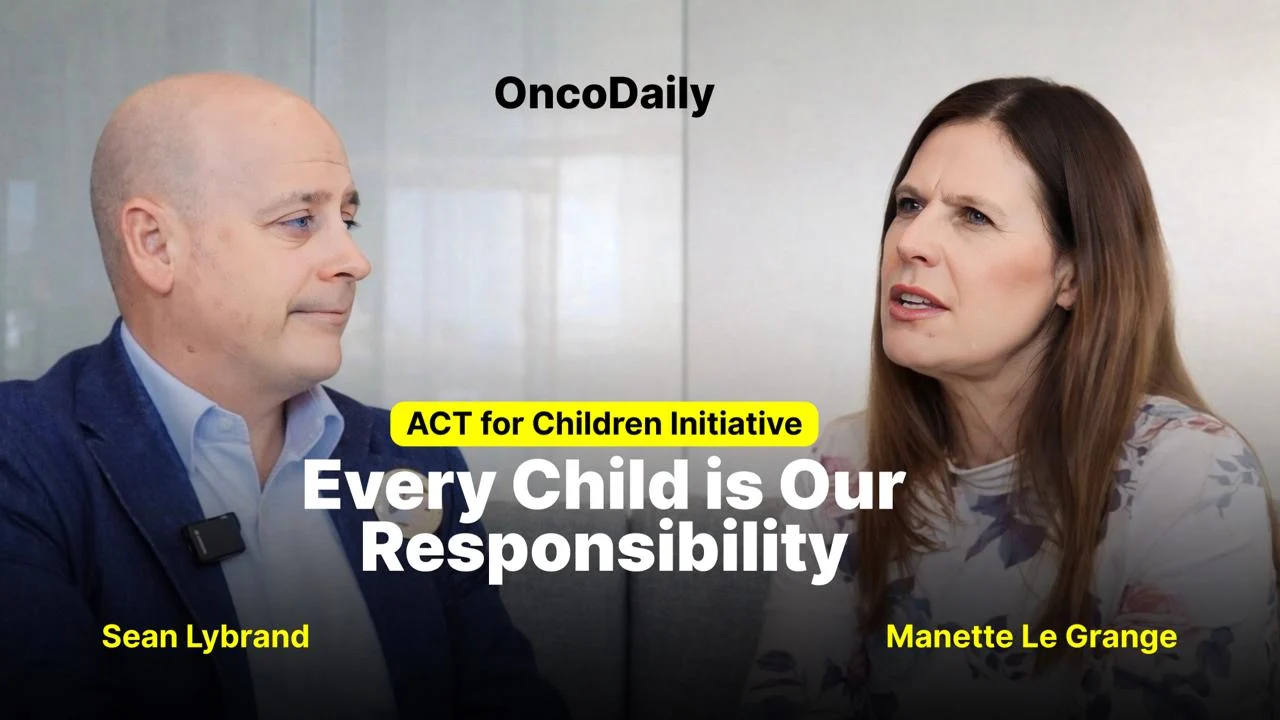
In this OncoDaily conversation, leaders from Servier and Amgen explore how the ACT for Children initiative is reshaping the landscape of pediatric oncology. Rather than relying on short-term donation models, the initiative focuses on building sustainable access by strengthening healthcare systems, supporting local expertise, and enabling countries to independently deliver life-saving treatments over time.
A central theme throughout the discussion is collaboration. Childhood cancer care, as emphasized by the speakers, should never be approached as a competitive space between industries, countries, or institutions. Instead, it requires a unified global effort that places the child at the center of every decision. As highlighted in the interview:
“In childhood cancer, whether it is in high-income countries or lower-income countries, everywhere is not a competition. It’s a child. It’s a future, it’s hope, and it’s our responsibility to look after children and the future.”
This statement captures a fundamental shift in perspective. Children are not defined by geography, economic status, or healthcare systems—they represent a shared future. Ensuring access to treatment, therefore, becomes a collective responsibility that transcends borders. It calls for collaboration between pharmaceutical companies, healthcare providers, policymakers, global organizations, and local institutions, all working toward a common goal.
The ACT for Children initiative reflects this approach in practice. By aligning stakeholders, investing in system readiness, and focusing on long-term sustainability, it demonstrates that meaningful progress in pediatric oncology is achievable when efforts are coordinated rather than fragmented.
Ultimately, the message is clear: improving survival in childhood cancer depends not only on innovation, but on access. And true access can only be achieved through collaboration, commitment, and a shared sense of responsibility for every child’s future.
You Can Watch the Full Interview on OncoDaily TV