
Key takeaways
- Hereditary kidney cancers account for approximately 5–8% of cases, and early-onset disease, bilateral or multifocal tumors, and family history should prompt genetic counseling and testing.
- Genetic syndromes require different surgical approaches. The three-centimeter rule can guide surveillance in VHL and hereditary papillary RCC, while aggressive FH-deficient RCC requires earlier intervention.
- Nephron-sparing surgery is essential in hereditary kidney cancer, particularly for patients with multiple or recurrent tumors, helping preserve kidney function and reduce the risk of dialysis.
- Targeted therapies are transforming hereditary RCC management. Belzutifan has demonstrated significant activity in VHL-associated RCC, while bevacizumab plus erlotinib achieved a 72% response rate in advanced HLRCC-associated RCC.
- Understanding inherited mutations is advancing precision oncology, revealing therapeutic targets, guiding personalized surveillance, and improving treatment strategies for both hereditary and sporadic kidney cancers.
Abhinav Sidana, Associate Professor of Surgery and Urologic Oncologist at the University of Chicago, explored how inherited genetic alterations influence kidney cancer diagnosis, surveillance, surgery, and systemic treatment during his presentation at VIRO 2026 – Global Voices in Renal Oncology by OncoDaily.
One of the most important distinctions he discussed concerns a seemingly simple measurement: three centimeters.
For patients with von Hippel-Lindau syndrome, a renal tumor can often be monitored until it approaches three centimeters before surgical intervention is considered. But in patients with hereditary leiomyomatosis and renal cell cancer (HLRCC), even a much smaller tumor can metastasize, making early surgical treatment essential.
The difference reflects the underlying biology of hereditary renal cancers.
Although hereditary syndromes account for an estimated 5-8% of kidney cancers, understanding their genetic mechanisms has had implications far beyond this relatively small patient population. Research into inherited mutations has helped explain how renal tumors develop and contributed to treatments now used in both hereditary and sporadic disease.
As Sidana explained:
“Kidney cancer, as you are aware, is not a single disease.”
Recognizing Hereditary Kidney Cancer
Identifying a hereditary predisposition is important because it can change the way a patient is monitored and treated, while also providing information about potential cancer risks in family members.
Sidana described several characteristics that should prompt clinicians to consider genetic counseling and testing.
These include:
- Diagnosis of RCC before age 46,
- Bilateral or multifocal renal tumors,
- Strong family history of kidney cancer.
- Characteristic skin lesions,
- Pulmonary cysts,
- Early-onset uterine fibroids.
Many inherited renal cancer syndromes follow an autosomal dominant inheritance pattern, meaning that an affected individual can pass the pathogenic genetic variant to their children.
An important biological distinction is that the same genes implicated in hereditary RCC can also be altered in sporadic tumors.
For example, the VHL gene is inactivated in the majority of sporadic clear cell RCCs, while an inherited pathogenic variant in VHL causes von Hippel-Lindau syndrome.
Understanding these connections has been essential to the development of molecularly targeted therapies.
Von Hippel-Lindau Syndrome: Managing Recurrent Tumors While Preserving Kidney Function
Von Hippel-Lindau (VHL) syndrome is one of the best-characterized hereditary kidney cancer syndromes.
It results from germline pathogenic alterations in the VHL tumor suppressor gene on chromosome 3.
VHL is a multisystem condition associated with tumors and cysts in several organs. Patients may develop retinal, cerebral, or spinal hemangioblastomas, pheochromocytomas, pancreatic lesions, and epididymal cystadenomas.
Renal manifestations commonly include multiple cysts and clear cell RCC, often appearing at a younger age than sporadic kidney cancer.
These tumors may develop in both kidneys and recur throughout a patient’s lifetime.
For surgeons, this creates a difficult challenge: removing malignant tumors while preserving enough healthy renal tissue to maintain kidney function over many years.
Why the Three-Centimeter Rule Matters
Unlike some aggressive hereditary renal cancers, VHL-associated renal tumors generally have a low metastatic risk when they are smaller than three centimeters.
This observation led to the development of the three-centimeter rule, an active surveillance approach in which renal tumors are monitored until the largest lesion approaches the threshold for intervention.
The strategy aims to balance metastatic risk against the consequences of repeated surgery.
Patients with VHL can develop numerous renal lesions over their lifetime. Operating on every small tumor as soon as it appears could result in multiple procedures and substantial cumulative loss of healthy kidney tissue.
Once surgery becomes necessary, Sidana emphasized the importance of nephron-sparing techniques.
Tumor Enucleation Versus Partial Nephrectomy
Conventional partial nephrectomy typically involves removing the tumor together with a margin of surrounding normal renal tissue.
Tumor enucleation takes a more tissue-preserving approach, removing the tumor along its pseudocapsule while minimizing the amount of normal kidney parenchyma excised.
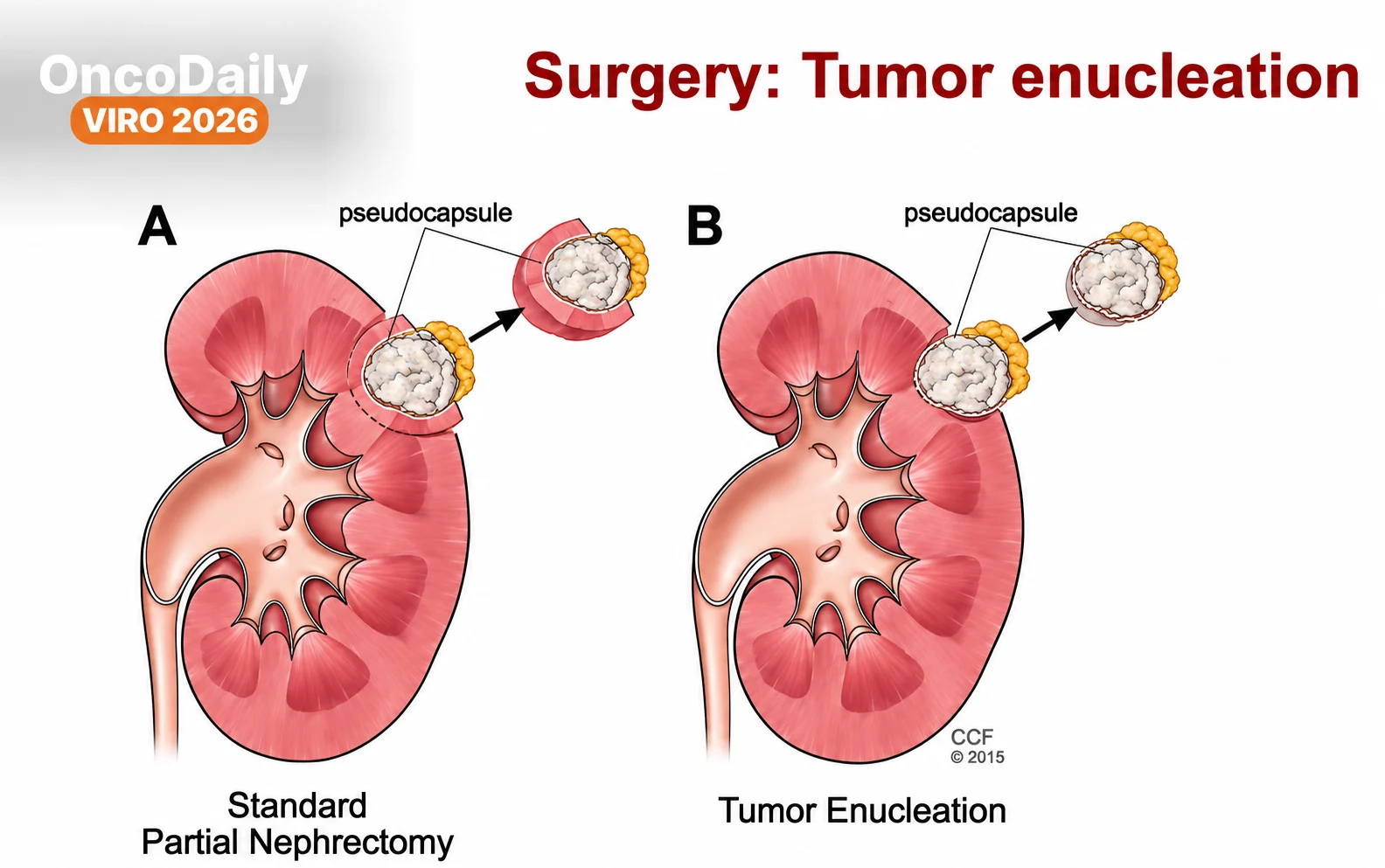
This distinction is particularly important for hereditary renal cancers involving multiple tumors.
Sidana discussed how enucleation can be performed using open or robotic surgery, with off-clamp techniques used in selected cases to avoid temporarily interrupting renal blood flow.
He also reviewed research from the National Cancer Institute (NCI) evaluating extensive nephron-sparing surgery in patients with hereditary kidney cancer.
One study examined 30 patients who underwent procedures involving the removal of at least 20 tumors from a single kidney.
Despite the considerable surgical complexity, more than 80% of baseline renal function was preserved in most patients, demonstrating the feasibility of removing numerous tumors without necessarily sacrificing the kidney.
These operations are technically demanding and can involve significant complications, making specialist surgical experience particularly important.
For patients who may require repeated interventions throughout their lives, preserving renal function remains a central treatment objective.
From VHL Genetics to Belzutifan
Understanding the VHL pathway has also transformed systemic treatment development.
Under normal conditions, the VHL protein helps regulate hypoxia-inducible factors (HIFs), proteins involved in cellular responses to oxygen availability.
When VHL function is lost, HIF activity increases, stimulating the expression of genes associated with angiogenesis and tumor growth, including vascular endothelial growth factor (VEGF).
This pathway helped establish the biological rationale for antiangiogenic treatments in RCC.
More recently, the development of belzutifan, a selective HIF-2α inhibitor, has provided a treatment that directly targets a key consequence of VHL inactivation.
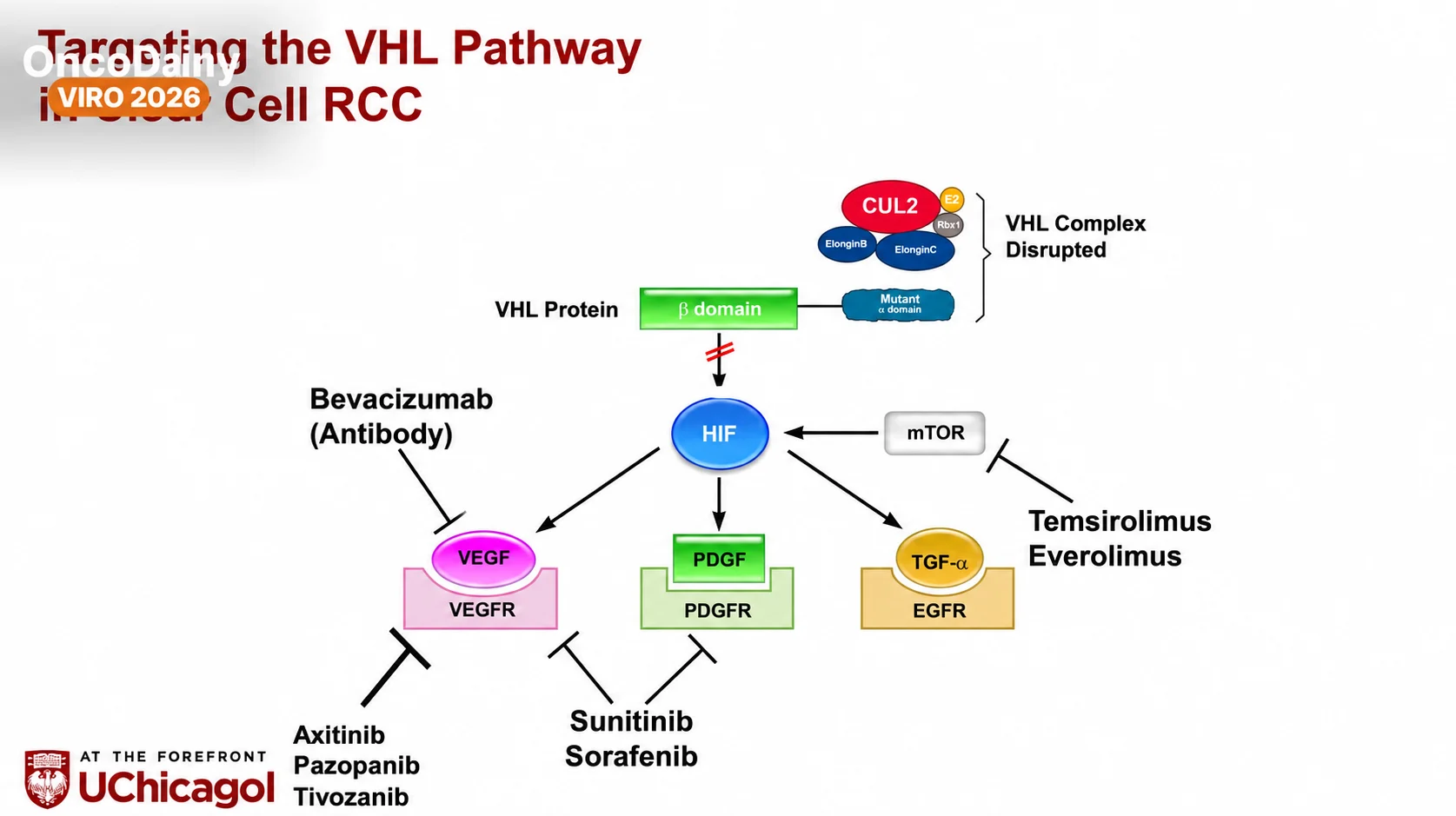
Sidana discussed the phase II LITESPARK-004 trial, which evaluated belzutifan in patients with VHL-associated RCC who did not require immediate surgery.
The initial findings demonstrated an objective response rate of 49%, with many patients experiencing reductions in renal tumor size.
Longer-term results published in 2025 showed continued activity. After approximately 50 months of follow-up, 67% of patients with RCC had achieved an objective response, including 11% with complete responses.
Belzutifan has been approved for eligible adults with VHL-associated RCC and certain other VHL-related tumors that do not require immediate surgery.
Its ability to shrink tumors offers an additional management option for selected patients who might otherwise face repeated operations.
However, systemic treatment does not eliminate the need for continued surveillance, and treatment decisions must consider potential adverse effects, including anemia and hypoxia.
Hereditary Papillary RCC: When MET Drives the Disease
Another hereditary condition discussed by Sidana was hereditary papillary renal carcinoma (HPRC).
This rare autosomal dominant syndrome is associated with germline activating variants in the MET proto-oncogene on chromosome 7.
Patients typically develop multiple bilateral papillary renal tumors, historically classified as type 1 papillary RCC.
Unlike several other inherited renal cancer syndromes, HPRC generally does not produce characteristic manifestations outside the kidneys.
Because these tumors often have relatively indolent growth patterns, management can follow a strategy similar to that used in VHL.
Small renal masses may undergo imaging surveillance until the largest tumor approaches three centimeters, with nephron-sparing surgery considered when intervention is indicated.
Tumor enucleation can be particularly useful when multiple tumors require removal.
However, the three-centimeter threshold does not apply to every hereditary form of papillary RCC.
HLRCC: The Aggressive Exception to the Three-Centimeter Rule
Hereditary leiomyomatosis and renal cell cancer (HLRCC) presents a substantially different clinical picture.
The syndrome is associated with inherited pathogenic variants in the FH gene, which encodes fumarate hydratase, an enzyme involved in cellular metabolism.
HLRCC is also known as FH tumor predisposition syndrome, and associated renal malignancies are increasingly described as FH-deficient RCC.
Patients may develop cutaneous leiomyomas and, particularly in women, multiple or symptomatic uterine leiomyomas.
Sidana noted that a family history of severe uterine fibroids requiring hysterectomy at a young age can be an important clue to the diagnosis.
However, the renal tumors associated with FH deficiency are of greatest concern because of their aggressive biological behavior.
Unlike VHL or HPRC, patients with HLRCC may develop only one or a few renal tumors. Yet those tumors can grow rapidly and metastasize at relatively small sizes.
Sidana discussed an NIH imaging analysis in which metastatic disease was documented even among patients with renal lesions smaller than three centimeters.
Consequently, the surveillance strategy appropriate for VHL-associated tumors is not suitable for suspected FH-deficient RCC.
Early Surveillance and Prompt Surgery
For individuals with an established FH-related hereditary predisposition, renal surveillance generally begins in childhood, often around 8–10 years of age, with annual MRI commonly recommended.
When a suspicious solid renal lesion is detected, prompt evaluation by an experienced multidisciplinary team is essential.
Surgical management also differs from the tumor enucleation approach favored in several other hereditary syndromes.
Because FH-deficient RCC can exhibit aggressive behavior, complete surgical excision with appropriate margins is generally preferred over simple tumor enucleation.
Depending on the extent and location of the disease, surgery may involve a wide-margin partial nephrectomy or radical nephrectomy.
The contrast illustrates why identifying the hereditary syndrome before making treatment decisions can be crucial.
A surgical strategy designed to preserve kidney function in a relatively indolent hereditary cancer may be inadequate for a tumor with a high risk of early metastasis.
Bevacizumab and Erlotinib: New Treatment Opportunities in Metastatic HLRCC
For patients who develop advanced FH-deficient RCC, effective systemic treatment has historically been challenging.
Sidana discussed a phase II clinical trial conducted by the NCI, led by Dr. Ramaprasad Srinivasan, evaluating the combination of bevacizumab and erlotinib.
Sidana participated in the research and described its importance for patients with this aggressive form of hereditary kidney cancer.
Bevacizumab targets VEGF-mediated angiogenesis, while erlotinib inhibits epidermal growth factor receptor (EGFR) signaling.
The combination was investigated in two separate cohorts: patients with HLRCC-associated advanced renal cancer and patients with sporadic papillary RCC.
The findings were published in The New England Journal of Medicine in June 2025.
Among patients with HLRCC-associated RCC, the trial reported:
- Objective response rate: 72%.
- Median progression-free survival: 21.1 months.
- Median overall survival: 44.6 months.
In the sporadic papillary RCC cohort, the objective response rate was 35%, with a median progression-free survival of 8.9 months.
The results demonstrated substantial antitumor activity in a disease historically associated with poor outcomes.
Sidana also described a clinical example presented by Srinivasan involving a 58-year-old patient with HLRCC-associated papillary RCC and extensive retroperitoneal disease.
Following approximately four months of bevacizumab and erlotinib, imaging demonstrated a marked reduction in tumor burden.
Although the trial was single-arm and cannot establish a survival advantage over a randomized comparator, the findings provide important prospective evidence supporting this targeted combination in advanced HLRCC-associated kidney cancer.
They also illustrate how understanding the metabolic consequences of inherited genetic alterations can lead to new therapeutic approaches.
Birt-Hogg-Dubé Syndrome and Tuberous Sclerosis: Different Genetic Risks
Sidana also reviewed two other hereditary conditions associated with renal tumors: Birt-Hogg-Dubé syndrome and tuberous sclerosis complex.
Birt-Hogg-Dubé Syndrome
Birt-Hogg-Dubé (BHD) syndrome is caused by pathogenic variants in the FLCN gene, which encodes the protein folliculin.
The condition is associated with characteristic skin lesions called fibrofolliculomas, pulmonary cysts, and an increased risk of spontaneous pneumothorax.
Approximately 15-30% of affected individuals develop renal tumors during their lifetime.
The tumors are histologically diverse, although hybrid oncocytic/chromophobe tumors and chromophobe RCC are particularly characteristic.
Because many BHD-associated renal tumors behave relatively indolently, the three-centimeter rule can often be applied.
When surgery is required, nephron-sparing approaches, including tumor enucleation, are generally preferred when oncologically appropriate.
Renal surveillance is essential throughout life. MRI is the preferred imaging modality, with surveillance intervals individualized according to guidelines and clinical findings.
Although BHD-associated molecular abnormalities involve pathways connected to mTOR signaling, mTOR inhibitors are not an established standard systemic treatment for BHD-associated kidney tumors.
Tuberous Sclerosis Complex
Tuberous sclerosis complex (TSC) is caused by pathogenic variants in TSC1 or TSC2.
It is a multisystem disorder associated with lesions affecting the skin, brain, heart, lungs, and kidneys.
Renal angiomyolipomas are among the most common kidney manifestations. RCC is considerably less frequent, occurring in approximately 1-4% of patients in reported series.
Management requires distinguishing angiomyolipomas from suspicious renal malignancies.
For growing angiomyolipomas that require treatment, mTOR inhibitors such as everolimus play an important role, while embolization or surgery may be necessary in selected circumstances.
The management of suspected RCC must be individualized according to tumor characteristics rather than automatically applying the same approach used for VHL-associated renal tumors.
In both BHD and TSC, coordinated long-term surveillance is important because kidney involvement is only one component of a broader hereditary condition.
Why Genetic Counseling and Specialized Care Matter
Throughout the presentation, Sidana emphasized that hereditary kidney cancer management begins with recognizing patients who may have an inherited predisposition.
A detailed family history can provide information extending beyond kidney cancer itself.
Early hysterectomies for severe uterine fibroids may suggest FH-related disease. Recurrent spontaneous pneumothorax or characteristic skin lesions may point toward BHD. Bilateral or multifocal renal tumors appearing at an unusually young age can raise suspicion for several different syndromes.
When hereditary RCC is suspected, referral for genetic counseling and appropriate germline testing can help establish the diagnosis and guide screening of at-risk relatives.
MRI is generally preferred for repeated renal surveillance because it avoids cumulative ionizing radiation exposure and provides detailed characterization of renal lesions.
However, surveillance intervals and treatment thresholds must be tailored to the specific syndrome.
For patients requiring complex surgical management, Sidana encouraged referral to centers with experience in hereditary renal cancers.
These patients often require a different approach from individuals with sporadic RCC, particularly when repeated surgeries, bilateral tumors, or aggressive hereditary histologies are involved.
How Hereditary Kidney Cancer Research Is Changing Treatment
The study of inherited kidney cancer syndromes has substantially influenced the understanding of RCC biology.
Research into VHL established the importance of oxygen-sensing pathways and helped drive the development of antiangiogenic therapies and HIF-2α inhibition.
Studies of FH-deficient disease revealed a distinct metabolic vulnerability and contributed to investigations of targeted treatment combinations such as bevacizumab and erlotinib.
At the same time, experience with inherited multifocal renal tumors has helped refine surgical approaches that prioritize long-term kidney preservation.
Sidana’s presentation demonstrates why genetic diagnosis matters at every stage of care, from deciding when to intervene on a small renal mass to choosing the surgical technique or systemic therapy most appropriate for the disease.
For some inherited renal tumors, careful surveillance and tissue-preserving surgery can limit unnecessary interventions. For others, early aggressive treatment may be necessary despite a small primary tumor.
Recognizing these differences allows clinicians to base treatment decisions on the biology of the cancer, rather than tumor size alone.
The event is supported by AVEO Oncology as bronze sponsor and Arcus Biosciences as Innovation Supporter.
Written by Eliz Baloyan, MD, Features Writer and Editor at OncoDaily and CancerWorld