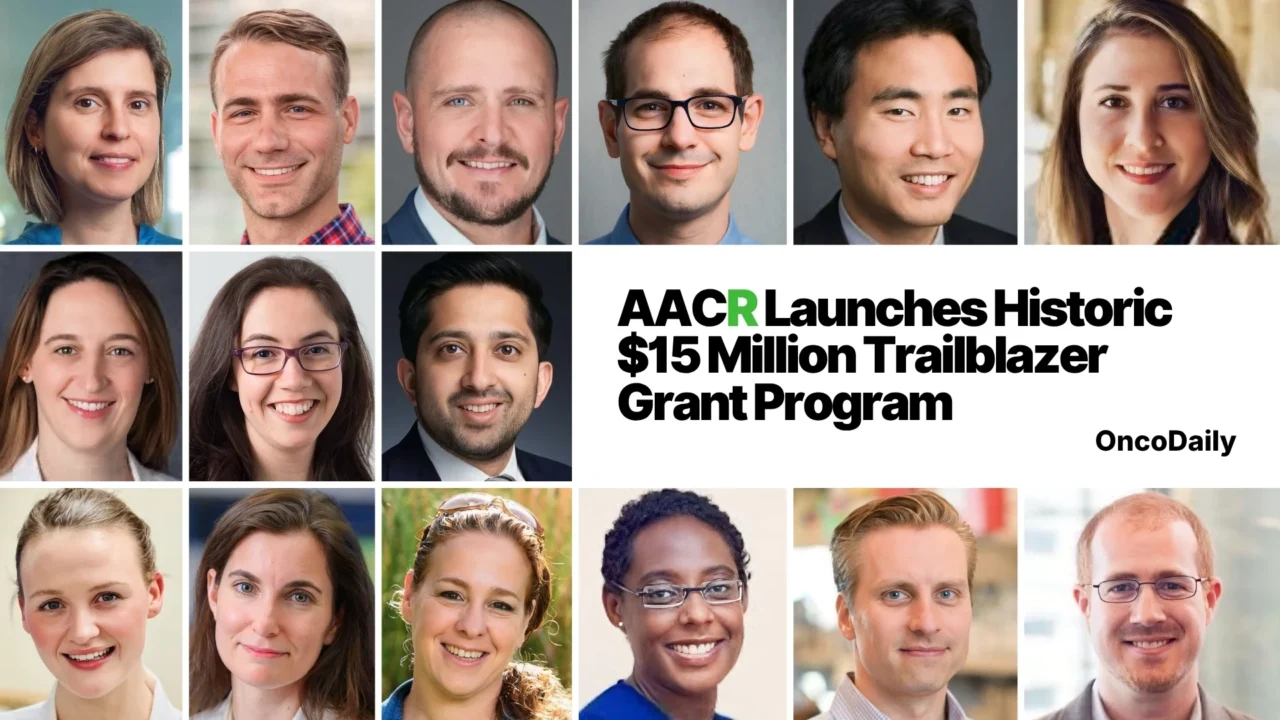
The American Association for Cancer Research (AACR) announced a major new funding initiative during the Opening Ceremony of the AACR Annual Meeting 2026 in San Diego. Through its Trailblazer Cancer Research Grants, AACR will support 15 investigators with $1 million each over three years, making this the largest grant program in the organization’s history.
The awards were given to nine early-stage investigators and six mid-career investigators whose projects were selected for their scientific merit and promise. Altogether, the initiative represents a $15 million investment aimed at helping researchers build innovative programs that can advance cancer biology, translational science, and patient care.
Margaret Foti, PhD, MD (hc), Chief Executive Officer of AACR, said the program reflects the need to strengthen the scientific workforce in order to address future challenges in cancer incidence and mortality. She noted that many of the awardees are at critical stages in their careers and that this level of support can help them pursue highly creative work with the potential to change the field.
A Major Investment Backed by Pfizer
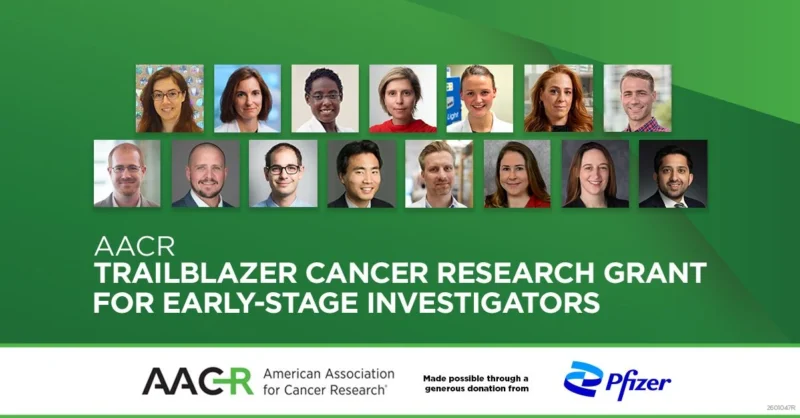
The funding for the Trailblazer grants was made possible through Pfizer’s donation of its royalties from U.S. sales of Bavencio® (avelumab) to AACR, first announced in December 2023. AACR conducted the application review and selection process independently, while the donated funding created the foundation for this new program.
Jeff Legos, Chief Oncology Officer at Pfizer, said the company believes progress in cancer care starts with investing in scientists and physicians whose ideas can reshape patient outcomes. The partnership between AACR and Pfizer reflects a shared interest in supporting bold research with long-term clinical relevance.
What makes this initiative especially notable is not only its size, but also its structure. By distributing the grants over three years, the program gives investigators meaningful time and resources to develop emerging ideas rather than limiting them to short-term projects.
Early-Stage Investigators









Mid-Career Investigators






Why the Trailblazer Grants Matter
The significance of this announcement goes beyond the number of awards. Research funding often determines whether promising ideas can move from concept to discovery, especially for investigators who are still building independent programs or expanding into new scientific directions. Programs like this create space for ambitious work that may not always fit into more traditional funding models.
AACR said the goal of the Trailblazer Cancer Research Grants is to support paradigm-shifting research that can improve understanding of cancer biology, strengthen translational science, and ultimately lead to better outcomes for patients. In that sense, the program is not only a financial investment, but also a statement about where the future of cancer research should be directed.
Stay informed with more articles like this on OncoDaily.
Written by Nare Hovhannisyan,MD