
How much endocrine treatment is necessary for a young woman with hormone receptor-positive breast cancer? When does chemotherapy provide meaningful benefit, and how much of that benefit might result from ovarian suppression rather than direct cytotoxicity? A comprehensive review published in Annals of Oncology examines these questions and highlights persistent gaps in the management of premenopausal women with HR-positive/HER2-negative early breast cancer.
The review, titled Navigating Uncertainties and Evidence Gaps in Adjuvant Therapy for Premenopausal Women With HR-Positive/HER2-Negative Breast Cancer, was authored by L. Licata and colleagues, with L. Pusztai and G. Bianchini contributing equally as senior authors.
Published online September 17, 2026, the article synthesizes evidence from SOFT, TEXT, ASTRRA, TAILORx, RxPONDER, MINDACT, OPTIMA, and other studies to examine how chemotherapy, ovarian function suppression (OFS), genomic testing, and endocrine therapy duration should be individualized.
The authors emphasize that premenopausal breast cancer cannot be managed simply by applying treatment principles established predominantly in older women.
Differences in tumor biology, ovarian function, chemotherapy-induced menopause, treatment-related toxicity, and reproductive priorities create a distinct clinical setting. Although adjuvant endocrine therapy remains the foundation of care, the optimal intensity of treatment is not always clear.
Premenopausal Breast Cancer Represents a Distinct Clinical Population
Women diagnosed with breast cancer at a young age more frequently present with adverse clinicopathological characteristics, including higher-grade tumors and greater proliferative activity. Even among patients with HR-positive/HER2-negative disease, tumors arising at younger ages may demonstrate biological features associated with more aggressive behavior.
The review highlights that young patients are more likely to have luminal B-like disease and distinct patterns of gene expression. These differences may contribute to a higher baseline recurrence risk and potentially different responses to systemic treatment.
However, age should not be regarded as an isolated indication for more intensive therapy. The authors emphasize the importance of distinguishing recurrence risk from treatment sensitivity.
A patient may have a high recurrence risk without necessarily deriving substantial benefit from a particular intervention. Conversely, a patient with lower baseline risk may still experience relative treatment benefit, although the absolute improvement may be small.
This distinction is essential when decisions involve treatments associated with years of toxicity, premature menopause, or potential effects on fertility.
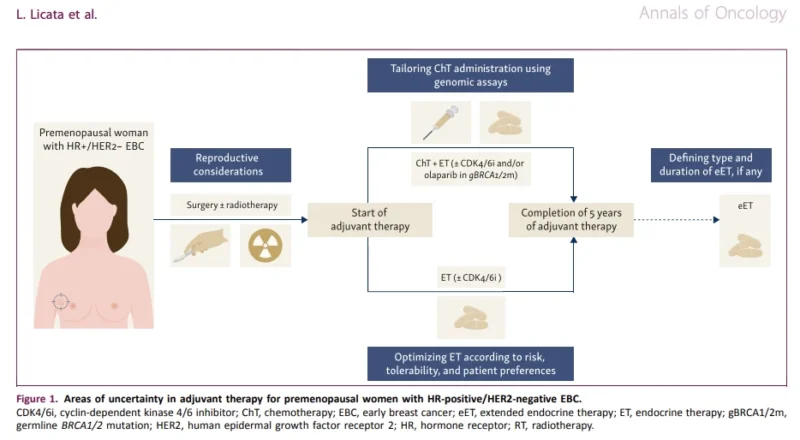
Ovarian Function Suppression: Established Benefit, Unequal Absolute Gains
The strongest evidence supporting OFS comes from the SOFT and TEXT randomized trials. These studies established that intensifying adjuvant endocrine treatment can improve outcomes in premenopausal women with HR-positive early breast cancer.
At 15 years of follow-up, SOFT demonstrated that adding OFS to tamoxifen reduced breast cancer events compared with tamoxifen alone, with an HR of 0.82 (95% CI 0.69–0.98). Exemestane combined with OFS produced a further reduction in breast cancer events compared with tamoxifen alone, with an HR of 0.70 (95% CI 0.58–0.84).
In the combined SOFT/TEXT analysis, 15-year disease-free survival was 74.9% with exemestane plus OFS compared with 71.3% with tamoxifen plus OFS. However, overall survival was not significantly different between the two combination strategies, reaching 87.8% and 87.0%, respectively.
These results illustrate an important distinction between improvements in disease recurrence and demonstrated survival gains. The absolute benefit of intensive endocrine therapy was greatest among women with higher-risk disease, including those younger than 35 years and those who required chemotherapy.
In contrast, patients with lower-risk disease often experienced relatively small improvements in distant recurrence outcomes. The authors therefore argue against automatically prescribing maximal ovarian suppression to every premenopausal patient.
Instead, OFS intensity should reflect anticipated absolute benefit, baseline risk, tolerability, and individual priorities.
Could Shorter Ovarian Suppression Be Sufficient?
Most contemporary adjuvant treatment strategies involving OFS use a five-year treatment duration. However, this approach may create substantial long-term symptoms, including vasomotor disturbances, sexual dysfunction, musculoskeletal pain, and reduced bone mineral density.
The ASTRRA trial provides evidence supporting a shorter strategy in a selected population. Among women who remained or became premenopausal after chemotherapy, adding two years of OFS to tamoxifen improved 10-year disease-free survival to 83.7% compared with 75.9% with tamoxifen alone.
The reported HR was 0.68 (95% CI 0.53–0.87). These findings suggest that some benefit can be achieved without five continuous years of ovarian suppression. However, ASTRRA did not establish that two years of OFS is equivalent to five years. Differences in population characteristics and treatment comparisons prevent direct extrapolation.
The review therefore treats shorter OFS as a potential individualized strategy when prolonged treatment is poorly tolerated, not as a universally validated replacement for the five-year approach.
Another unresolved question concerns the adequacy of ovarian suppression during treatment. Incomplete suppression may occur in patients receiving gonadotropin-releasing hormone agonists, particularly when aromatase inhibitors are administered.
Although evidence suggests that three-monthly formulations can provide ovarian suppression comparable with monthly injections, standardized estradiol monitoring strategies remain poorly defined.
The review identifies monitoring thresholds, assay selection, and the appropriate timing of ovarian function assessment as important research priorities.
CDK4/6 Inhibitors Add Another Layer to Treatment Selection
The emergence of adjuvant CDK4/6 inhibitors has further complicated decisions about endocrine treatment intensity. Abemaciclib and ribociclib have demonstrated improvements in invasive disease-free survival in appropriately selected higher-risk HR-positive/HER2-negative early breast cancer populations.
Subgroup analyses indicate that premenopausal patients can derive benefits consistent with those seen in broader trial populations. However, these agents have different eligibility criteria and treatment requirements.
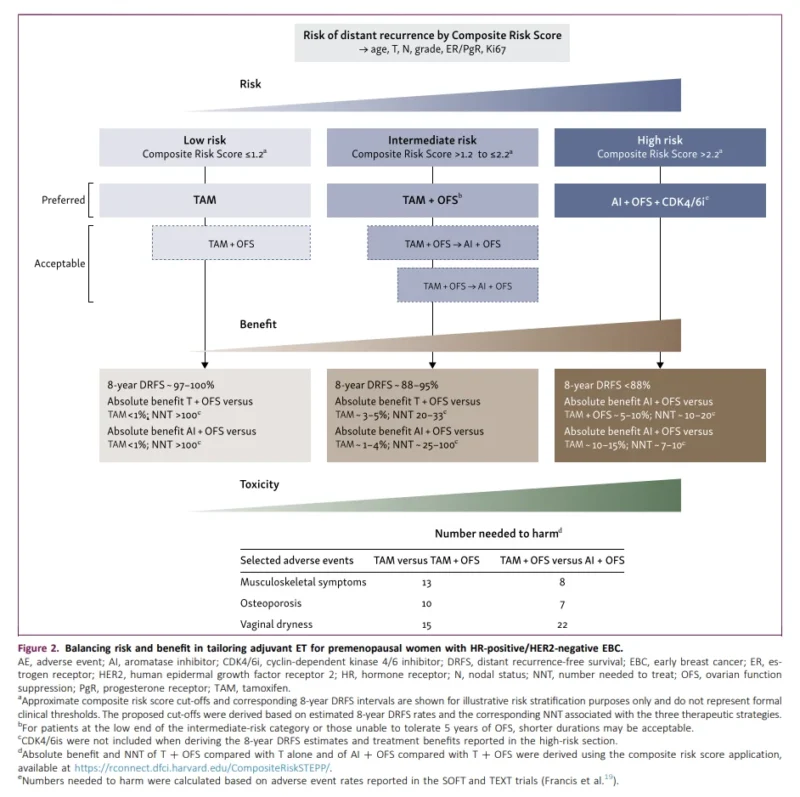
The review emphasizes that CDK4/6 inhibitor use should be integrated into the overall endocrine strategy rather than considered independently of ovarian suppression. For higher-risk patients, an aromatase inhibitor plus OFS, with an indicated CDK4/6 inhibitor, represents an important treatment approach.
Nevertheless, adding treatment also increases the burden of adverse events, monitoring, and potential adherence difficulties.
The expanding therapeutic landscape therefore creates an important question: how can clinicians identify patients who truly need multiple layers of adjuvant treatment intensification while avoiding unnecessary toxicity in those with limited absolute benefit?
Genomic Assays: Prognostic Value Is Not the Same as Chemotherapy Prediction
Genomic assays have transformed adjuvant chemotherapy decisions in HR-positive/HER2-negative early breast cancer. The Oncotype DX Recurrence Score and PAM50-based Prosigna assay provide important information about recurrence risk.
However, their interpretation in premenopausal women remains more complicated than in postmenopausal populations. TAILORx and RxPONDER demonstrated apparent chemotherapy benefit among subsets of premenopausal women, including some patients with intermediate genomic risk.
Yet the review emphasizes an important limitation. In these trials, only approximately 13% of premenopausal patients in the endocrine therapy control groups received OFS. Consequently, the endocrine treatment received by many participants may not reflect contemporary optimized endocrine therapy.
Chemotherapy can induce temporary or permanent ovarian suppression, particularly among women approaching natural menopause. This raises the possibility that part of the apparent chemotherapy benefit resulted from an endocrine effect rather than direct tumor-cell cytotoxicity.
The authors stress that genomic scores remain valuable prognostic tools, but their ability to isolate chemotherapy-specific benefit in premenopausal patients is less certain. A low genomic score therefore should not be interpreted as universally excluding chemotherapy benefit, particularly in patients with node-positive disease. Similarly, the presence of premenopausal status alone should not automatically establish a requirement for chemotherapy.
The Chemoendocrine Effect: An Important Unresolved Mechanism
One of the review’s central arguments concerns the contribution of chemotherapy-induced ovarian suppression to treatment outcomes. Evidence from TAILORx suggests that chemotherapy benefit in women aged 50 years or younger with intermediate Recurrence Scores was concentrated predominantly in women aged 40–50 years.
The review notes that women approaching menopause are more likely to experience sustained ovarian suppression after chemotherapy. Additional evidence comes from a post hoc RxPONDER analysis examining anti-Müllerian hormone (AMH), a marker of ovarian reserve.
Patients with AMH levels of at least 10 pg/mL demonstrated an apparent chemotherapy benefit, with an HR of 0.48 and an absolute five-year improvement of 7.8%. Patients with lower AMH levels did not demonstrate a comparable benefit.
These observations support the hypothesis that the chemotherapy-associated endocrine effect contributes meaningfully to outcomes. However, the review does not conclude that chemotherapy acts exclusively through ovarian suppression.
Young patients may have biologically more proliferative or chemotherapy-sensitive tumors, and direct cytotoxic effects remain plausible. The relative contribution of these mechanisms is not yet established. AMH-based treatment selection also remains investigational and should not be adopted as a validated standalone method for omitting chemotherapy.
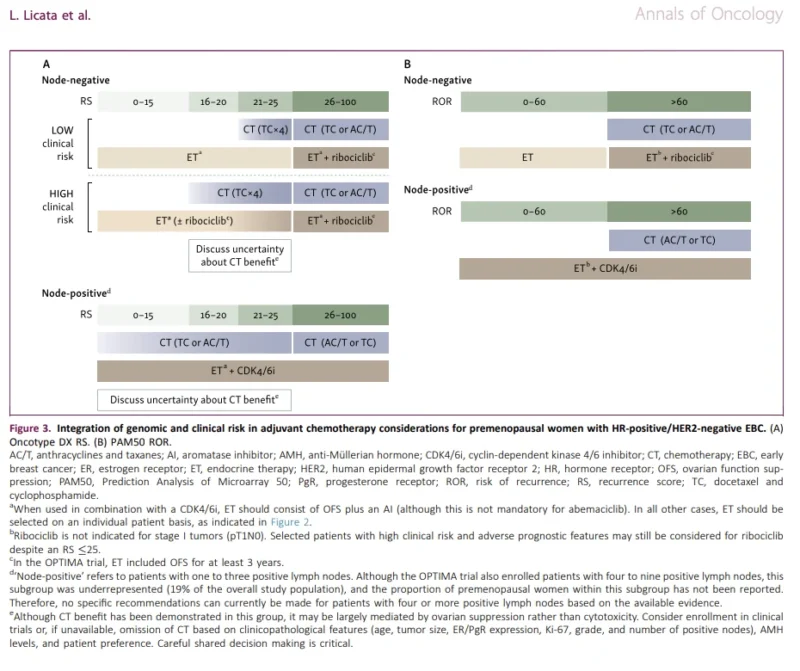
OPTIMA: Important Evidence for Genomically Guided De-escalation
The OPTIMA trial provides additional evidence relevant to individualized chemotherapy decisions. The study randomized 4,429 patients aged at least 40 years to standard chemotherapy followed by endocrine treatment or a Prosigna-guided strategy.
Patients assigned to the genomic-testing approach received chemotherapy when the PAM50 Risk of Recurrence score exceeded 60, while those with scores of 60 or lower received endocrine therapy alone.
Among patients with low genomic risk, five-year invasive breast cancer-free survival was 94.8% in the standard chemotherapy–endocrine treatment group and 93.6% in the test-directed endocrine-only group.
The HR was 1.06 (95% CI 0.80–1.40), meeting the prespecified criterion for noninferiority. Premenopausal women accounted for approximately 37% of the study population. Importantly, premenopausal women assigned to endocrine therapy alone were required to receive OFS for at least three years.
This addressed an important limitation of earlier genomic trials, in which ovarian suppression was less consistently administered. Nevertheless, the review emphasizes several restrictions.
Women younger than 40 years were excluded, patients with more than three positive lymph nodes were underrepresented, and the study was not powered to demonstrate noninferiority specifically within the premenopausal subgroup.
Therefore, OPTIMA supports further investigation of chemotherapy de-escalation under optimized endocrine treatment but does not establish universal chemotherapy omission for premenopausal women with low genomic risk. Ongoing OFSET and OPTIMA-YOUNG studies are expected to address these uncertainties more directly.
Extended Endocrine Therapy: What Happens After Five Years?
HR-positive breast cancer carries a prolonged risk of recurrence extending well beyond the first five years after diagnosis. Extended endocrine therapy aims to reduce late recurrence, but the optimal strategy in women who remain premenopausal after five years remains uncertain.
The ATLAS trial demonstrated that continuing tamoxifen for ten years rather than five reduced breast cancer recurrence and mortality. Similarly, aTTom supported the benefit of extended tamoxifen treatment.
However, much of the evidence informing extended endocrine therapy, particularly aromatase inhibitor strategies, comes from postmenopausal populations. The review highlights an observational cohort of 501 women diagnosed by age 40 who remained premenopausal after five years of treatment that included OFS.
Extended endocrine treatment was associated with reduced invasive breast cancer recurrence (HR 0.63) and distant recurrence (HR 0.49). Although encouraging, these findings were observational and did not establish the optimal extended regimen or duration.
Questions also remain about when ovarian suppression can safely be discontinued, how menopausal status should be reassessed, and whether switching endocrine therapy is preferable to continuing the same treatment. The authors propose integrating recurrence risk, treatment tolerance, menopausal status, and patient preferences when making extended therapy decisions.
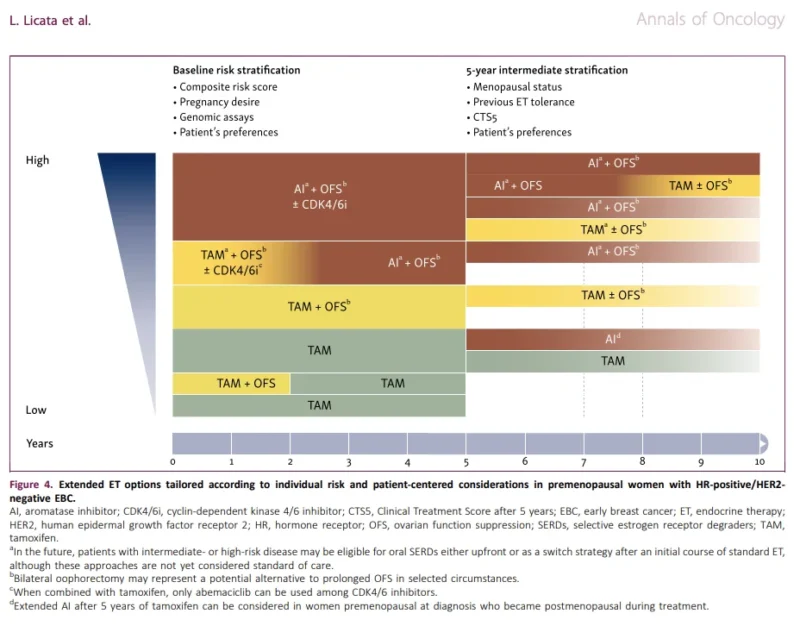
Treatment Adherence Is a Major Determinant of Long-Term Outcomes
The review emphasizes that prescribing effective therapy is only one component of successful adjuvant treatment. Patients must also be able to continue treatment over several years. In SOFT and TEXT, approximately 20% of women younger than 35 years discontinued assigned endocrine therapy prematurely.
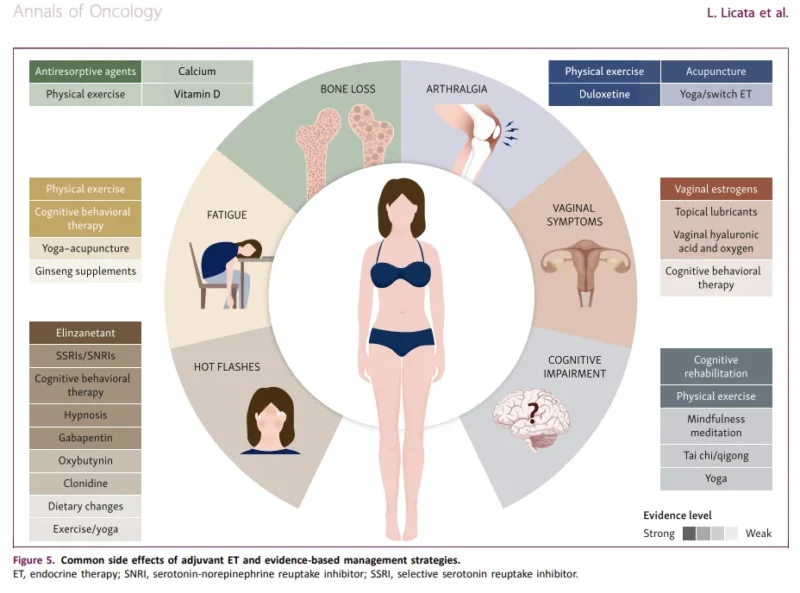
Treatment-related menopausal symptoms, sexual dysfunction, fatigue, musculoskeletal pain, cognitive complaints, and psychological distress can all contribute to treatment interruption. A Danish registry study involving 4,503 premenopausal women found that endocrine treatment discontinuation was associated with an increased recurrence risk, with an HR of 1.67.
Other population-based studies reported similar associations between sustained endocrine treatment and improved outcomes. These data reinforce the importance of recognizing treatment-related symptoms early and offering effective supportive care.
Evidence-based strategies include exercise, selected pharmacological approaches for vasomotor symptoms, management of arthralgia, sexual health interventions, and psychological support. The review also highlights digital patient-reported outcome systems as potentially useful tools for improving symptom monitoring and communication.
However, evidence supporting digital interventions is still evolving. The overall message is that adherence difficulties should prompt active assessment of treatment burden and patient needs rather than simply reinforcing the original prescription.
Fertility and Pregnancy: The POSITIVE Trial Changes the Conversation
Fertility is a central consideration for many premenopausal patients. Adjuvant endocrine therapy is commonly recommended for at least five years, creating a substantial delay for women who wish to become pregnant.
The POSITIVE study addressed whether selected women could temporarily interrupt endocrine treatment to pursue pregnancy. The prospective study enrolled 516 women aged 42 years or younger who had completed 18–30 months of adjuvant endocrine therapy.
Participants were permitted to interrupt treatment for up to two years to attempt pregnancy, give birth, and breastfeed, with subsequent treatment resumption recommended. At five years, breast cancer events had occurred in 12.3% of participants.
The review reports that these outcomes were comparable with an external control cohort meeting similar eligibility criteria. Among women with available reproductive data, 76% achieved pregnancy and 69% had a live birth.
However, pregnancy success decreased with increasing age. These findings provide reassurance regarding temporary endocrine therapy interruption in carefully selected women. Nevertheless, POSITIVE was a single-arm study, and its findings do not establish the long-term safety of interruption for every risk category.
The enrolled population was predominantly lower risk, and longer follow-up remains important, particularly because HR-positive disease can recur many years after diagnosis. The review therefore emphasizes early fertility counseling and referral for preservation strategies, including oocyte or embryo cryopreservation.
Reproductive planning should be incorporated into treatment decisions from diagnosis rather than addressed only after endocrine therapy has already begun.
A More Individualized Framework for Premenopausal Patients
The authors propose a pragmatic approach integrating several dimensions of risk and treatment benefit. Baseline clinical risk remains essential, including tumor size, nodal involvement, grade, proliferation, and hormone receptor expression.
Genomic assays can add prognostic information, although their predictive interpretation requires particular caution in premenopausal patients. Ovarian function, reproductive goals, and anticipated treatment tolerance are additional factors that may substantially influence the preferred approach.
For lower-risk disease, tamoxifen alone may remain appropriate. For selected intermediate-risk patients, tamoxifen plus OFS can provide additional protection without necessarily requiring the most intensive endocrine regimen.
For higher-risk disease, aromatase inhibitor plus OFS, with a CDK4/6 inhibitor when indicated, represents an important escalation strategy. Chemotherapy decisions should incorporate clinical risk, genomic findings, and uncertainty surrounding the chemoendocrine effect.
The framework is intended to support clinical reasoning and shared decision-making. Importantly, the authors’ proposed decision pathways and illustrative genomic-risk thresholds are not themselves prospectively validated algorithms.
They should therefore be distinguished from formal guideline recommendations and the eligibility criteria of individual randomized trials.
OncoDaily Takeaway
The new Annals of Oncology review highlights a fundamental challenge in premenopausal HR-positive/HER2-negative early breast cancer: choosing the intensity of adjuvant treatment requires more than estimating recurrence risk.
SOFT and TEXT confirm the value of ovarian function suppression, particularly for higher-risk patients, but also demonstrate that absolute benefit varies substantially. TAILORx, RxPONDER, and OPTIMA raise important questions about how much chemotherapy benefit in younger women results from direct cytotoxicity and how much may be mediated by ovarian suppression.
Although genomic assays provide valuable prognostic information, their predictive interpretation requires caution in premenopausal populations. Extended endocrine treatment, therapy adherence, adverse-event management, and reproductive planning add further complexity.
The central message is that optimal adjuvant therapy should be guided by the intersection of tumor biology, clinical risk, ovarian function, treatment tolerability, and individual patient priorities—not age or genomic risk alone.
Future randomized trials will be essential to determine when chemotherapy can safely be omitted, how ovarian suppression can be optimized, and which patients truly require prolonged endocrine intensification.
Until then, careful interpretation of existing evidence and transparent shared decision-making remain the foundations of individualized care.
Sources
- Licata L, Mariani M, Chiavassa A, et al. Navigating Uncertainties and Evidence Gaps in Adjuvant Therapy for Premenopausal Women With HR-Positive/HER2-Negative Breast Cancer. Annals of Oncology. Published online September 17, 2026. DOI: 10.1016/j.annonc.2026.09.005
- Francis PA, Pagani O, Fleming GF, et al. Final Outcomes of the SOFT and TEXT Phase III Trials in Premenopausal Hormone Receptor-Positive Early Breast Cancer. Annals of Oncology. 2026;37:1367–1385. DOI: 10.1016/j.annonc.2026.05.704
- Sparano JA, et al. Adjuvant Chemotherapy Guided by a 21-Gene Expression Assay in Breast Cancer. New England Journal of Medicine. 2018. DOI: 10.1056/NEJMoa1804710
- Kalinsky K, et al. 21-Gene Assay to Inform Chemotherapy Benefit in Node-Positive Breast Cancer. New England Journal of Medicine. 2021. DOI: 10.1056/NEJMoa2108873
- Partridge AH, et al. Interrupting Endocrine Therapy to Attempt Pregnancy After Breast Cancer. New England Journal of Medicine. 2023. DOI: 10.1056/NEJMoa2212856