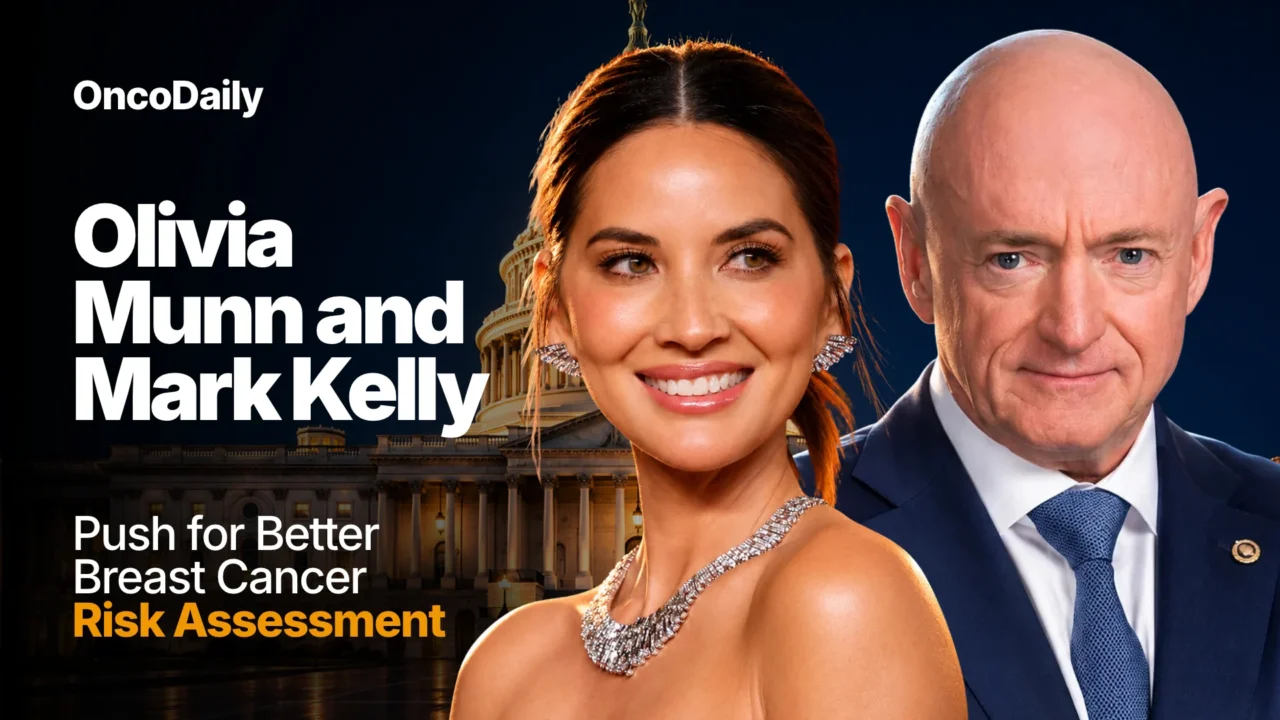
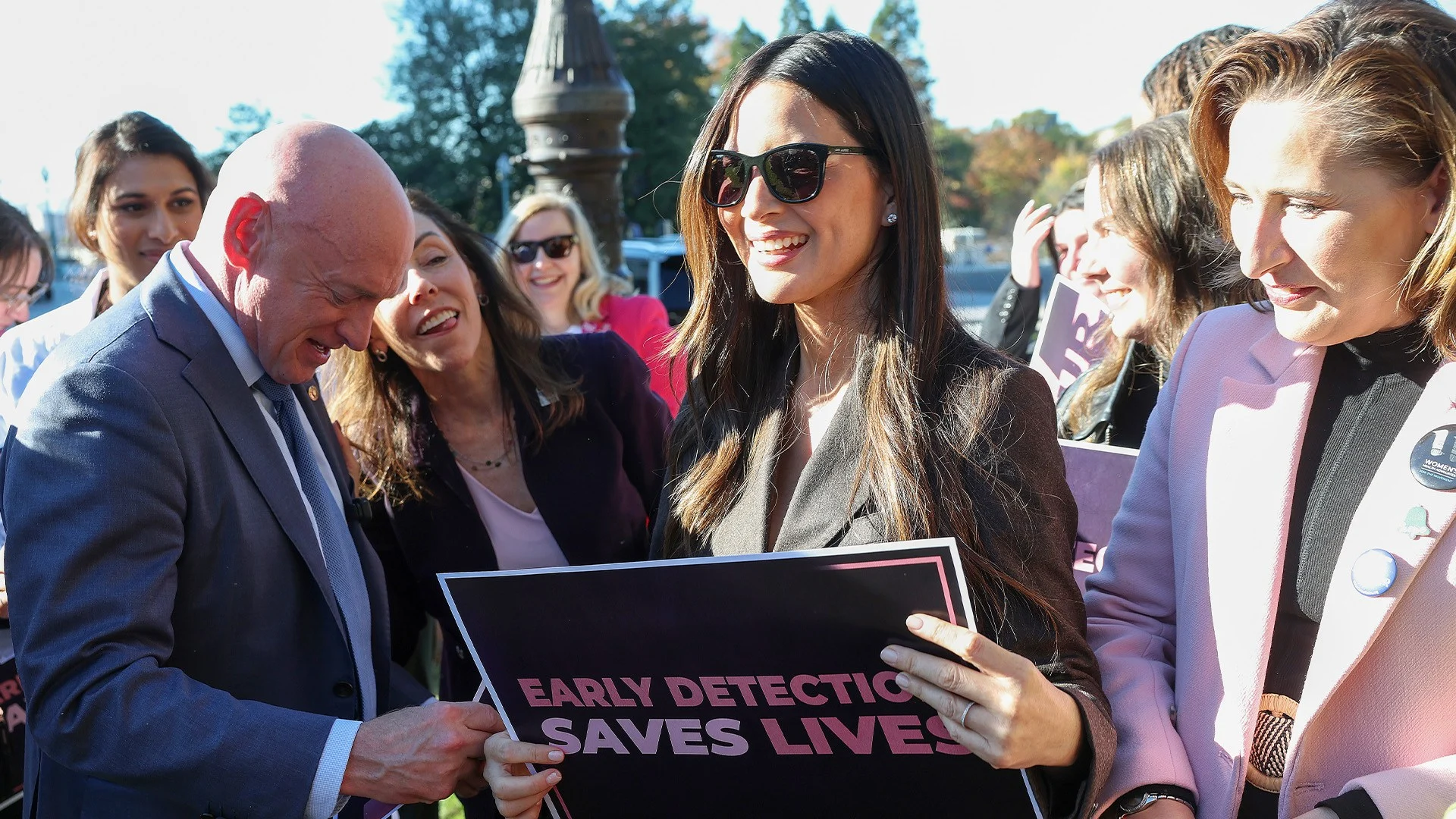
Actress and breast cancer survivor Olivia Munn joined US Senator Mark Kelly on Capitol Hill on November 18, 2026, to introduce the bipartisan Know Your Risk Act, legislation aimed at making breast cancer risk assessments a routine part of healthcare and improving access to personalized screening.
For Munn, the initiative is deeply personal. In 2023, a breast cancer risk assessment prompted additional testing that revealed cancer in both breasts, despite reassuring results from her earlier mammogram and genetic testing. Now, she is working to ensure that other women have access to the same information before a cancer diagnosis changes their lives.
Why Breast Cancer Risk Assessment Is Personal for Olivia Munn
Munn was diagnosed with stage I luminal B breast cancer in both breasts in April 2023. Earlier that year, she had undergone genetic testing for cancer-associated mutations, which returned negative results. Her mammogram had also shown no concerning findings.
However, her obstetrician-gynecologist, Dr. Thaïs Aliabadi, decided to calculate her lifetime breast cancer risk using the Tyrer-Cuzick risk assessment model.
The result was 37.3%, considerably above the commonly used 20% lifetime-risk threshold for considering intensified screening. This prompted a breast MRI, followed by further imaging and biopsy, which confirmed bilateral breast cancer.
Munn subsequently underwent a double mastectomy and additional procedures as part of her treatment.
Her experience demonstrated an important distinction: a normal mammogram and negative hereditary cancer testing do not necessarily mean that a woman has a low overall risk of developing breast cancer.
Speaking at the November 18 announcement, Munn explained:
“I know firsthand how powerful this tool can be because it led me to my breast cancer diagnosis.”
Her advocacy became even more personal when her mother, Kim Munn, underwent the same type of risk assessment. Her mother’s estimated lifetime risk was 26.2%, prompting additional imaging that identified stage I HER2-positive breast cancer.
After witnessing the value of risk assessment in two generations of her family, Munn became increasingly determined to expand awareness and access.
In an October 2026 interview with People, she described breast cancer advocacy as her new mission, saying that sharing her experience had given her a clearer sense of purpose.
What Would the Know Your Risk Act Change?
The Know Your Risk Act seeks to address a gap in breast cancer prevention: although validated risk assessment tools already exist, their use is not consistently incorporated into routine clinical care.
The legislation is designed to promote a more standardized and personalized approach to understanding breast cancer risk, helping patients and healthcare professionals make informed decisions about when screening should begin and whether additional screening methods may be appropriate.
According to Susan G. Komen, the proposal would establish an interagency task force to advance strategies for improving the availability and use of validated breast cancer risk assessment tools.
The initiative focuses on:
- Promoting more consistent use of breast cancer risk assessment in healthcare.
- Improving access to validated risk assessment models.
- Supporting personalized conversations about screening and prevention.
- Identifying ways to improve the accuracy and clinical usefulness of existing tools.
- Helping patients understand when additional screening may be appropriate.
- Importantly, the legislation is still a proposal. Its introduction does not immediately make risk assessment mandatory during medical appointments or change existing breast cancer screening recommendations.
At the Capitol Hill event, Kelly emphasized that women should not have to independently discover these tools or specifically request them during routine healthcare visits.
A Bipartisan Effort Built on Personal Experiences
The proposal is supported by lawmakers from both political parties, including Republican Senator Shelley Moore Capito and House Representatives Mariannette Miller-Meeks and Kim Schrier.
Kelly also has a personal connection to breast cancer. Both his mother and grandmother experienced the disease.
The senator and Munn have been friends for more than a decade. After learning about her diagnosis, Kelly reached out to offer support. Their conversations eventually developed into a collaboration focused on making breast cancer risk assessment more accessible.
During the announcement, Munn highlighted the importance of cooperation across political divisions:
“Breast cancer doesn’t distinguish between political parties.”
The November 18 event also brought together breast cancer advocates, survivors, and representatives of Susan G. Komen, including its President and CEO, Amber Guild.
The organization’s support reflects a broader emphasis on incorporating individual risk into breast cancer screening decisions rather than relying exclusively on age-based approaches.
Why Risk Assessment Matters in Breast Cancer Screening
Breast cancer risk assessment tools estimate an individual’s probability of developing breast cancer over a specified period or during their lifetime.
Models such as Tyrer-Cuzick and the National Cancer Institute’s Breast Cancer Risk Assessment Tool use combinations of clinical, reproductive, personal, and family history factors to estimate risk.
These tools do not diagnose cancer, and their estimates have limitations. However, they can help identify individuals who may benefit from further clinical evaluation, preventive interventions, or additional screening.
For example, the American Cancer Society recommends annual breast MRI alongside mammography for certain women at high risk, including those with an estimated lifetime breast cancer risk of approximately 20–25% or greater based on appropriate models.
In Munn’s case, the assessment was instrumental in identifying the need for an MRI that ultimately led to her diagnosis.
The wider need is substantial. Susan G. Komen estimates that approximately 325,000 new cases of invasive breast cancer and more than 42,000 breast cancer deaths will occur in the United States in 2026.
The organization has also highlighted increasing breast cancer incidence among younger women, reinforcing the need for approaches that recognize individual risk factors.
Nevertheless, integrating risk assessment into routine care will require attention to model accuracy, differences across populations, clinician education and patients’ ability to access recommended follow-up testing.
From Breast Cancer Survivor to Healthcare Advocate
Since publicly revealing her diagnosis in March 2024, Munn has used her platform to encourage women to understand their breast cancer risk and discuss appropriate screening with their healthcare professionals.
Her efforts have evolved from sharing her personal experience to pursuing changes in healthcare policy.
The Know Your Risk Act represents the next stage of that advocacy: an attempt to move breast cancer risk assessment beyond individual awareness campaigns and toward more consistent use throughout the healthcare system.
Whether the proposal advances through Congress remains to be determined. Its introduction, however, has renewed attention on a fundamental question in breast cancer prevention: how can healthcare systems identify people at elevated risk before cancer is detected through routine screening?
For Munn, the answer begins with making an already available assessment tool more accessible to patients and the clinicians caring for them.
Read further on OncoDaily: Olivia Munn and Breast Cancer: How She Went Against, How She Survived, and More