





Six continents. Seven regional editions. More than a thousand of institutions analyzed. One question left standing: which medical university is growing faster than any other in the world?
Over the past year, BIGR has methodically mapped the research momentum of medical schools across the United States and Canada, Europe, the Post-Soviet region, Latin America, Asia, Africa, and Australasia – each edition asking the same question of a different part of the world: not who is biggest, but who is accelerating fastest. Now, for the first time, we bring all of that data together into a single global ranking.
The result is a genuinely worldwide picture of where medical research is being transformed fastest – and the answer will surprise almost everyone. The single fastest-growing medical university on the planet is not in Boston, London, or Tokyo. It’s in a city of 2.5 million people that most global rankings have never given a second thought.
That’s the story this final installment is here to tell.
Scope of the Study
- Geography: Global – all institutions previously evaluated across BIGR’s USA & Canada, Europe, Post-Soviet, Latin America, Asia, Africa, and Australasia editions
- Period analyzed: 2000-2024 (inclusive)
- Data source: All publications indexed in PubMed affiliated with each institution, across all medical and biomedical disciplines
- Total institutions evaluated across all regional editions: 1514
- Methodology: BIGR’s proprietary Exponentially Weighted Growth Index (EWGI), applying a seven-year decay parameter (τ = 7) to weight recent publication years more heavily, with growth measured against each institution’s own historical average output.
An EWGI above 100% signals that an institution is publishing at a rate that exceeds its own historical norm – the higher the number, the faster the acceleration. This global edition simply takes every institution already evaluated across BIGR’s regional series and ranks them against one another on a single global scale.
Note: Rankings are based on data collected in 2025-2026 and cover the period 2000-2024; publications from 2025 onward were not included in the analysis. Only universities with at least 500 publications indexed in PubMed during the period were included, ensuring that every ranked institution has demonstrated sustained, meaningful research activity.
The Global Top 100
- Universitas Padjadjaran Fakultas Kedokteran, Indonesia – 249.9%
- Universitas Airlangga Fakultas Kedokteran, Indonesia – 246.9%
- King Faisal University College of Medicine in Al-Ahsa, Saudi Arabia – 246.5%
- Umm Al-Qura University Faculty of Medicine, Saudi Arabia – 245.6%
- Universitas Surabaya Fakultas Kedokteran, Indonesia – 245.1%
- Renaissance School of Medicine at Stony Brook University, USA – 244.0%
- University of Sharjah College of Medicine, UAE – 242.5%
- Universitas Hasanuddin Fakultas Kedokteran, Indonesia – 242.3%
- Nova Southeastern University Dr. Kiran C. Patel College of Osteopathic Medicine Fort Lauderdale, USA – 242.0%
- Universitatea din Oradea Facultatea de Medicină și Farmacie, Romania – 239.85%
- Universitas Islam Bandung Fakultas Kedokteran, Indonesia – 237.2%
- Chengdu University School of Medicine and Nursing, China – 237.0%
- Shaoguan University, China – 236.9%
- Changchun University of Chinese Medicine, China – 233.5%
- University of Jordan Faculty of Medicine, Jordan – 231.7%
- Jiangxi Medical College of Nanchang University, China – 231.0%
- Ningbo University Health Science Centre, China – 229.9%
- University of Baghdad College of Medicine, Iraq – 229.9%
- Yerevan State Medical University, Armenia – 229.9%
- Shenzhen University College of Medicine, China – 229.8%
- Columbia University Vagelos College of Physicians and Surgeons, USA – 229.3%
- Novosibirsk State University, Russia – 228.9%
- Anhui University of Science and Technology College of Medicine, China – 228.5%
- Hashemite University Faculty of Medicine, Jordan – 227.6%
- Universität Zürich Medizinische Fakultät, Switzerland – 226.94%
- University of Cape Coast School of Medical Sciences, Ghana – 226.7%
- Universitas Andalas Fakultas Kedokteran, Indonesia – 226.6%
- Shanxi Medical University, China – 226.5%
- Samara State Medical University, Russia – 225.7%
- University of Mosul College of Medicine, Iraq – 224.8%
- Al-Azhar University, Egypt – 224.4%
- Universitas Indonesia Fakultas Kedokteran, Indonesia – 224.0%
- Fujian Medical University, China – 223.5%
- College of Human Medicine Benha University, Egypt – 223.2%
- University of Turku Faculty of Medicine, Finland – 222.85%
- Hebei University Medical College, China – 222.7%
- Universität Bern Medizinische Fakultät, Switzerland – 222.12%
- Walailak University School of Medicine, Thailand – 221.9%
- Faculty of Medicine, South Valley University, Egypt – 221.9%
- Universität Basel Medizinische Fakultät, Switzerland – 221.71%
- Koç Üniversitesi Tıp Fakültesi, Turkiye – 221.6%
- Kunming University of Science and Technology Medical School, China – 220.9%
- Institute of Medicine, Tribhuvan University, Nepal – 220.9%
- Rīga Stradiņš University Medicīnas Fakultāte, Latvia – 220.59%
- Universitatea de Medicină și Farmacie Carol Davila, Romania – 220.1%
- Inner Mongolia Medical University, China – 220.1%
- Universitas Udayana Fakultas Kedokteran, Indonesia – 220.1%
- Hanoi Medical University, Vietnam – 220.1%
- Saint Petersburg State University, Russia – 220.1%
- Inner Mongolia University for the Nationalities, China – 219.8%
- Yangzhou University College of Medicine, China – 219.8%
- Jianghan University School of Medicine, China – 219.2%
- University of Rijeka Faculty of Medicine, Croatia – 218.87%
- Facultad de Ciencias de la Salud (UNICEN), Argentina – 218.8%
- Zhengzhou University Medical School, China – 218.7%
- King Mongkut’s Institute of Technology Ladkrabang Faculty of Medicine, Thailand – 218.6%
- Lake Erie College of Osteopathic Medicine – Erie, USA – 218.5%
- Monash School of Medicine, Australia – 217.3%
- Keele University School of Medicine, UK – 217.15%
- Maastricht University Faculty of Health, Medicine and Life Sciences, Netherlands – 217.0%
- Queen’s University Faculty of Health Sciences, Canada – 216.8%
- Flinders University College of Medicine and Public Health, Australia – 216.62%
- Jiangsu University School of Medicine, China – 216.5%
- Menoufia University Faculty of Medicine, Egypt – 216.5%
- Uppsala University Faculty of Medicine, Sweden – 216.27%
- Medical College of Wuhan University of Science and Technology, China – 215.8%
- Qingdao University Qingdao Medical College, China – 215.8%
- University of Melbourne Faculty of Medicine, Dentistry & Health Sciences, Australia – 215.11%
- Bogomolets National Medical University, Ukraine – 214.5%
- University of Basrah College of Medicine, Iraq – 214.3%
- Bashkir State Medical University, Russia – 213.7%
- International University of Health and Welfare (IUHW) School of Medicine, Japan – 213.5%
- Mbarara University of Science and Technology Faculty of Medicine, Uganda – 213.2%
- Vilnius University Faculty of Medicine, Lithuania – 213.16%
- University of Oulu Faculty of Medicine, Finland – 213.14%
- Università Cattolica del Sacro Cuore Facoltà di Medicina e Chirurgia ‘Agostino Gemelli’, Italy – 213.04%
- Western University of Health Sciences College of Osteopathic Medicine of the Pacific, USA – 212.5%
- Medical University ‘Prof. Dr. Paraskev Stoyanov’ Varna Faculty of Medicine, Bulgaria – 212.43%
- Universidad de Concepción Facultad de Medicina, Chile – 212.1%
- Tanta University Faculty of Medicine, Egypt – 211.8%
- University of New South Wales Faculty of Medicine, Australia – 211.8%
- Hunan Normal University College of Medicine, China – 211.6%
- Duke University School of Medicine, USA – 211.0%
- Universidad de Los Andes Facultad de Medicina, Chile – 211.0%
- Anhui Medical University, China – 210.8%
- Lithuanian University of Health Sciences Faculty of Medicine, Lithuania – 210.37%
- Universiteit Antwerpen Faculteit Geneeskunde en Gezondheidswetenschappen, Belgium – 209.94%
- Siberian State Medical University, Russia – 209.8%
- Bengbu Medical College, China – 209.7%
- Medical College of China Three Gorges University, China – 209.7%
- Universidad Nacional Mayor de San Marcos Facultad de Medicina San Fernando, Peru – 209.6%
- Sumy State University, Ukraine – 209.6%
- Addis Ababa University College of Health Sciences School of Medicine, Ethiopia – 209.0%
- University of British Columbia Faculty of Medicine, Canada – 208.7%
- Jordan University of Science and Technology Faculty of Medicine, Jordan – 208.6%
- University of Gezira Faculty of Medicine, Sudan – 208.6%
- Üsküdar Üniversitesi Tıp Fakültesi, Turkiye – 208.5%
- Misr University for Science and Technology College of Medicine, Egypt – 208.4%
- Lund University Faculty of Medicine, Sweden – 208.14%
- Syddansk Universitet Det Sundhedsvidenskabelige Fakultet Esbjerg, Denmark – 208.06%
Strategic Insights: The Forces Driving Global Research Acceleration
Five structural forces explain why research momentum is concentrating where it is across this global ranking:
- State-directed research investment in the Gulf and Southeast Asia – Saudi Arabia’s Vision 2030 program and Indonesia’s expanding national research grants have done for medical research what similar state-backed pushes did for other industries: compress decades of institution-building into a single decade. The presence of Saudi and Indonesian universities in the global top 5 is not accidental, but the direct result of deliberate national policy.
- China’s geographically distributed scientific expansion – China’s 23 entries in the global top 100 are not concentrated in Beijing and Shanghai alone. they stretch from Inner Mongolia to Fujian to Shaanxi, reflecting a national research buildout that has reached far beyond the country’s historic scientific centers.
- Philanthropic capital transforming individual institutions – Stony Brook’s rise into the global top 10, fueled by more than $500 million in Renaissance Technologies family giving, is the clearest single example in this ranking of what concentrated philanthropic investment can do to a university’s research trajectory in a short period of time.
- Post-Soviet and Eastern European research reintegration – Institutions across Armenia, Russia, Romania, and the Baltic states are converting renewed international research collaboration and EU integration (where applicable) into some of the highest per-capita growth rates of any region.
- Smaller research ecosystems producing concentrated momentum – Africa’s outsized presence in the global top 100, despite entering this series with the smallest total pools of qualifying institutions, shows that a smaller number of well-supported, internationally connected institutions can generate momentum disproportionate to the size of the broader research ecosystem around them.
Spotlights: The World’s Fastest-Growing Medical Universities
Universitas Padjadjaran Fakultas Kedokteran, Indonesia – 249.9%

The fastest-growing medical university on the planet is located in Bandung, the cultural capital of West Java and Indonesia’s third-largest city. Founded in 1957 as one of the original four faculties of UNPAD, the medical school has transformed over the past decade and a half from a regionally focused teaching faculty into a nationally significant research institution, with particular strength in infectious disease, tropical medicine, and maternal and child health. Its rise to the very top of a genuinely global ranking – ahead of institutions in the United States, Switzerland, and China – is a landmark moment for Southeast Asian medical science, and a clear signal that the center of gravity in global research growth is shifting.
Universitas Airlangga Fakultas Kedokteran, Indonesia – 246.9%
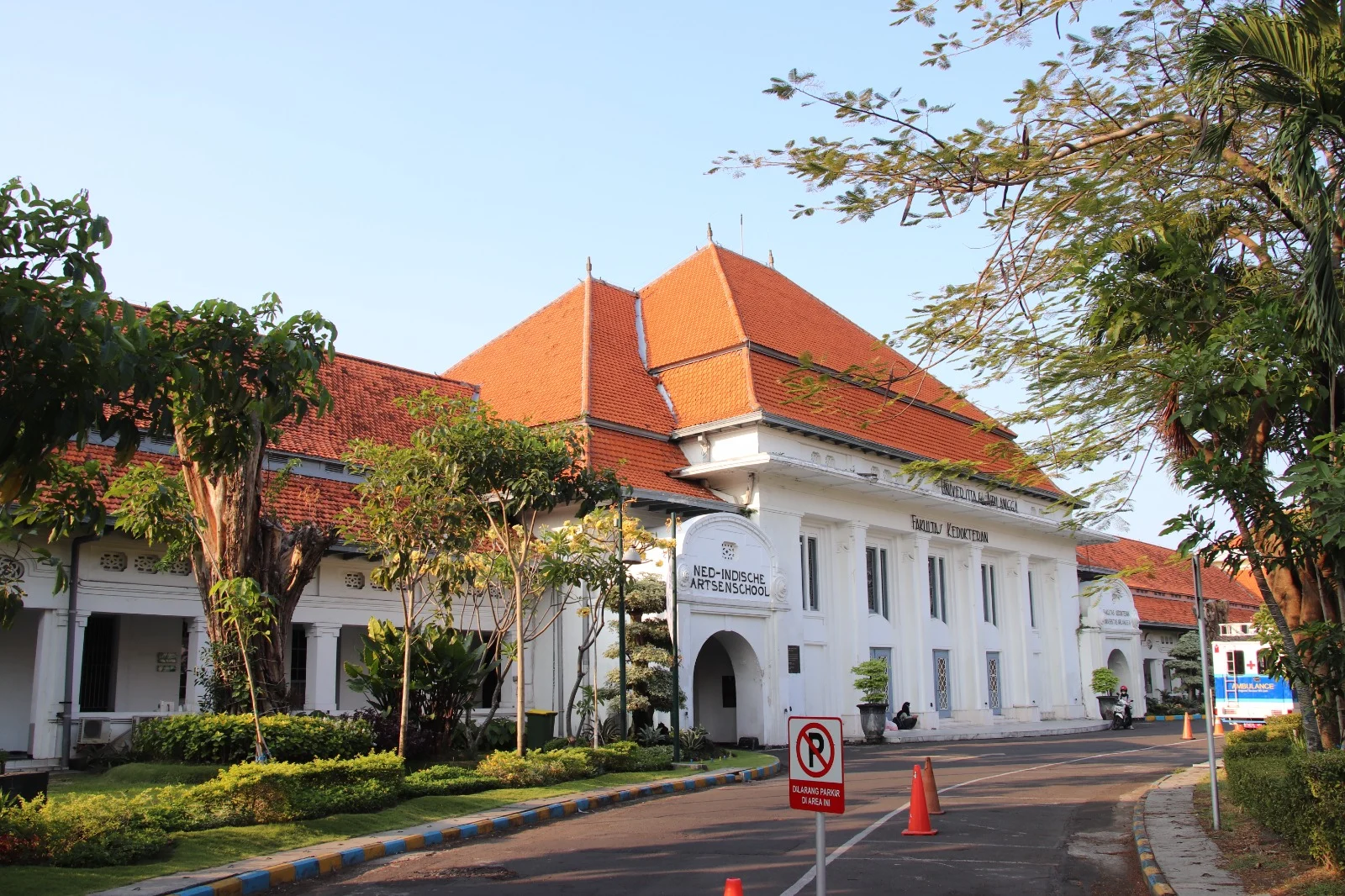
Indonesia’s second entry in the global top 3 is based in Surabaya, the country’s second-largest city and historic commercial capital. Airlangga’s rise alongside Padjadjaran is not a coincidence – it reflects a genuinely national Indonesian research acceleration, driven by expanding graduate programs, growing international research partnerships, and deliberate investment in faculty development across the country’s leading public universities.
King Faisal University & Umm Al-Qura University, Saudi Arabia – 246.5% and 245.6%

Two Saudi institutions claim the third and fourth spots globally, both propelled by the research investment priorities of Saudi Arabia’s Vision 2030 program. Umm Al-Qura holds a particularly unique distinction: it is the university of Mecca, the holiest city in Islam, drawing on connections across the Muslim world that have translated into a genuinely global research profile, including distinctive strength in the study of mass-gathering public health during the annual Hajj pilgrimage.
Renaissance School of Medicine at Stony Brook University, USA – 244.0%

The highest-ranked institution from the United States and Canada tells one of the most remarkable transformation stories in this entire global ranking. Stony Brook’s medical school was renamed in 2018 in recognition of more than $500 million in philanthropic investment from over 100 families connected to Renaissance Technologies, the legendary quantitative hedge fund. That single wave of investment – funding new faculty chairs, research centers, and infrastructure – propelled a solid regional public medical school into a top-10 global growth story, and stands as one of the clearest examples in this entire series of what concentrated philanthropic investment can do to an institution’s research trajectory.
The All-Time Giants: Top 20 by Total Publications (2000-2024)
- Harvard Medical School, USA – 274,516 publications
- Zhejiang University, China – 135,222 publications
- Shanghai Medical College, Fudan University, China – 107,900 publications
- Seoul National University College of Medicine, Republic of Korea – 104,908 publications
- Sun Yat-sen University School of Medicine, China – 103,886 publications
- University of Tokyo Faculty of Medicine, Japan – 94,878 publications
- Medical School, Nanjing University, China – 87,751 publications
- Capital Medical University, China – 79,323 publications
- Baylor College of Medicine, USA – 79,302 publications
- Yale School of Medicine, USA – 79,046 publications
- Peking Union Medical College, China – 78,679 publications
- West China School of Medicine, Sichuan University, China – 76,497 publications
- Perelman School of Medicine, University of Pennsylvania, USA – 73,898 publications
- Johns Hopkins University School of Medicine, USA – 72,512 publications
- Kyoto University Faculty of Medicine, Japan – 71,062 publications
- Stanford University School of Medicine, USA – 68,937 publications
- Yonsei University College of Medicine, Republic of Korea – 66,680 publications
- China Medical University, China – 65,498 publications
- Mayo Clinic Alix School of Medicine, USA – 65,288 publications
- Washington University School of Medicine in St. Louis, USA – 64,411 publications
Spotlights: The World’s Largest Medical Research Institutions
Harvard Medical School, USA – 274,516 publications
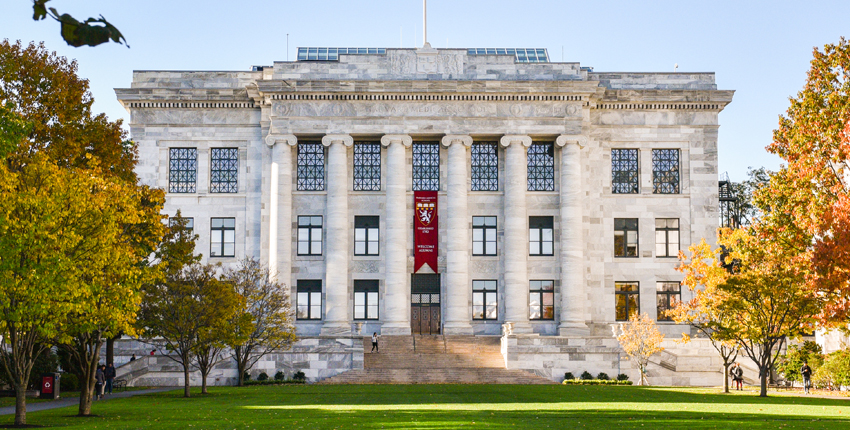
No institution on Earth comes close to Harvard Medical School’s output. Harvard’s 274,516 publications since 2000 place it in a category entirely of its own. From the world’s first cancer research laboratories to today’s AI-integrated genomic medicine, Harvard has maintained an unbroken three-century tradition of defining the frontier of medical science, and shows no sign of slowing down: its most productive years on record have come recently, not decades ago.
Zhejiang University, China – 135,222 publications
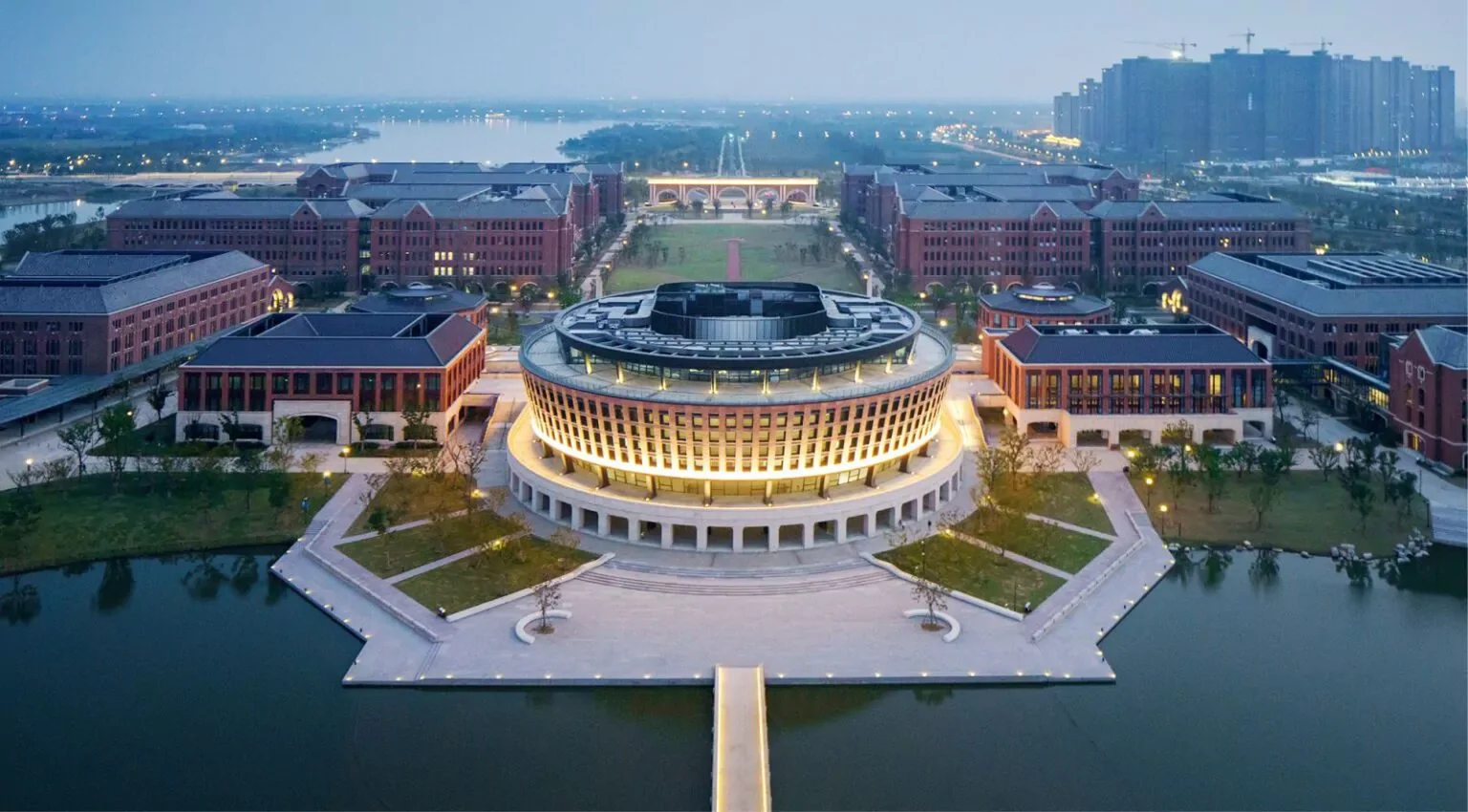
Based in Hangzhou, one of China’s most prosperous and innovative cities, Zhejiang University has built a medical research enterprise of extraordinary scale, spanning oncology, cardiovascular medicine, neuroscience, infectious disease, and traditional Chinese medicine research. Zhejiang Province carries a broader scientific legacy that predates the university’s current scale: physicist Chien-Shiung Wu and Nobel laureate Tsung-Dao Lee both studied there before reshaping 20th-century physics. Today, Zhejiang University’s medical school continues that legacy at a volume matched by almost nothing else in Asia.
Shanghai Medical College, Fudan University, China – 107,900 publications
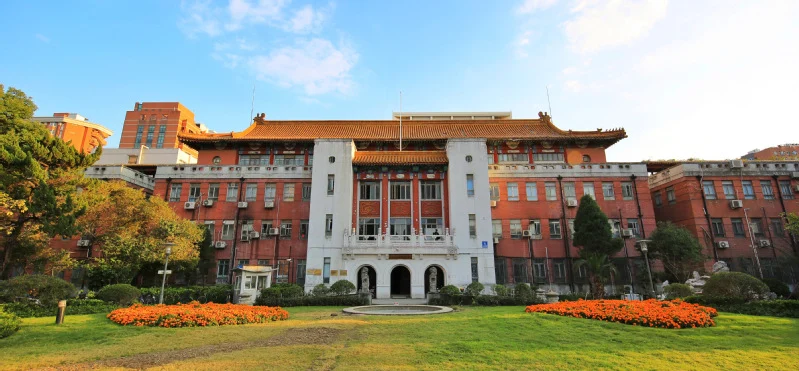
Originally established as the independent Shanghai Medical University, the institution merged with Fudan University in 2000 to create one of China’s most formidable research universities. The college now operates 17 affiliated hospitals with a combined medical staff exceeding 15,000, handling nearly a quarter of all hospital caseload in the city of Shanghai. Its research output has more than doubled as a share of the university’s total funded projects since the 2000 merger, reflecting a deliberate, sustained institutional push to become a world-class center for medical science – a push that its 107,900 publications since 2000 make clear has succeeded.
What This Global Ranking Reveals
With all 1514 institutions from BIGR’s regional editions placed on a single scale, some patterns become visible that no single continental ranking could show on its own.
Asia dominates the global top 100 by sheer force. Of the top 100 institutions worldwide, 47 are Asian – nearly half the entire list. China alone contributes 23 institutions to the global top 100, more than any other single country on Earth, while Indonesia’s 8 entries, concentrated almost entirely in the top 50, represent the most startling national growth story in this entire series.
Europe holds the most consistent depth. With 19 entries in the global top 100, Europe’s presence is broader and more evenly distributed across countries – Romania, Switzerland, Latvia, Croatia, Finland, and a dozen others all place at least one institution in the world’s fastest-growing tier, suggesting a continent-wide research acceleration rather than a handful of standout national stories.
Africa punches significantly above its weight. Despite entering this series with by far the smallest qualifying pool of institutions of any continent (108, compared to Asia’s 553), Africa still places 10 institutions in the global top 100 – a remarkable concentration rate driven almost entirely by Egypt and Ghana, and proof that a smaller research ecosystem can still produce disproportionate momentum at its leading edge.
Latin America and Australasia are the areas of greatest relative weakness in this ranking – not because their leading institutions aren’t accelerating (Argentina’s UNICEN and Chile’s Universidad de Concepción both comfortably clear 210%), but because both regions placed only 4 institutions each in the global top 100, the smallest representation of any continent evaluated. This is worth reading carefully: it does not mean research in these regions is stagnant – every regional edition found institutions accelerating well past their own historical baselines – but relative to the explosive growth rates now being posted across Asia, the Middle East, and parts of Eastern Europe, both regions’ fastest-growing institutions are, for now, accelerating from a comparatively steadier base.
The Country Leaderboard
Measured by how many institutions each country placed in the global top 100:
- China – 23 institutions
- Indonesia – 8 institutions
- USA – 6 institutions
- Egypt – 6 institutions
- Russia – 5 institutions
No other country places more than four institutions in the global top 100 – a reminder of just how concentrated this kind of research acceleration tends to be, even at a worldwide scale.
Discussion: A Genuinely New Map
If there is one finding that defines this global edition, it is this: the countries producing the fastest research growth in medicine today are, for the most part, not the countries that dominate conversations about global science.
China’s sheer scale was expected. But Indonesia’s presence at the very top of the entire global ranking – ahead of every institution in the United States, the United Kingdom, and continental Europe – is the kind of result that should reshape how the global research community thinks about where scientific momentum is actually building. The same is true of Jordan, Iraq, and Egypt each placing multiple institutions in the world’s top 100, or of Armenia’s Yerevan State Medical University out-accelerating institutions with vastly larger budgets and centuries more history.
Momentum, unlike prestige, does not ask permission. It simply shows up in the data.
This global ranking is the culmination of a year-long project mapping research acceleration across every populated continent on Earth and it offers something no single continental ranking could: a genuinely worldwide answer to the question of who is transforming medical research fastest, and where the next generation of scientific leadership may be quietly taking shape.
Authors: Aren Petrosyan, MD, Research Associate at BIGR, Hana Maheen, MD, Research Associate at BIGR and Editor at OncoDaily, Elen Baloyan, MD, Director of BIGR and Managing Editor at OncoDaily.
About BIGR
This study was conducted by the Boston Institute for Global Rankings (BIGR) – an academic initiative dedicated to transparent, data-driven evaluation of excellence in universities, medical centers, and healthcare professionals worldwide. With a focus on performance, impact, and innovation, BIGR aims to create meaningful global benchmarks for the future.
Think BIGR.
Catch up on all previous chapters of these series:
- Top Growing Medical Universities in Australasia: 2026 Edition
- Top Growing Medical Universities in Africa: 2026 Edition
- Top Growing Medical Universities in Asia: 2026 Edition
- Top Growing Medical Universities in Latin America: 2026 Edition
- Top Growing Medical Universities in Europe: 2026 Edition
- Top Growing Medical Universities in USA and Canada: 2025 Edition
- Top Growing Medical Universities in the Post-Soviet Region: 2025 Edition