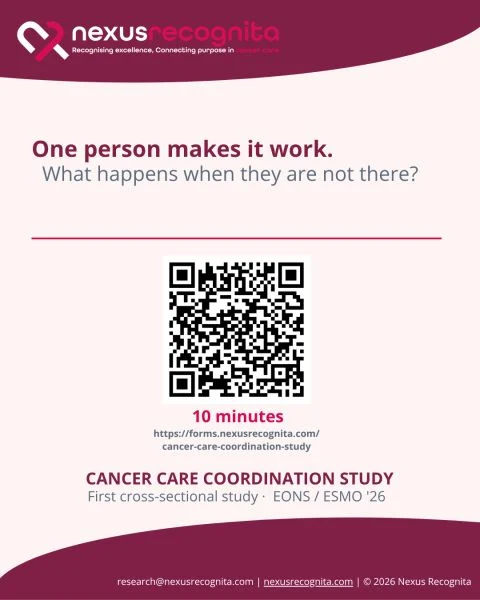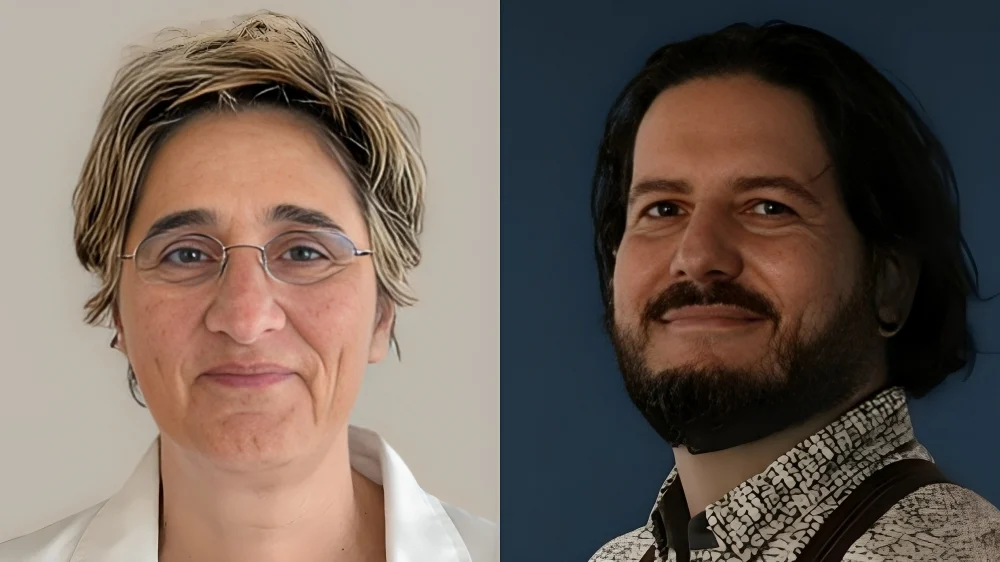
Istvan Borbiro, Founder of Nexus Recognita, shared on LinkedIn:
“Picture the person on your team who makes the difficult calls happen.
The case that needs input the team does not routinely have access to. They know who to ring. They find the specialist, get the opinion, keep the case moving. It works because they are there.
Now ask a harder question. What happens the week they are not there?
In the Cancer Care Coordination Study we ask exactly that. If the person who usually manages this kind of situation were absent, what would happen? And across the people who have answered, a large share cannot say for certain.
Some know it would stall. Many simply do not know, because the team has never had to find out. It has run on that person for so long that no one has seen it run without them.
That is a quieter kind of fragility than a missed result or a broken handoff. It is a single point of load that everyone relies on and no one has stress-tested. It holds, right up until the day it does not.
What the study does is make that visible before the day arrives. It turns an assumption the team has never examined into something it can see and plan around, while the person is still there to plan with.
If your team works like this, your ten minutes adds your experience to the picture. If it doesn’t work this way, that sharpens the finding. Your experience counts either way.
To which Zacharoula Sidiropoulou, Senior Consultant Breast Surgical Oncologist at Hospital São Francisco Xavier, added:
“Ask your cancer team one question: if our coordinator disappeared for two weeks, what exactly would happen to the cases in flight?
If the room goes quiet, is that silence that is the finding.
We pretend our pathways run on protocols. Much of the time they run on one person’s contacts, memory, and willingness to chase. The missing biopsy result gets chased because she noticed. The rare-tumour opinion arrives because he knows who answers their phone. The scan happens this week because someone walked down to radiology instead of sending a third email.
None of it is documented. None of it is backed up. All of it stands between a patient and a delayed treatment decision.
And here’s the equity problem hiding inside it: when coordination runs on personal networks instead of systems, the speed of your diagnosis depends on where you happen to be treated and on who happens to work there that week. Patients at well-connected centres get the fast informal route. Patients everywhere else get the official waiting time. Same disease, same guidelines, different clocks. Invisible coordination doesn’t just create fragility; it quietly creates a two-tier pathway no one ever decided to build.
We would never take a patient into surgery with no checklist, no second pair of hands, and no one counting the instruments. But we run entire diagnostic pathways on a single unmonitored person, and yes, we call it teamwork.
This study is doing what should have been done years ago: stress-testing that assumption before reality does it for us, while the person is still in the building to plan with. Making this work visible is how it becomes something every patient can count on , not just the lucky ones.
10 minutes. Your answer counts whether your team runs this way or not; in fact, ‘we don’t’ is exactly the comparison the data needs.”
Other articles featuring Zacharoula Sidiropoulou on OncoDaily.