





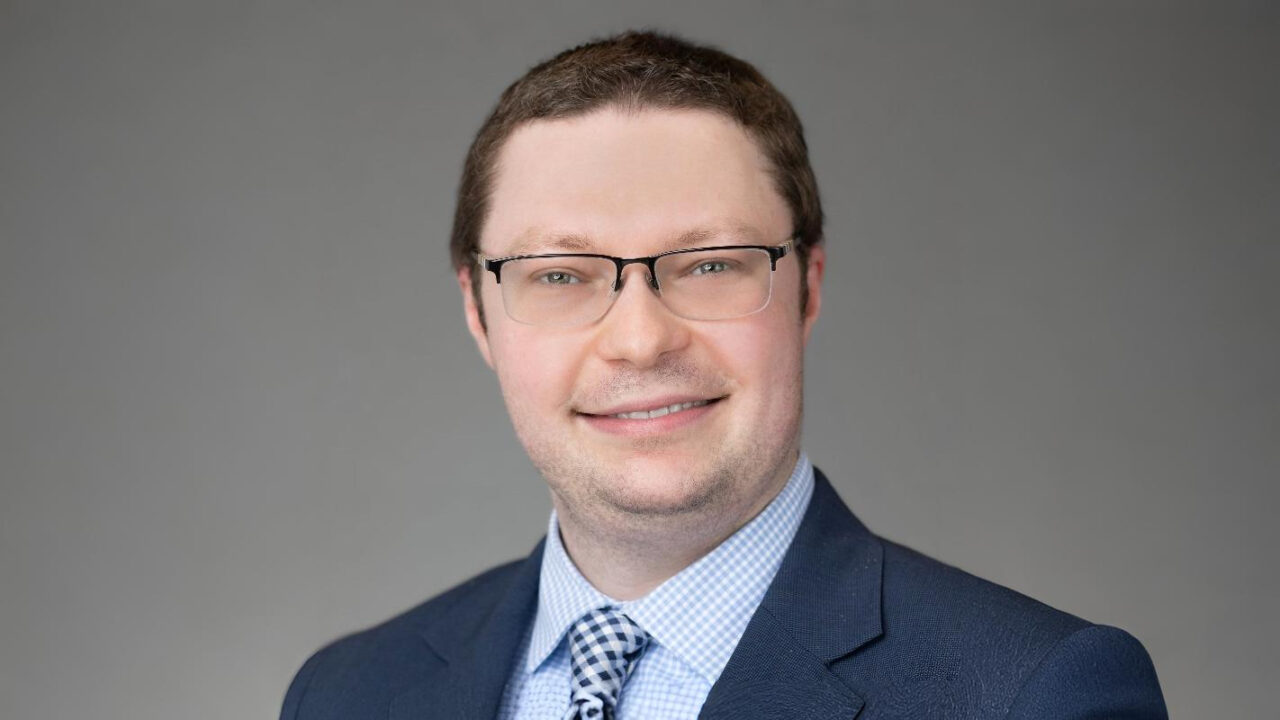
Yan Leyfman, Medical Oncologist, Co-Founder and Executive Director of MedNews Week, shared a post on X:
“Why do some CAR T cells persist for years while others quickly disappear?
A new study uncovers a fundamental mechanism that may help explain long-term CAR T-cell durability: asymmetric cell division.
Although current FDA-approved CAR T products use either CD28 or 4-1BB costimulatory domains, these signaling modules produce markedly different clinical behaviors. Patients treated with 4-1BB-based CAR T therapies often experience greater long-term persistence, but the biological basis has remained unclear.
Key findings:
- 4-1BB CAR T cells generated daughter cells with distinct fates after their first division:
- One daughter became more effector-like
- The other adopted a more memory-like, persistence-prone state
- CD28 CAR T cells, despite exhibiting greater surface protein asymmetry, showed less divergence in their transcriptional, epigenetic, and metabolic programs between daughter cells.
- Multi-omic analyses revealed that costimulatory domains influence how early fate decisions are established, ultimately shaping whether CAR T cells become short-lived effectors or long-lasting memory cells.
Why does this matter?
Long-term remissions after CAR T therapy likely depend on a small subset of infused cells acquiring a durable memory-like phenotype. Understanding how costimulatory domains influence these earliest cell fate decisions could inform the design of next-generation CAR T products with improved persistence and more durable responses.
This study provides a mechanistic link between CAR design and long-term therapeutic success—highlighting that the future of cellular therapy may be determined by what happens during a CAR T cell’s very first division. ”
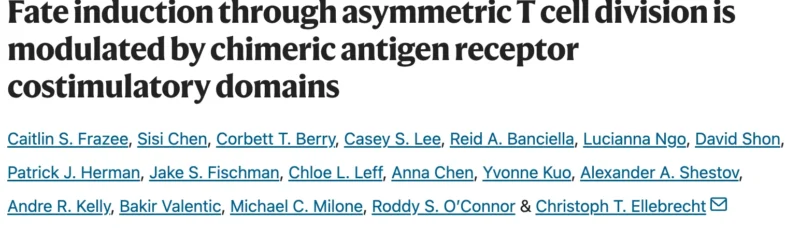
Title: Fate induction through asymmetric T cell division is modulated by chimeric antigen receptor costimulatory domains
Authors: Caitlin S. Frazee, Sisi Chen, Corbett T. Berry, Casey S. Lee, Reid A. Banciella, Lucianna Ngo, David Shon, Patrick J. Herman, Jake S. Fischman, Chloe L. Leff, Anna Chen, Yvonne Kuo, Alexander A. Shestov, Andre R. Kelly, Bakir Valentic, Michael C. Milone, Roddy S. O’Connor, Christoph T. Ellebrecht
Read The Full Article
Other articles featuring Yan Leyfman on OncoDaily.