Wungki Park, Assistant Attending at Memorial Sloan Kettering Cancer Center and Assistant Professor of Medicine at Weill Cornell Medicine, shared a post on LinkedIn:
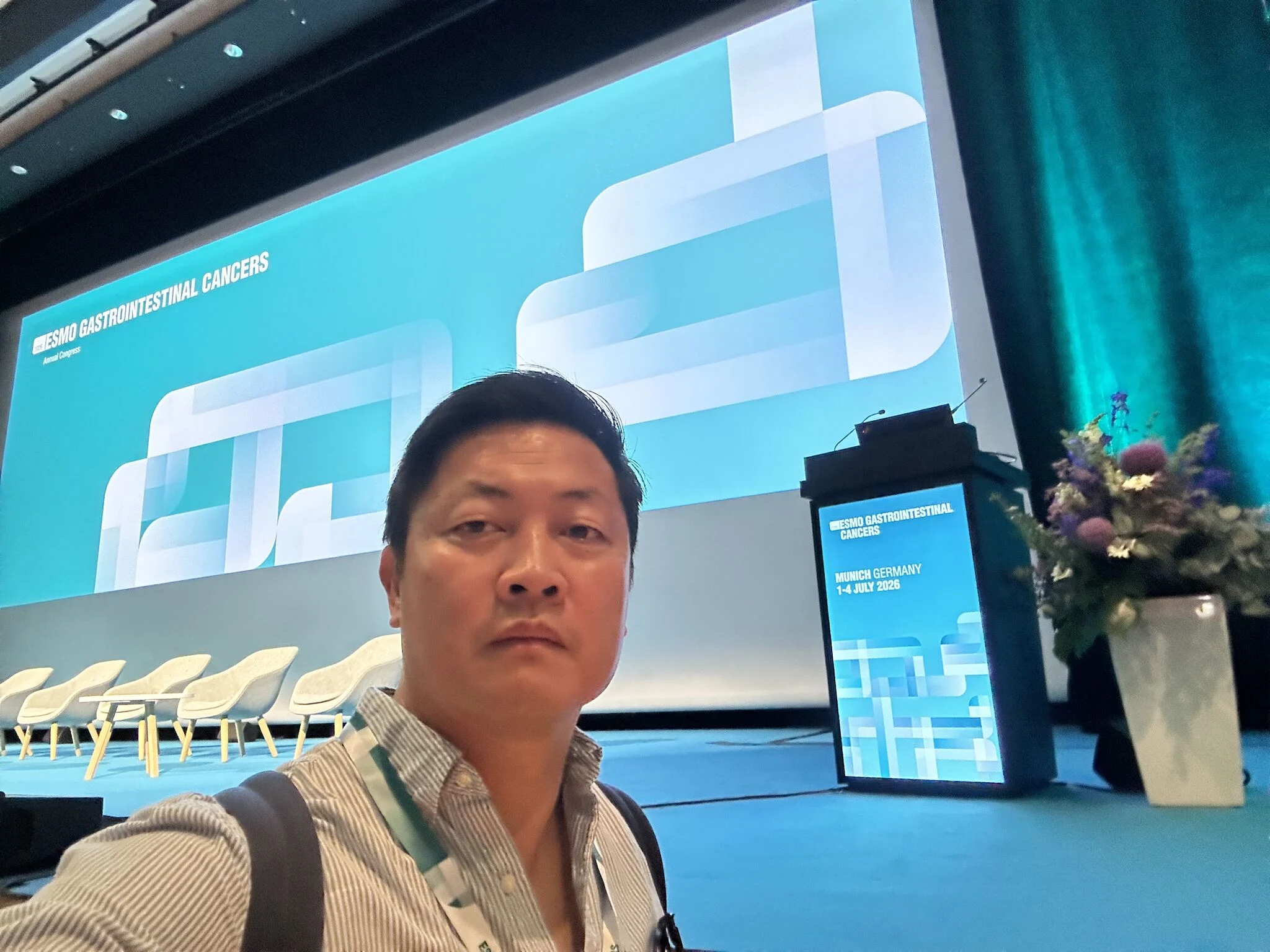
“Ready.
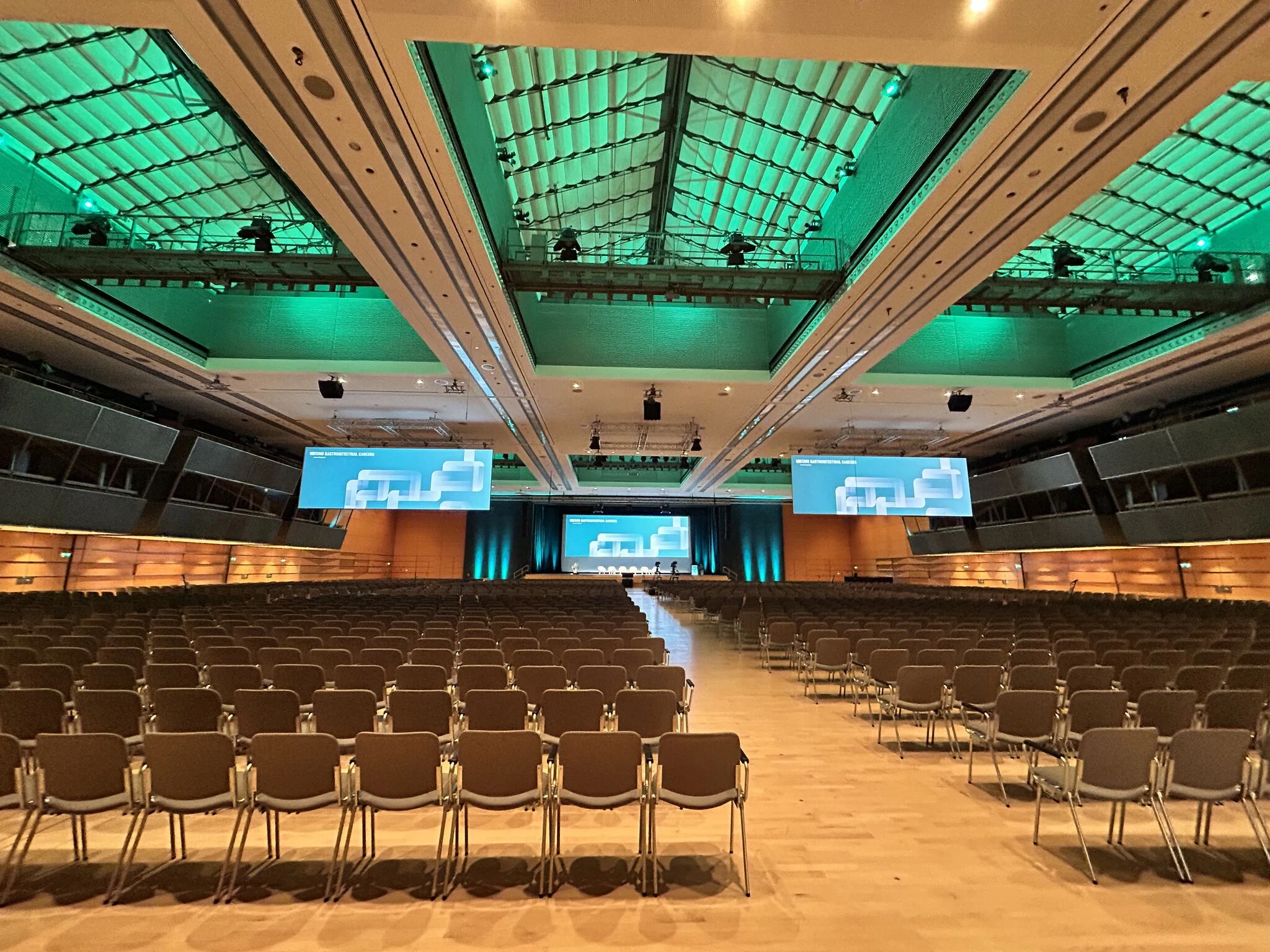
One of my favorite moments before an oral presentation is walking into an empty auditorium before anyone arrives.
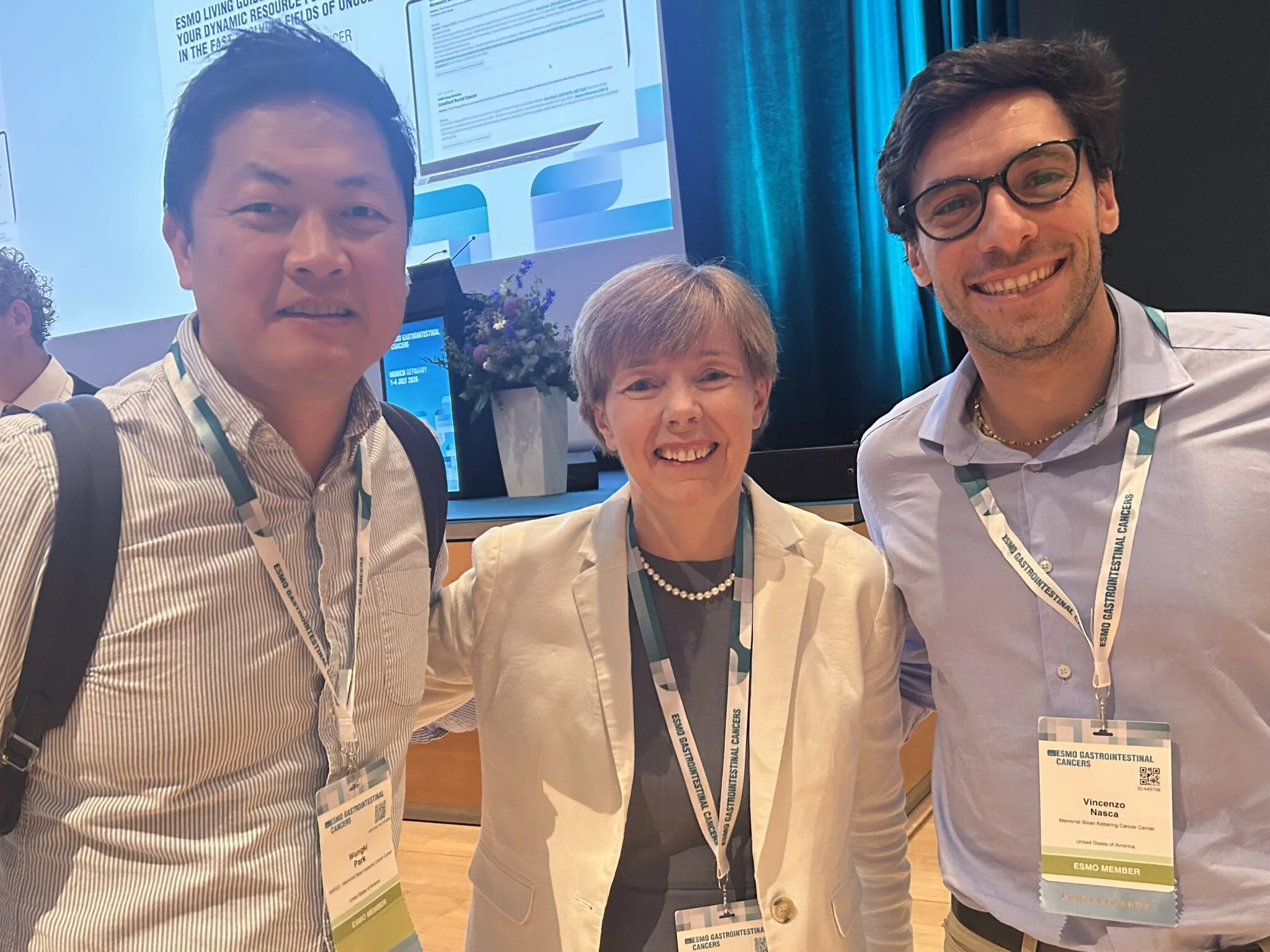
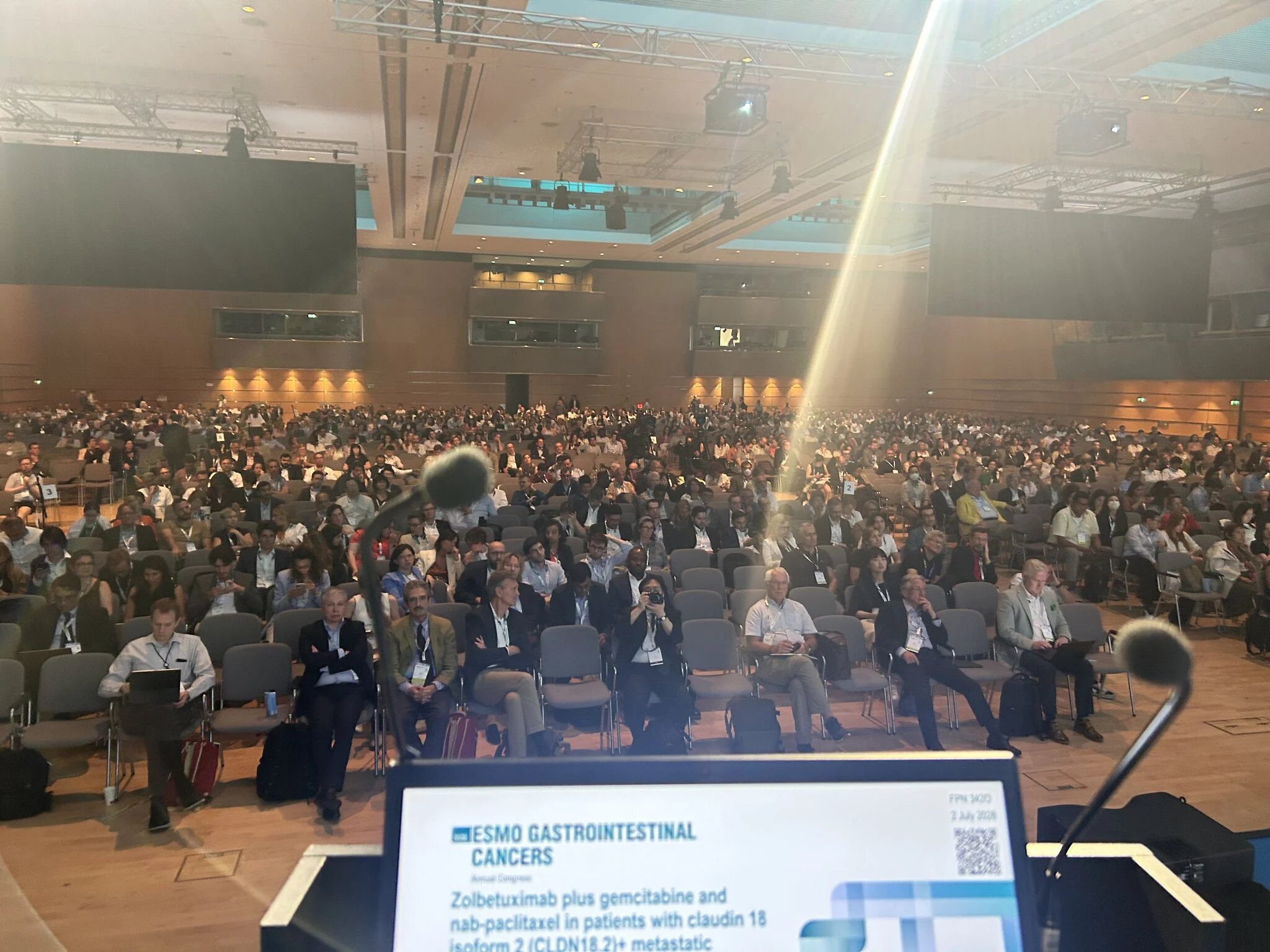
Soon, the room will be filled with colleagues from around the world, all working toward one shared goal: improving outcomes for patients with gastrointestinal cancers.
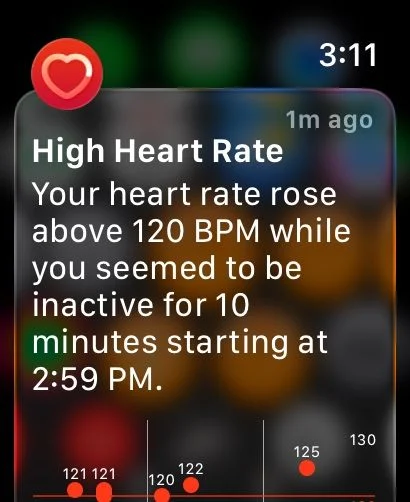
Then my Apple Watch buzzed:
‘High heart rate detected.’
At ESMO GI 2026, pancreatic cancer took another meaningful step forward.
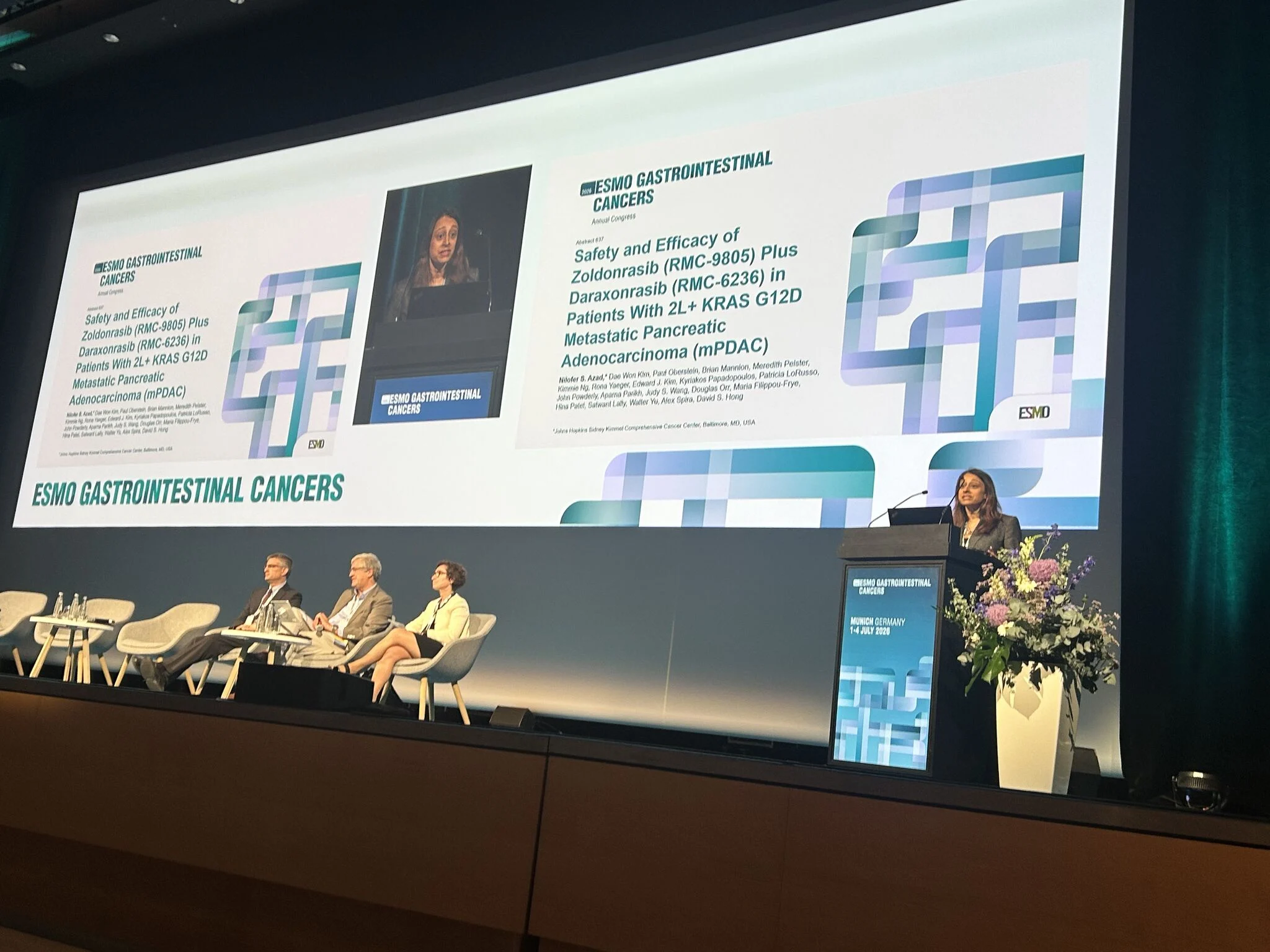
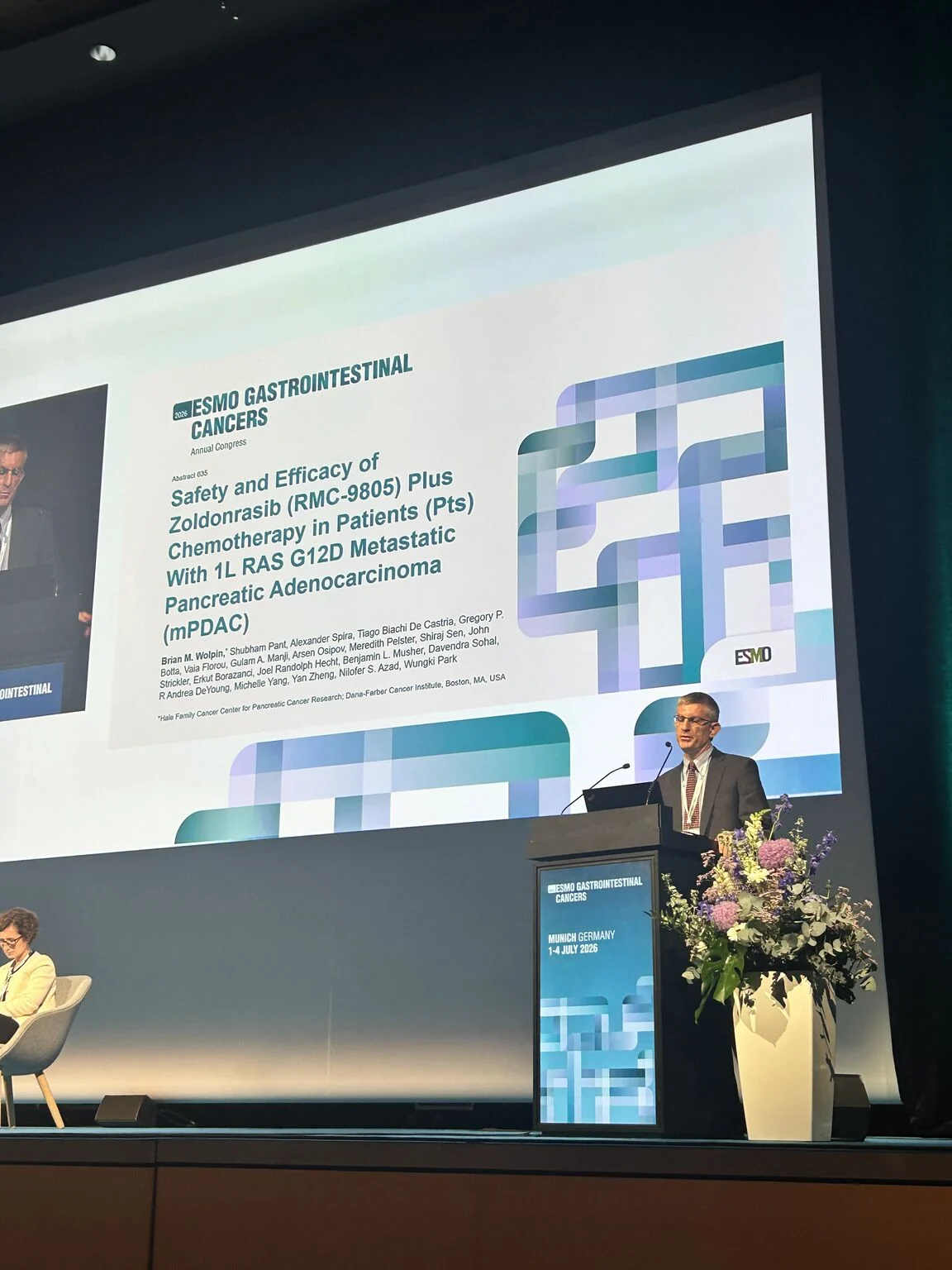
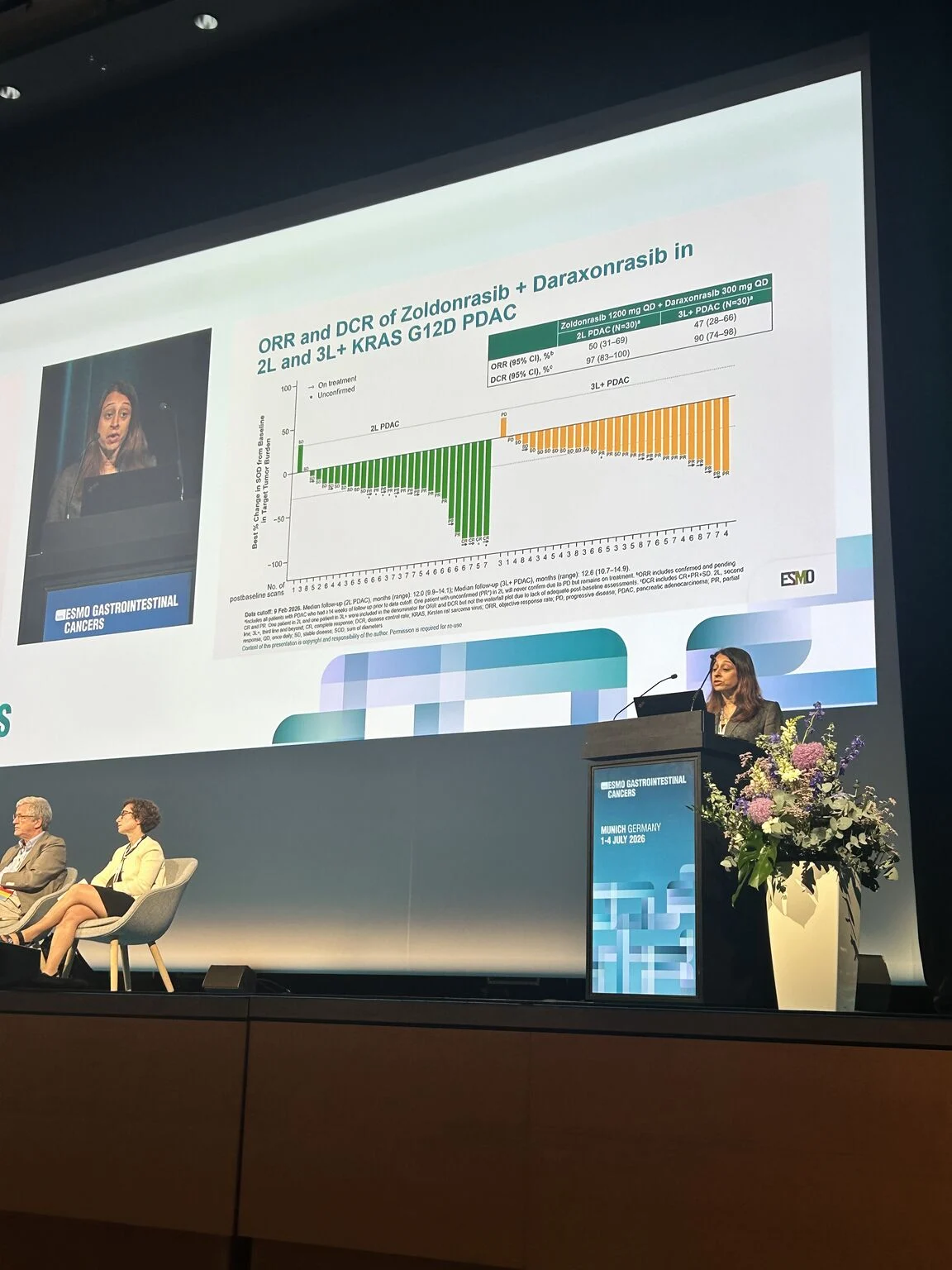
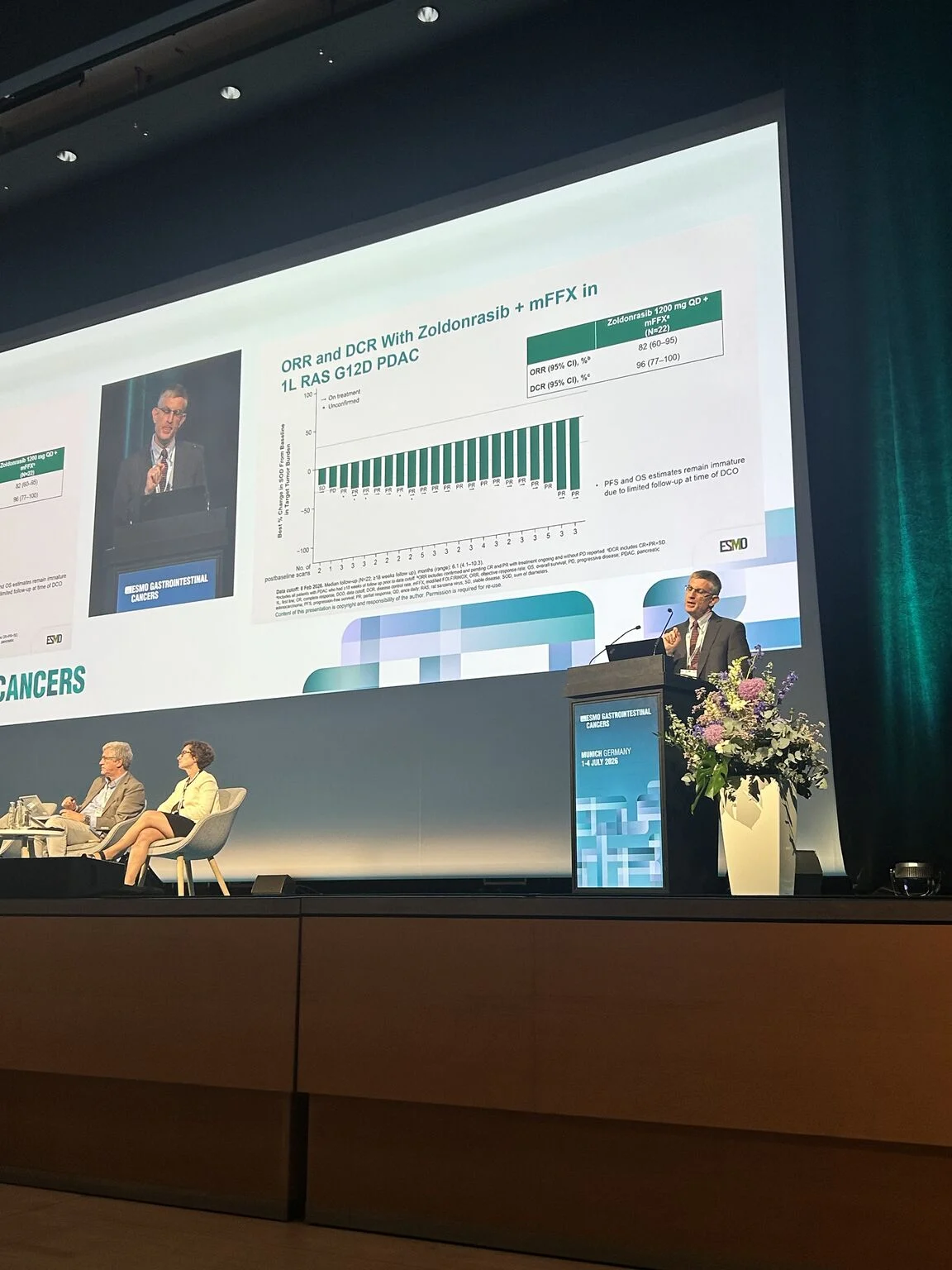
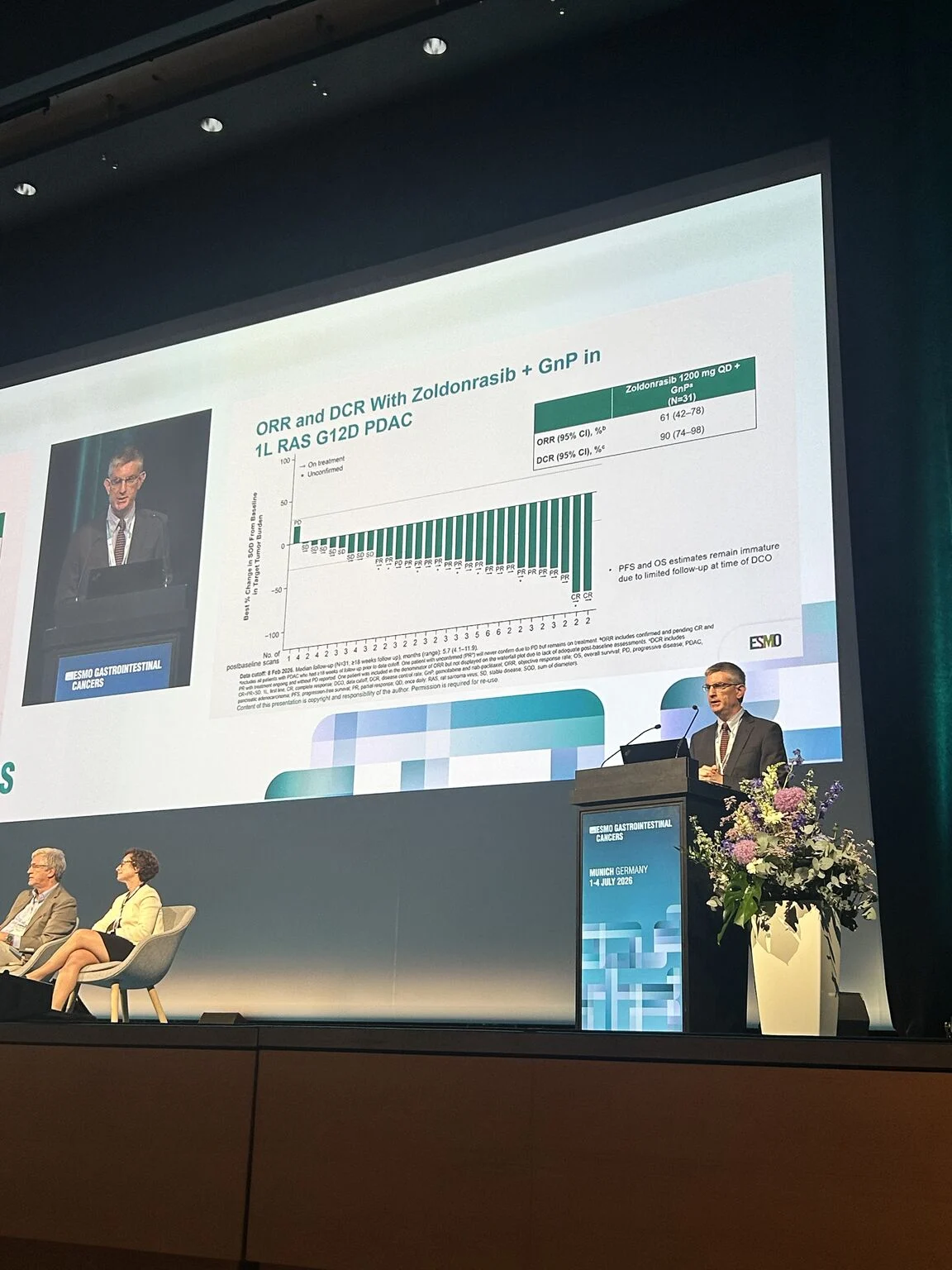
We shared new data on zoldonrasib plus chemotherapy and zoldonrasib plus daraxonrasib, highlighting how rapidly KRAS-directed therapeutics continue to evolve.
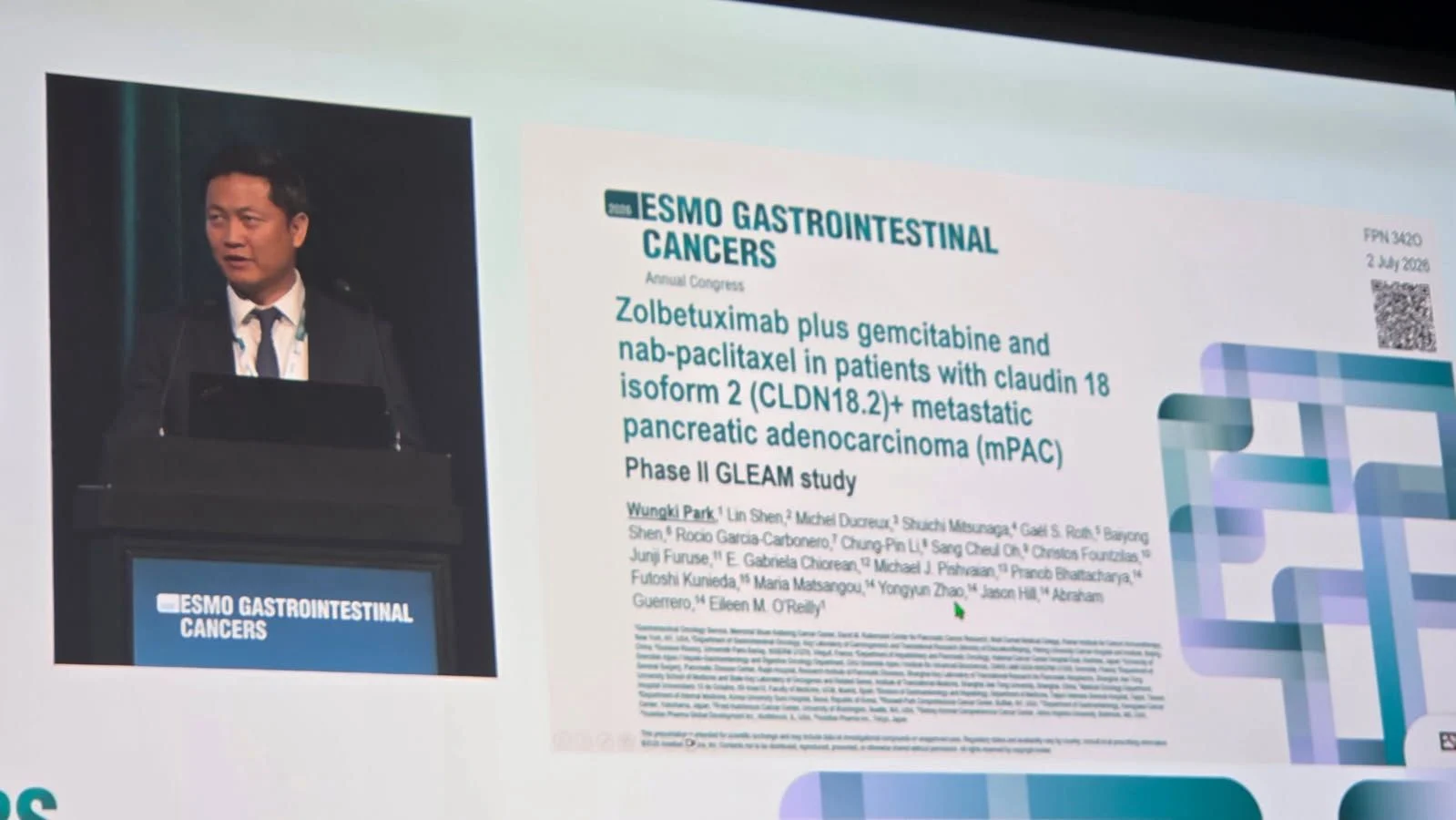
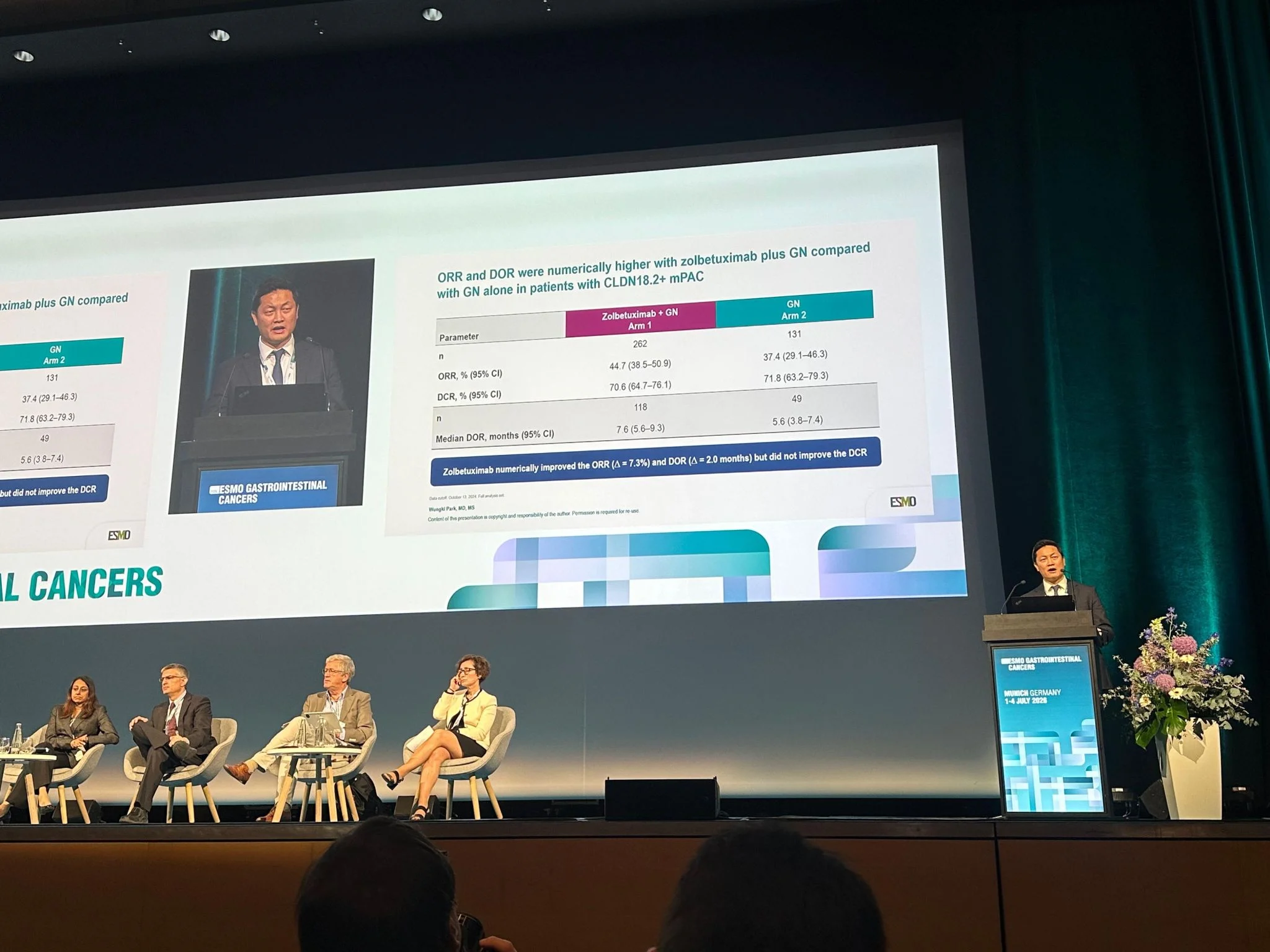
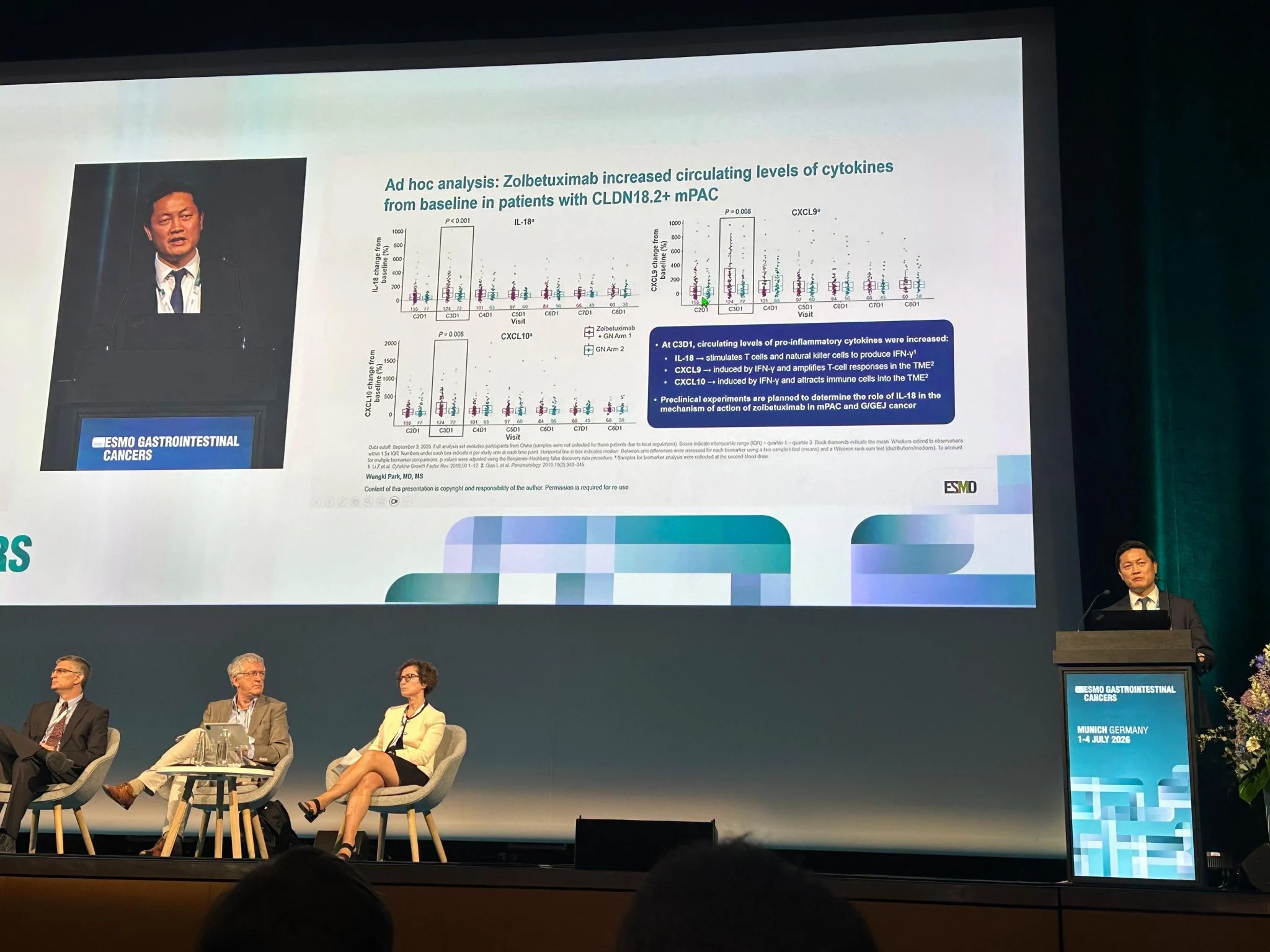
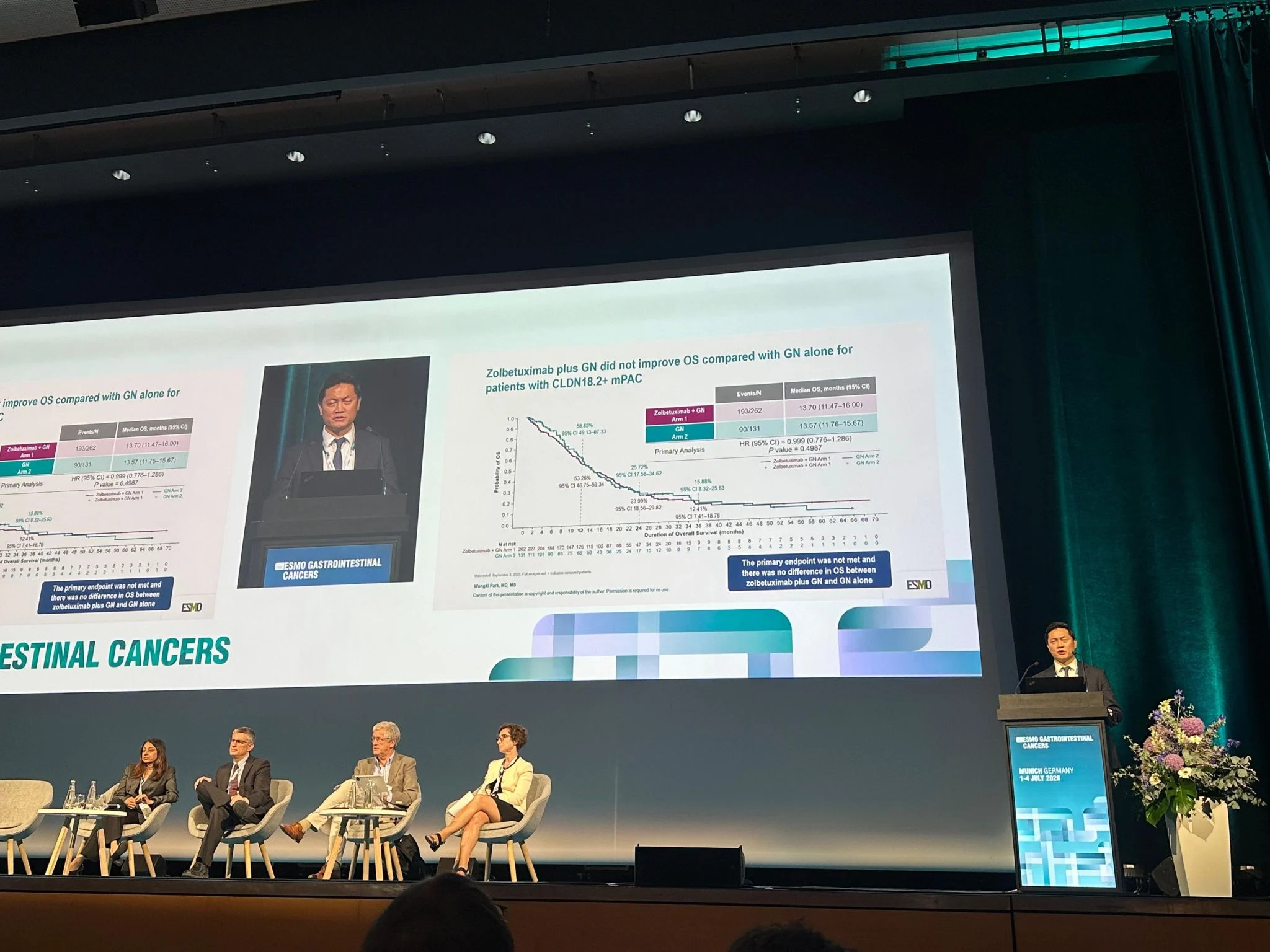
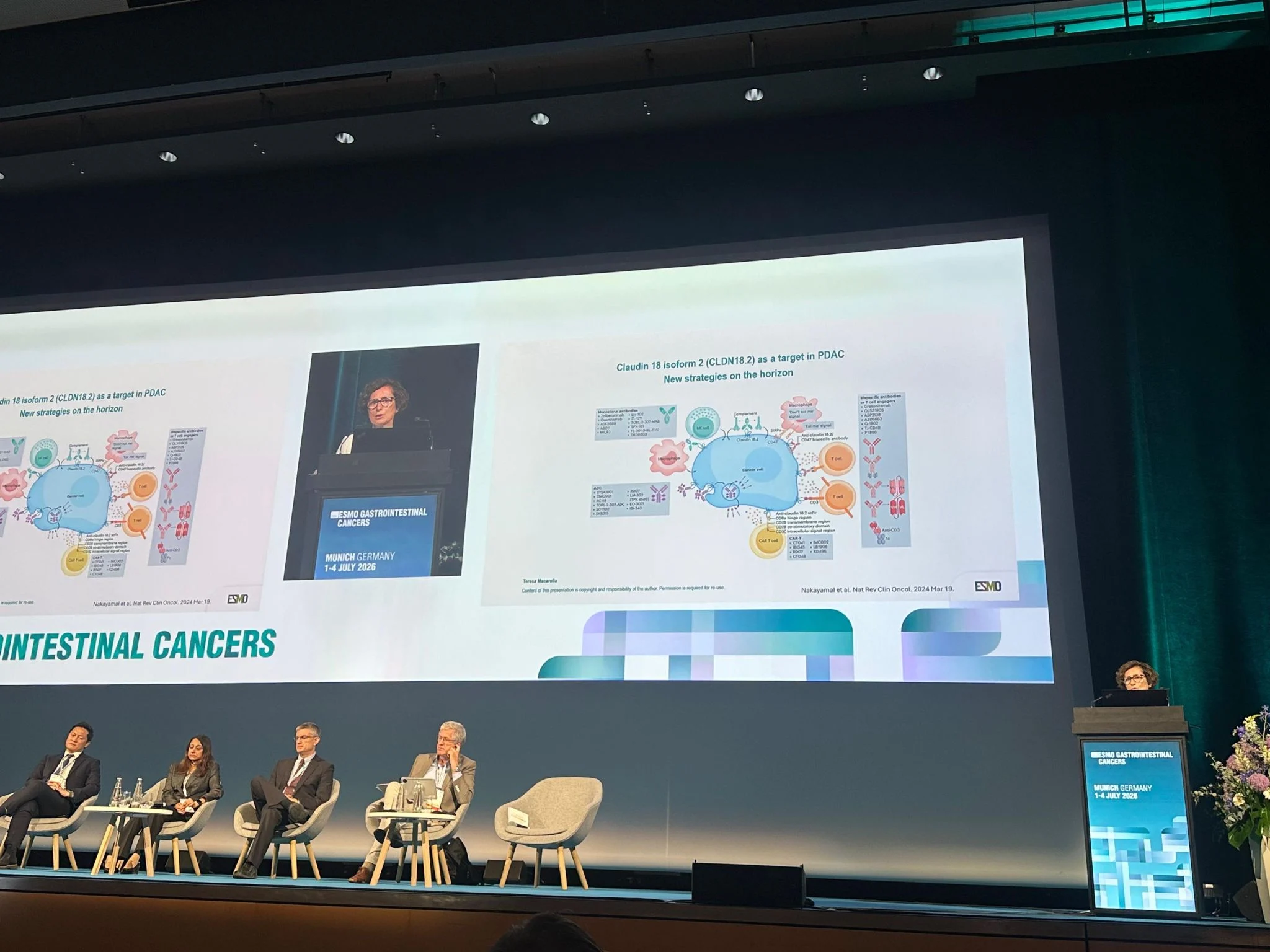
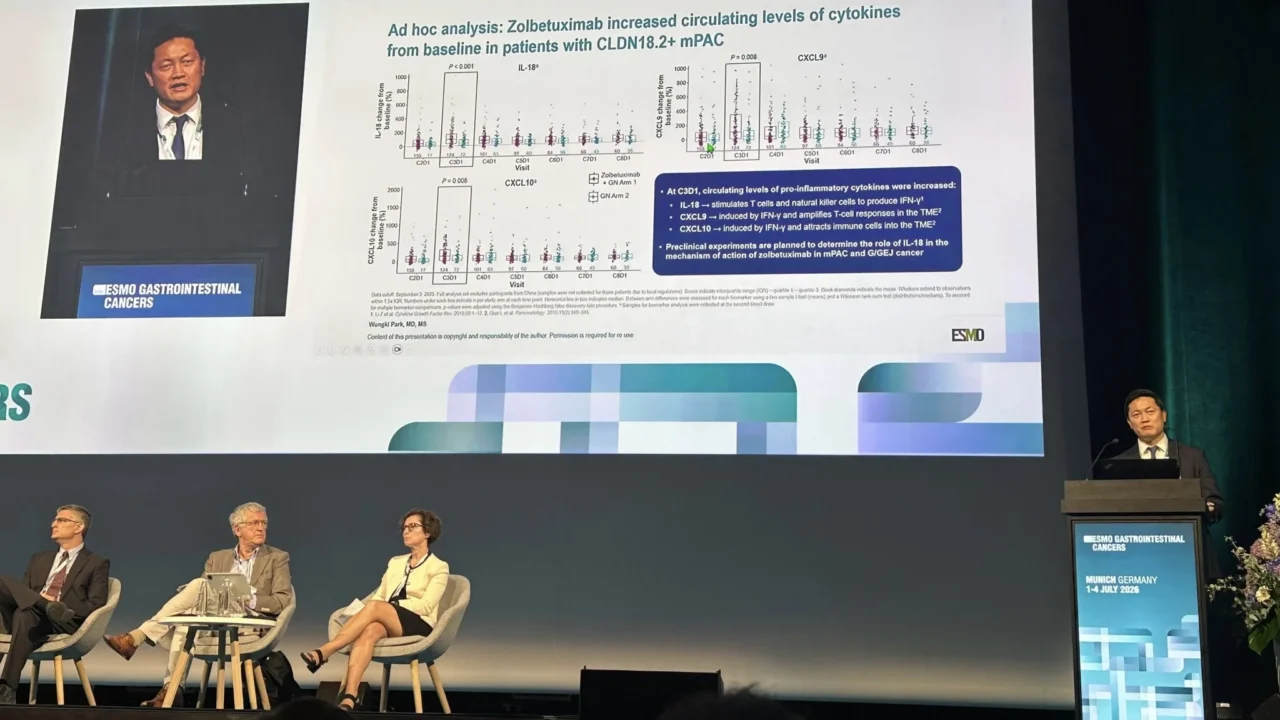
I also had the privilege of presenting the Phase II GLEAM study, which evaluated the first-generation anti-CLDN18.2 antibody, zolbetuximab, in metastatic pancreatic cancer.
Although GLEAM did not meet its primary endpoint, I left the stage feeling optimistic.
It was encouraging to see strong engagement from the audience, reinforcing the importance of continuing this work. Understanding what happened in GLEAM, decoding pancreatic cancer biology, and translating those lessons into better therapies remains a mission for every researcher and clinician and for every patient who participated in the study.
There are important opportunities to learn.
The message from the meeting was clear:
The future of pancreatic cancer will not be built on a single breakthrough, but through continuous progress driven by better science, smarter clinical trials, stronger collaboration, and a deeper understanding of the disease.”
Other articles about Pancreatic Cancer on OncoDaily.