





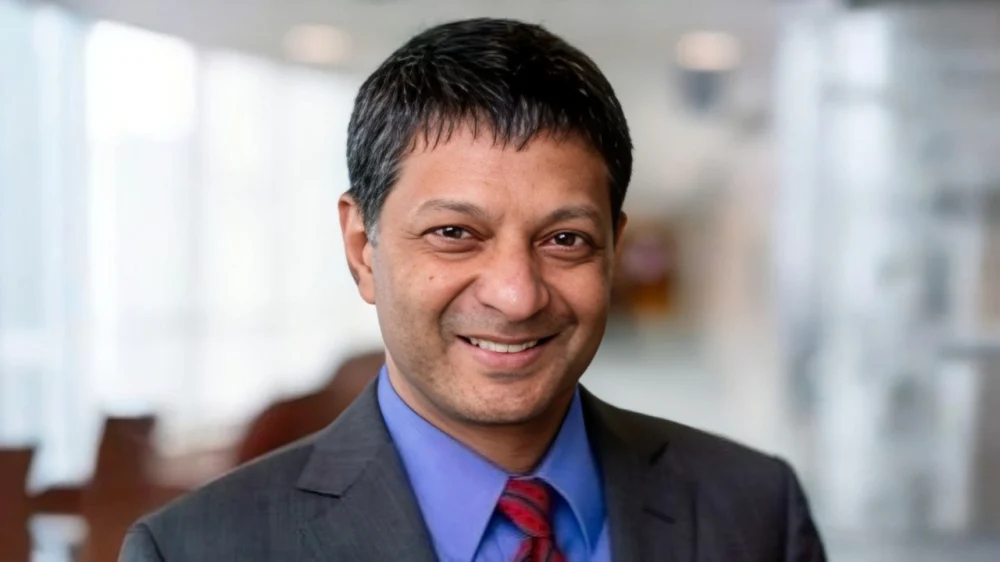
Vincent Rajkumar, Professor of Medicine at the Mayo Clinic in Rochester, shared on X:
“A major fallacy in smoldering myeloma is to think we can predict outcome with better and deeper genomics.
No. Genomics alone is not great at predicting outcome on its own. At least not what we have so far. Clone size (Tumor burden) is critical and actually does better. Bigger the clone, higher the risk of progression. By the time Clone size is 60% of the marrow, the progression risk is so high we now call it active myeloma with or without symptoms or organ damage. Models like IMWG 20-2-20 correlate with clone size.
But clone size alone is also not great either in many patients. Clone size plus genomic markers is the best. This is what Francesco Maura et al and I recommend in our paper.
Myelomarisk.com gives calculators to use if you know the genomics and clone size.
If you don’t have genomics, then you have to rely on clone size. When looking at clone size The bigger the clone, the greater the risk. Which is why using absolute values than a cut off is better. See myelomarisk.com on how to enter actual values and get better estimate of risk.
Another variable is change in cline size or genomics over time. This is an important factor whether patients with smoldering myeloma are being observed or treated. See thread for a related paper on how to act based on change in clone size.
The puzzle for us is: Almost all high risk smoldering myeloma have genomic abnormalities indistinguishable from active myeloma. The question is why do some not progress for years despite having malignancy: most like immune control and micro environment keeping the malignant clone in check. This is what we are working to figure out now.”
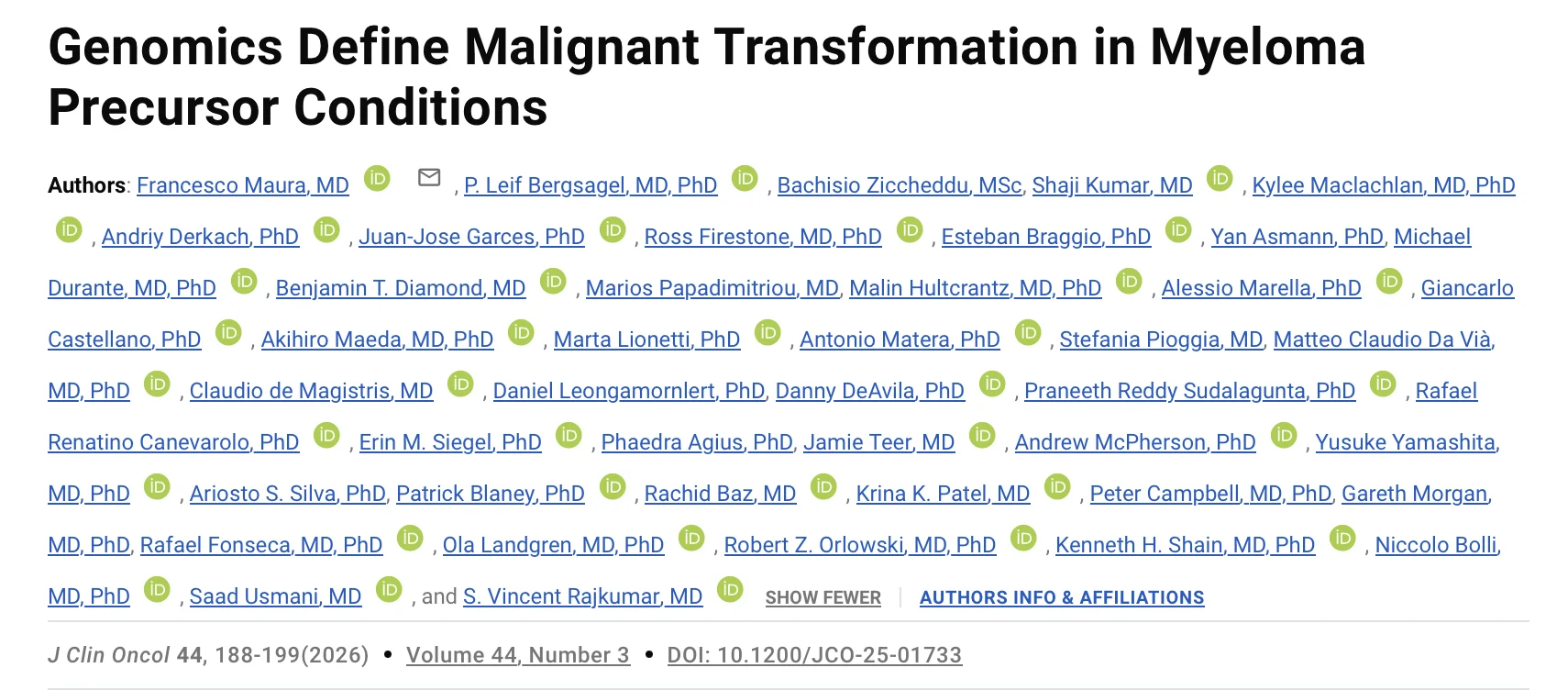
Title: Genomics Define Malignant Transformation in Myeloma Precursor Conditions
Authors: Francesco Maura, P. Leif Bergsagel, Bachisio Ziccheddu, Shaji Kumar, Kylee Maclachlan, Andriy Derkach, Juan-Jose Garces, Ross Firestone, Esteban Braggio, Yan Asmann, Michael Durante, Benjamin Diamond, Marios Papadimitriou, Malin Hultcrantz, Alessio Marella, Giancarlo Castellano, Akihiro Maeda, Marta Lionetti, Antonio Matera, Stefania Pioggia, Matteo Claudio Da Vià, Claudio de Magistris, Daniel Leongamornlert, Danny DeAvila, Praneeth Reddy Sudalagunta, Rafael Renatino Canevarolo, Erin Siegel, Phaedra Agius, Jamie Teer, Andrew McPherson, Yusuke Yamashita, Ariosto Silva, Patrick Blaney, Rachid Baz, Krina Patel, Peter Campbell, Gareth Morgan, Rafael Fonseca, Ola Landgren, Robert Orlowski, Kenneth Shain, Niccolo Bolli, Saad Usmani, S. Vincent Rajkumar
Read the Full Article on Journal of Clinical Oncology
Other posts featuring Vincent Rajkumar on OncoDaily.