





Veli Bakalov, Oncologist at MD Anderson Cancer center at Cooper University Health Care and Author of HemeOncBuddy app, shared a post on X:
”HemeOncHeroes series. Story 8
In 2014, cancer immunotherapy had a problem nobody could solve.
Checkpoint inhibitors worked spectacularly in some patients and not at all in others. Within the same tumor type, response rates ranged from 5 to 50 percent.
A small Hopkins team thought they knew why.
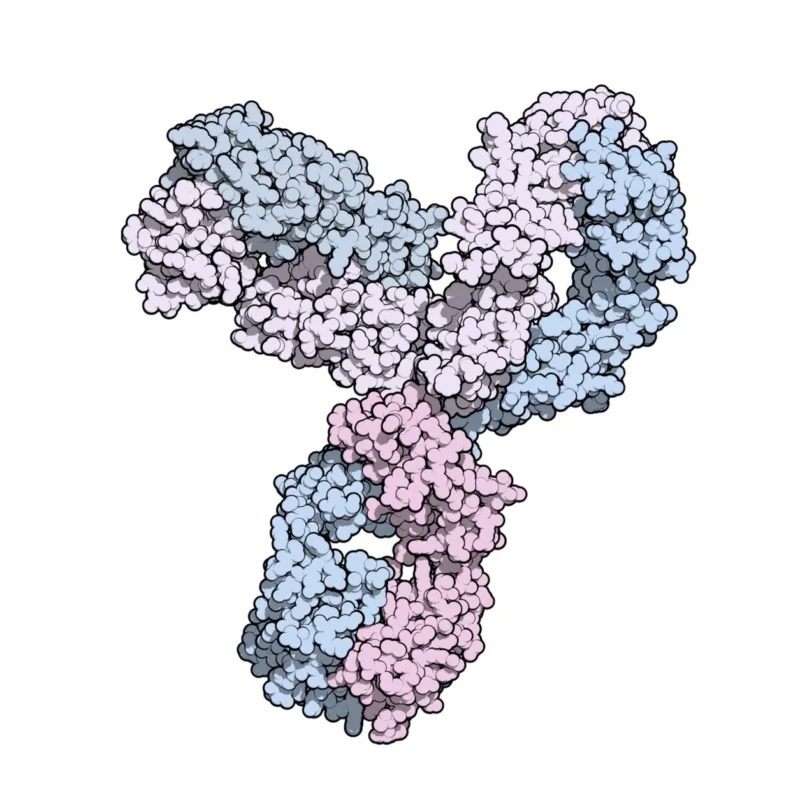
Pembrolizumab (Keytruda). The first FDA-approved cancer treatment for a tissue-agnostic indication: MSI-H or dMMR solid tumors, regardless of tissue of origin.
PD-L1 was imperfect, and no biomarker reliably separated responders from non-responders across tumors.
At Johns Hopkins, a small group of physicians had a hypothesis.
Tumors with a high mutational burden, especially those with mismatch repair deficiency, should be more recognizable to the immune system. They should produce more neoantigens. They should respond to immunotherapy.
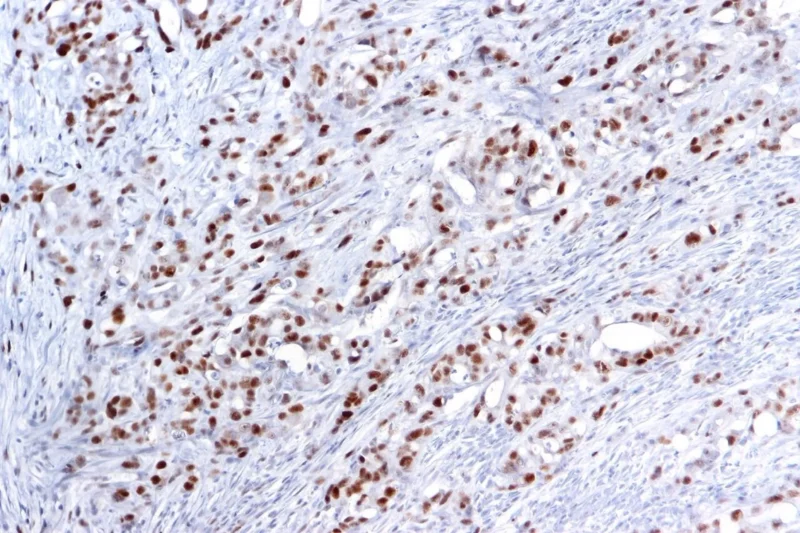
MSI-H colorectal adenocarcinoma with MSH6 loss. The biomarker that predicts pembrolizumab response.
The logic was simple.
Mismatch repair (MLH1, MSH2, MSH6, PMS2) is the cell’s DNA spellchecker. Lose it, and mutations pile up, often 10 to 50 times a normal tumor, clustered at short repeats called microsatellites. That is MSI-high.
Every mutation is a chance to make a neoantigen, a fragment the immune system reads as foreign.
A dMMR tumor is loud: packed with neoantigens and infiltrated by T cells. But the T cells are held back by the PD-1 brake.
Pembrolizumab releases it.
The team included Dung Le, a young Hopkins oncologist; Luis Diaz, Bert Vogelstein, and the immunologist Drew Pardoll.
They designed a small phase 2 trial.
It enrolled 41 patients across three cohorts: dMMR colorectal cancer, MMR-proficient colorectal cancer, and dMMR non-colorectal cancers.
All received pembrolizumab.
In 2015 they published the results in NEJM.
In MMR-deficient colorectal cancer, the immune-related objective response rate was 40 percent. In MMR-proficient colorectal cancer, it was zero.
Responses were also seen in dMMR non-colorectal cancers. Mismatch repair status had completely separated responders from non-responders.
That small Hopkins trial became the proof of principle.
By 2017, pooled data from five pembrolizumab trials (KEYNOTE-016, 164, 012, 028, 158) totaling 149 patients with MSI-H/dMMR cancers supported the FDA decision.
In 2017, the FDA granted pembrolizumab the first tissue-agnostic cancer approval: unresectable or metastatic MSI-H or dMMR solid tumors after prior treatment, regardless of histology.
It was the first time the FDA approved a cancer treatment based on a shared molecular feature across tumor sites rather than the organ where the cancer began.
The implications cascaded.
Larotrectinib and entrectinib followed for NTRK fusion-positive solid tumors.
Selpercatinib followed for RET fusion-positive solid tumors.
Dabrafenib plus trametinib followed for many unresectable or metastatic BRAF V600E solid tumors (colorectal cancer is excluded from that tissue-agnostic indication, due to intrinsic resistance to BRAF inhibition).
Trastuzumab deruxtecan followed for HER2-positive, IHC 3+ solid tumors.
The era of tumor-agnostic oncology had arrived.
For patients with MMR-deficient cancers, the survival changes have been remarkable.
Many patients with previously fatal MMR-deficient metastatic colorectal cancer have achieved durable complete responses on pembrolizumab and live for years.
In 2024, Memorial Sloan Kettering investigators (Andrea Cercek and Luis Diaz) reported updated phase 2 data: all 42 patients with locally advanced dMMR rectal cancer who completed dostarlimab had a clinical complete response, without surgery, radiation, or conventional chemotherapy at that point.
The disease that often required chemoradiation, total mesorectal excision, and sometimes a permanent ostomy could now, in selected dMMR patients, be driven into durable complete clinical response with immunotherapy alone.
Le, Diaz, and their colleagues changed the framework of how oncology defines a treatment indication.
What matters is not just where the tumor came from. What matters is what is broken inside its cells.
FDA tissue-agnostic transcript.
Title: PD-1 Blockade in Tumors with Mismatch-Repair Deficiency
Authors: Dung T. Le, Jennifer N. Uram, Hao Wang, Bjarne R. Bartlett, Holly Kemberling, Aleksandra D. Eyring, Andrew D. Skora, Brandon S. Luber, Nilofer S. Azad, Dan Laheru, Barbara Biedrzycki, Ross C. Donehower, Atif Zaheer, George A. Fisher, Todd S. Crocenzi, James J. Lee, Steven M. Duffy, Richard M. Goldberg, Albert de la Chapelle, Minori Koshiji, Feriyl Bhaijee, Thomas Huebner, Ralph H. Hruban, Laura D. Wood, Nathan Cuka, Drew M. Pardoll, Nickolas Papadopoulos, Kenneth W. Kinzler, Shibin Zhou, Toby C. Cornish, Janis M. Taube, Robert A. Anders, James R. Eshleman, Bert Vogelstein, Luis A. Diaz Jr.
Other Articles Featuring Veli Bakalov On OncoDaily.