The Breast Cancer Research Foundation shared a post on LinkedIn:
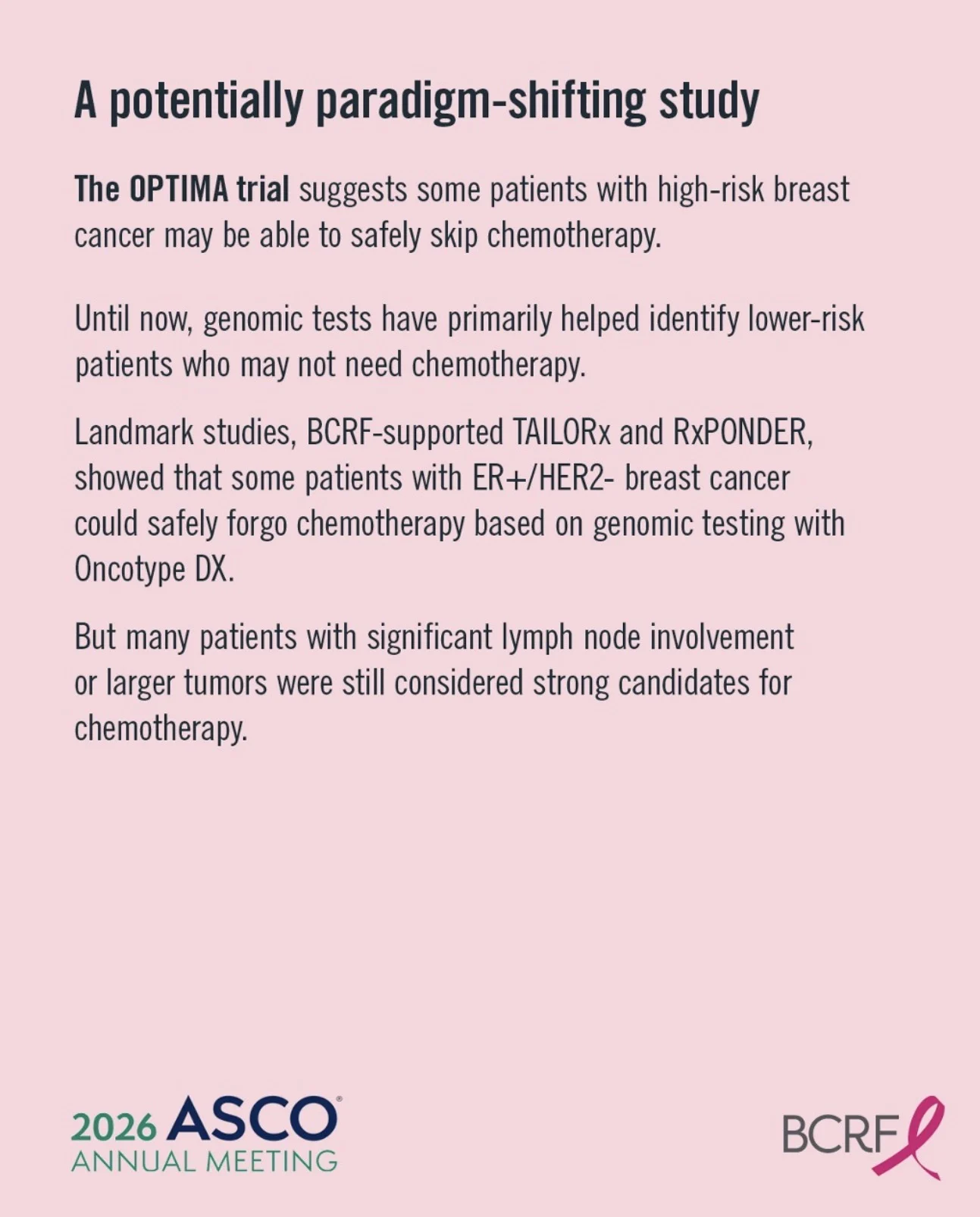
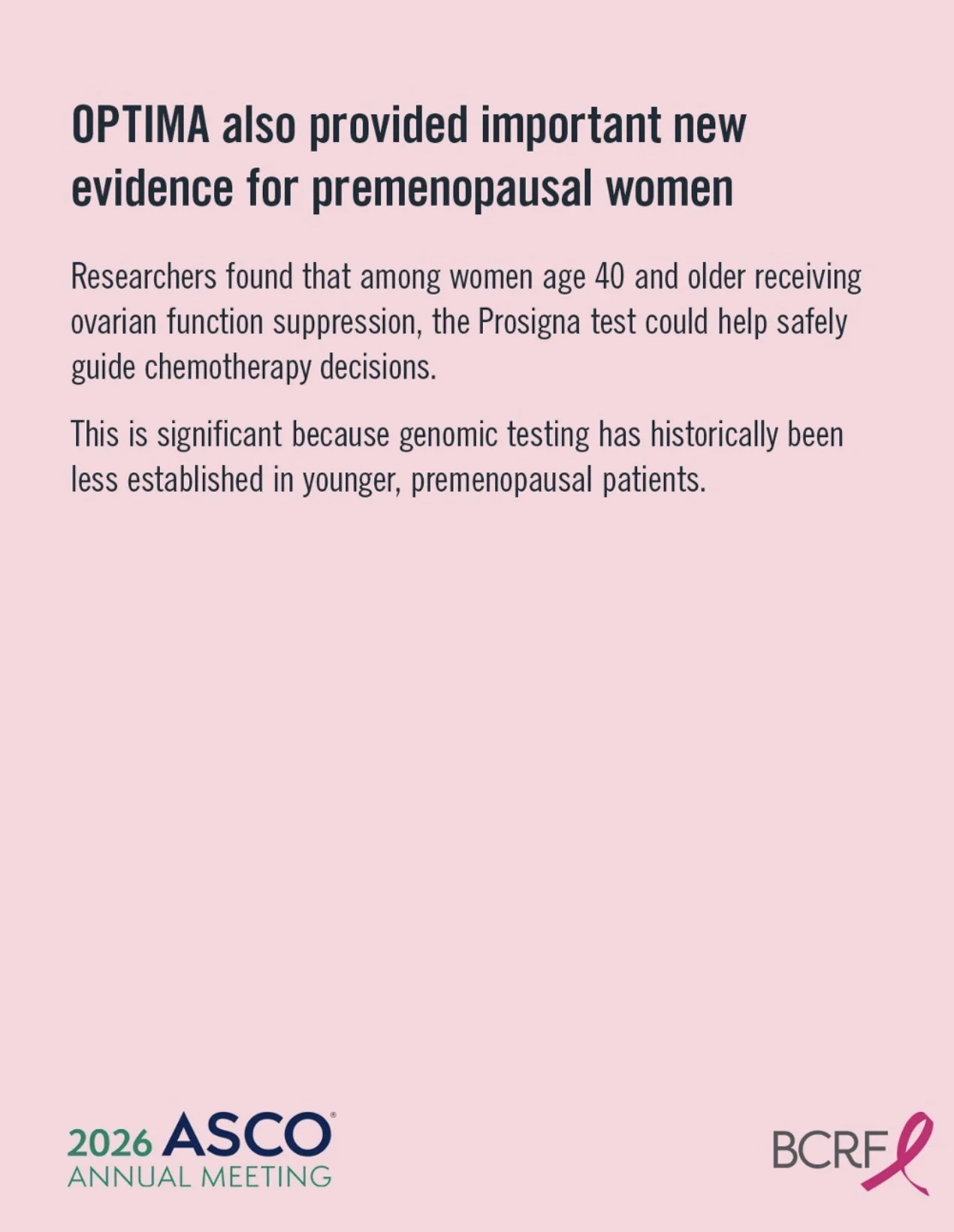
”One of the most important breast cancer studies presented at ASCO 2026 may change how doctors think about chemotherapy for patients with high-risk disease.
Previous landmark studies, including TAILORx and RxPONDER, showed that genomic testing could help some patients with ER-positive, HER2-negative breast cancer safely avoid chemotherapy.
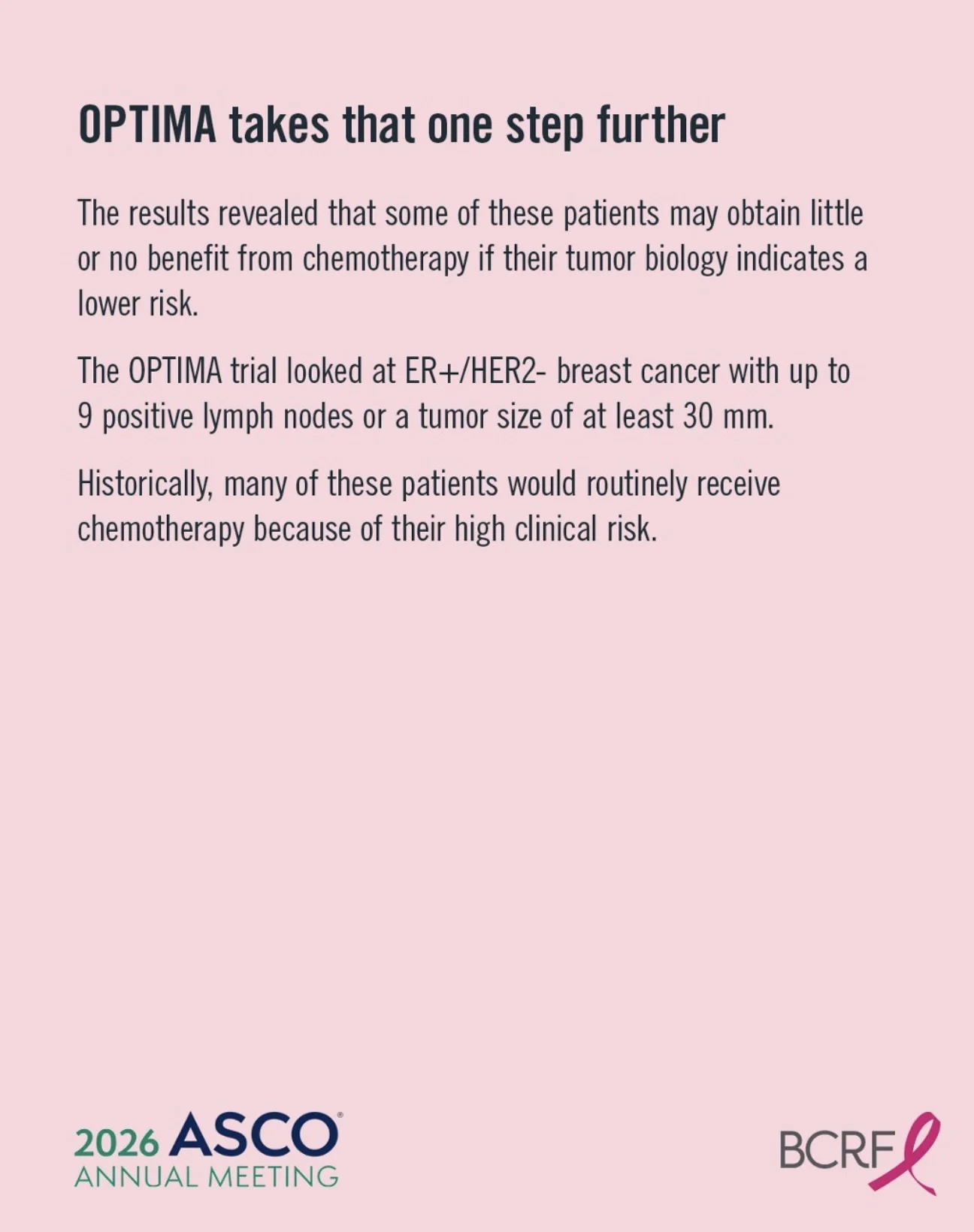
The OPTIMA trial extends that concept to women with up to 9 positive lymph nodes – patients who would typically be considered strong candidates for chemotherapy.
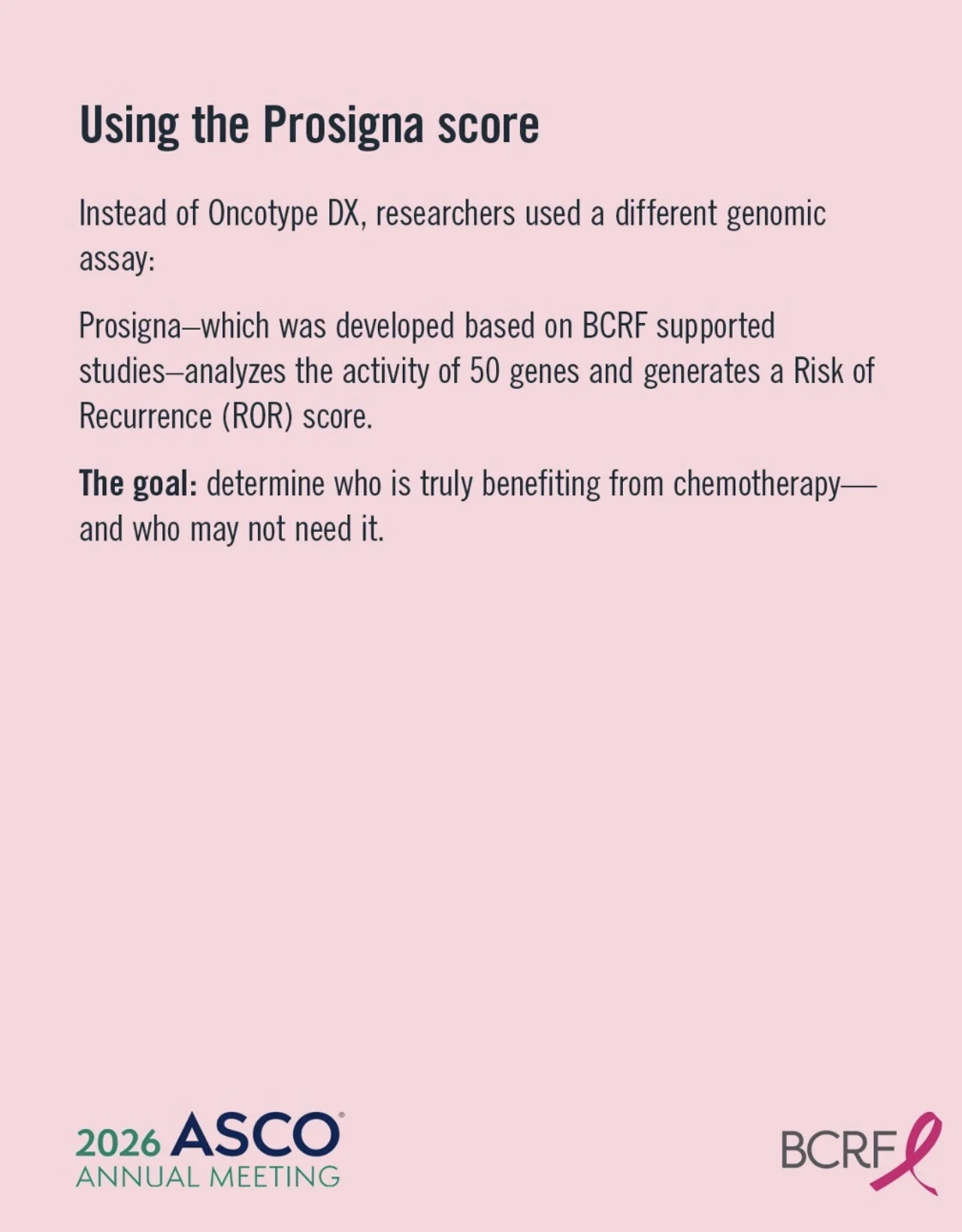
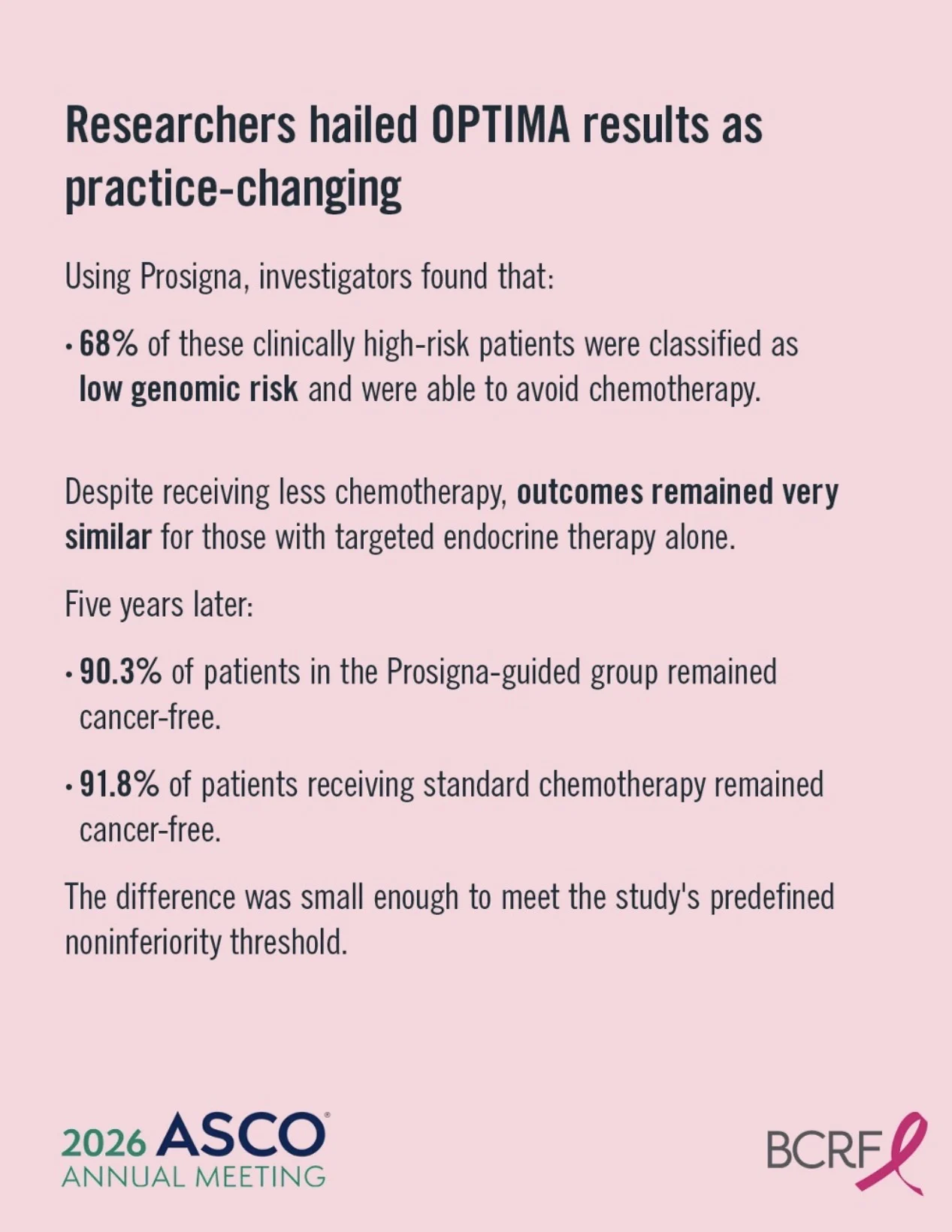
Using the 50-gene Prosigna genomic test, which was developed based on BCRF supported studies, researchers identified a large group of patients who appeared to derive minimal, if any, benefit from chemotherapy while maintaining excellent outcomes.
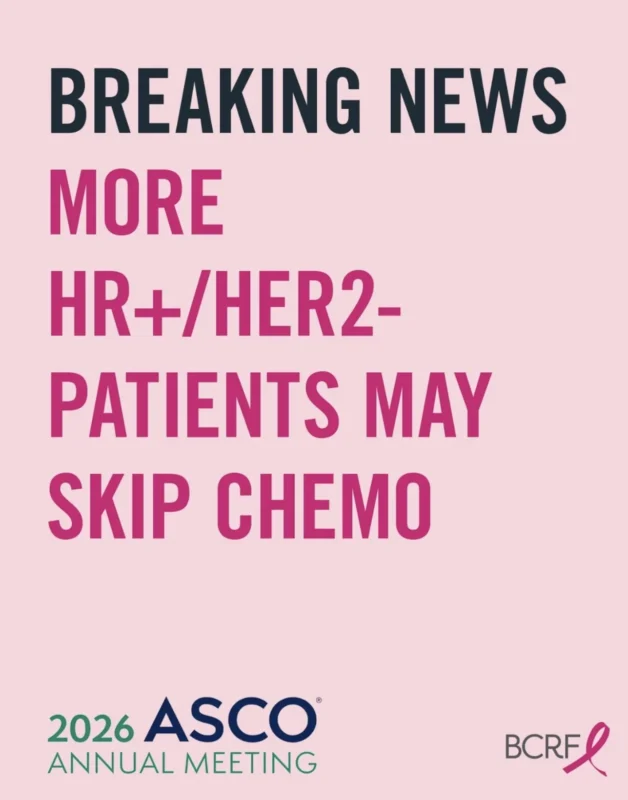
The study also provided important new evidence supporting the use of genomic testing in certain premenopausal women receiving ovarian function suppression.
Why does this matter? Chemotherapy can be associated with significant short- and long-term side effects. Findings like these help doctors better identify which patients may benefit from chemotherapy – and which may be able to safely avoid it.”
Other Articles About The Breast Cancer Research Foundation On OncoDaily.