Thaís Santana, Radiation Oncologist at CEBROM, shared on LinkedIn:
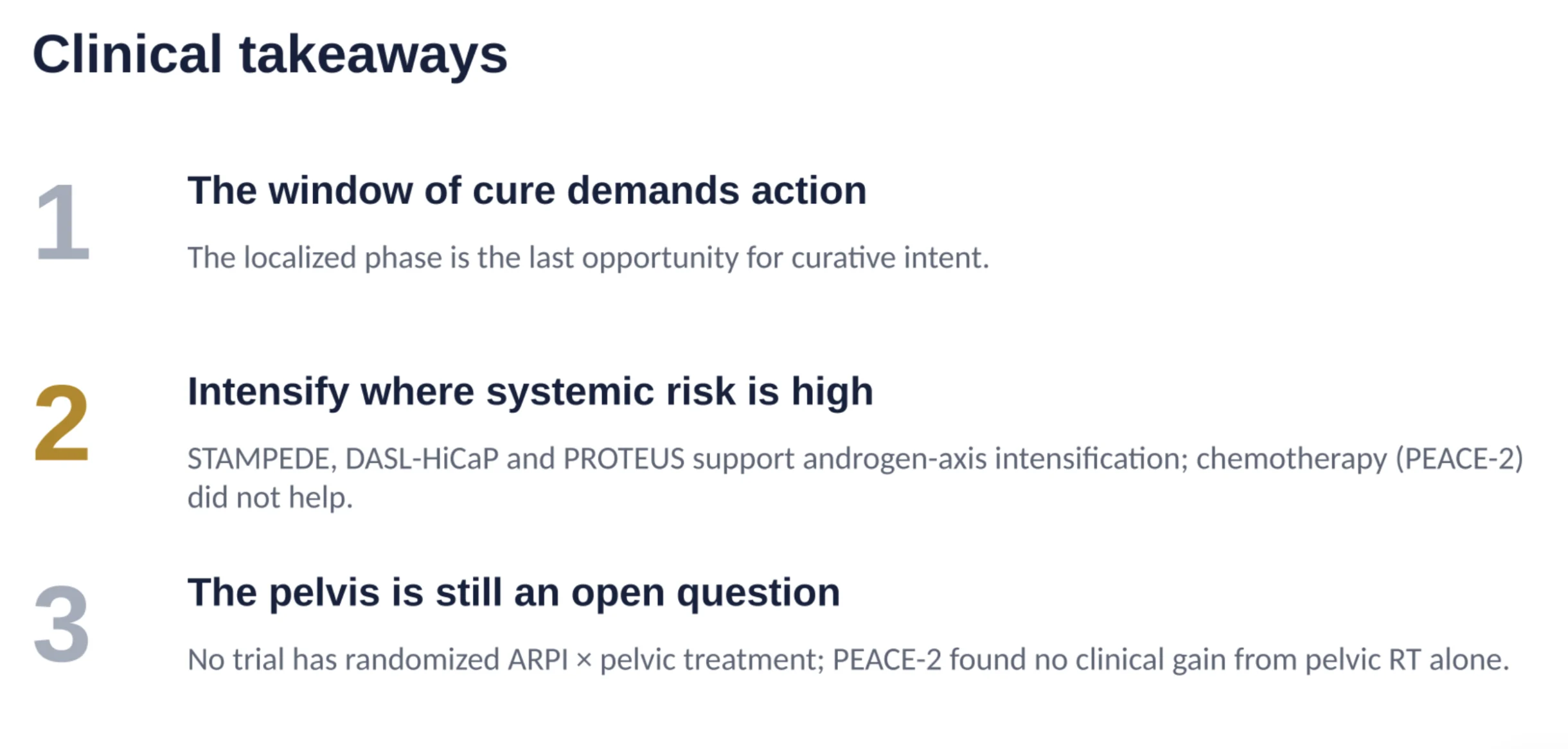
“Is ARPI intensification in high-risk localized prostate cancer a class effect? Does the pelvis matter?
Four recent trials, read together:
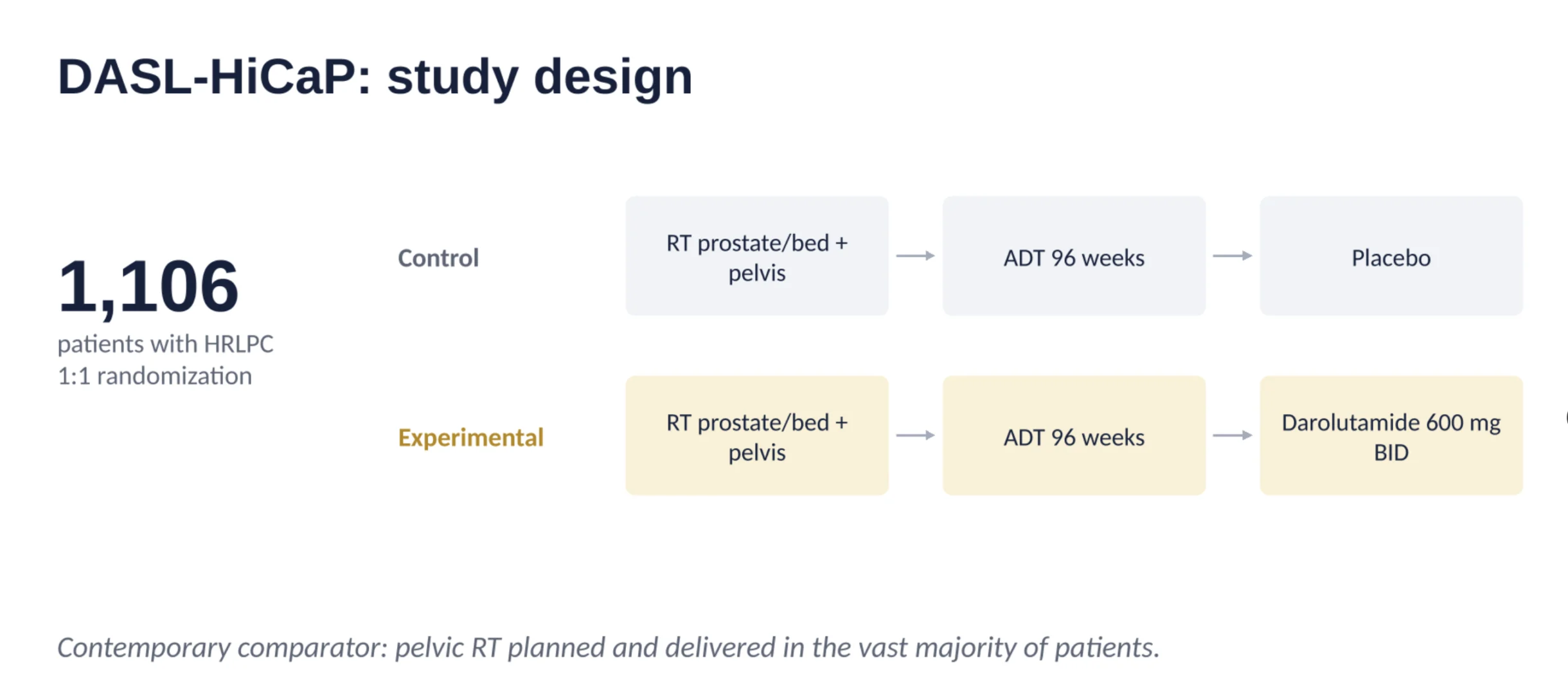
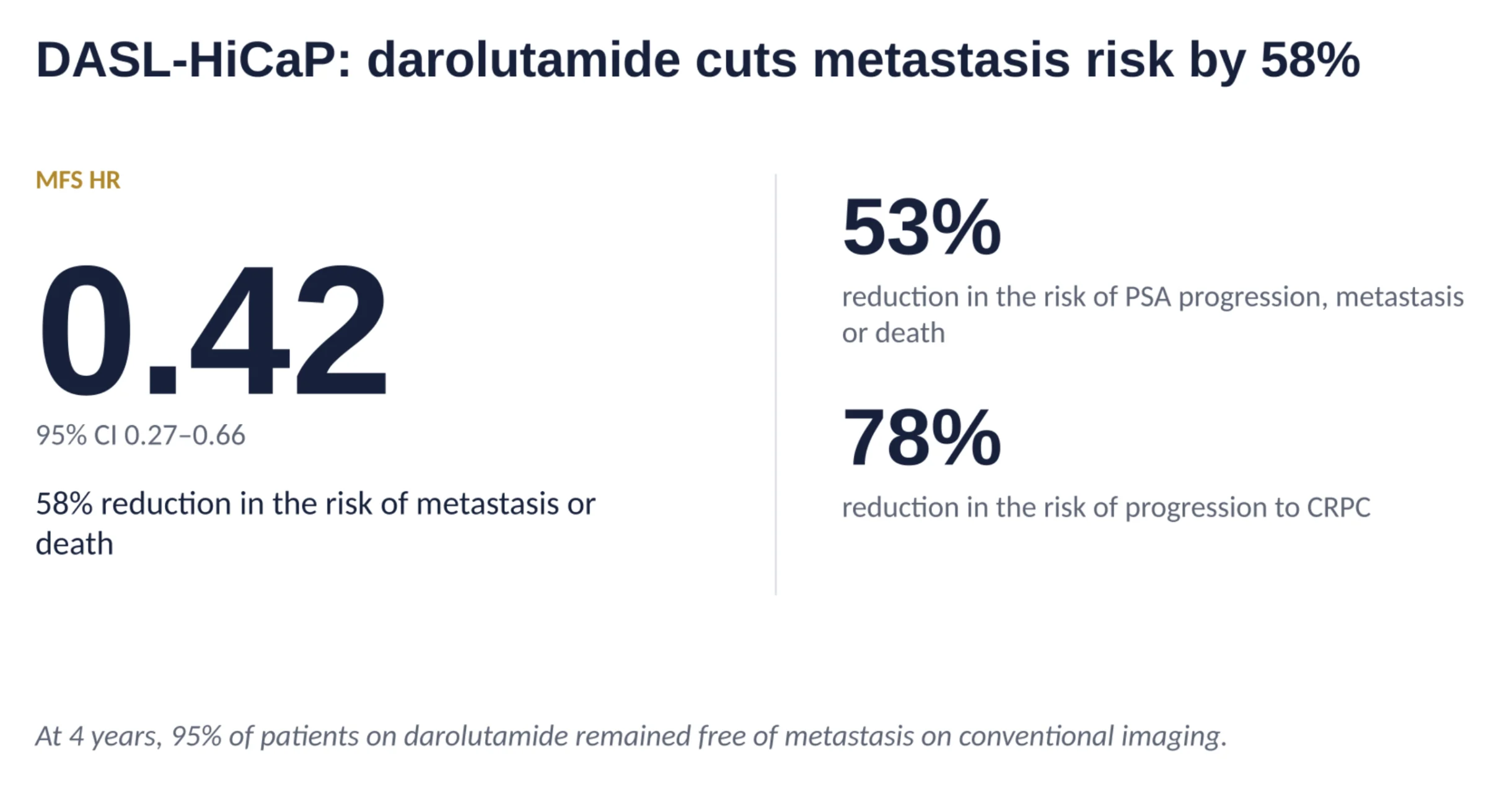
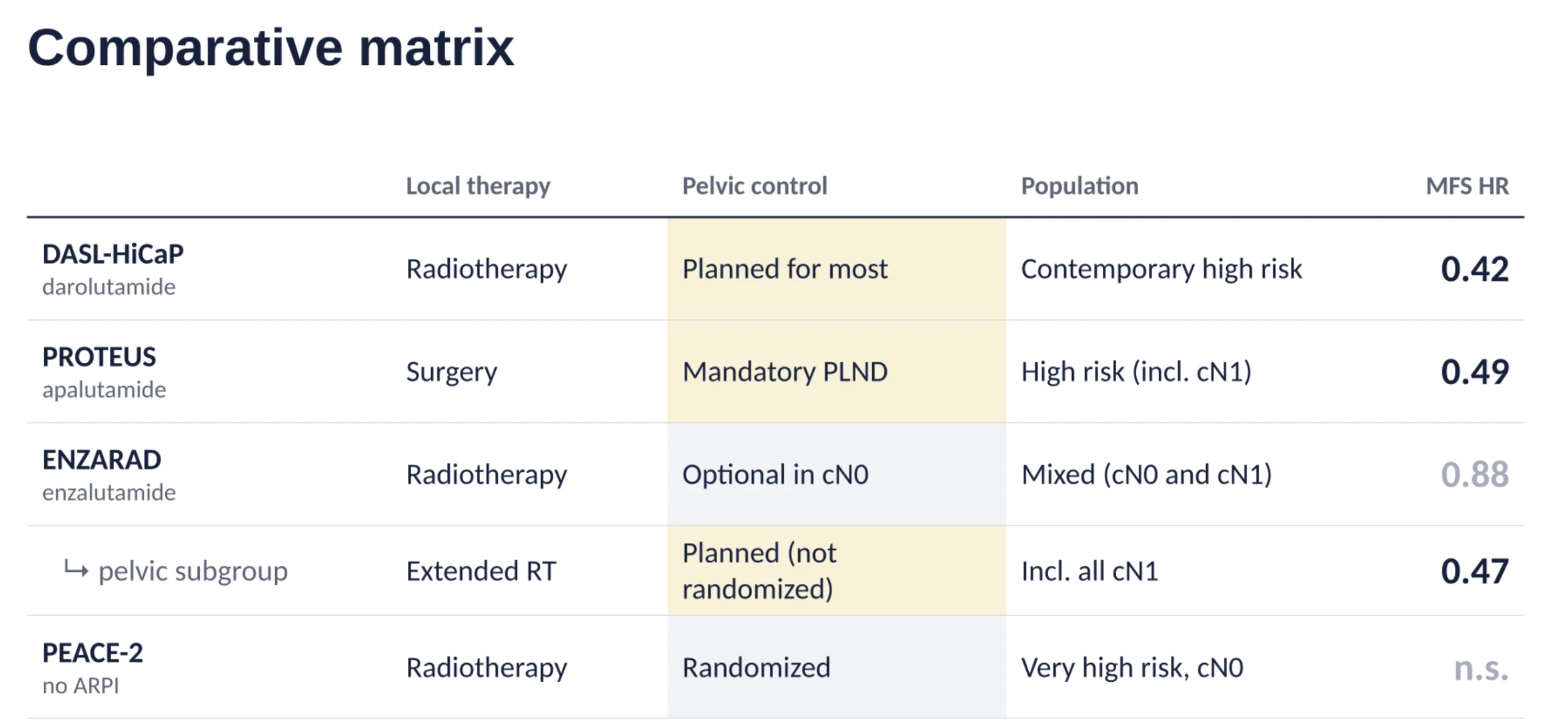
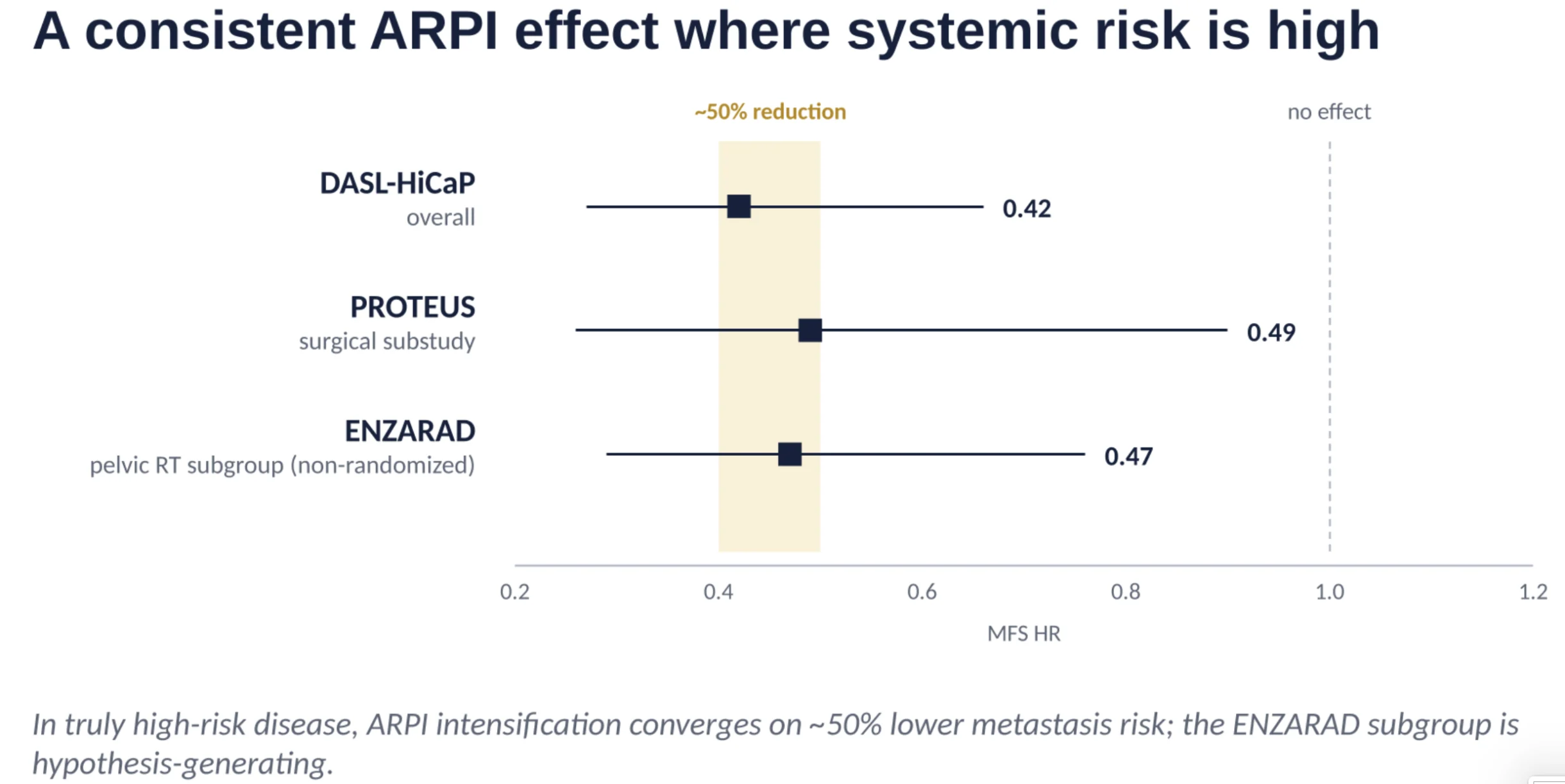
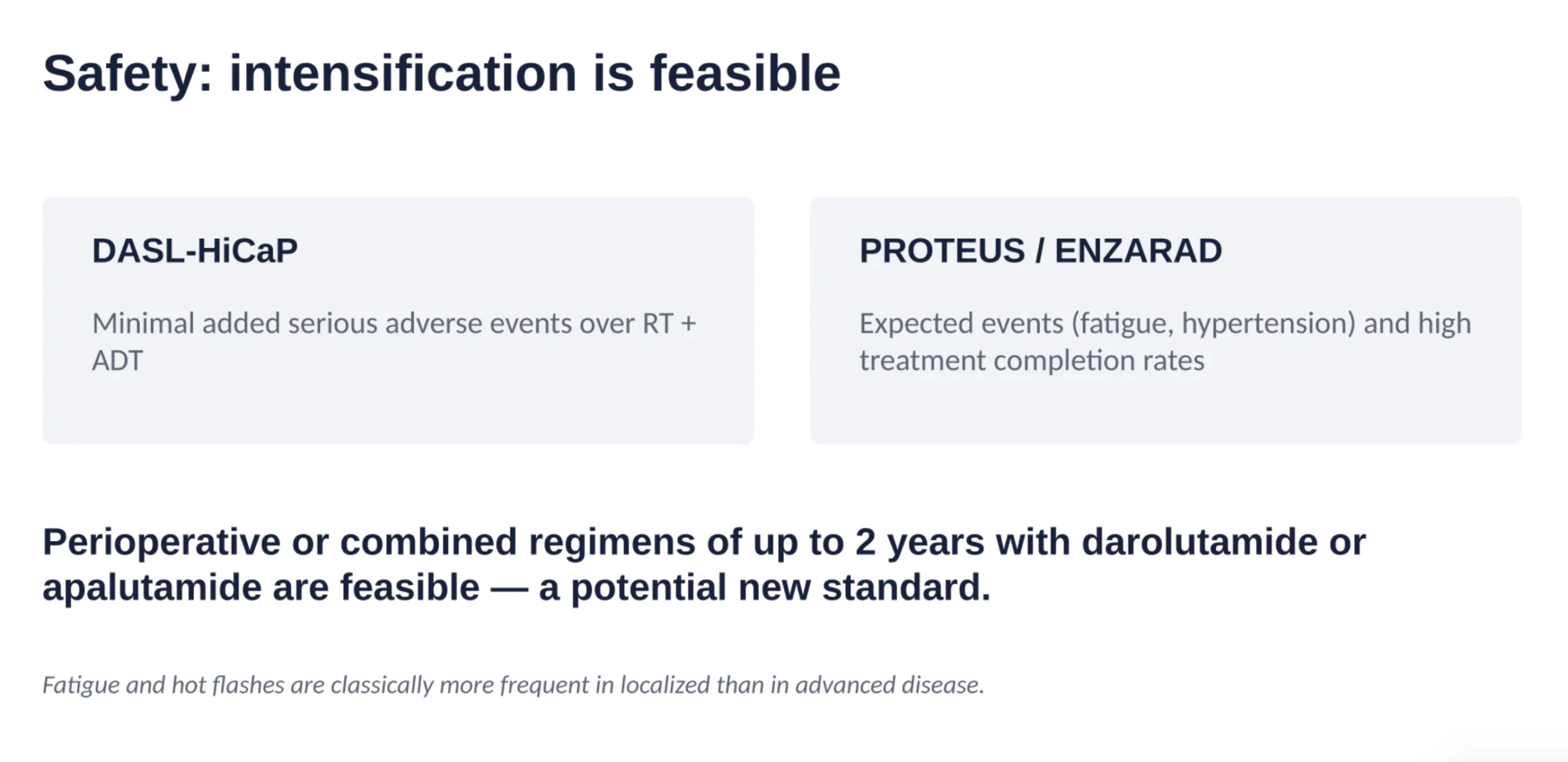
- DASL-HiCaP: darolutamide + RT including the pelvis in both arms. MFS HR 0.42 (interim).
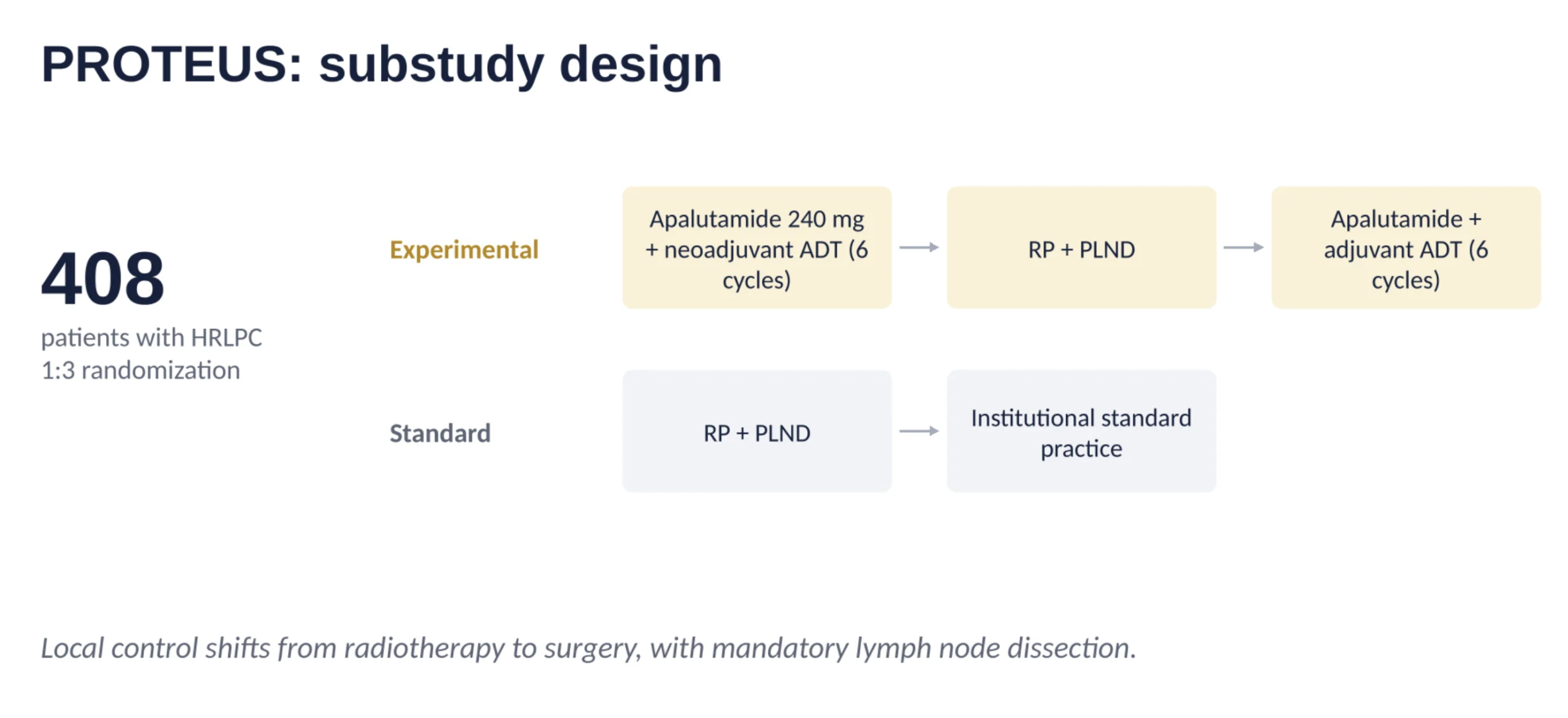
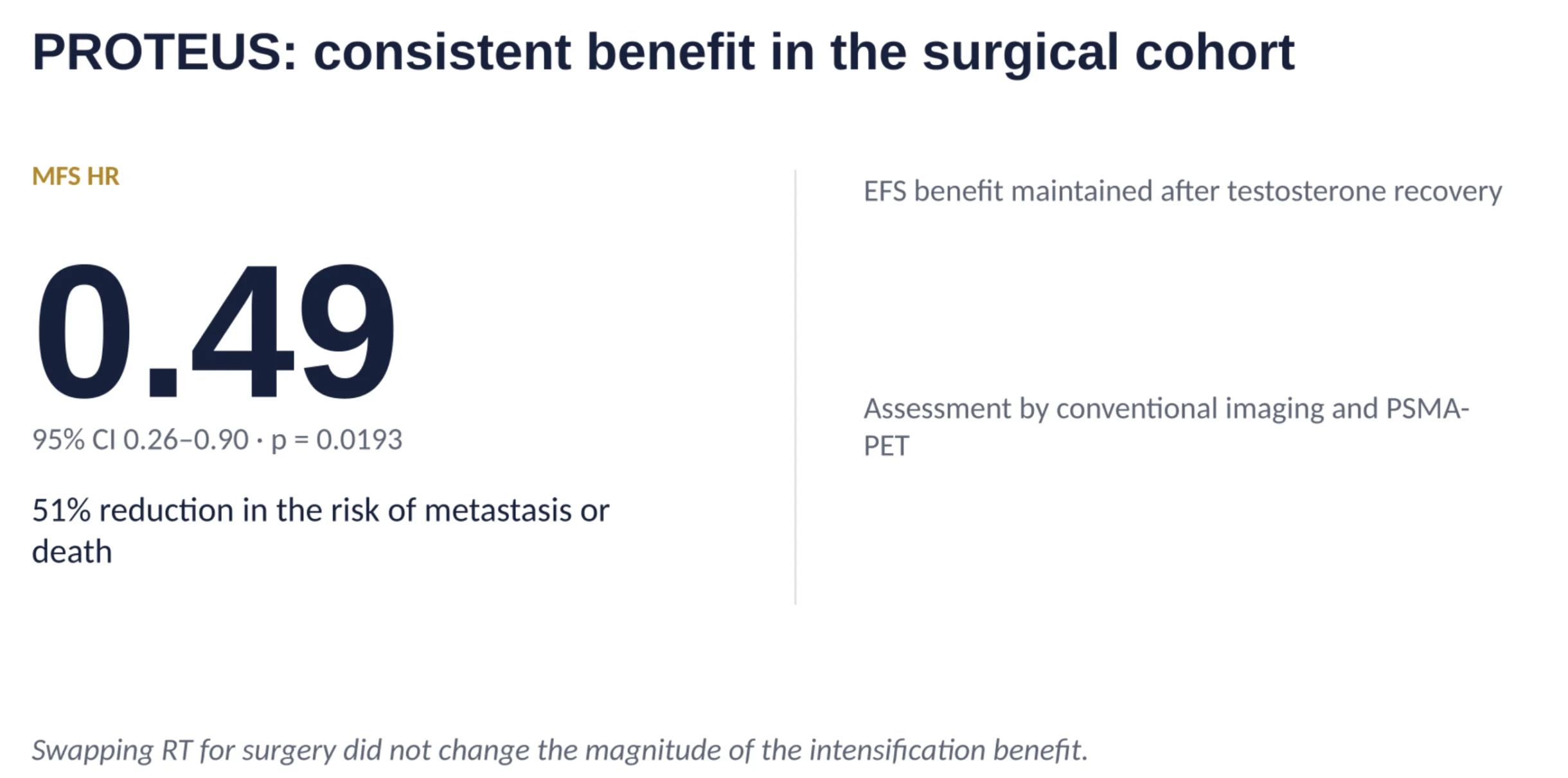
- PROTEUS: apalutamide around prostatectomy with PLND in both arms. Benefit reported in the surgical cohort.
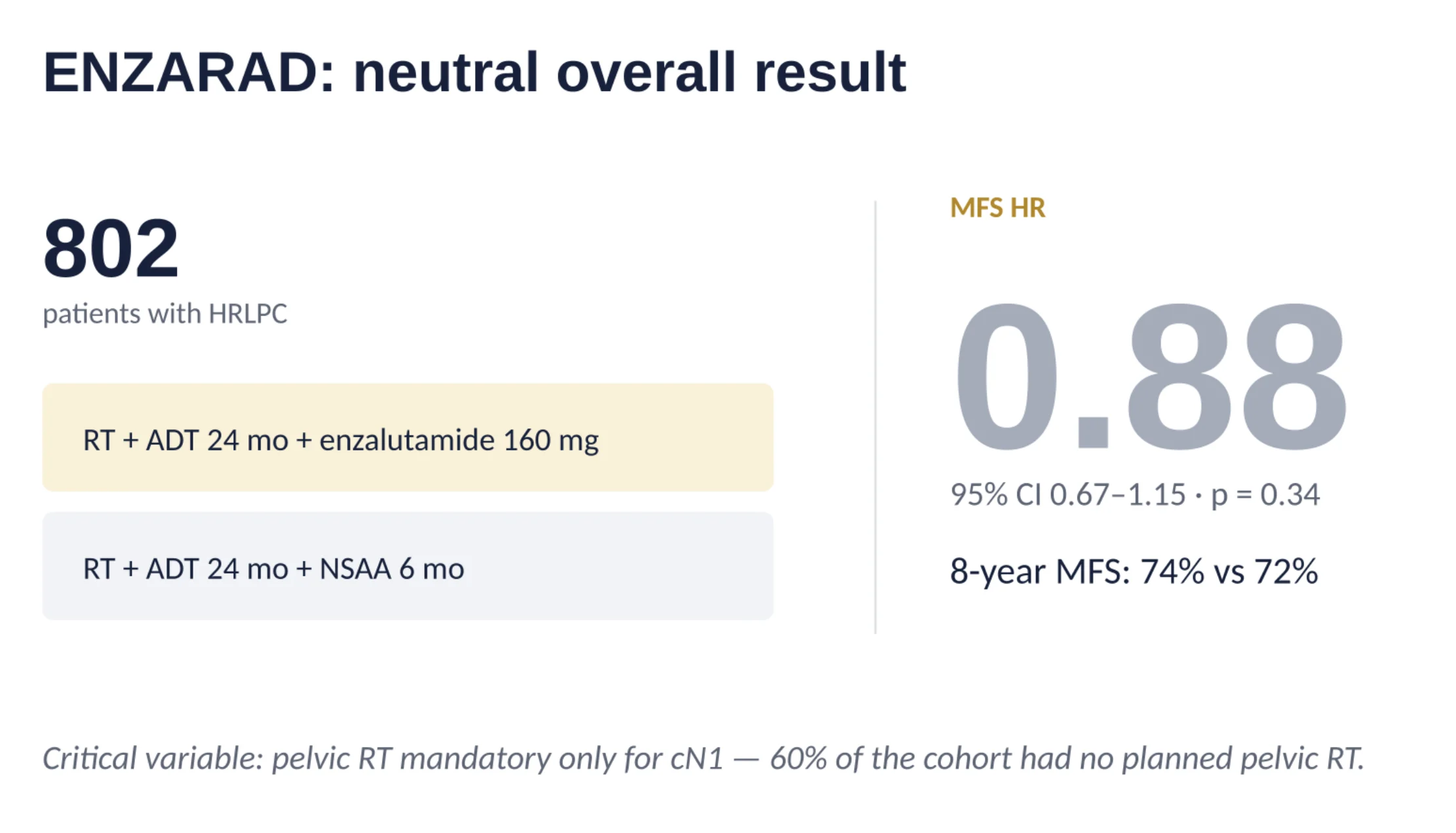
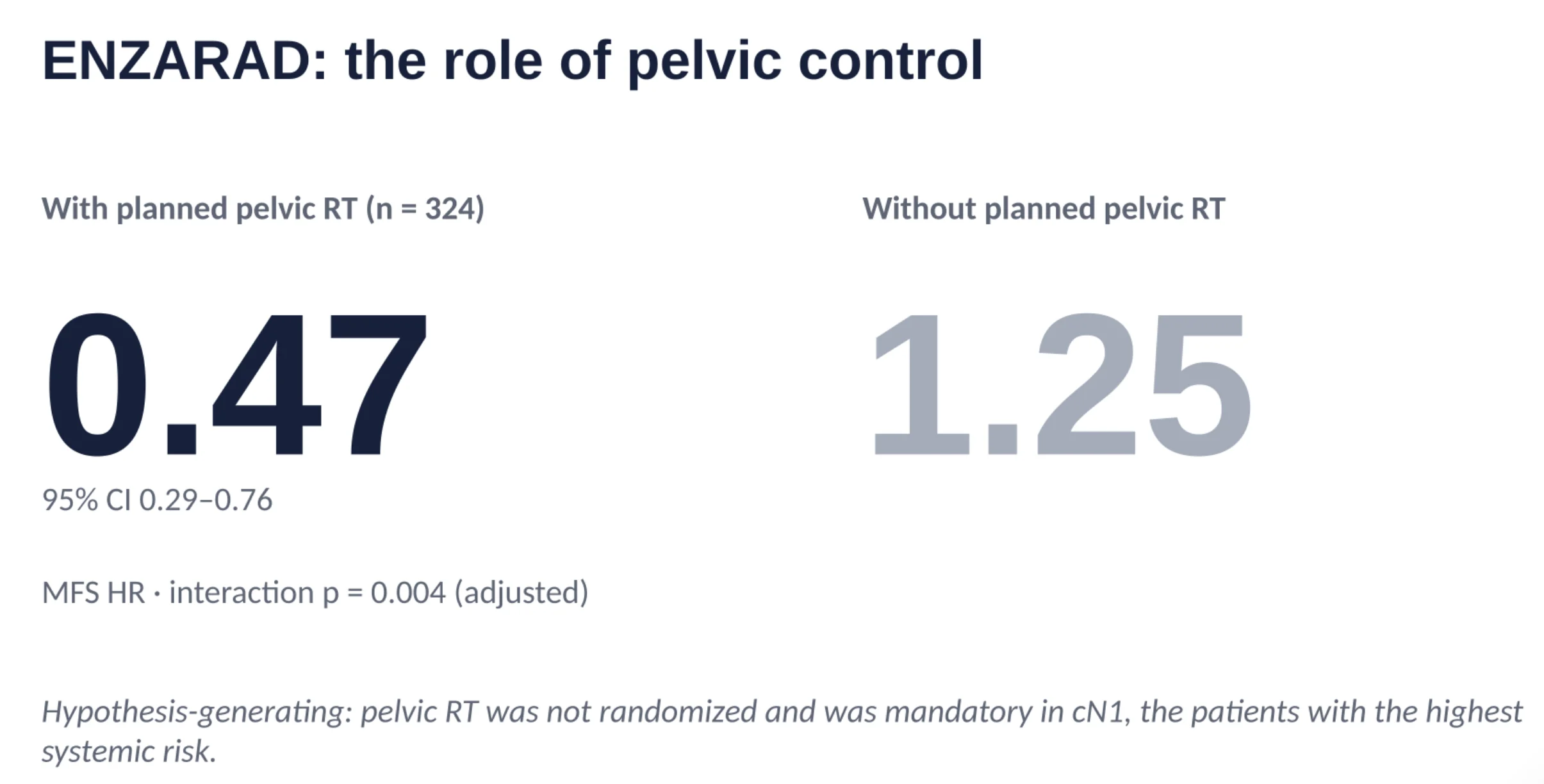
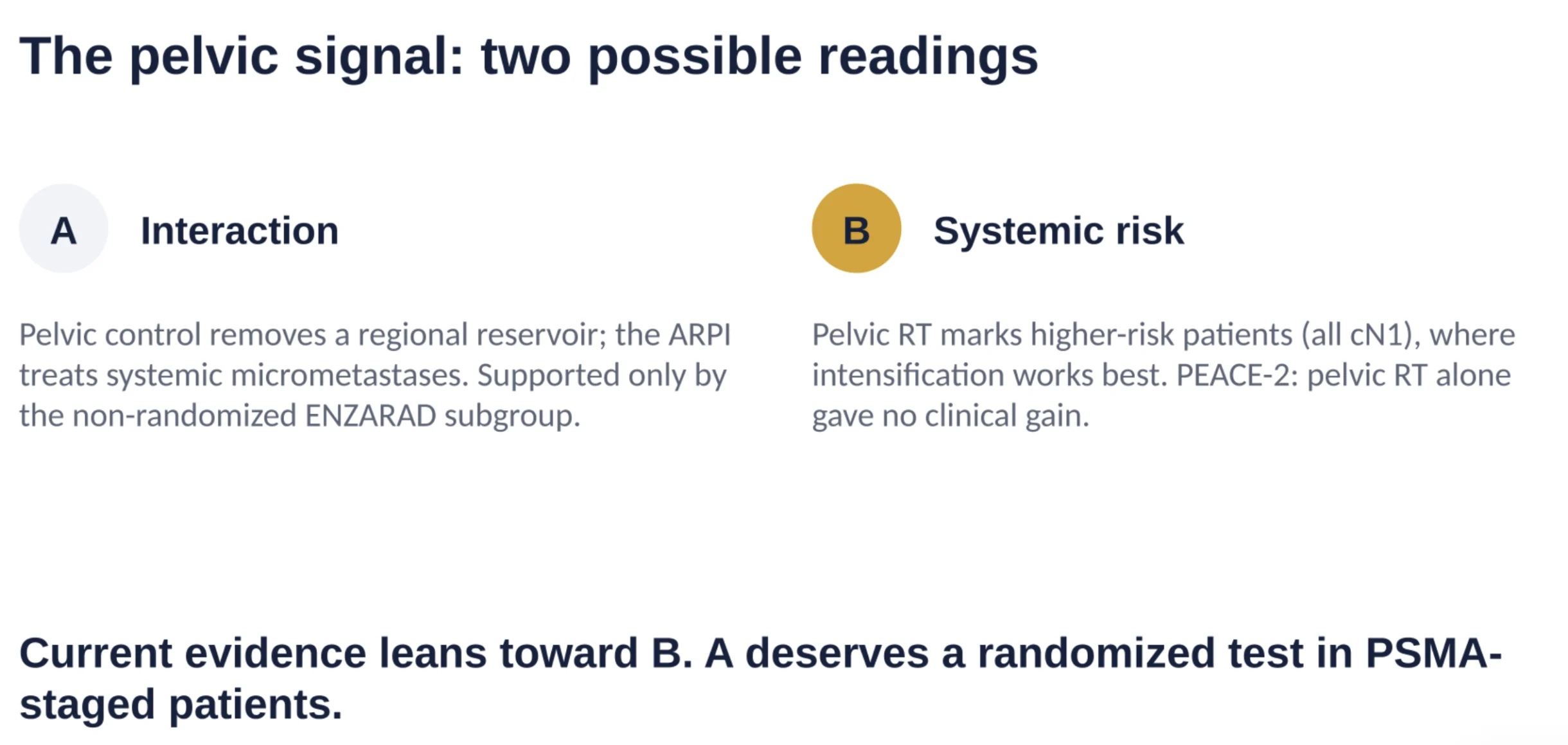
- ENZARAD: enzalutamide + RT. Overall MFS HR 0.88, not significant. With planned pelvic RT, HR 0.47 (interaction p = 0.004).
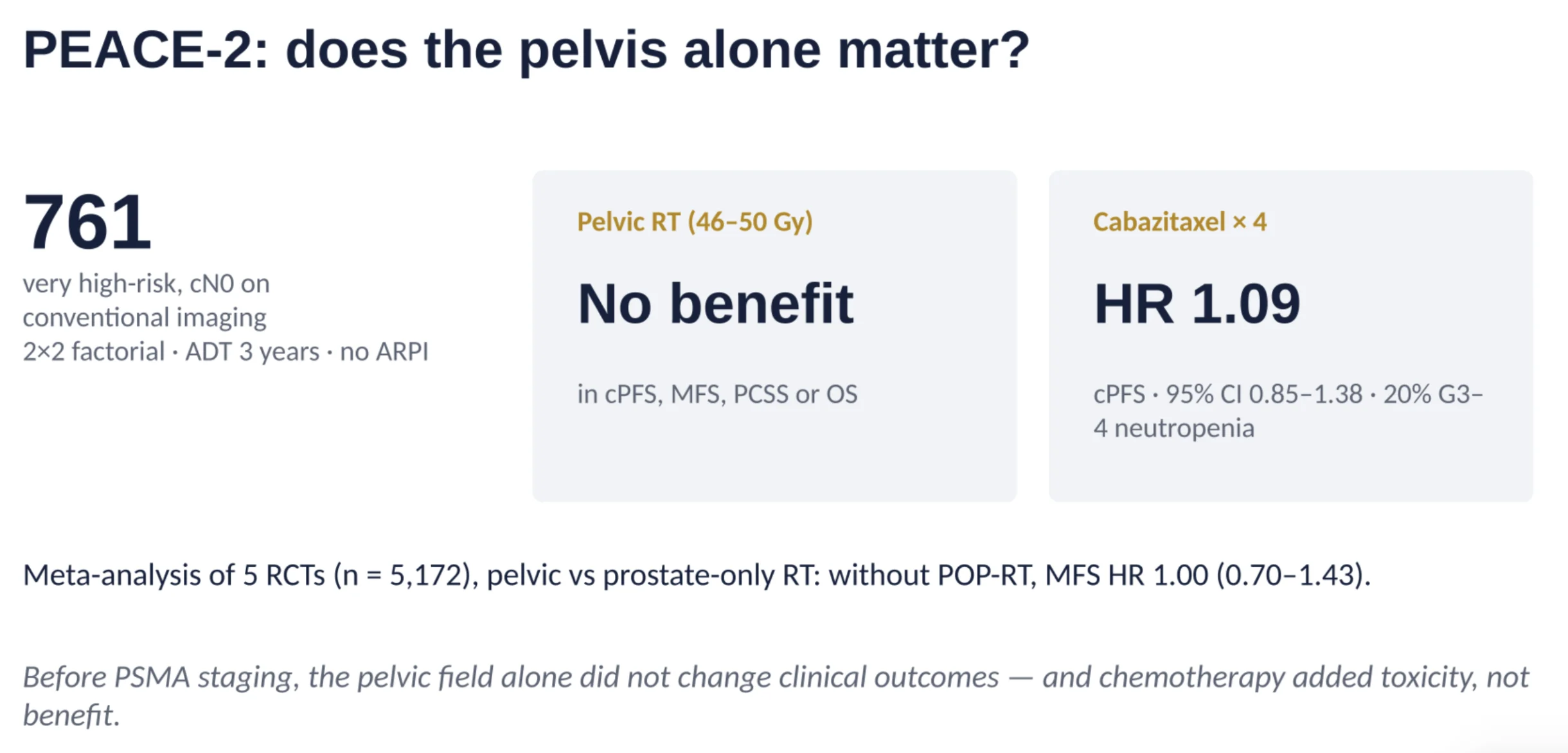
- PEACE-2 (ESTRO 2026): elective pelvic RT in very high-risk cN0 disease on conventional imaging, with 3 years of ADT and no ARPI.
No improvement in cPFS, MFS, PCSS or OS. Cabazitaxel added toxicity without benefit.
So how do they fit together?
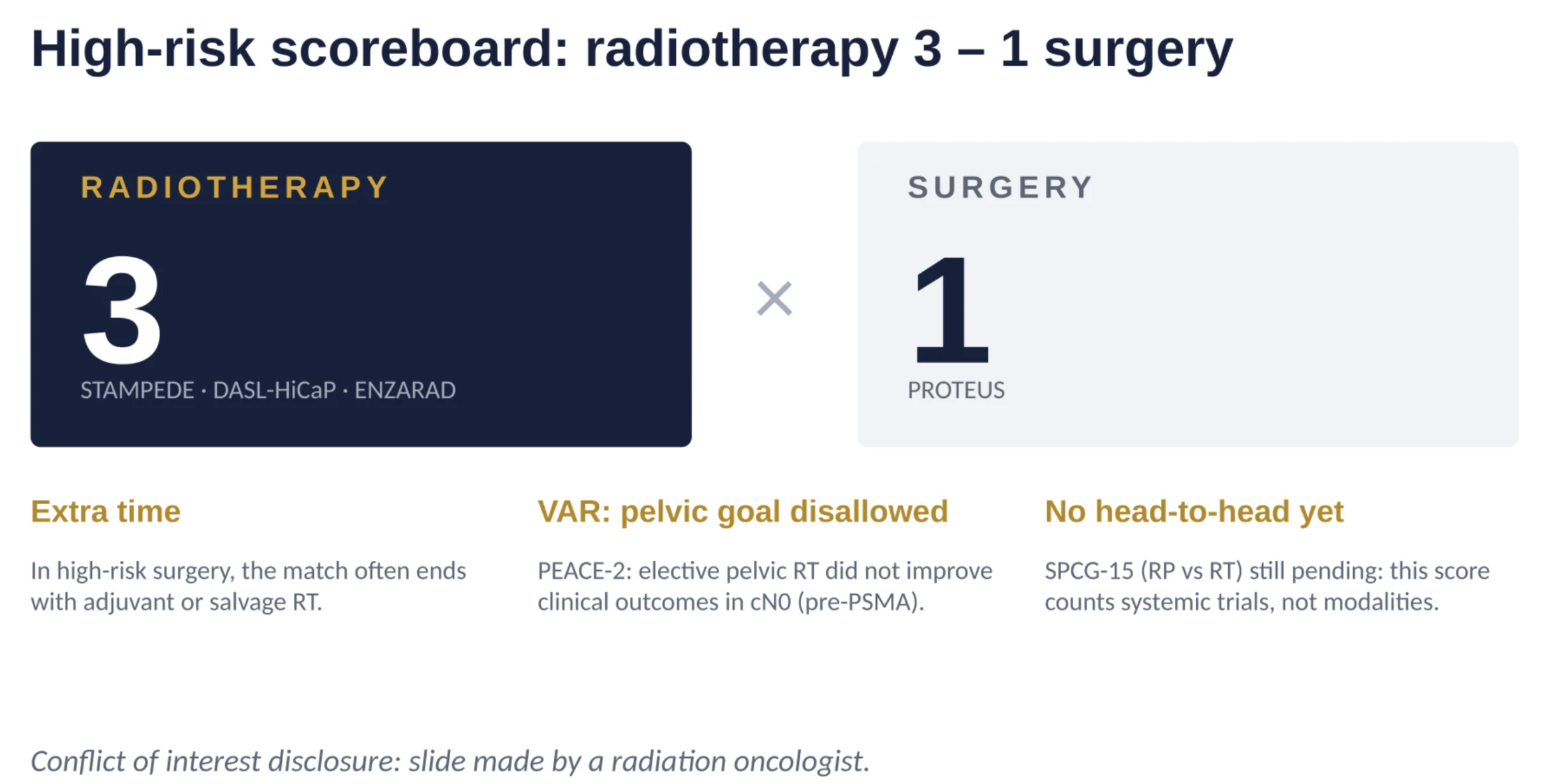
- No trial has randomized ARPI × pelvic treatment. The ENZARAD signal is hypothesis-generating: pelvic RT was mandatory for cN1, so that subgroup carried the highest systemic risk.
- PEACE-2 suggests that, before PSMA staging, the pelvic field alone doesn’t change clinical outcomes.
- The common thread is systemic risk. ARPIs help most where occult micrometastatic disease is most likely. Chemotherapy, at least here, does not.
What remains open: does the pelvis matter more in PSMA-staged patients (POP-RT) or alongside a more potent systemic backbone? That question is worth a trial.
And yes, slide 15 has a scoreboard. Full disclosure: I’m a radiation oncologist. 3×1 and counting.
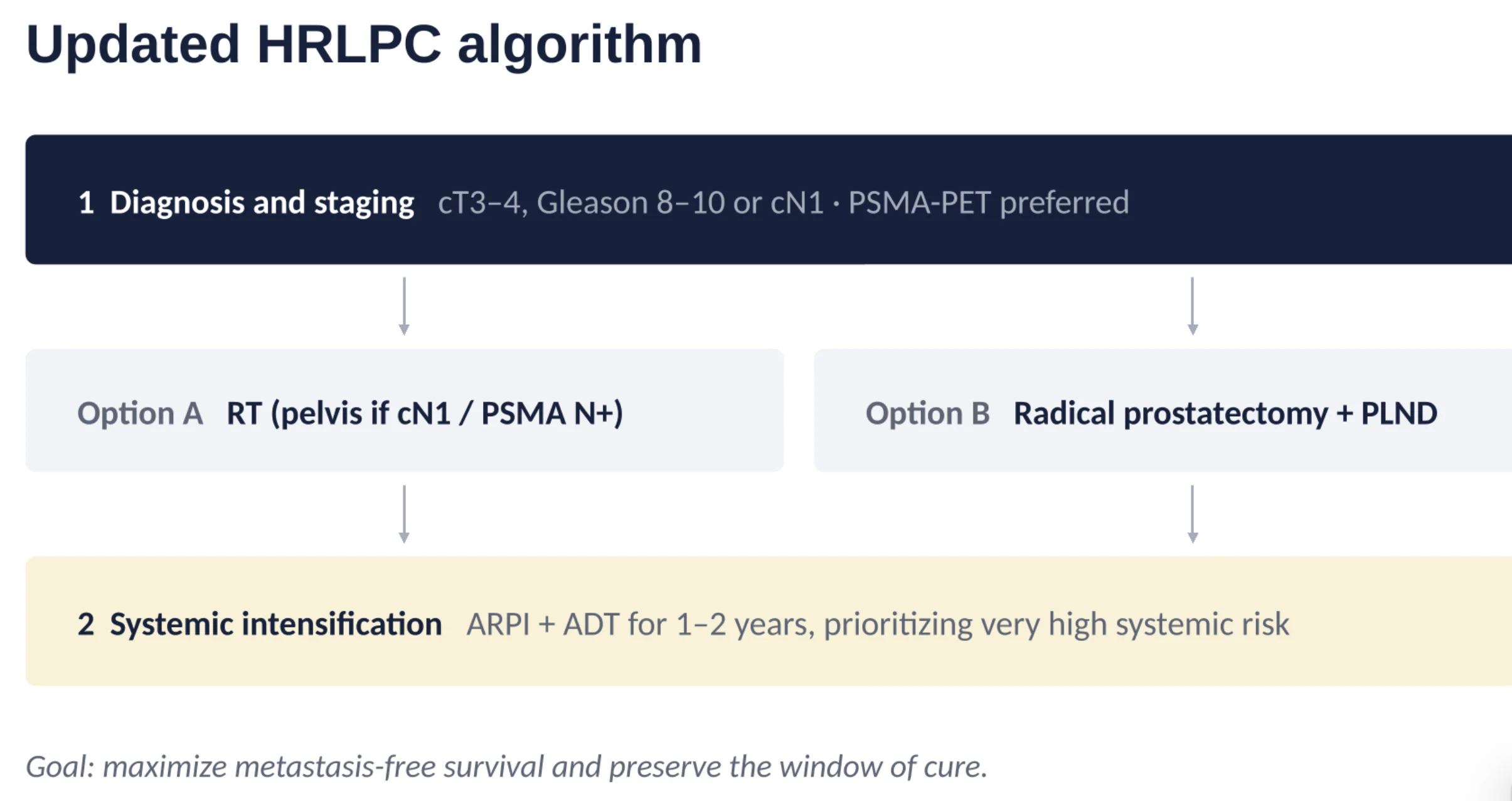
How are you selecting patients for ARPI intensification and pelvic RT in your practice?”
You can also read: DASL-HiCaP Trial Shows Darolutamide Improves Metastasis-Free Survival in Very High-Risk Prostate Cancer