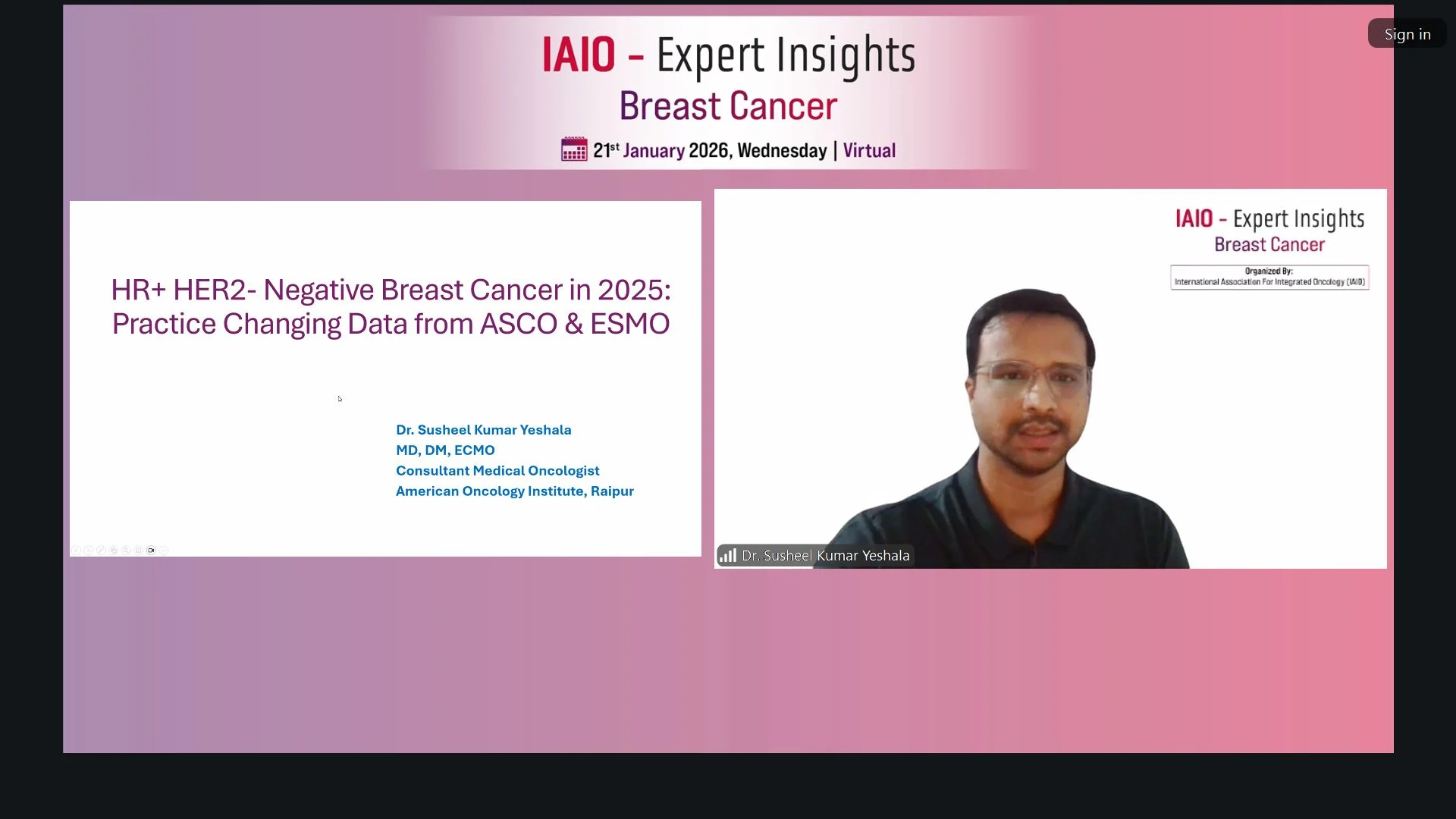
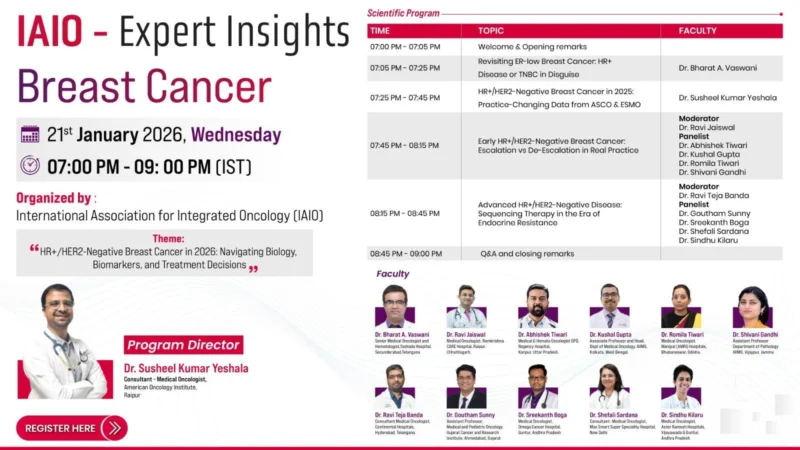
Susheel Kumar Yeshala, Consultant Medical Oncologist at American Oncology Institute, shared a post on LinkedIn:
“A wonderful evening of learning and reflection on HR+/HER2-negative breast cancer.
KEY TAKE-HOME POINTS
- Why HR+/HER2-Negative Is the Most Complex Subtype Today.
-HR+/HER2-negative breast cancer is a molecular umbrella, not a single disease.
-Includes luminal A, luminal B, ER-low, and endocrine-resistant phenotypes.
-Long natural history with risk of relapse even after 10–20 years.
-Maximum number of competing treatment options → high risk of overtreatment.
- “Then vs Now” – How Treatment Has Changed.
Then: Endocrine therapy ± CDK4/6 only in metastatic disease.
Now (2025): Adjuvant CDK4/6 inhibitors.
-Oral SERDs.
-Molecular stratification (ESR1, PI3K/AKT).
-ADCs entering HR+ disease.
We have moved from a linear endocrine pathway to a precision-layered ecosystem
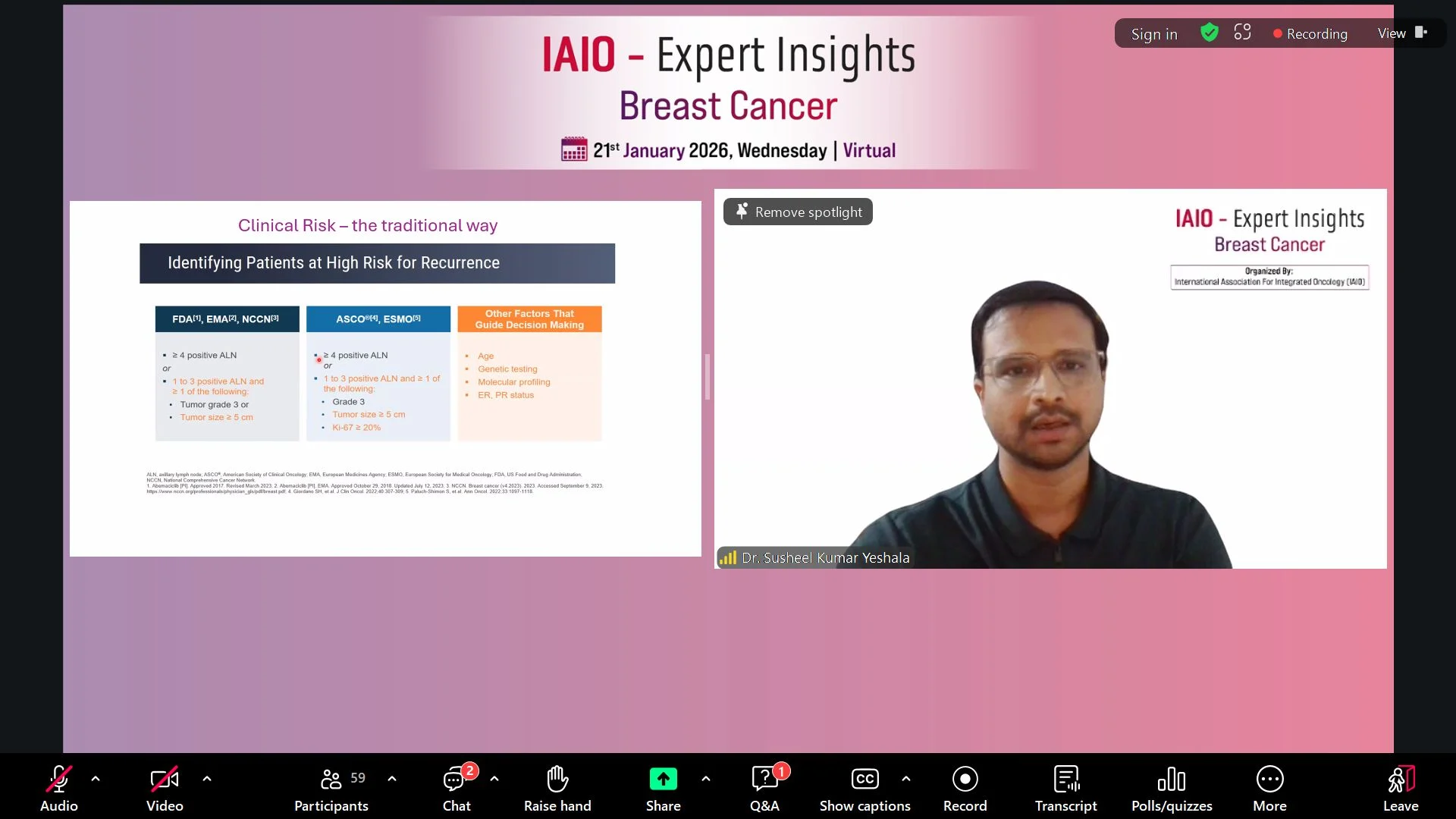
- What Truly Defines “High Risk” in 2025?
-High risk is no longer about lymph nodes alone.
-High risk = Clinical burden.
-Genomic aggressiveness.
-Biological phenotype (especially ER-low disease).
-Genomic assays help: Avoid unnecessary chemotherapy.
-Prevent inappropriate escalation.
- Adjuvant CDK4/6 Inhibitors – Key Learnings.
MonarchE: First CDK4/6 trial to show OS benefit.
-Benefit confined to truly high-risk patients.
NATALEE: Broader population.
-Modest absolute benefit.
-OS still immature.
-Raises concern of overtreatment.
-MonarchE taught us whom to treat, NATALEE taught us how far we can expand.
- Endocrine Resistance: Biology Drives Sequencing.
ESR1 mutation is now a therapeutic decision point
Trials like EMERALD-3, VERITAC-2, SERENA-6, PADA support adaptive endocrine strategies
Resistance is multi-pathway: ER mutation, PI3K/AKT/mTOR activation
- ADCs in HR+ Disease.
-ADCs are not “failure of endocrine therapy”
-They represent precision cytotoxic therapy.
-DESTINY-Breast-06 shows ADCs entering HR+ space before conventional chemotherapy.
“With so many effective therapies available, the future of HR+ breast cancer is not about more drugs – but better decisions.”
More posts featuring Susheel Kumar Yeshala on OncoDaily.