





Survivor Healthcare shared a post on LinkedIn:
“Cancer-related fatigue and depression are among the most common and burdensome symptoms experienced by people with cancer, but too often they are conflated.
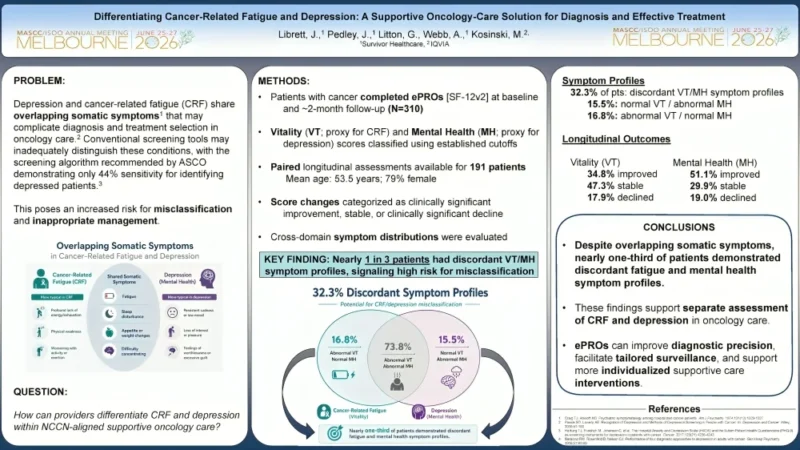
In a poster presentation we’re sharing today at the annual conference of The Multinational Association of Supportive Care in Cancer (MASCC) and International Society Oral Oncology – ISOO, we found that nearly 1 in 3 patients demonstrated discordant fatigue and mental health symptom profiles.
In other words, many patients who appeared fatigued were not depressed. And notably, many with depression did not exhibit significant fatigue.
This was a striking discovery, and here’s why it matters:
When we rely on symptoms that overlap between these conditions, patients may be misdiagnosed. That can trigger interventions that don’t address their underlying needs.
Our findings underscore the importance of separate assessments to differentiate between cancer-related fatigue and depression. They also show how electronic patient-reported outcomes (ePROs) can enhance diagnostic precision, enable more tailored surveillance, and support more individualized supportive cancer care.
The right diagnosis is the key to providing cancer patients with the right support. We hope our latest research helps move the needle in that direction.”
Other articles about The Multinational Association of Supportive Care in Cancer (MASCC) on OncoDaily.