






SM Rafiqul Islam, Research Fellow at the National Cancer Institute (NCI), shared a post on LinkedIn about a paper he co-authored with colleagues published in Cancer Immunology, Immunotherapy:
“PIK3CA is the third most frequently mutated gene in epithelial cancers, following TP53 and KRAS. Yet, very few ‘Functional and Clinically useful’ T cell Receptors (TCRs) have been identified in the last decades for these ‘Hotspot’ mutations.
Our work highlights a major step forward: we identified numerous HLA Class-I and Class-II restricted, clinically validated (patented) T-cell receptors (TCRs). Subsequently, we used two Class-II TCRs to treat patients with stage-4 pancreatic (N345K) and breast (E545K) Cancers, targeting the mutated PIK3CA.
Tumor-infiltrating lymphocytes (TILs) and antigen-experienced PBLs were grown, TCR identified, isolated, transduced into PBL, expanded, and infused into those solid epithelial cancer patients. Many more TCRs are coming, and a lot more to do!”
HLA-class II-restricted T Cell Receptors for PIK3CA “Hotspot” Mutations, E545K and N345K
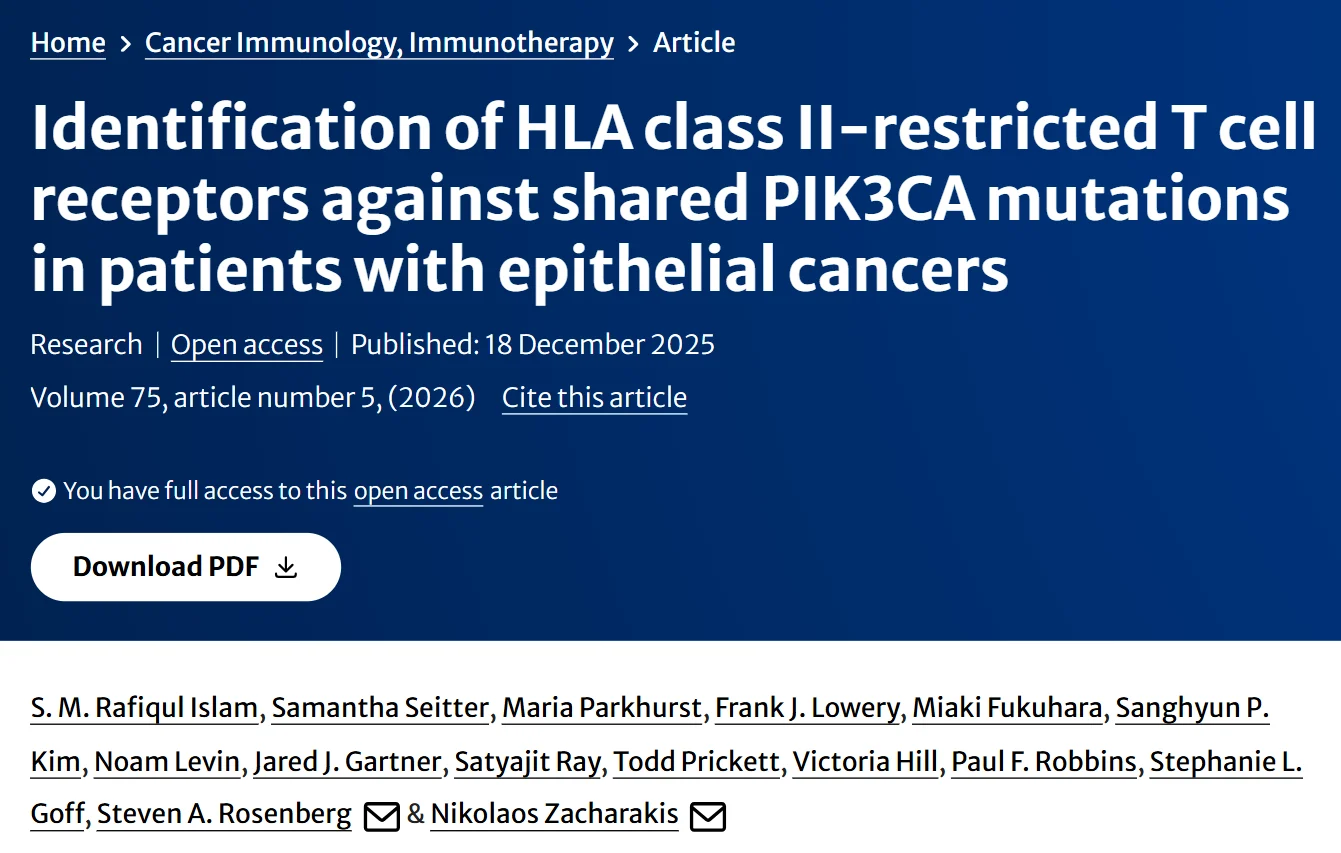
Title: Identification of HLA class II-restricted T cell receptors against shared PIK3CA mutations in patients with epithelial cancers
Authors: S. M. Rafiqul Islam, Samantha Seitter, Maria Parkhurst, Frank J. Lowery, Miaki Fukuhara, Sanghyun P. Kim, Noam Levin, Jared J. Gartner, Satyajit Ray, Todd Prickett, Victoria Hill, Paul F. Robbins, Stephanie L. Goff, Steven A. Rosenberg, Nikolaos Zacharakis
You can read the Full Article in Cancer Immunology, Immunotherapy.
More posts on Epithelial Cancers on OncoDaily.