Shrinidhi Nathany, Consultant Molecular Hematology and Oncology at Fortis Memorial Research Institute, India, shared a post on LinkedIn:
“New guideline alert – ASCO 2026,
Circulating tumor DNA (ctDNA) has rapidly moved from being an emerging technology to an integral component of precision oncology.
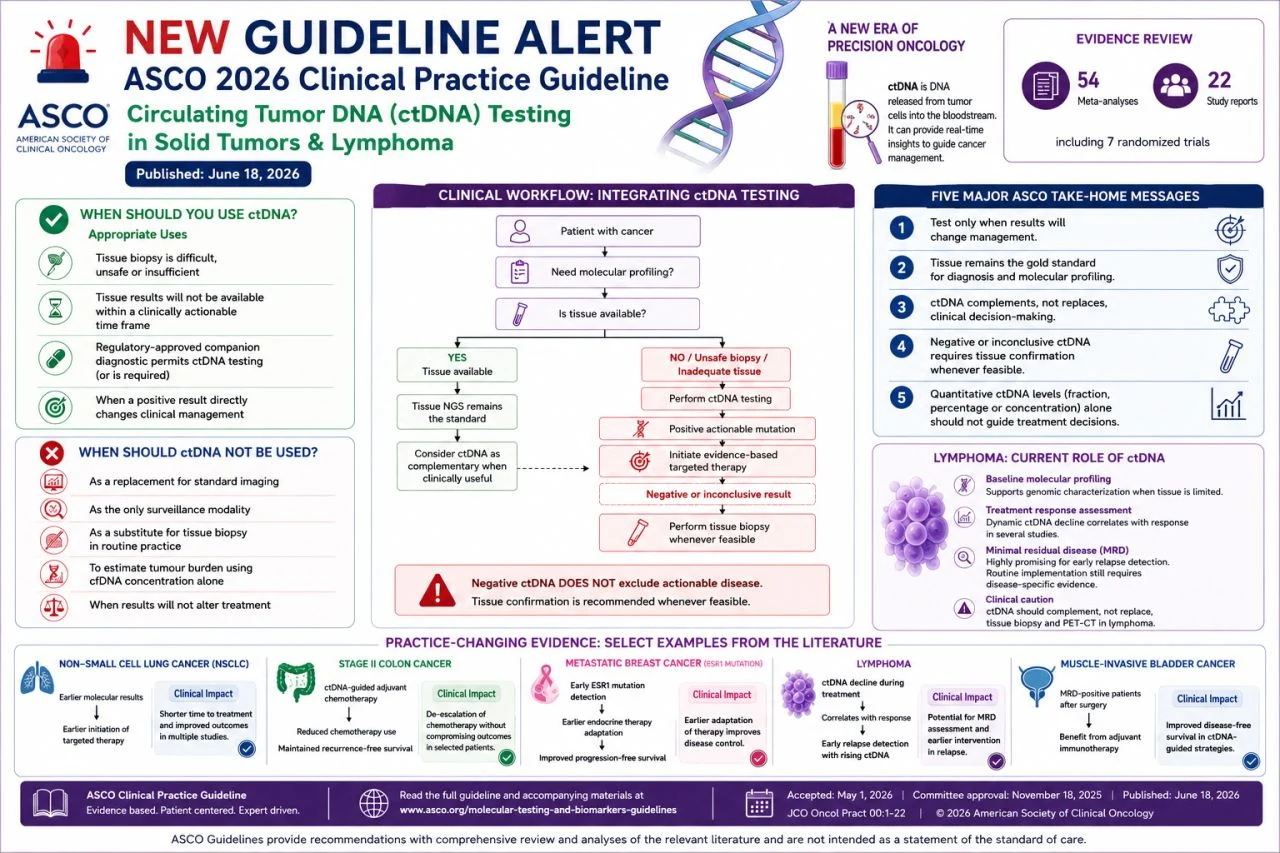
With the publication of its first dedicated Clinical Practice Guideline on ctDNA testing in solid tumors and lymphoma, ASCO has provided much needed clarity on when liquid biopsy should be used and, equally importantly, when it should not.
The central message of this guideline is simple:
Do not perform ctDNA testing simply because it is available. Perform it only when the result will influence patient management.
ASCO recommends ctDNA testing when tissue biopsy is unsafe, technically challenging, unavailable within a clinically actionable timeframe, or when regulatory approved companion diagnostics support its use.
However, a negative or inconclusive ctDNA result should never be considered sufficient to exclude actionable genomic alterations. Whenever feasible, tissue based confirmation remains the standard of care.
The guideline also cautions against using ctDNA as a replacement for tissue biopsy, radiological surveillance, or disease burden assessment using quantitative ctDNA levels alone. Instead, ctDNA should be viewed as a complementary tool that strengthens clinical decision making alongside pathology, imaging, and multidisciplinary evaluation.
Evidence highlighted within the guideline demonstrates meaningful clinical utility across multiple cancers, including earlier initiation of targeted therapy in non small cell lung cancer, reduced chemotherapy exposure in selected patients with stage II colon cancer, earlier endocrine therapy adaptation in metastatic breast cancer, MRD guided immunotherapy in muscle invasive bladder cancer, and an emerging role for treatment response assessment and molecular residual disease detection in lymphoma.
This guideline marks an important milestone for molecular oncology. The future of precision cancer care is not tissue biopsy versus liquid biopsy. It is choosing the right test, for the right patient, at the right time.”