






Shane Neibart, Resident Physician at Harvard Radiation Oncology Program, shared on X:
“Recently out in IJROBP – The Red Journal. Our team at MGH with super mentor Rachel Jimenez published our prospective correlative study of hypothyroidism nested within the Rad Comp RCT of Proton vs. Photon RNI.
Title: Clinical Hypothyroidism after Proton versus Photon Regional Nodal Irradiation: A Prospective Correlative Study within the RADCOMP Randomized Trial
Authors: Shane S. Neibart, Meredith Taylor, Nicolas Depauw, Beow Y. Yeap, Erin Plummer, Katherine Santoro, Alphonse G. Taghian, Shannon M. MacDonald, Rachel B. Jimenez
Read The Full Article

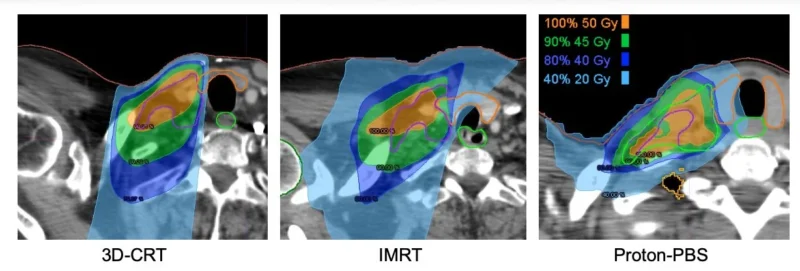
Proton RNI is attractive due to cardiopulmonary sparing, which was the impetus for the Ph3 RadComp trial (pending primary endpoint). But how does modality choice impact other OARs? The thyroid may be collateral damage.
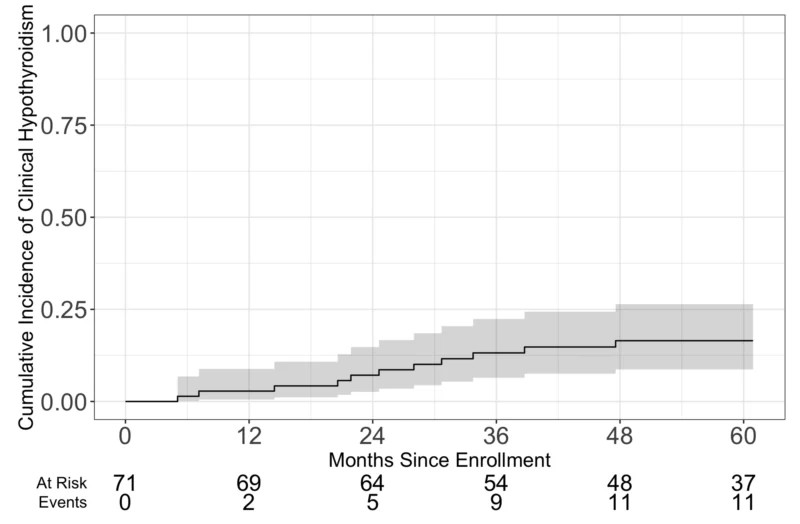
We regularly measured TSH values prospectively and found a 3-year incidence of hypothyroidism of 13%.
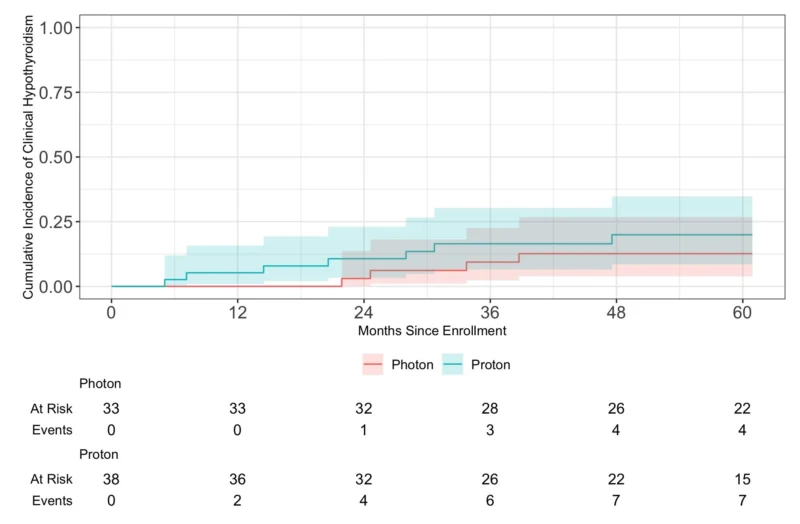
Stratifying by modality, we found a 3-year incidence of 16% in proton and 9% in the photon group (p=0.14).
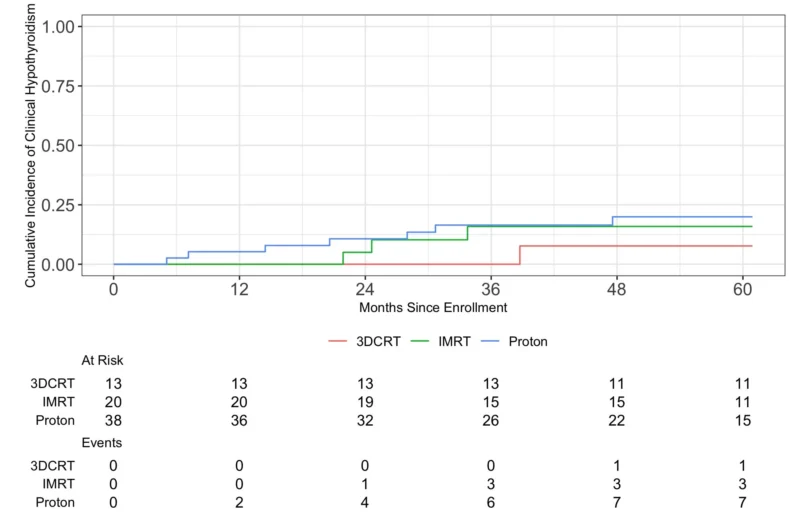
While not part of the randomization in RadComp, we then looked closer at the photon patients. Stratifying into IMRT vs. 3DCRT. Non-significant trends show 3DCRT patients had lowest risk and IMRT and Proton (PBS) patients did similarly.
We then explored previously validated thyroid metrics to see if these were predictive of hypothyroidism. Dmean > 21 Gy and Volume-Spared from 20 Gy < 2.2 cc were significantly associated with hypothyroidism and proton patients exceeded these metrics more often.
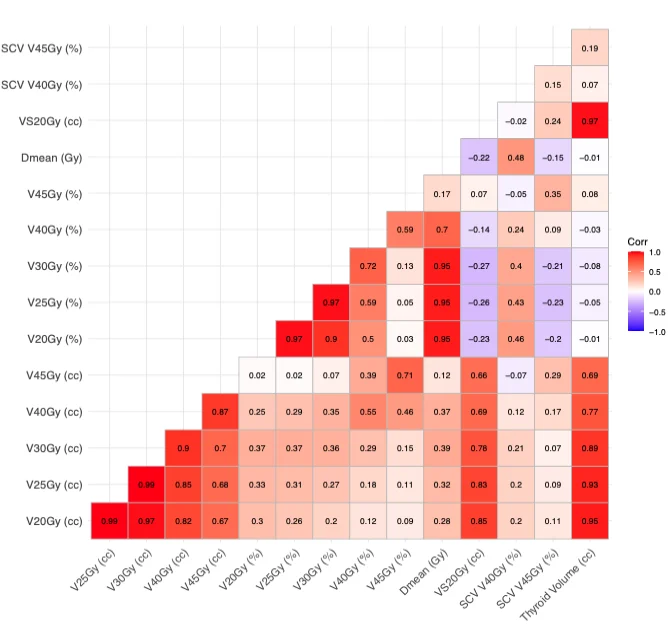
Our study wasn’t large enough for complex MVA or DVH-metric discovery, but we did show strong correlations among dose-metrics. This supports that many possible constraints for optimization may be appropriate. We focused on validating Dmean and VS20Gy.
Lots more to unpack here, but just want to thank the patients, RadComp Study for supporting this effort, and the team Mass General Brigham, Harvard Radiation Oncology Program.”
Other articles about IJROBP on OncoDaily.