The Lung Institute at Baylor Medicine shared a post on X:
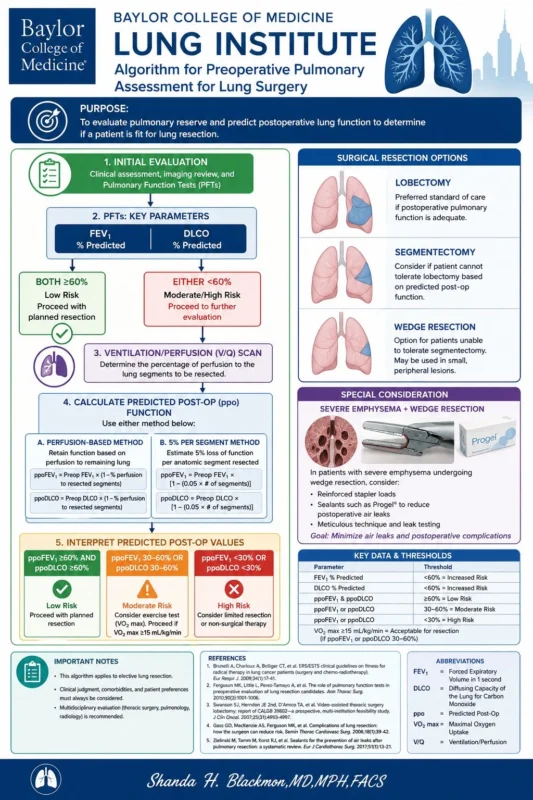
“How do we determine whether a patient is healthy enough for lung cancer surgery?
Our new Baylor College of Medicine Lung Institute Pulmonary Function Assessment Algorithm provides a stepwise, evidence-based approach to selecting the safest and most effective treatment.
Key components include:
- Pulmonary function testing (FEV₁ and DLCO)
- Predicted postoperative (ppoFEV₁/ppoDLCO) calculations using V/Q perfusion or segment-based methods
- Selection of lobectomy, segmentectomy, or wedge resection based on pulmonary reserve
- Strategies to reduce postoperative air leaks in patients with severe emphysema
- When surgery is not the safest option, multidisciplinary evaluation-including Radiation Oncology for stereotactic body radiation therapy (SBRT)-ensures patients still receive potentially curative treatment.
The best lung cancer care isn’t about performing the biggest operation-it’s about choosing the right treatment for the right patient through thoughtful multidisciplinary collaboration. Shanda Blackmon explains…”
Shanda Blackmon, Professor of Surgery in the Division of Thoracic Surgery at Baylor College of Medicine and Director of the Lung Institute at Baylor Medicine, shared The Lung Institute at Baylor Medicine’s post, adding:
“Determining if a patient is fit enough for lung surgery is one of the most important things a thoracic surgeon does.”
You can also read:
Roche Reports Positive Phase 3 Results for Divarasib in Previously Treated KRAS G12C NSCLC