Santiago Millan, Technical Lead, Global Platform for Access to Childhood Cancer Medicines at World Health Organization (WHO), shared on LinkedIn:
“What will it take to ensure that no child is denied a chance of survival because cancer medicines are unavailable, unaffordable, or not quality-assured?
This question matters because where a child lives still largely determines their chances of surviving cancer. While more than 80% of children with cancer survive in many high-income countries, survival rates remain below 30% in many low – and middle – income countries. Limited access to essential cancer medicines remains a major contributor to this inequity.
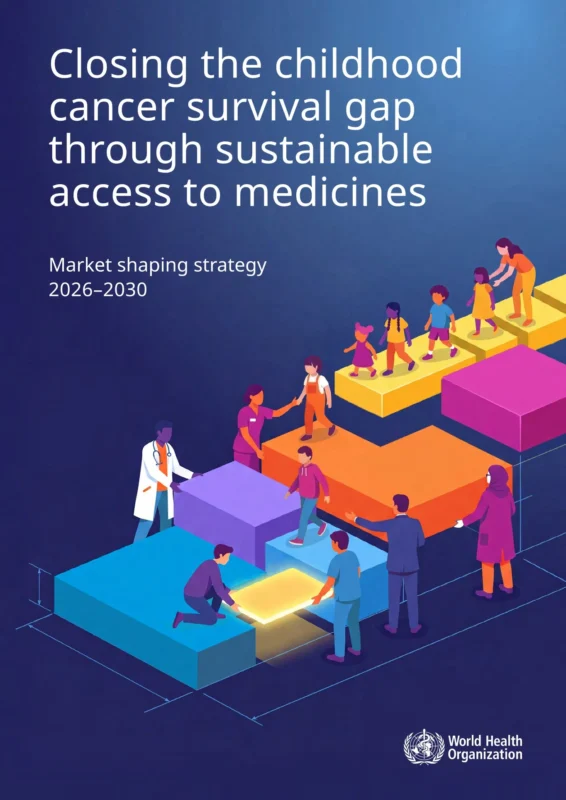
To address this, we are launching today the publication Closing the childhood cancer survival gap through sustainable access to medicines: market shaping strategy 2026-2030.
The strategy provides a practical roadmap to build healthier and more sustainable markets for childhood cancer medicines, helping ensure they can be delivered reliably, affordably, and at quality by strategically aligning supply and demand.
This milestone reflects a truly collective effort and we are thankful to all colleagues and experts that contributed to its development. The strategy draws on the experience of the Global Platform for Access to Childhood Cancer Medicines and its core partners: WHO, St. Jude Children’s Research Hospital, UNICEF and PAHO. It also benefited from contributions of more than 100 experts across stakeholders and geographies, who helped strengthen the strategy’s quality, accuracy, clarity, and practical relevance.
Importantly, this strategy is not just a vision for the future. Its implementation is already underway. Several of its market – shaping interventions are being advanced through the Global Platform and its partners, generating valuable lessons and building momentum for broader action. The launch of this strategy marks the beginning of the next phase: translating evidence into coordinated action at scale.
Now is the time to work together to bring the strategy to life. Governments, partners, manufacturers, healthcare professionals, civil society, people with lived experience, all have a role to play. Together, we can help close the childhood cancer survival gap and create a future where more children can access life-saving medicines, wherever they live.
You can also read: WHO Unveils 2026–2030 Strategy to Close the Childhood Cancer Medicines Gap