





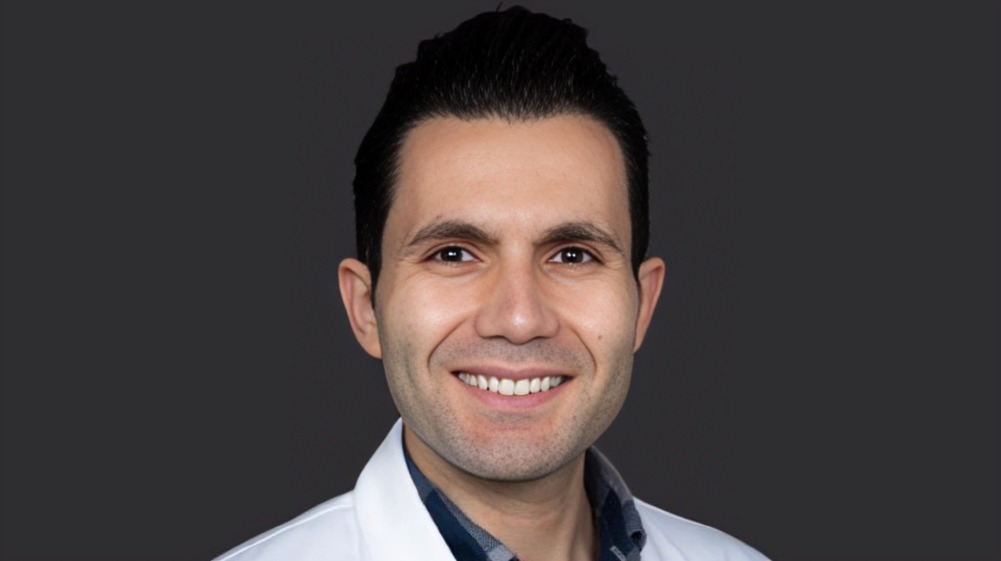
Roupen Odabashian, Hematology/Oncology Fellow at the Karmanos Cancer Institute, shared a post on LinkedIn:
“Researchers just published a landmark study in Nature on MIRA (Medical Intelligence for Reasoning and Action), an autonomous AI agent that manages patient care from initial history-taking through to hospital admission.
This shifts the narrative from ‘AI as a task-specific chatbot’ to ‘AI as an integrated clinical workflow partner’.
Operating in a sandboxed electronic health record (EHR), MIRA proved it can navigate a large clinical action space to perform the multifaceted demands of real-world medicine.
The 7-step clinical workflow MIRA executes:
- Obtains patient histories through conversational dialogue.
- Requests and interprets physical examinations.
- Orders diagnostic tests (laboratory, microbiology, and imaging).
- Synthesizes results to generate differential diagnoses.
- Formulates treatment plans, including prescribing medications.
- Schedules surgical procedures (e.g., laparoscopic appendectomies).
- Recommends hospital admission or discharge based on clinical severity.
That last step matters most: MIRA reached a 100% recall for necessary admissions in pneumonia and pulmonary embolism cases.
Here are three things changing for the future of clinical AI:
- AI is moving from ‘Advice‘ to ‘Action.’ Previous LLMs provided free-text advice; MIRA turns clinical intent into structured, actionable EHR operations using over 85,000 options while complying with FHIR standards.
- Performance benchmarks are becoming more rigorous. Evaluation has moved beyond simple medical exams. MIRA was tested against board-certified physicians, achieving a diagnostic accuracy of 87.8% compared to the human average of 78.1%.
- Guideline adherence and safety are now automated. MIRA’s decisions were more guideline-concordant than those of physicians in several categories, such as prescribing intravenous fluids for pancreatitis. It also showed strong medication safety, with zero high-severity drug interactions or renal dosing errors in evaluated cases.
The tension this creates: While MIRA approached or exceeded experienced-physician performance, its role is not to replace clinicians.
The challenge is integrating these agents into collaborative environments where they execute routine tasks under human supervision, freeing doctors to focus on direct patient interaction.
Generalization and safety still require prospective, real-world studies before full deployment.”
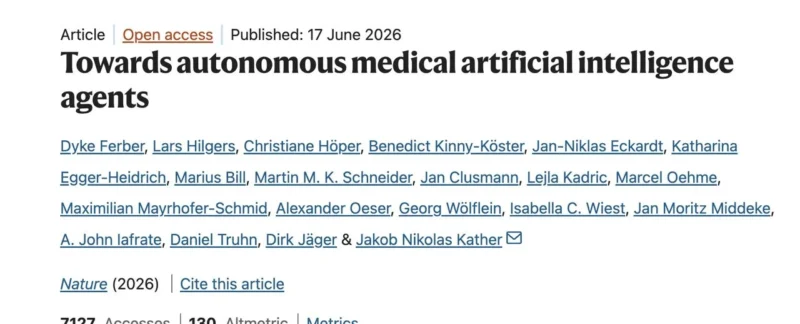
Title: Towards autonomous medical artificial intelligence agents
Authors: Dyke Ferber, Lars Hilgers, Christiane Höper, Benedict Kinny-Köster, Jan-Niklas Eckardt, Katharina Egger-Heidrich, Marius Bill, Martin M. K. Schneider, Jan Clusmann, Lejla Kadric, Marcel Oehme, Maximilian Mayrhofer-Schmid, Alexander Oeser, Georg Wölflein, Isabella C. Wiest, Jan Moritz Middeke, A. John Iafrate, Daniel Truhn, Dirk Jäger and Jakob Nikolas Kather
Other articles featuring Roupen Odabashian on OncoDaily.