






Rishabh Jain, Medical Oncologist at AIIMS, shared a post on X:
“One bladder instillation. Given once. Within 24 hours of surgery.
JCOG1403 provides phase III evidence that this simple intervention reduces recurrence after radical nephroureterectomy for upper tract urothelial carcinoma.
Published in The Lancet Oncology
Trial design
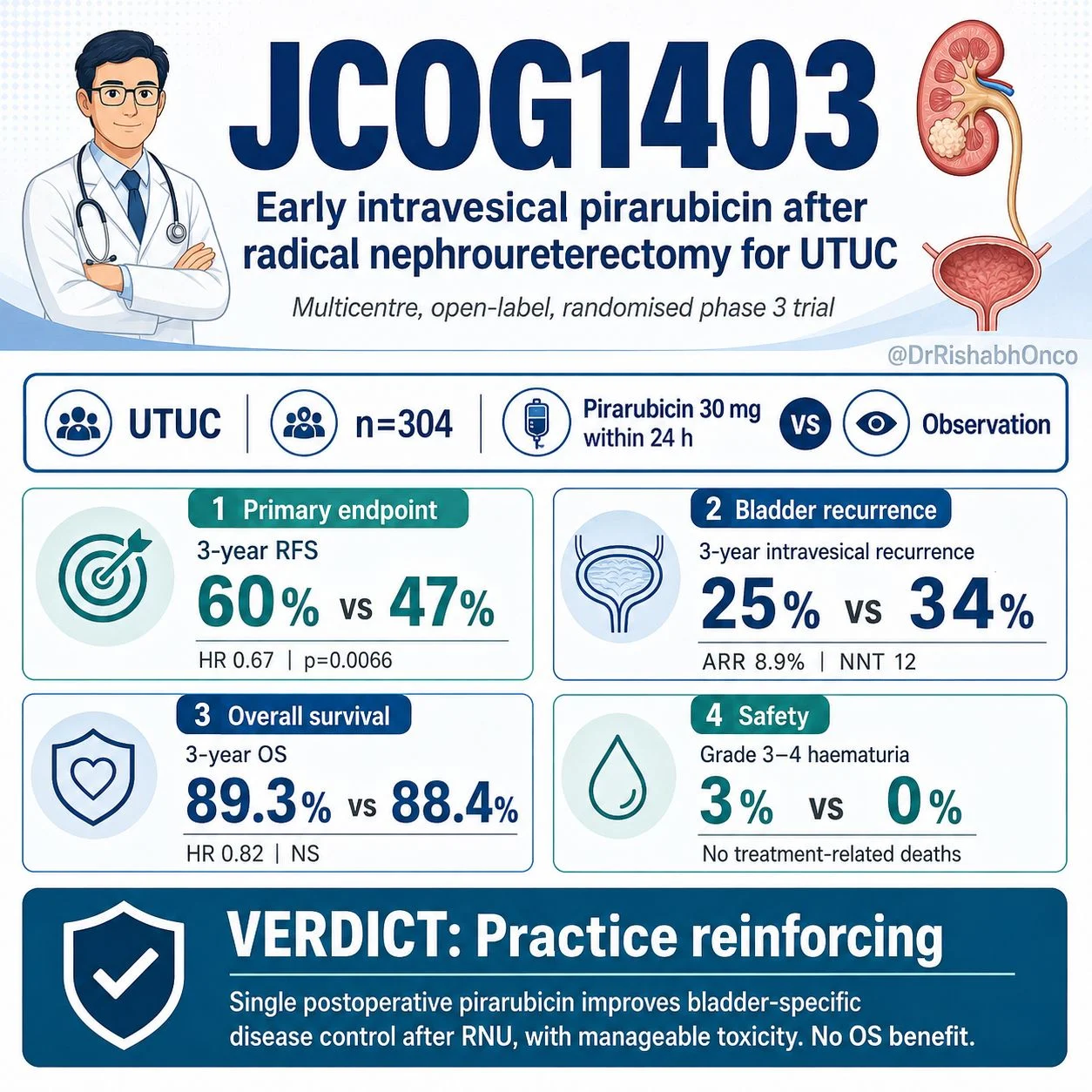
304 patients with previously untreated stage 0a–III UTUC and no history of bladder cancer were randomised after surgery:
Pirarubicin 30 mg intravesically within 24 h vs Observation
Pirarubicin was retained for 30 minutes.
Primary endpoint: relapse-free survival
Key result
3-year RFS:
Pirarubicin: 60%
Observation: 47%
HR 0.67
p=0.0066
An absolute 13% improvement from a single postoperative dose.
Where did the benefit come from?
3-year bladder recurrence:
25% with pirarubicin
34% with observation
Absolute risk reduction: 8.9%
NNT: 12
Non-intravesical relapse was not reduced.
Overall survival
3-year OS:
89.3% vs 88.4%
HR 0.82, p=0.48
So this is better bladder-specific disease control, not a systemic survival effect.
Safety
Grade 3–4 haematuria:
3% vs 0%
No treatment-related serious adverse events or deaths.
Take-home
A single intravesical pirarubicin instillation within 24 hours of nephroureterectomy is low-burden, manageable and meaningfully reduces bladder recurrence.
The challenge is no longer the evidence. It is ensuring the dose is actually delivered. Practice changing? I would say practice reinforcing, with strong phase III confirmation.
Do you routinely give postoperative intravesical chemotherapy after nephroureterectomy?”
Other articles featuring Rishabh Jain on OncoDaily.