Renjith Vijayakumar Selvarani, Founder, Chairman, Chief Scientific and Technology Officer at Olusium, and Co-Principal Investigator at Cancer Institute (WIA), shared on LinkedIn:
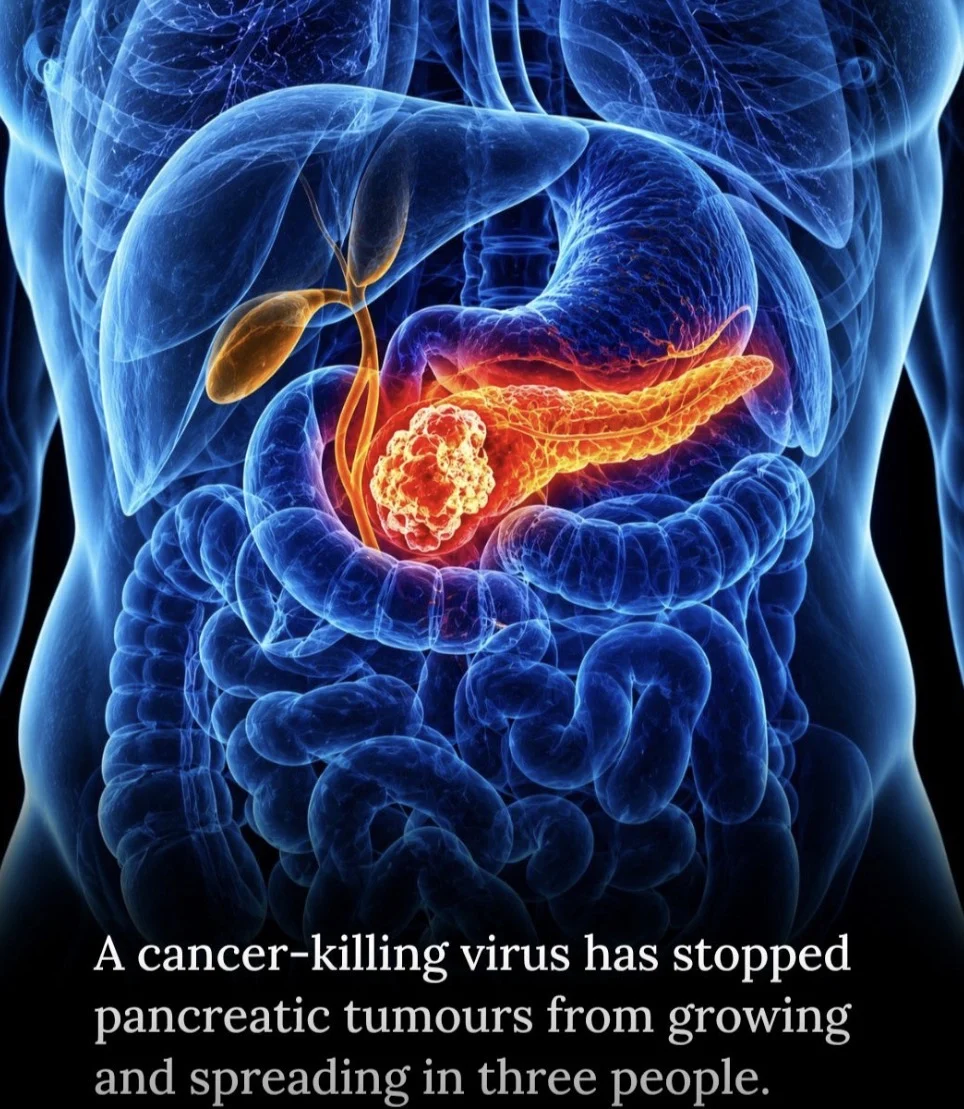
“An experimental cancer-killing virus has stopped pancreatic tumors from progressing in the first three patients treated in an early clinical trial.
Researchers at the University of Minnesota are testing a genetically engineered adenovirus against locally advanced pancreatic cancer.
These patients have cancer that has spread into nearby tissues but has not yet spread to distant organs.The virus is designed to preferentially replicate inside cancer cells. Once inside, it multiplies until the cancer cell bursts, releasing more viral particles that can infect neighboring tumor cells. Destroying the cells this way may also expose tumor proteins to the immune system, potentially helping it recognize and attack the cancer.
In the Phase 1 trial, the first three participants received the virus directly into their pancreatic tumors. All three remained alive with stable disease, meaning their cancers had not significantly grown or spread after treatment. One of the patients had reportedly maintained stable disease for about a year.
What makes the early result particularly interesting is that researchers deliberately started with only around one-tenth of the viral dose they ultimately hope to test.
But this is not evidence that pancreatic cancer has been cured.
Only three people have been treated at this dose; there was no control group, and Phase 1 trials are primarily designed to assess safety rather than prove effectiveness. The findings have also been presented at a scientific meeting rather than published as a full peer-reviewed clinical paper.
Still, seeing tumor stability in all three initial patients has encouraged researchers to continue escalating the dose and testing the approach in more people.
CLINICAL TRIAL
Yamamoto et al., Phase 1 trial of an engineered oncolytic adenovirus for locally advanced pancreatic cancer, presented at the American Society of Gene and Cell Therapy Annual Meeting (2026).”
You may also be interested in: Can Pancreatic Cancer Be Detected Early? Symptoms, Biomarkers, and New Tests