






Renjith Vijayakumar Selvarani, Founder, Chairman, Chief Scientific and Technology Officer at OLUSIUM, shared a post on LinkedIn:
“Tumor-Eating Bacteria: A Glimpse Into the Future of Cancer Therapy
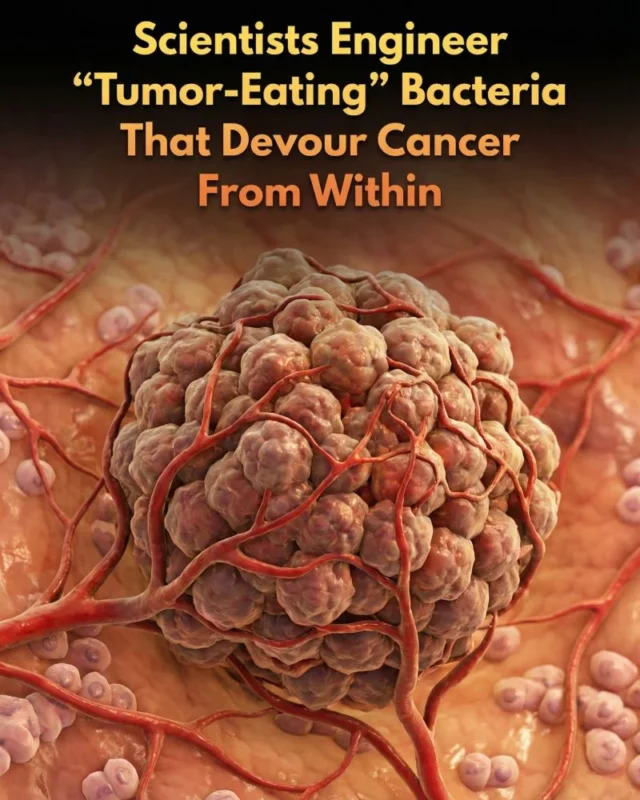
We are entering a transformative era in synthetic biology, one where living systems are being engineered to perform tasks once thought impossible. A recent development in this space highlights just how far we’ve come: scientists have designed bacteria that can infiltrate and destroy tumors from within.
Researchers have taken a naturally occurring soil bacterium and reprogrammed it into a precision tool against cancer. What makes this approach remarkable is its ability to exploit a fundamental weakness of solid tumors their oxygen-deprived core. Unlike healthy tissues, many tumors contain hypoxic regions that are difficult for conventional therapies like chemotherapy and radiation to effectively reach.
This is where biology offers an elegant solution.
The engineered bacteria are designed to thrive in these low-oxygen environments. Once inside the tumor, they begin to colonize and consume nutrients essential for tumor survival. In essence, they turn the tumor’s own microenvironment into a self-destructive ecosystem.
However, the real innovation lies in control.
One of the biggest challenges in using bacteria therapeutically is ensuring they act only where needed. To address this, researchers incorporated a sophisticated genetic circuit based on quorum sensing a mechanism that allows bacteria to “sense” their population density. Only after reaching a critical mass within the tumor do these engineered cells activate genes that help them tolerate oxygen. This ensures they remain inactive in healthy, oxygen-rich tissues, significantly improving safety and precision.
This work represents more than just a novel cancer treatment strategy it signals a shift in how we think about medicine. Instead of relying solely on external interventions, we are now designing living systems that can adapt, respond, and execute complex therapeutic functions autonomously.
While this approach is still in the preclinical stage, its implications are profound:
- Targeting regions inaccessible to traditional therapies
- Reducing systemic toxicity
- Enabling self-regulated, intelligent treatment systems
As synthetic biology continues to evolve, such innovations could redefine the boundaries of cancer care. The convergence of biology, engineering, and computation is not just enhancing medicine, it is reinventing it.
The future of oncology may not just be chemical or mechanical. It may be alive.
Source: Sadr, S., Zargar, B., Aucoin, M. G., and Ingalls, B. Construction and Functional Characterization of a Heterologous Quorum Sensing Circuit in Clostridium sporogenes. ACS Synthetic Biology.”
Other articles featuring Renjith Vijayakumar Selvarani on OncoDaily.