






Renjith Vijayakumar Selvarani, Founder, Chairman, Chief Scientific and Technology Officer at OLUSIUM, shared a post on LinkedIn:
“A Universal Cancer Vaccine? A Transformative Step in Oncology Research.
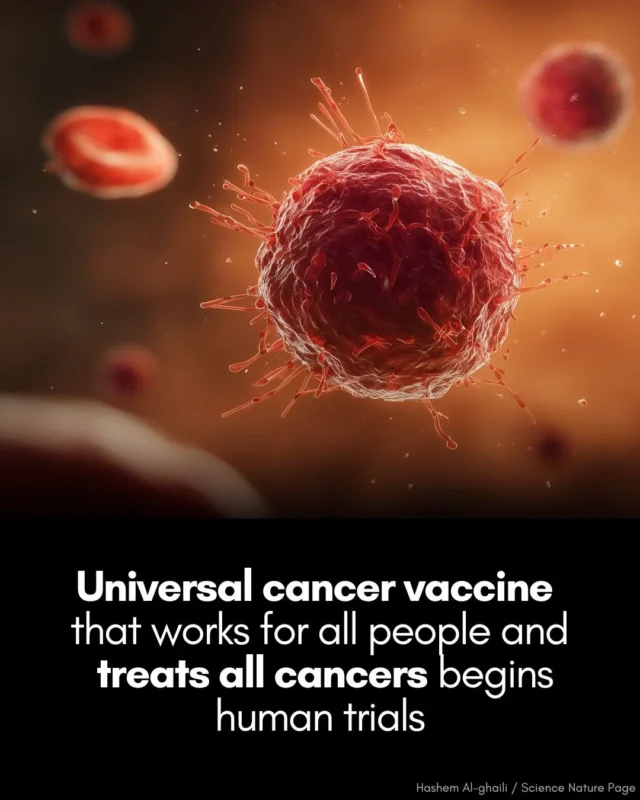
A groundbreaking development from the University of Florida is generating global attention: an “off-the-shelf” mRNA-based universal cancer vaccine that may work across multiple cancer types and it is already being tested in humans. Published in Nature Biomedical Engineering (Sayour et al., 2025), this innovative approach challenges the conventional framework of personalized cancer vaccines.
Unlike existing cancer vaccines that are customized for each patient based on specific tumor mutations, this new strategy does not require individualized tumor sequencing at the outset. Instead of training the immune system to recognize a specific cancer protein, the vaccine activates type-I interferons natural immune messengers that play a central role in innate immunity. By stimulating these early immune pathways, the vaccine helps “reset” immune signals that tumors often hijack to evade detection.
In essence, it makes hidden cancers visible again to the immune system. Preclinical studies in mouse models have shown promising results. The vaccine slowed the growth of melanoma, glioma, and metastatic bone cancer. Importantly, it also appeared to convert previously resistant tumors into ones that responded better to immune checkpoint inhibitors, suggesting that this platform could enhance the effectiveness of existing immunotherapies rather than replace them.
Human trials have already begun in patients with aggressive and recurrent cancers, including pediatric glioma and osteosarcoma. The clinical strategy is particularly interesting: it combines an initial off-the-shelf immune-activating dose with a subsequent personalized booster. If successful, this could significantly shorten the time required to begin treatment and offer a broader, faster defense against difficult-to-treat cancers.
The broader implication is profound. For years, oncology research has largely focused on adaptive immunity and tumor-specific antigen targeting. This work shifts attention back to innate immune reprogramming, highlighting that restoring fundamental immune signaling may be just as important as identifying specific tumor mutations. It suggests a future where immune signal engineering complements precision oncology.
While still in early stages, this development represents a scientifically thoughtful and potentially transformative step forward. It is not yet a universal cure, but it reflects a maturing understanding of how mRNA technology can be leveraged beyond infectious disease potentially reshaping the way we initiate and enhance cancer immunotherapy.
Source: Sayour, E., et al. (2025). Off-the-shelf mRNA vaccine activates innate immunity against solid tumors. Nature Biomedical Engineering, July 18, 2025.”
Other articles featuring Cancer Immunotherapy on OncoDaily.