






Rawia Mohamed, Head of the Anatomical Pathology Department at Burjeel Medical City, shared a post on LinkedIn:
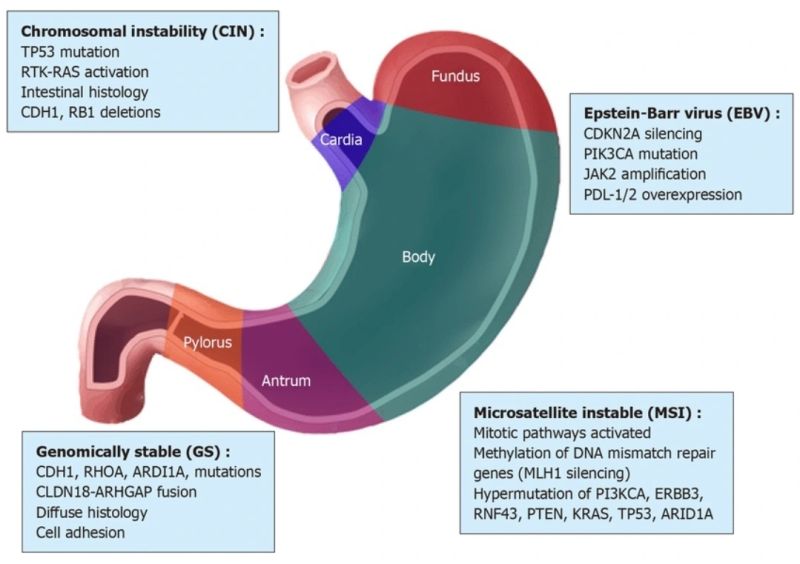
“Although CLDN18.2 expression is distributed evenly across the four TCGA molecular subtypes (EBV, MSI, GS, CIN), it demonstrates distinct clinical clustering patterns.
CLDN18.2-positive tumors frequently exhibit diffuse infiltrative morphology (Borrmann type 4), KRAS amplification, reduced NK cell signatures (low CD16), and increased macrophage infiltration (high CD68). This indicates that CLDN18.2 reflects a conserved gastric lineage program rather than a genomically defined subgroup, but its expression is enriched in tumors with specific microenvironmental and morphological profiles.
One important point: KRAS amplification is seen in a subset of aggressive gastric cancers, and studies show:
KRAS-amplified tumors often retain epithelial differentiation programs, including CLDN18.2
These tumors may rely on cell–cell adhesion and tight junction signaling, which keeps CLDN18.2 expression intact
This does not mean KRAS drives CLDN18.2, only that both often coexist in certain aggressive phenotypes.
In addition Even though CLDN18.2 exists in all subtypes, studies repeatedly show:
Higher expression in diffuse infiltrative tumors
Especially in linitis plastica–like tumors
Often within Genomically Stable (GS) morphology — but also present in CIN & EBV & MSI cases
CLDN18.2 is a tight junction protein normally expressed in gastric mucosa, and diffuse tumors maintain this lineage marker strongly.
So morphology (diffuse infiltration) can correlate with CLDN18.2, even if the genomic subtype does not.”
More from Rawia Mohamed.