Rasha Aboelhassan, Council Member at International Association for the Study of Lung Cancer, Senior Oncology Consultant at Nasser Institute Hospital, shared on LinkedIn:
“Breakthrough oncology drugs only work if patients actually receive them without interruption.
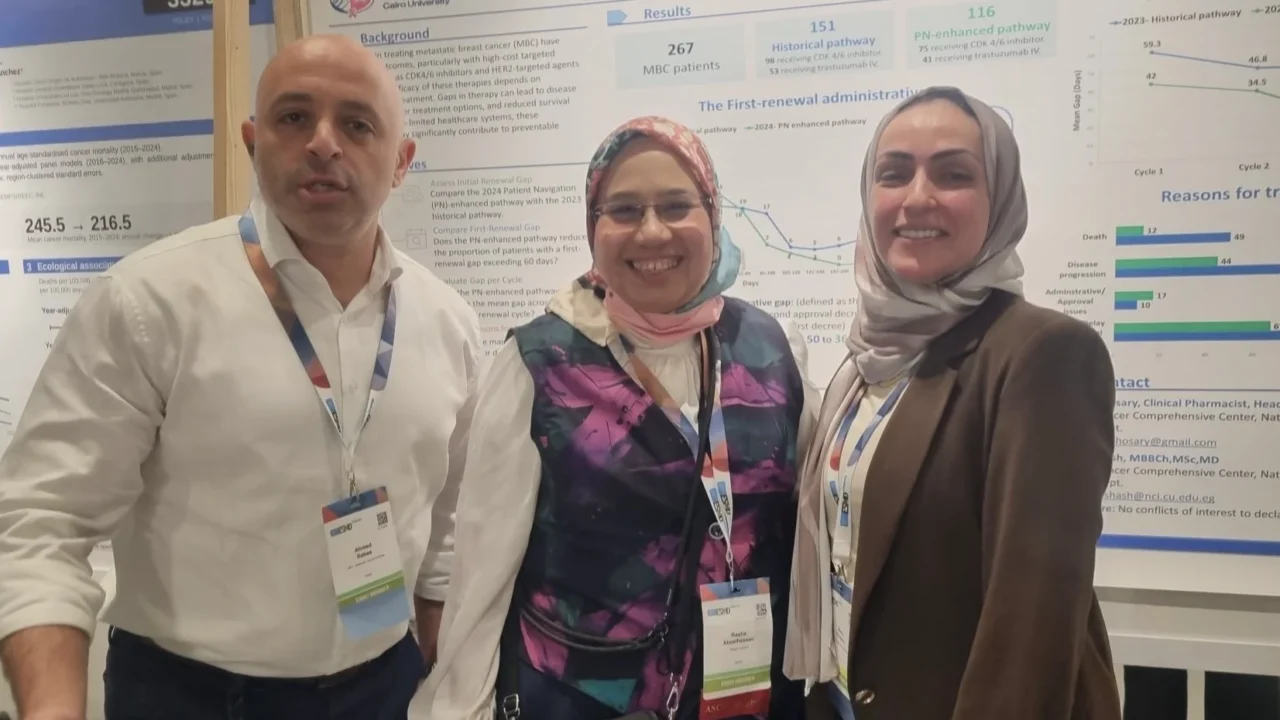
In resource-limited settings, recurring payer and administrative re-authorizations often trigger dangerous gaps in care for metastatic breast cancer (MBC). At Cairo University’s National Cancer Institute, researchers evaluated whether Patient Navigation (PN) could solve this operational bottleneck:
The Data (267 patients on CDK4/6i or Trastuzumab IV):
- First-renewal gap: Cut from 59.3 to 42.0 days (an absolute 17.4-day reduction, p < 0.001).
- Subsequent cycles: Average administrative delays decreased from 52.6 to 39.7 days (p < 0.001).
- Severe delays (>60 days): Dropped from 40.4% to 26.7% (adjusted OR 0.54, p = 0.020).
- Generalizability: The benefit was treatment-class independent across oral and IV targeted therapies.
The Takeaway:
While molecular innovation dominates congress headlines, health-system delivery determines real-world survival. Navigators cut nearly three weeks of administrative delay per cycle—showing that structured navigation is an essential policy lever to protect treatment continuity.
Hear is the whole interview with Prof Mona Elhosary poster author:
How does your center manage recurring prior-authorization friction to prevent therapy suspension?”
You can also read: Rasha Aboelhassan: Key Insights From ESMO 2026