Puja Sapra, Senior Vice President, Head R&D Biologics Engineering and Oncology Targeted Discovery at AstraZeneca, shared a post on LinkedIn:
“Our team at AstraZeneca just published some of our lessons learned in the optimization of PROteolysis Targeting Chimeras (PROTACs) and the pivotal role of the linker region in achieving desired pharmacological effects, improving oral bioavailability, and influencing metabolic stability in Nature Reviews Chemistry.
PROTACs are an emerging promising modality with the first cohort now in late phase clinical trials. We see applications of this modality to an expanding range of molecular targets and therapeutic areas. An increased understanding on how to discover, optimize, and exploit this modality is imperative to realize the full potential of PROTACs.
As we look to the future beyond classical PROTACs, similar optimizations found for PROTACs may also benefit other forms of induced proximity pharmacology including PHosphorylation-Inducing Chimeras (PHICs), DeUBiquitinase-TArgeting Chimeras (DUBTACs), and Regulated Induced Proximity TArgeting Chimeras (RIPTACs).
A special thanks to the great work of Andy Pike Esther L. Iacovos N. Michaelides Markus Schade Ankit S. Jamie Scott Abhishek Srivastava and the rest of the team on this publication!”
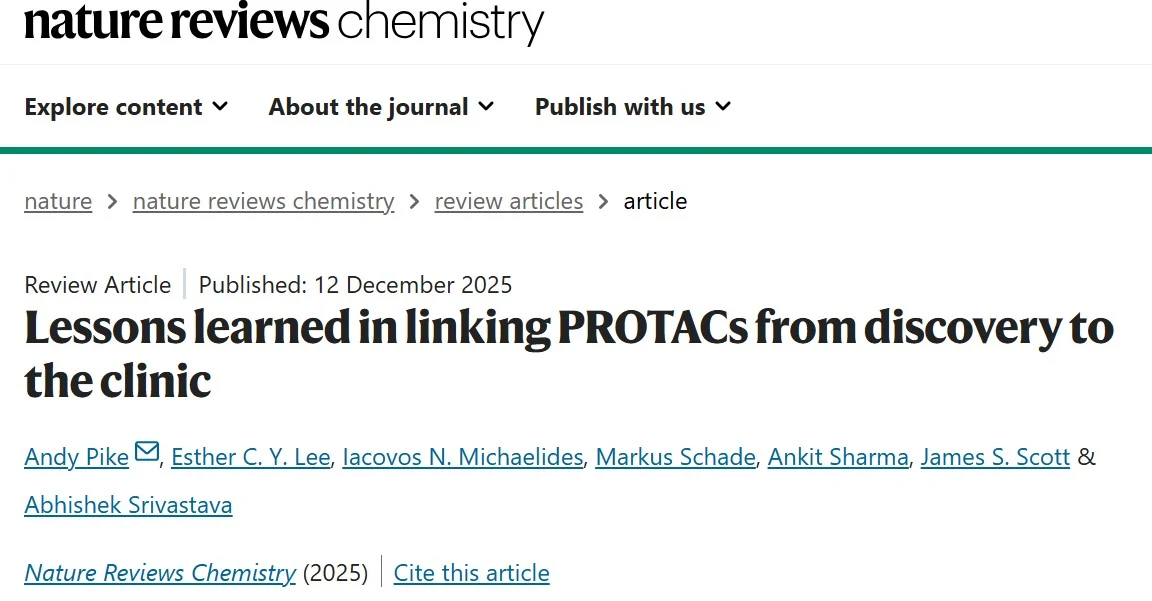
Title: Lessons learned in linking PROTACs from discovery to the clinic
Authors: Andy Pike, Esther C. Y. Lee, Iacovos N. Michaelides, Markus Schade, Ankit Sharma, James S. Scott, Abhishek Srivastava
You can read the full article in Nature Reviews – Chemistry.