






A new study led by Dr. Amrit Baral, a trained epidemiologist, medical doctor, and Postdoctoral Fellow at Johns Hopkins Bloomberg School of Public Health, has identified a previously unreported association between lifetime use of classic psychedelics and prostate cancer diagnosis among U.S. men aged 50 years and older. The findings were published in Nature: Scientific Reports.
Using nationally representative data from the 2015-2019 National Survey on Drug Use and Health (NSDUH), the study examined 19,460 men (representing over 50 million U.S. adults through weighted analysis) and evaluated whether lifetime cannabis use, classic psychedelic use (including LSD, psilocybin, peyote, mescaline), or co-use was associated with prostate cancer diagnosis.
Key Findings
- Exclusive classic psychedelic use was associated with more than two-fold greater odds of reporting a prostate cancer diagnosis compared to men who used neither cannabis nor psychedelics (AOR: 2.62, 95% CI: 1.31-5.22, p < 0.01).
- Among men aged 65 and older, classic psychedelic–only users had over threefold higher odds of prostate cancer diagnosis than non-users (AOR: 3.60, 95% CI: 1.71-7.55, p < 0.01).
- Cannabis-only use and co-use of cannabis plus psychedelics were not associated with reports of prostate cancer diagnosis.
- Given the cross-sectional nature of the data, the study does not establish causality; it highlights the need for further research into potential biological pathways involving serotonergic and endocannabinoid signaling in oncology.
Dr. Baral, the study’s lead author, said:
“This is the first large-scale epidemiologic study to examine how classic psychedelic use may relate to prostate cancer in older adults. Given the rapid rise in interest and accessibility of both cannabis and psychedelics for medical and non-medical use, it is critical that we understand their long-term health implications – especially for aging populations at elevated cancer risk.”
Dr. Baral is a NIDA T32 Postdoctoral Research Fellow in the Department of Mental Health at Johns Hopkins Bloomberg School of Public Health, with research collaborations at the University of Miami Miller School of Medicine and the Global Cannabis and Psychedelics Research Collaboratory at the University of Miami School of Nursing and Health Studies.
Why This Matters Now
As psychedelic therapies gain mainstream attention for treating depression, anxiety, and end-of-life distress, and cannabis becomes increasingly normalized in oncology settings, clinicians and policymakers face new questions about safety – particularly in older adults.
Dr. Baral emphasized:
“This study does not suggest that psychedelic use causes prostate cancer. But the association we observed is unexpected and noteworthy. It underscores an urgent need for longitudinal studies, mechanistic research, and careful assessment of motivations and timing of cannabis and classic psychedelics use among older adults and prostate cancer patients.”
About the Research Team
Lead author:
Amrit Baral, PhD, MBBS, MPH: NIDA T32 Postdoctoral Fellow at Johns Hopkins University Bloomberg School of Public Health
Mentor(s) and Co-authors:
Denise C Vidot, PhD: Associate Professor, School of Nursing and Health Studies; and Miller School of Medicine, University of Miami; Director of Global Cannabis and Psychedelics Research Collaboratory; Member of the Sylvester Comprehensive Cancer Center.
Yue Pan, PhD: Research Associate Professor of Biostatistics in the Department of Public Health Sciences at the University of Miami Miller School of Medicine.
Paulo S Pinheiro, PhD: Research Associate Professor of Epidemiology in the Department of Public Health Sciences at the University of Miami Miller School of Medicine. Member of the Sylvester Comprehensive Cancer Center.
WayWay M Hlaing, PhD: Professor of Epidemiology in the Department of Public Health Sciences at the University of Miami Miller School of Medicine.
Albert Garcia-Romeu, PhD: Associate Professor of Psychiatry and Behavioral Sciences at the Johns Hopkins University School of Medicine; Associate Center Director and Susan Hill Ward Professor in Psychedelics and Consciousness at Johns Hopkins University Center for Psychedelics and Consciousness Research
Publication Information
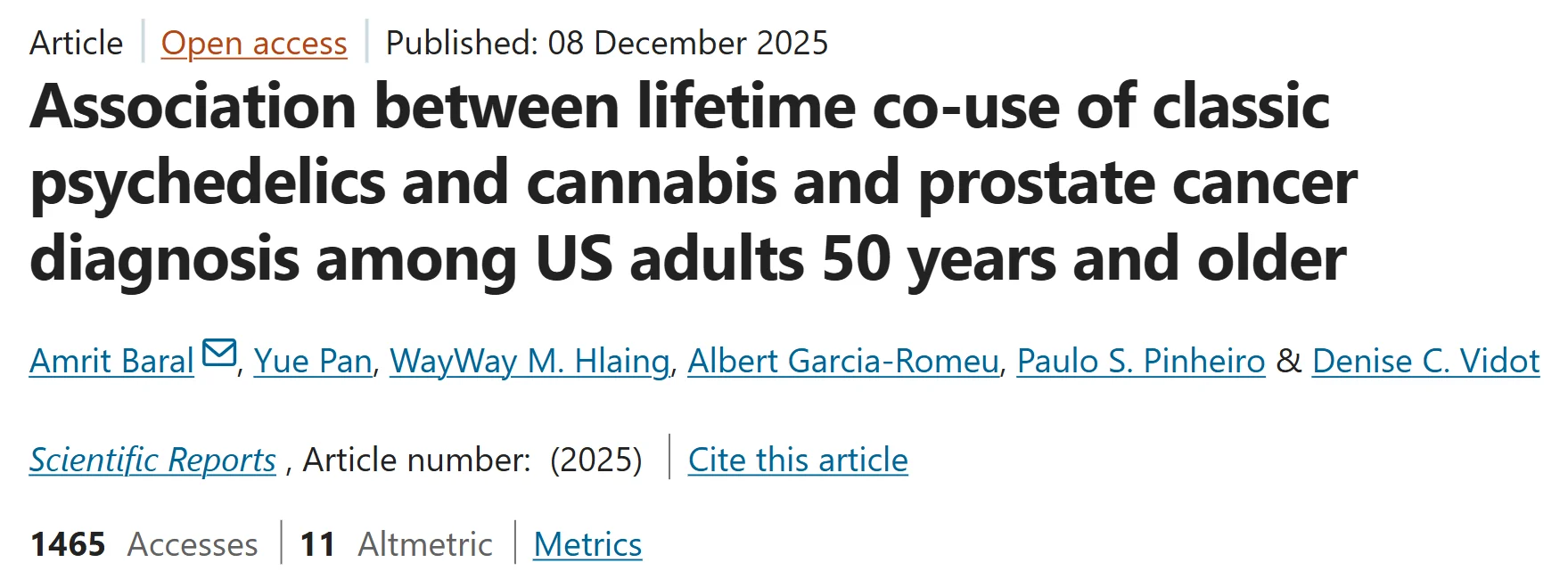
Title: Association between lifetime co-use of classic psychedelics and cannabis and prostate cancer diagnosis among US adults 50 years and older
Authors: Amrit Baral, Yue Pan, WayWay M. Hlaing, Albert Garcia-Romeu, Paulo S. Pinheiro, Denise C. Vidot
You can read the Full Article in Scientific Reports.
About Dr. Amrit Baral
Dr. Amrit Baral is a NIDA T32 Postdoctoral Research Fellow in the Department of Mental Health at the Johns Hopkins Bloomberg School of Public Health. He earned his Ph.D. in Epidemiology under the mentorship of Dr. Denise C. Vidot at the University of Miami Miller School of Medicine, following medical training at Chongqing Medical University in China and an MPH from West Chester University of Pennsylvania.
His research examines cannabis hyperemesis syndrome, route-specific patterns of cannabis use and cannabis use disorder, and the cardiometabolic, occupational, and sleep-related health effects of cannabis and psychedelics. He also conducts research at the intersection of cancer and cannabis and previously contributed to NCI-funded studies investigating cannabis and psychedelic use among individuals living with cancer.
You can read more posts featuring Amrit Baral on OncoDaily.