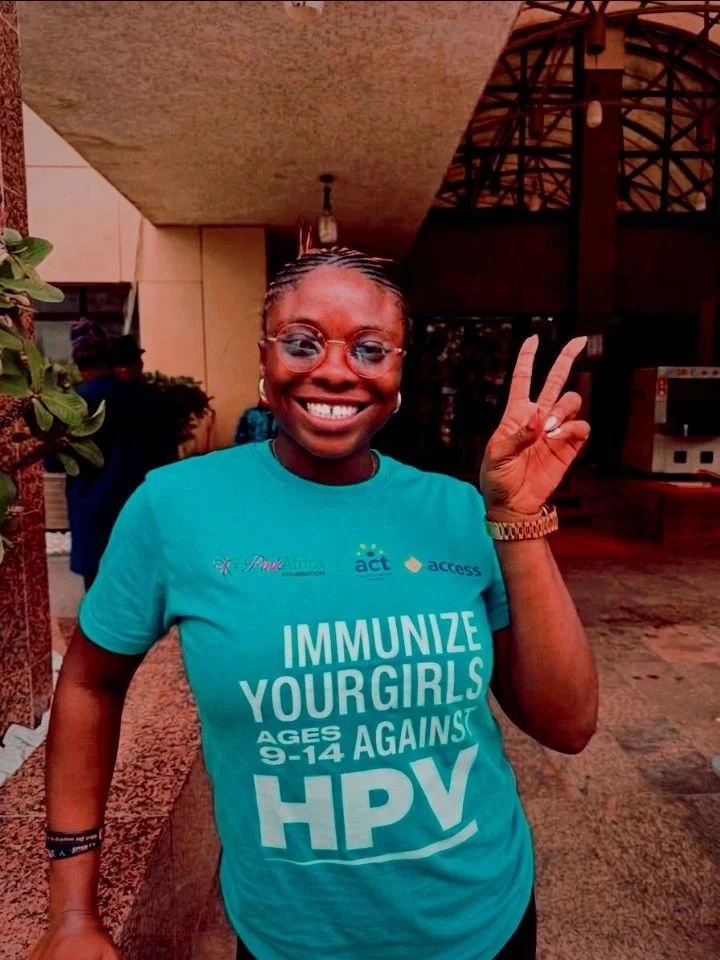
Petra Ibum Adjah, Programs and Communications Manager at Pink Africa Foundation, shared on LinkedIn:
“The World Health Organization’s 90-70-90 global strategy for eliminating cervical cancer in LMICs by 2030 is:
- By the age of 15, 90% of young girls had received all of their HPV vaccinations.
- By the age of 35, 70% of women have undergone a high-performance exam, which is repeated at the age of 45.
- 90% of women diagnosed with cervical cancer receive treatment, which includes 90% of women with pre-cancer and 90% of women with invasive cervical cancer.
Modelling suggests that attaining the eradication goal might avoid 74 million new instances of cervical cancer and 62 million deaths by 2120.
Here are three important facts concerning cervical cancer in Nigeria.
- Pap Smear Screening Rate: In Nigeria, approximately 14% of women aged 25 to 49 have never had a Pap smear test, and awareness of cervical cancer screening in communities remains very low, ranging from just 6.9% to 38.6%.
- HPV Vaccine Access: On a more positive note, the single-dose HPV vaccine is now available free of charge at Primary Health Care facilities for girls aged 9 to 14, and about 17 million girls have already been vaccinated.
- HPV-16/18 Carrier Numbers: An estimated 3.5% of women in the general Nigerian population carry a cervical HPV-16 or HPV-18 infection at any given time. These two high-risk strains are responsible for 66.9% of all invasive cervical cancer cases in the country.
We already have the knowledge, tools, and clinical expertise needed to eliminate cervical cancer.
It is easily preventable through screening and vaccination, and it is also easily treatable when detected as precancerous lesions.
The real challenge lies in awareness, access to screening, access to preventive care, access to treatment and management, and stronger patient pathways.
Every girl and woman, regardless of her economic status or location, deserves to be saved.
As low- and middle-income countries scale up cervical screening, more cases of invasive cervical cancer will be detected, especially among populations that have never been screened before.
Referral and cancer management strategies must therefore be implemented and expanded alongside prevention services.
There is a need for meaningful collaborations, expansion of services, and consistent tracking of progress.
This strategy must move from paper to reality if we are to successfully eliminate cervical cancer.
We are grateful to cancer organisations like Pink Africa Foundation, Medicaid Cancer Foundation, Cancer Advocacy Nigeria, End Cervical Cancer Nigeria Initiative, which are breaking barriers and closing the care gap through health education, advocacy, free screening, free treatment for precancerous lesions, and financial support for treatment.
Let’s get to work ensuring that no girl or woman is left behind and that cervical cancer is eradicated from Nigeria.”
You can also read:
Martha Wanjiru: Turning the WHO 90-70-90 Strategy Into Action to Eliminate Cervical Cancer.