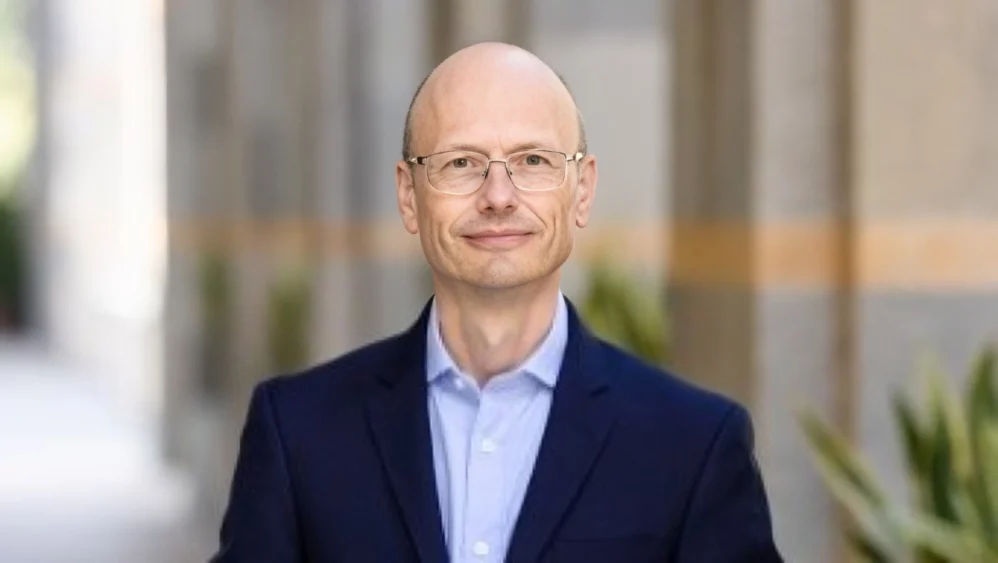
Paul Burton, Chief Medical Officer of Amgen, shared on LinkedIn:
“In January 2024, Kate was told she had one to two years to live.
She was 41 years old, had never smoked, and had two children at home. Her diagnosis: extensive-stage small cell lung cancer (ES-SCLC). I imagine receiving that diagnosis was devastating.
ES-SCLC is one of the most difficult-to-treat cancers, and the prognosis has typically been grim. But after decades of minimal advances, real hope and progress has finally emerged in this disease.¹,²And in a cancer this aggressive, scientific progress is a reason to push harder, not to ease off the gas.
Why Small Cell Lung Cancer is Different
Small cell lung cancer grows and spreads quickly. In fact, about 70% of people are diagnosed with the disease after it has already spread.3
The cancer often responds well to initial chemotherapy, but in most patients, it returns within months.4 Despite recent advances with initial treatment, median survival is still about a year from the start of maintenance treatment, and only about 40% of patients receive second-line therapy.5-7
That last statistic is one I keep returning to. It means that when first-line treatment stops working, most patients never receive another.
The disease moves faster than our options do. Kate’s first year followed that pattern. Chemotherapy and chest radiation worked well at first, until an MRI showed 30 metastases in her brain. ‘Small cell is relentless,’ she told us.
But so are the scientists working to change the trajectory of this disease.
The Case for Sticking with Hard Problems
Today, adults in the U.S. with previously treated ES-SCLC have a targeted treatment option.2 It exists because of years of research.
To me, that is what sustained commitment and what difficult science requires. It means investing in research programs that may ultimately fail. It means running trials among patients who are seriously ill and whose disease moves quickly. It means collaborating with academic groups and other companies. And it means accepting that the people who begin this work are often not the ones who finish it.
Persistence is key. And persistence is providing hope.
I am energized when I think about what advances could mean for people diagnosed with small cell lung cancer and those who love them.
Keeping the Momentum
‘Remember the human lives behind the research.’
That is what Kate asks of the scientists dedicating their careers to small cell lung cancer. It is a call to action we take to heart. Progress has finally arrived in a disease that has tested our field for decades, but the work is far from finished. We owe it to Kate, and to every individual impacted by this disease, to finish what has been started.
References
- Wang S, et al. Sci Rep. 2017;7(1):1339.
- Amgen. Press release. November 19, 2025.
- Megyesfalvi Z, et al. CA Cancer J Clin. 2023;73(6):620-652.
- Oronsky B, Abrouk N, Caroen S, et al. J Cancer. 2022;13(9):2945-2953.
- Cramer-van der Welle CM, Schramel FMNH, van Leeuwen AS, Groen HJM, van de Garde EMW; Santeon SCLC Study Group. Eur J Cancer Care (Engl). 2020;29(5):e13250.
- Shaw J, Pundole X, Balasubramanian A, et al. Oncologist. 2024;29(12):1079-1089.
- Paz-Ares L, Borghaei H, Liu SV, et al. Lancet. 2025;405(10495):2129-2143.”
You can also read: