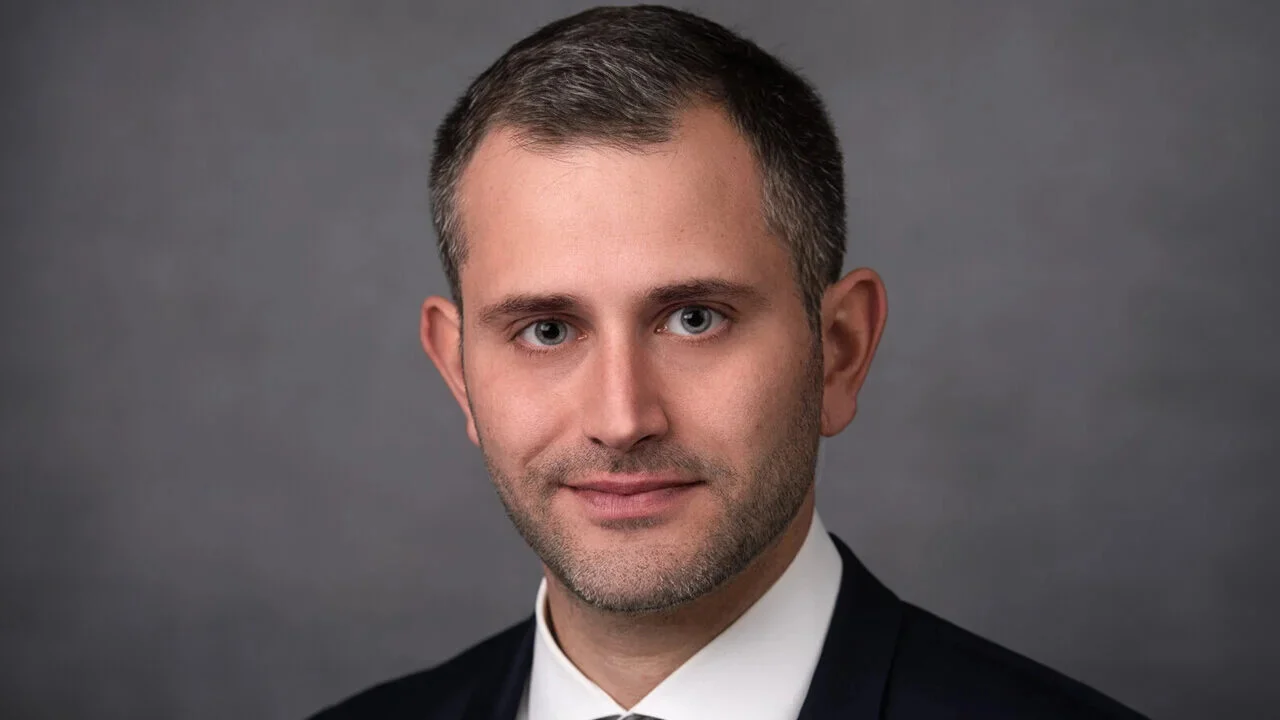
Paolo Tarantino, Research Fellow Dana-Farber Cancer Institute and Harvard Medical Schoolpost, shared a post on X:
“A common sub-analysis in clinical trials is the association of the type of response with survival outcomes, often showing that responders tend to do better. One issue with these analyses is that the causation is often misinterpreted.
Patients are implied to have experienced better PFS/OS because of achieving a better response. In truth, the opposite may be true: patients with less aggressive tumors are more likely to stay on treatment for long enough to achieve a deep response.
The statistical analysis is also tricky. The Kaplan-Meier PFS/OS curves for responders are usually flat for several months, suggesting “guarantee time bias”: patients who eventually become responders must survive and be progression-free long enough to be classified as responders.
In a nutshell, patients may not survive longer because they achieve a deeper response; rather, patients with more favorable tumor biology and longer disease control are more likely to remain on treatment long enough to achieve partial or complete response.
The same issue applies to analyses of drug toxicities, dose reductions, and irAEs: patients must remain alive and on treatment long enough to experience these events, which can make these groups appear to have better outcomes unless appropriate time-dependent or landmark methods are used.
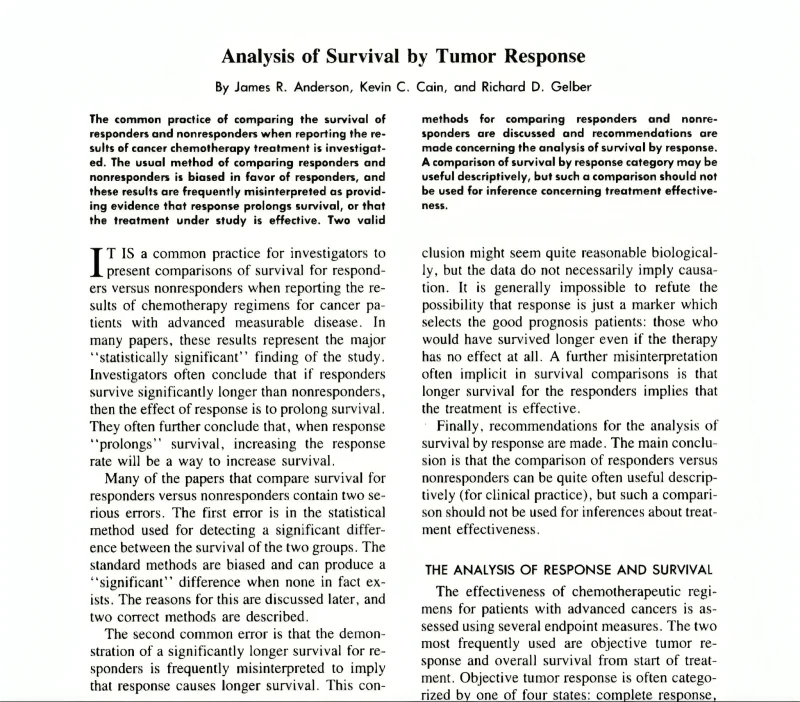
A thorough discussion of this bias is found in this article, published in the inaugural year of Journal of Clinical Oncology (vol 1, 1983).
Thanks to Carmine Valenza for sharing this article with me.”
Title: Analysis of survival by tumor response
Authors: J. R. Anderson, K. C. Cain, and R. D. Gelber
Read the article here.

Other articles featuring Paolo Tarantino on OncoDaily.