





Paolo Tarantino, Research Fellow Dana-Farber Cancer Institute and Harvard Medical Schoolpost, shared a post on X:
“There’s high chance that this may have never been a prospective study, but rather a real-world study.
We need to develop better safeguards to ensure that studies like this do not reach oral sessions in major conferences and full publication on high impact factor journals.”
Quoting Yakup Ergü, Medical Oncologist at Antalya City Hospital, shared an article on X:
“A clearly problematic study has now lost its status as valid scientific evidence. After the Nature Medicine retraction, the related ASCO abstract was also retracted from JCO.
Retractions are no longer rare, but seeing a meeting abstract formally retracted is still not a common occurrence. Hopefully, this case will serve as a lesson.”
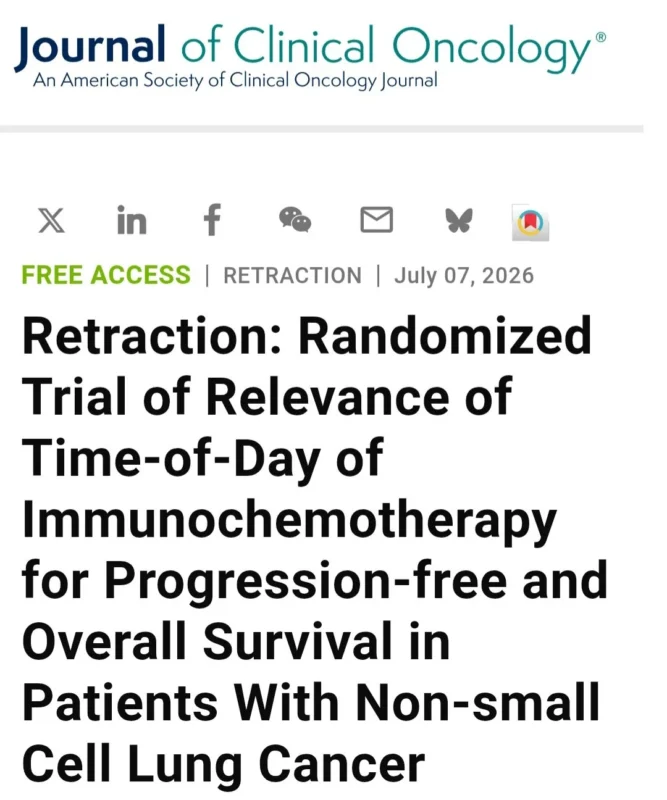
Nina Niu Sanford, Assistant Professor and Chief of Gastrointestinal Radiation Oncology at Harvard/Brigham and Women’s Hospital/Massachusetts General Hospital, also shared her opinion on X:
“Ironically, I think an AI-assisted review algorithm might have flagged some of the study’s discrepancies (maybe not in conference abstract, likely full paper). But many journals currently prohibit/discourage reviewers from using AI.”
Adekemi Oyewusi, Project Manager at Maisha Meds, shared a post on LinkedIn:
Other articles about AI on OncoDaily.