This week’s selection of OncoGrants spans the full research and care continuum, from student training and early-career investigator support to large translational programs and community-based cancer initiatives.
The list includes focused project funding in melanoma and pancreatic cancer, career development awards in triple-negative breast cancer and radiation oncology, and a major multi-year call targeting lung cancer recurrence. Education and workforce development feature prominently as well, with funded summer research programs, medical student fellowships, and leadership training in cancer immunotherapy.
Beyond research, several opportunities emphasize implementation and patient support—recognizing the role of trial coordination, community-led cancer services, and equity-focused programs in improving outcomes. Together, these grants reflect ongoing investment in both scientific progress and the systems that deliver cancer care.
1. MRF Resident/Fellow Melanoma Research Grant 2026
A one-year melanoma research grant for residents and fellows running a focused clinical or lab project in melanoma prevention, detection, biology, or treatment.
Eligibility Criteria:
- Resident or fellow leading a melanoma research project.
- Proposals may focus on cutaneous, pediatric, acral, or ocular melanoma.
- Apply via the MRF RFP and ProposalCentral.
Funding Details:
- $10,000 for 1 year.
- Supports resident/fellow-led clinical or laboratory research.
Deadline:
- February 6, 2026 at 11:59 p.m. ET.
Where to go for further information:
- Program details.
- Contact: research@melanoma.org.
2. Conquer Cancer Career Development Award in Triple Negative Breast Cancer (2026)
A mentored research grant by Conquer Cancer, the ASCO Foundation, for early-career clinical investigators pursuing translational or clinical research in triple-negative breast cancer. This Career Development Award (CDA)supports the transition of junior faculty to independent careers while tackling TNBC, an aggressive breast cancer subtype . Awardees receive funding, mentorship, and access to ASCO’s professional development resources to advance promising research ideas in TNBC.
Eligibility Criteria:
- Physicians (MD/DO or international equivalent) in early faculty positions (e.g. instructor or assistant professor) within 5 years of faculty appointment.
- Research proposal focused on triple-negative breast cancer (translational science, novel therapeutics, or clinical trials).
- Demonstrated potential as an independent investigator; must have a qualified mentor in breast oncology research.
- ASCO membership and institutional support required (protected research time, facilities).
Funding Details:
- $200,000 over 3 years (approx. $66K/year) to cover salary, supplies, and research costs.
- Projects may range from laboratory studies to early-phase clinical trials in TNBC.
- Travel stipend for ASCO Annual Meeting may be included to present results and engage in mentoring events.
Deadline:
- March 12, 2026– Full application due (via ASCO’s Grant Portal).
Where to go for further information:
- Program details.
- Contact: Conquer Cancer Grants Team (grants@conquer.org) for questions about eligibility or submissions.
3. St. Jude Pediatric Oncology Education (POE) Program 2026
A competitive NIH/NCI-funded summer internship at St. Jude Children’s Research Hospital for top undergraduate, graduate, and medical students pursuing biomedical or oncology research careers. Interns undertake 10–11 weeks of mentored lab or clinical cancer research at St. Jude, attend daily educational sessions, and gain exposure to cutting-edge pediatric oncology projects . This program aims to inspire the next generation of cancer scientists and clinicians.
Eligibility Criteria:
- Full-time students (at least college sophomore) in biomedical-related fields (undergraduate, graduate, or medical students).
- U.S. citizens or permanent residents with prior research experience and minimum GPA 3.4 (science and overall).
- Able to commit 10–11 weeks in residence (medical students: 10 weeks; others: 11 weeks) during summer 2026.
Funding Details:
- Stipend of $600 per week for the internship period.
- Housing provided at no cost for out-of-area interns (travel not included).
- Students are matched with a faculty mentor and work on the mentor’s ongoing research; training includes daily Lunch &
- Learn sessions and potential publication opportunities.
Deadline:
- February 1st, 2026 – Application deadline for all materials (late submissions not considered).
Where to go for further information:
- Program details.
- Contact: POE Program Office (email: poe@stjude.org) for inquiries.
4. Breast Cancer Trials Study Coordinator Prize 2026
An award recognizing Australian/New Zealand study coordinators and research nurses contributing to breast cancer clinical trials, supporting attendance at the BCT Annual Scientific Meeting.
Eligibility Criteria:
- Open to Australian and New Zealand study coordinators/research nurses active on BCT trials.
- Nomination requires online nomination form and supporting statement.
- Selection based on contribution to BCT clinical trials.
Funding Details:
- Covers ASM travel (economy airfare), accommodation, and full registration.
- Includes $500 toward a clinical trials professional development opportunity.
Deadline:
- March 31, 2026.
Where to go for further information:
- Program details.
- Application link.
- Contact: asm@bctrials.org.au.
5. OHSU Pancreatic Cancer Pilot Grant 2026
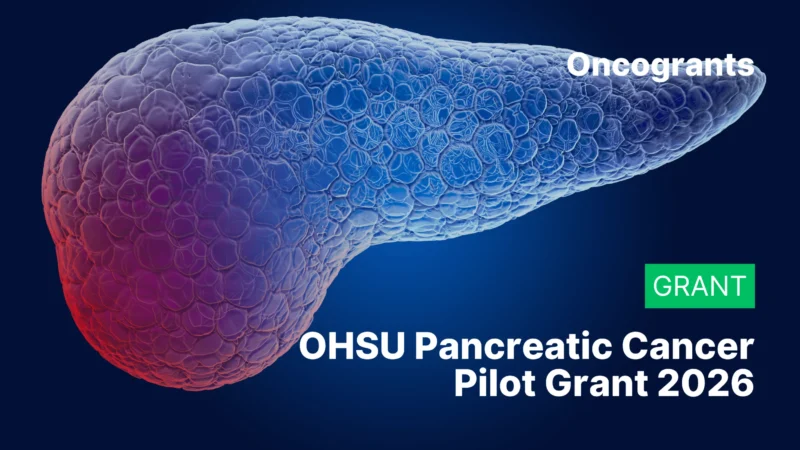
A one-year pilot funding program for pancreatic disease/cancer research at OHSU’s Brenden-Colson Center for Pancreatic Care, supporting projects that can start quickly in 2026.
Eligibility Criteria:
- Applicants must follow the pilot grant RFA and submit required forms.
- Internal award (no F&A funding).
- Intended for pancreas research projects (including cancer-focused work).
Funding Details:
- $50,000 direct costs for 1 year.
- Start date: July 1, 2026.
Deadline:
- LOI deadline: February 2, 2026.
- Full application due April 6, 2026.
Where to go for further information:
6. ASTRO Medical Student Fellowship Award (Radiation Oncology Research 2026)
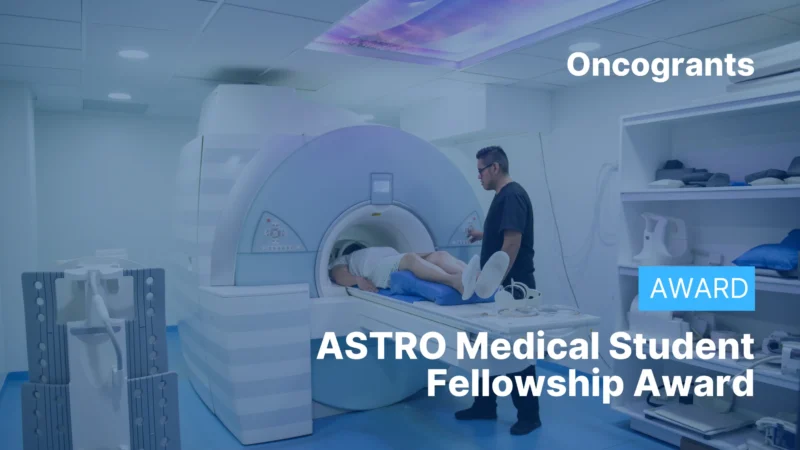
A summer research fellowship offered by ASTRO for medical students to explore radiation oncology. This award provides funding for an 8-week mentored research project in radiation oncology, including exposure to clinical practice and research methodologies in rad onc . It aims to cultivate interest in the field among medical students (particularly those early in training) by supporting a hands-on research experience and clinical shadowing in areas like radiobiology, radiation physics, or clinical radiation therapy trials.
Eligibility Criteria:
-
Enrolled medical students (MD or DO programs) in any year (with preference to first- or second-year students) interested in radiation oncology
-
Must secure a mentor who is an ASTRO member and a faculty radiation oncologist or radiobiologist at the host institution
-
The research project can be basic, translational, or clinical, but should be related to radiation oncology (e.g., a lab project on radiation sensitizers or a clinical study on treatment outcomes)
-
ASTRO membership for the student is required (complimentary for medical students) and the student is expected to consider radiation oncology residency in the future
Funding Details:
- $4,000 stipend for the 8-week full-time research period.
-
$1,000 upon completion and submission of final research report.
-
$1,000 travel subsidy to attend the ASTRO Annual Meeting the following year (to present findings).
-
- $6,000 award for the student , typically allocated as:
-
-
The student’s mentor receives an additional $2,000 honorarium (through the ASTRO–BCRF Mentor Award) to support their role and project expenses.
-
Awardees are invited to ASTRO’s Annual Meeting and recognition events (registration fee waived).
-
Deadline:
-
February 12, 2026 – Application deadline for the ASTRO Medical Student Fellowship (summer 2026 placements).
-
Selections announced by April 2026, allowing students to arrange research and any necessary elective time.
-
Fellowship projects occur roughly June–August 2026; final reports due fall 2026.
Where to go for further information:
-
Contact: education@astro.org – ASTRO Education Department can help students find potential mentors and answer questions about the application.
7. ASTRO Residents/Fellows in Radiation Oncology Seed Grant (2026)
A research seed grant offered by the American Society for Radiation Oncology to empower radiation oncology residents and fellows to jump-start a research project. This one-year grant provides $50,000 to support hypothesis-driven projects in radiation oncology – from clinical radiation therapy studies to translational radiobiology or physics research . It aims to foster early-career investigators in developing preliminary data and experience necessary for future larger grants.
Eligibility Criteria:
-
Current radiation oncology residents or clinical fellows (MD/DO) in accredited programs, or postdoctoral researchers in medical physics/radiation science.
-
Project must be in an area of radiation oncology or related cancer radiotherapy research.
-
Applicants need a primary mentor (faculty in radiation oncology or related field) who will guide the project.
-
ASTRO membership is required, and applicants must commit at least 75% time to research during the grant period.
Funding Details:
-
-
Can be used for salary support, lab supplies, and limited travel to present findings
-
No institutional overhead/indirect costs allowed
$50,000 USD for 1 year (direct costs only).
-
-
Grant term starts July 1, 2026, and concludes June 30, 2027 (with required final report)
-
Access to ASTRO research mentorship resources and potential presentation at ASTRO’s Annual Meeting if results warrant
Deadline:
-
February 26, 2025.
-
Funding decisions by Spring 2026; winners announced by ASTRO by May 2026.
-
Note: A brief Letter of Intent may be required before full submission (per ASTRO’s instructions).
Where to go for further information:
-
Contact: grants@astro.org.
8. Cancer Australia – Supporting People with Cancer (SPWC) Grants 2026
An Australian Government community grants program funding local projects that improve cancer support and equitable outcomes. The SPWC 2026 grants provide up to AUD $120,000 (typically $20K–$120K each) for community-led initiatives that reduce the impact of cancer on patients, caregivers, and communities . Projects may focus on patient navigation, peer support, outreach in indigenous or rural communities, or developing educational and supportive care resources, aligning with Australia’s national cancer plan priority of equity in cancer care .
Eligibility Criteria:
-
Australian community organizations, not-for-profits, Aboriginal and Torres Strait Islander health services, and local government bodies are eligible to apply.
-
Projects must be evidence-based and address an identified support gap for people with cancer, their families or carers.
-
Emphasis on initiatives benefiting priority populations (e.g., Indigenous Australians, culturally and linguistically diverse groups, rural residents) to improve cancer outcome equity.
-
Applicants must have capacity to implement the project within 12–18 months and evaluate its outcomes.
Funding Details:
-
Multiple grants up to a total pool of AUD $1.2 million (round total), with individual grants up to $120,000 each (no matching funds required)
-
Funding covers direct project costs: personnel, program materials, travel for outreach, evaluation expenses (no capital works or major equipment)
-
Grant term: Projects starting April 2026, expected to complete by June 2027 (approximately 15 months)
-
Administered by Cancer Australia via the Can-Grant online system; subject to Australian Government funding agreements and reporting requirements
Deadline:
-
January 30, 2026 (5:00pm AEDT).
-
Decisions announced March 2026; funding agreements to commence by April 2026
Where to go for further information:
-
Contact: Cancer Australia via email (SPWCgrants@canceraustralia.gov.au) or phone for inquiries about eligibility or technical help.
9. Rising Tide Foundation & LUNGevity Lung Cancer Recurrence Research Grant (2026)
A new high-impact funding opportunity jointly offered by the Rising Tide Foundation for Clinical Cancer Research (RTFCCR) and LUNGevity Foundation. This grant will support innovative projects aimed at preventing lung cancer recurrence and overcoming treatment resistance . Multidisciplinary research teams with translational or clinical studies (e.g. novel adjuvant therapies, minimal residual disease monitoring, immunoprevention) are encouraged to apply. Projects should be patient-centered and have potential for near-term impact in advanced lung cancer care.
Eligibility Criteria:
-
Principal Investigators can be established scientists or clinician-researchers with a track record in lung cancer research.
-
Open worldwide: institutions in any country are eligible, but collaboration with U.S. groups is encouraged (LUNGevity is U.S.-based).
-
Proposals must address lung cancer recurrence – such as mechanisms of relapse, innovative interventions post-treatment, or predictive tools for recurrence.
-
A co-funding or sustainability plan is expected (RTFCCR often requires demonstration that the project can attract additional support or fit into a larger trial pipeline).
Funding Details:
-
Up to $1,000,000 per project over 2–3 years (exact budget per proposal based on scope and review panel recommendations).
-
Projects must be translational in nature with a clear path to patient benefit in 3–5 years . This could include funding for a Phase I/II clinical trial or advanced preclinical work leading to a trial.
-
No indirect costs are allowed (grant covers direct research costs only, per RTFCCR policy).
-
Milestone-driven funding: continuance of support each year contingent on meeting predefined milestones and deliverables.
Deadline:
-
February 15, 2026 – Full application due (via RTFCCR’s grants portal) . Note: A brief Letter of Intent or pre-application might be required by mid-January 2026 – check call details for LOI stage.
-
Funding decisions expected by June 2026, with grant start dates in mid-2026.
-
This is a one-time special call announced January 2026 ; future similar calls may be issued depending on available funds and outcomes.
Where to go for further information:
-
Contacts: Email RFA@risingtide.ch or research@lungevity.org for specific inquiries about proposal scope, and assistance in connecting with patient advocates (patient engagement is a review criterion).
10. SITC Women in Cancer Immunotherapy Network (WIN) Leadership Institute 2026
A professional development program by the Society for Immunotherapy of Cancer (SITC) to empower women oncologists and scientists in the immunotherapy field. The WIN Leadership Institute is a multi-day workshop offering mentorship from leading women in cancer immunotherapy, leadership and management training, and networking opportunities. Participants will enhance their skills in team building, effective communication, and career strategizing within the context of immuno-oncology, helping to address the gender gap in leadership positions.
Eligibility Criteria:
-
Early- to mid-career women (approximately 5–15 years post-training) working in cancer immunotherapy or related research/clinical practice.
-
Roles may include assistant professors, early associate professors, or equivalent industry/government scientists and clinicians focused on immuno-oncology.
-
SITC membership is required (Women in Cancer Immunotherapy Network is an initiative within SITC).
-
Demonstrated leadership potential and commitment to advancing immunotherapy (e.g., supervising teams, leading projects, or active in related professional societies).
Funding Details:
-
Travel and lodging for the in-person leadership retreat/workshop are fully covered by SITC (usually a 2–3 day program).
-
Workshop materials and meals provided during the institute.
-
No direct stipend to participants (this is a career development award, not a research grant).
-
Ongoing networking: institute alumnae gain access to the WIN network and continued mentorship post-workshop.
Deadline:
-
March 16, 2026 – Application deadline for the 2026 WIN Leadership Institute. Applications typically include a personal statement, CV, and letter of recommendation.
-
Selection notifications by May 2026.
-
The 2026 WIN Institute is expected to be held in Summer 2026 (dates and location will be announced by SITC; past institutes have coincided with SITC’s Annual Meeting or a standalone summer event).
Where to go for further information:
-
Program details.
-
Contact: education@sitcancer.org – SITC Education Department for inquiries about the WIN program or assistance with membership to apply.
All programs are currently open with deadlines ranging from late January through March 2026. Eligibility, award size, and scope vary widely, so applicants should review each opportunity carefully to determine fit.
This week’s OncoGrants offer options across disease areas, career stages, and geographies, providing multiple entry points for researchers, clinicians, trainees, and organizations working in oncology.
We’ll continue tracking high-value oncology funding opportunities each week—follow OncoDaily’s OncoGrants series for the next roundup.