Olubukola Ayodele, Breast Cancer Lead at University Hospitals of Leicester NHS Trust, shared a post on LinkedIn:
“Today is poster presentation day at ESMO Breast 2026 and I could not be prouder of my team.
Together, we have presented 7 abstracts, including 2 poster displays and 5 ePosters. I had the privilege of supervising 6 of these projects alongside an exceptional group of medical students, oncology trainees and HCPs.
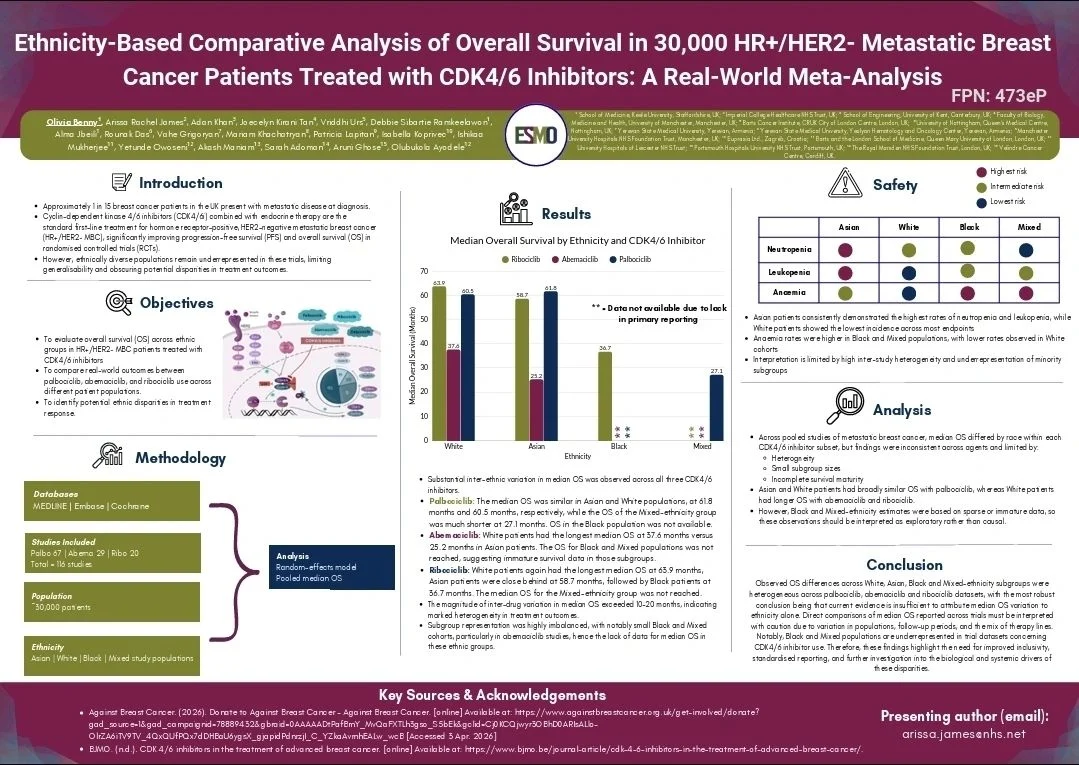
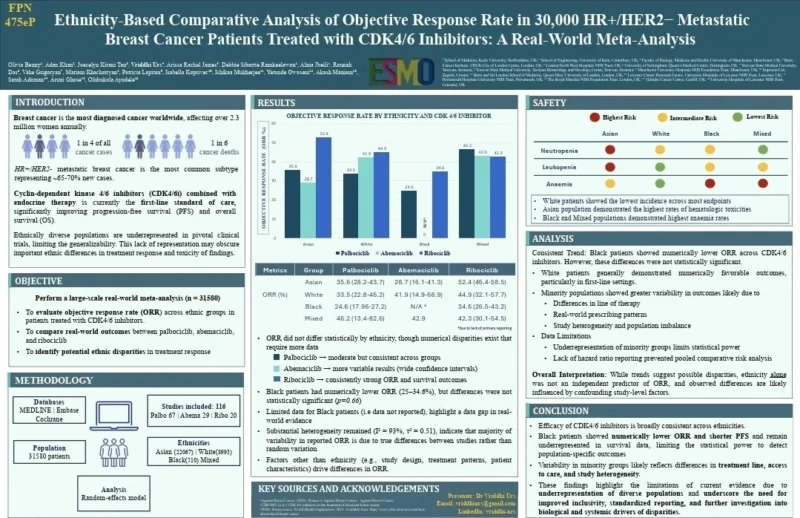
Four of our abstracts focused on a large real-world meta-analysis evaluating outcomes of metastatic breast cancer patients treated with CDK4/6 inhibitors across different ethnic populations.
Despite major advances in breast cancer treatment, diverse ethnic populations remain significantly underrepresented in clinical trials. This limits generalisability and can lead to unpredictable treatment outcomes and toxicity profiles in routine clinical practice.
Our analysis included 31,580 patients from 116 studies:
- Palbociclib: 67 studies
- Abemaciclib: 29 studies
- Ribociclib: 20 studies
Key findings:
White (W), Asian (A), Black (B)
Ribociclib:
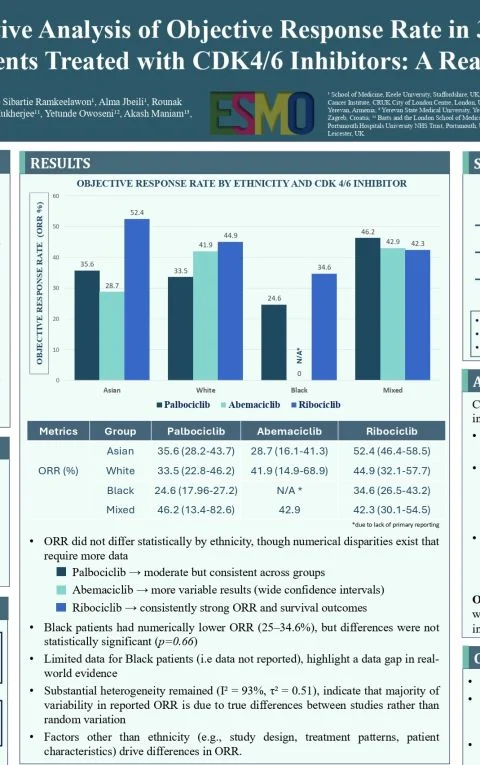
- mORR: W 44.9%, A 52.4%, B 34.6%
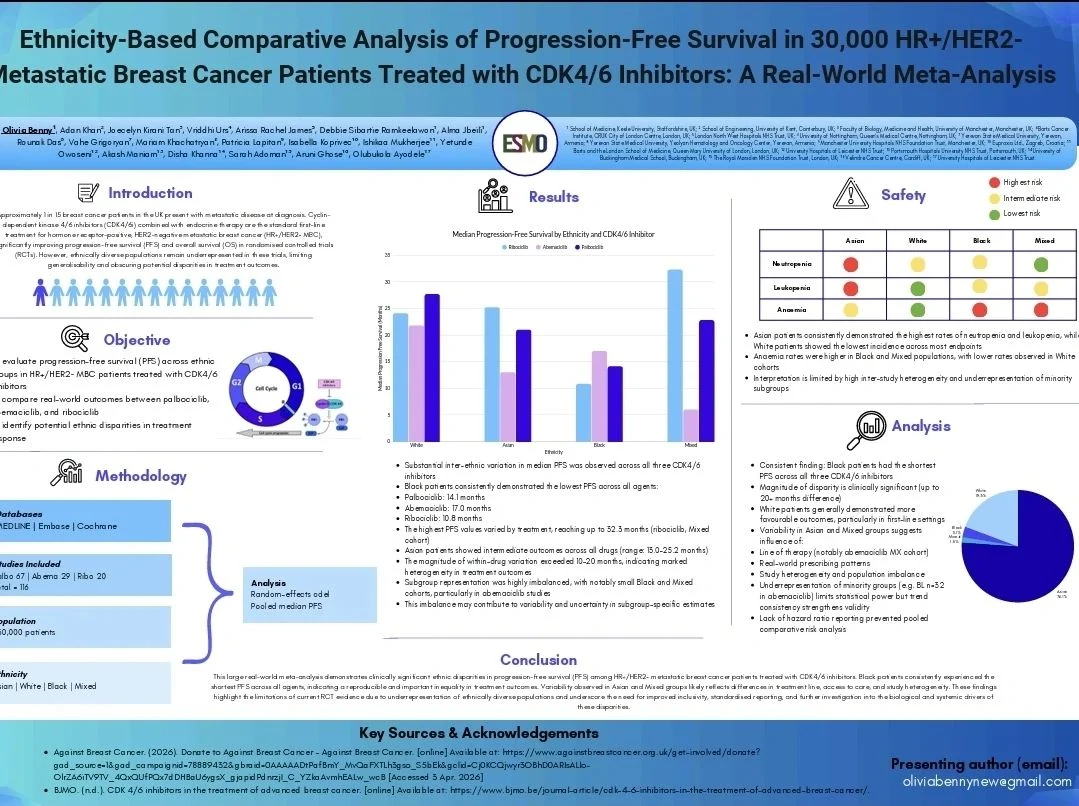
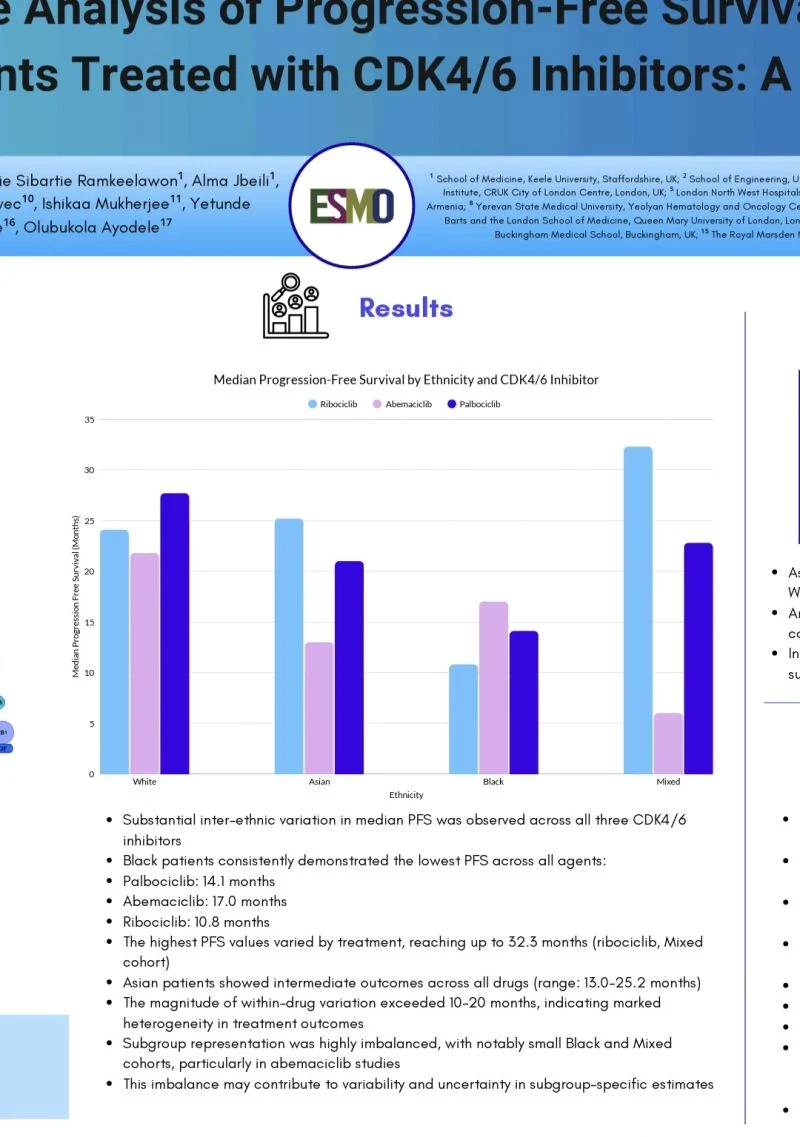
- mPFS: W 24.1 m, A 25.2 m, B 10.8 m
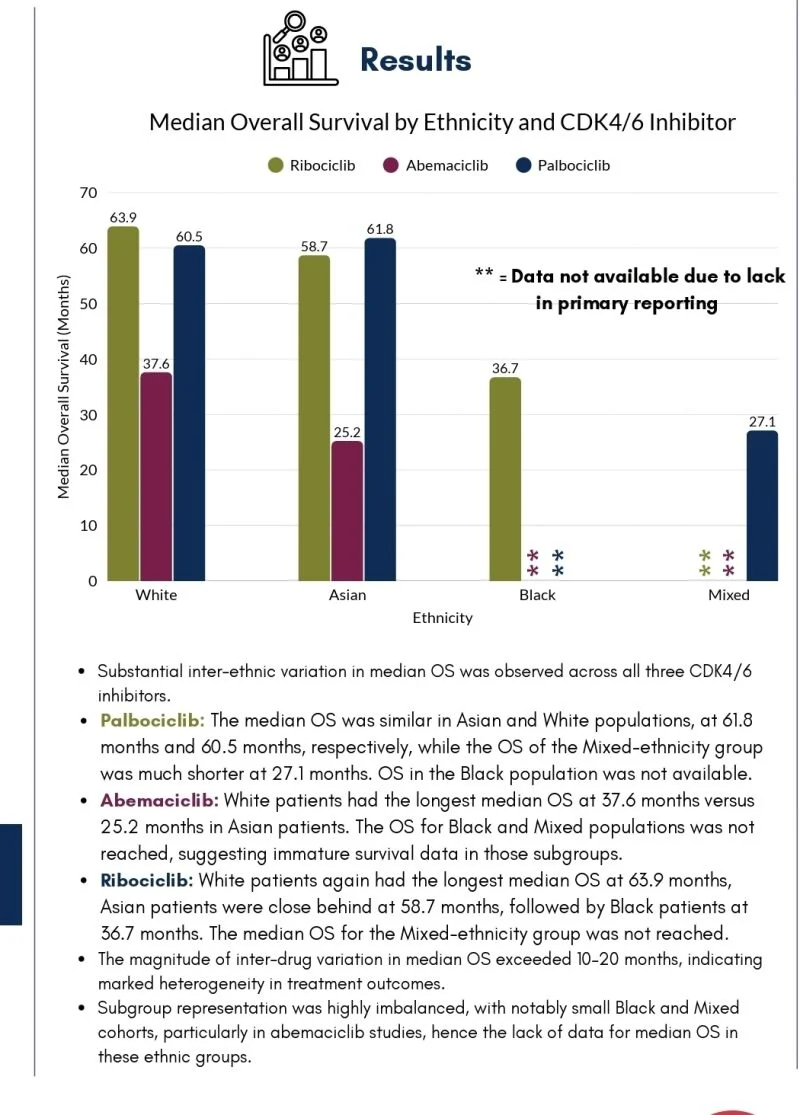
- mOS: W 63.9 m, A 58.7 m, B 36.7 m
Palbociclib:
- mORR: W 33.5%, A 35.6%, B 24.6%
- mPFS: W 27.7 m, A 22.8 m, B 14.1 m
- mOS: W 60.5 m, Asian 61.8 m, B 27.1 m
Abemaciclib:
- mORR: W 41.9%, A 28.7%, Black data unavailable due to lack of primary reportin
- mPFS: W 21.8 m, A 13.0 m, Black 17.0 m
- mOS: W 37.6 m, A 25.2 m, Black data unavailable due to lack of primary reporting
mORR, mPFS and mOS differed across White, Asian and Black populations, with Black patients consistently experiencing poorer outcomes across several endpoints.
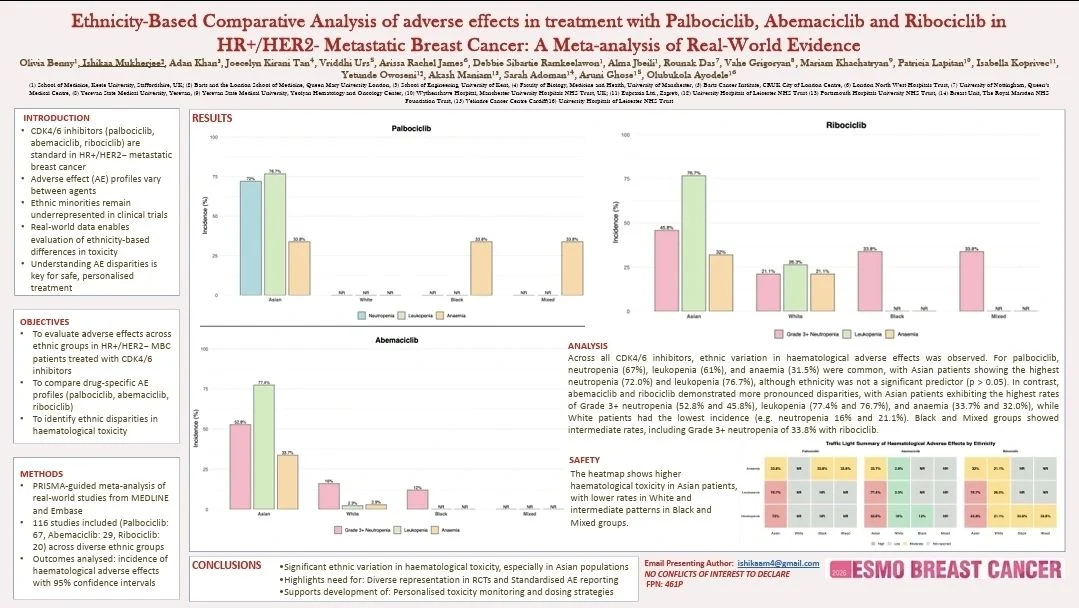
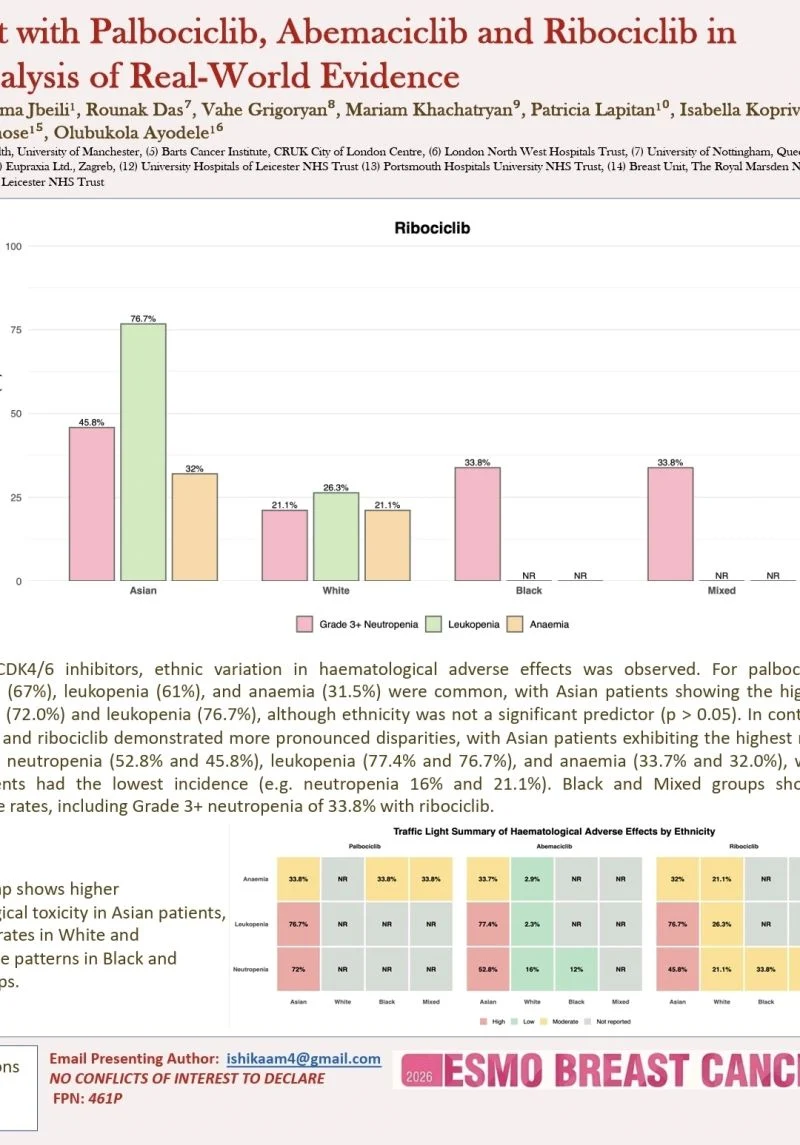
Our haematological toxicity analysis also showed that:
- Asian patients were at highest risk of neutropenia, particularly grade 3 neutropenia
- Black patients had higher rates of anaemia
These findings reinforce why representation in oncology research matters. Equity in cancer care cannot exist if diversity is continually absent from the evidence base guiding our treatment decisions.
This collaborative work has birthed a virtual Cancer Inequalities Lab.
A massive shout out and appreciation to the amazing team!”
Other articles featuring Olubukola Ayodele on OncoDaily.