Olivier Huillard, Co-CEO at Areltys, Medical Oncologist at AP-HP, shared a post on LinkedIn:
“A care pathway should not depend on a mobile number.
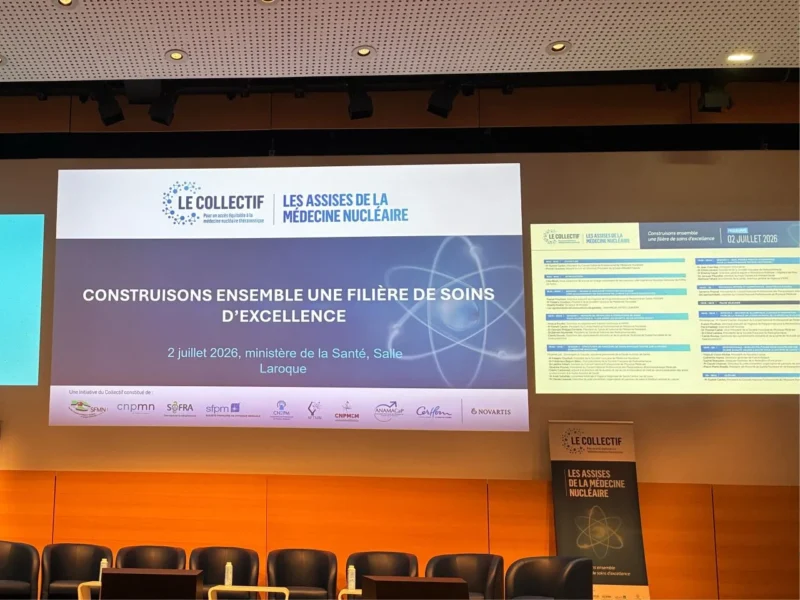
Last week, at the Assises de la Médecine Nucléaire, at the Ministry of Health, the entire ecosystem of vectorized internal radiotherapy (RIV) was brought together. The consensus was clear and legitimate: this approach will transform the treatment of many cancers, and the French sector is of high quality.
One session focused on the ‘patient-centered‘ pathway. Coordination between the referring oncologist and the treating centre was described above all as a matter of local goodwill: people know each other, exchange numbers, and the rest is organised ‘on a tailor-made basis‘, as with other anti-tumour treatments. The implication is that it will eventually happen by itself.
I don’t think it will happen by itself. RIV is multi-site, multi-specialty and delay-sensitive, which is why in RIV PSMA, the majority of eligible patients do not access treatment. This will not change as long as the journey is based on the personal contacts of each doctor. A directory or a RCP are not enough: you need a really equipped course.
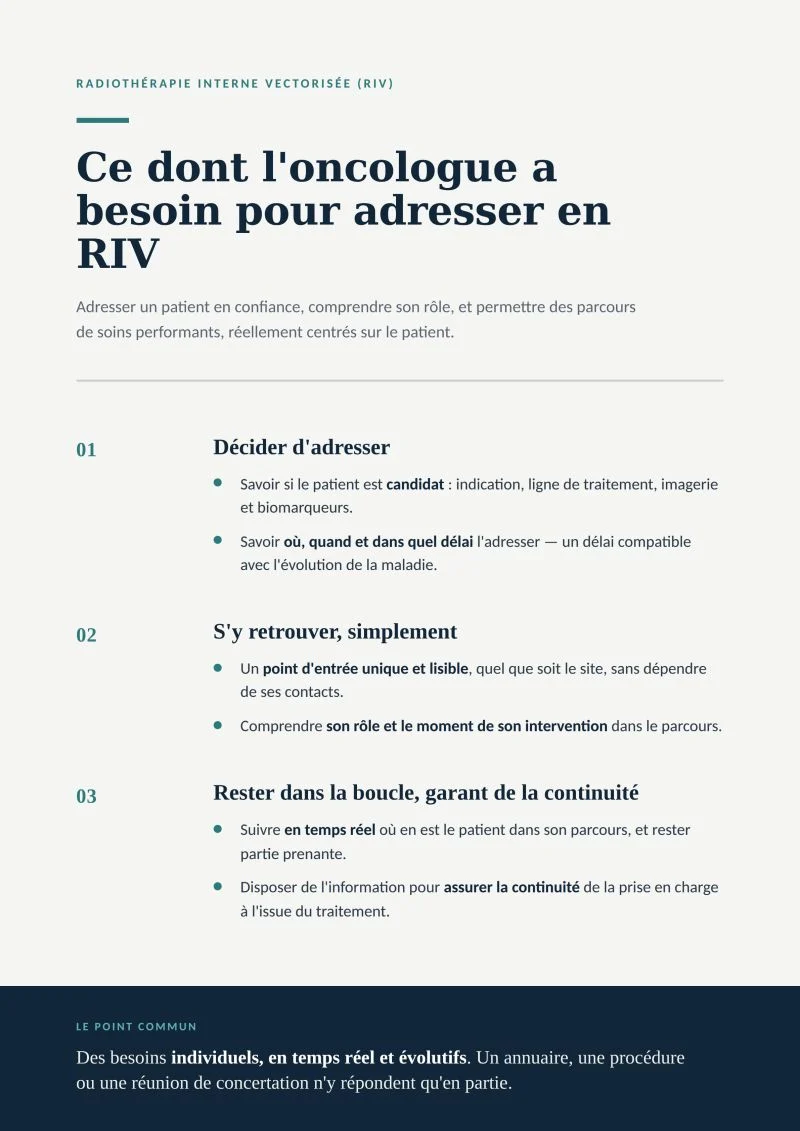
I have summarized on one page what the referring oncologist needs, concretely.
Structuring this pathway, for all stakeholders, is a matter of two distinct projects. The first, knowledge: measuring and mapping these pathways to objectify what is blocking, is the work we are doing in the RIV working group of the AP-HP, Assistance Publique – Hôpitaux de Paris. The second, operational: to give teams a tool that can be read and controlled in real time, the ‘custom’ tool that everyone demands, but reliable and shared. This is what we are building with Areltys.
The science of RIV is ready. The challenge now is that it reaches the patient, without depending on anyone’s mobile phone.”
Other articles featuring Olivier Huillard on OncoDaily.