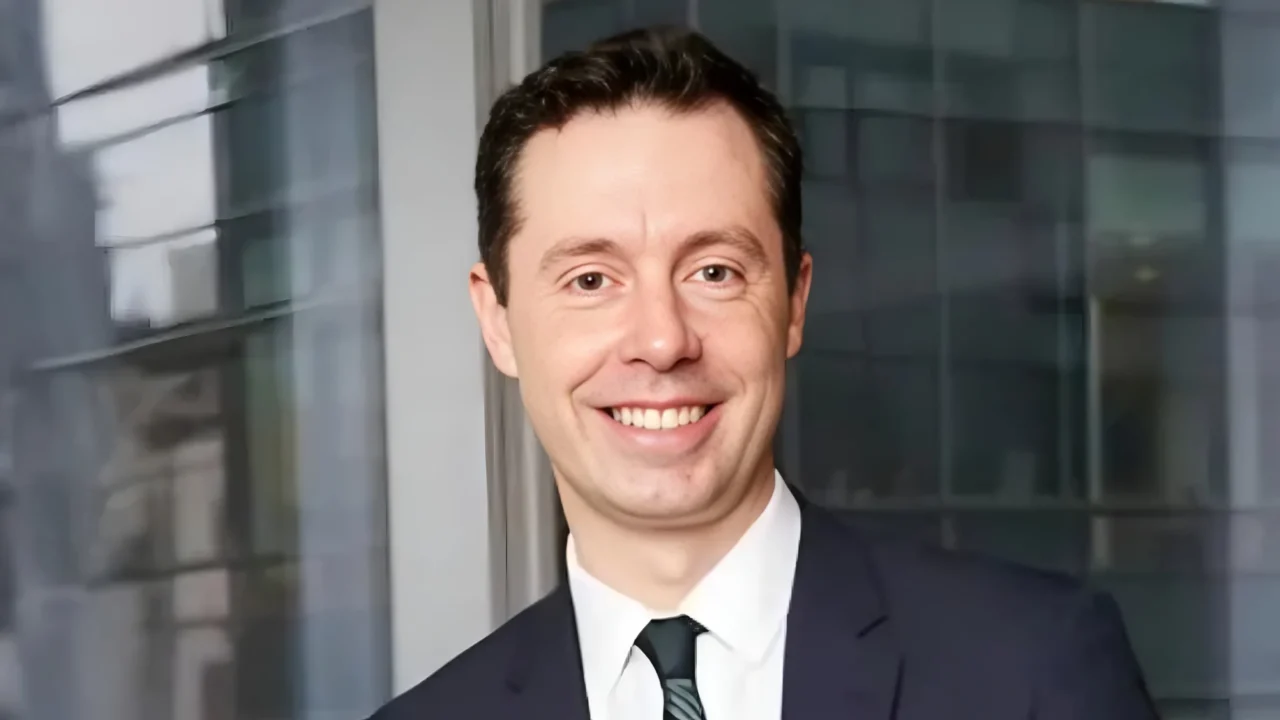
Olivier Elemento, Director of Englander Institute for Precision Medicine at Weill Cornell Medicine, shared a post on LinkedIn:
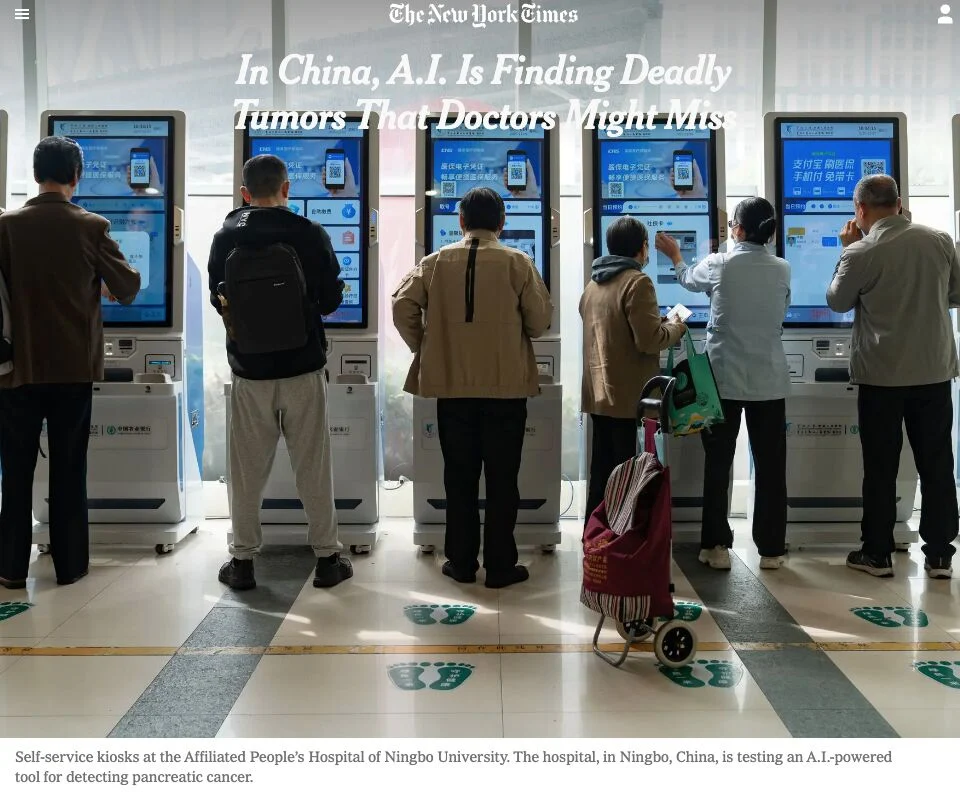
“Behind the NYT headline: China’s medical AI pipeline dwarfs the US
A striking NYT story describes PANDA, an AI tool from Alibaba’s Damo Academy that detects pancreatic cancer in routine CT scans. At one Chinese hospital, the system analyzed 180,000 scans and flagged roughly two dozen cancers – including 14 early-stage cases that might otherwise have been missed. The FDA has granted it “breakthrough device” status.
But this is just the tip of a massively growing iceberg.
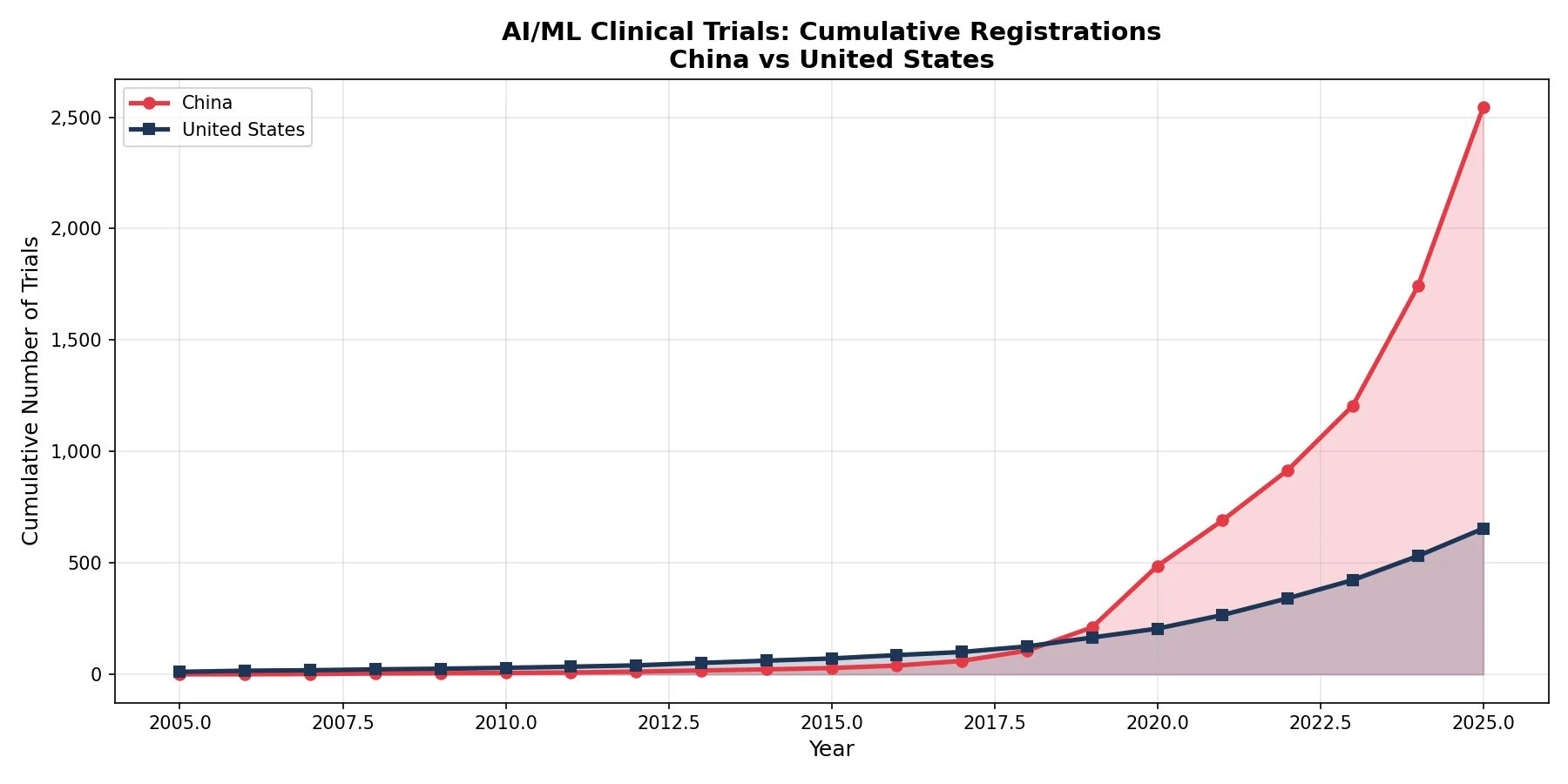
The growth curves tell the story
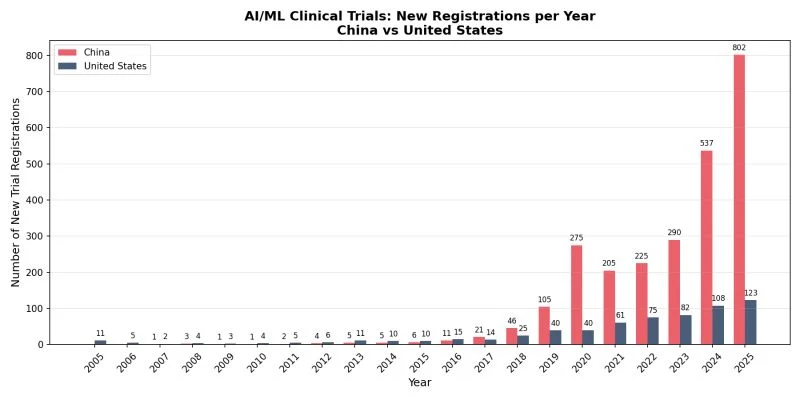
I analyzed WHO clinical trial registry data, searching for “artificial intelligence” OR “machine learning” OR “AI” and comparing trials in China vs the United States. The trajectories are starkly different.
In 2016, the US was still ahead. By 2019, China had overtaken the US cumulatively. In 2025, China registered 802 new AI clinical trials. The US registered 123.
China is on an exponential curve – roughly 40% annual growth. The US is linear – about 15%. The gap widens every year.
Why this matters
A research paper showing 95% accuracy on retrospective datasets doesn’t mean an AI is ready for the clinic. Clinical trials are where the real work happens – testing algorithms in actual hospital workflows, discovering edge cases, building the evidence base that regulators and insurers require, and training physicians to trust and use these tools.
More trials means more AI tools getting validated. More validation means faster regulatory approval. Faster approval means earlier deployment. Earlier deployment means more real-world data to improve the next generation of tools.
I think we’re watching China build a flywheel for medical AI deployment that the US hasn’t matched. The registry data suggests hundreds more AI tools are quietly progressing through trials across China.
As the NYT article points out, the question isn’t whether AI will transform healthcare – it absolutely will. The question is who will lead that transformation and set the standards.”
More posts featuring Olivier Elemento.