






Nickhill Bhakta, Associate Member in the Department of Global Pediatric Medicine at St. Jude Children’s Research Hospital, shared on LinkedIn:
“‘Where is the global response to the childhood cancer diagnostics gap?’
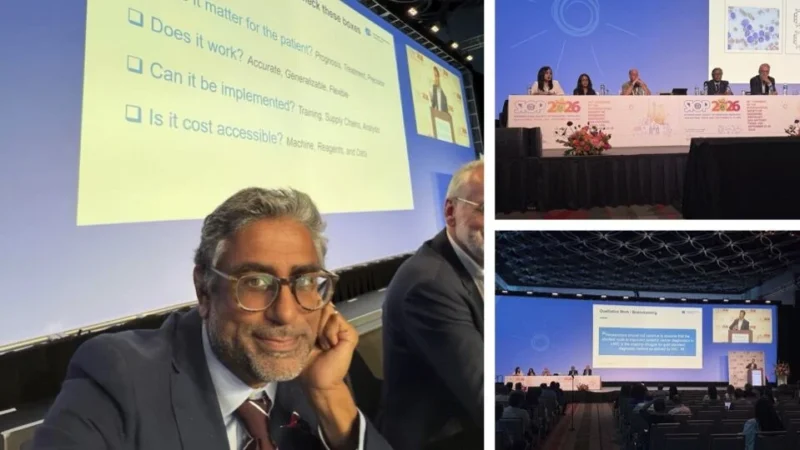
This question was top of mind as I co-moderated the SIOP 2026 Presidents Lecture with Rob Pieters yesterday.
If you are unfamiliar with the issue, I’ll summarize quickly. 400,000 children around the world develop cancer each year, of whom 50% are never diagnosed. Among those diagnosed, 50% will get a wrong or incomplete diagnosis.
This ‘diagnostic gap’ means ~3 in 4 children with cancer are getting no therapy or futilely receiving toxic drugs that will provide no chance of cure. This is unacceptable.
Yesterday afternoon we shared our story/solution.
Thomas Alexander explained how a simple Nanopore-based test, developed by Jeremy Wang, can comprehensively diagnose childhood leukemias in a matter of hours, just as accurately as gold standard options that take 2-3 weeks to result and are currently only clinically available at ~40-50 hospitals worldwide, all at a fraction of the price.
Bas Tops next described how the same test can also provide preliminary methylation-based results for all cancer subtypes in just a matter of minutes(!).
Javeria Aijaz followed and shared how her hospital is now using the test to ensure children in Pakistan benefit by getting the right chemotherapy, for the right disease and not a drop more.
Finally, Nancy Bolous ended by reminding us that even the best science will not change practice if you don’t follow the money and conduct health economics.
As the session ended, I took the last question and asked Rob:
‘We have a Global Initiative for Childhood Cancer, a Global Platform for Access to Childhood Cancer Medicines and many other initiatives to improve treatment. Where is the global response to the childhood cancer diagnostics gap?’
While my question was somewhat rhetorical, we need an answer. For too long, ‘diagnostic incrementalism,’ the idea that we simply need to invest in replicating the expensive, complex and inefficient diagnostic pathways used in highly resourced settings, has dominated thinking in the field.
The truth is this strategy is not working.
So here’s where I landed: Let’s stop waiting for a magically labeled initiative and instead look inwards.
Over the past six months, we have formed a like-minded community pushing innovative diagnostics forward from science fiction to the clinic. Yet its not enough.
We need coordination, transparency and pooled transdisciplinary expertise; a consortium of dreamers, researchers and implementors.
So where is the global response to the childhood cancer diagnostics gap?
Meet (a few of) my friends.”
Other articles about pediatric oncology on OncoDaily.