


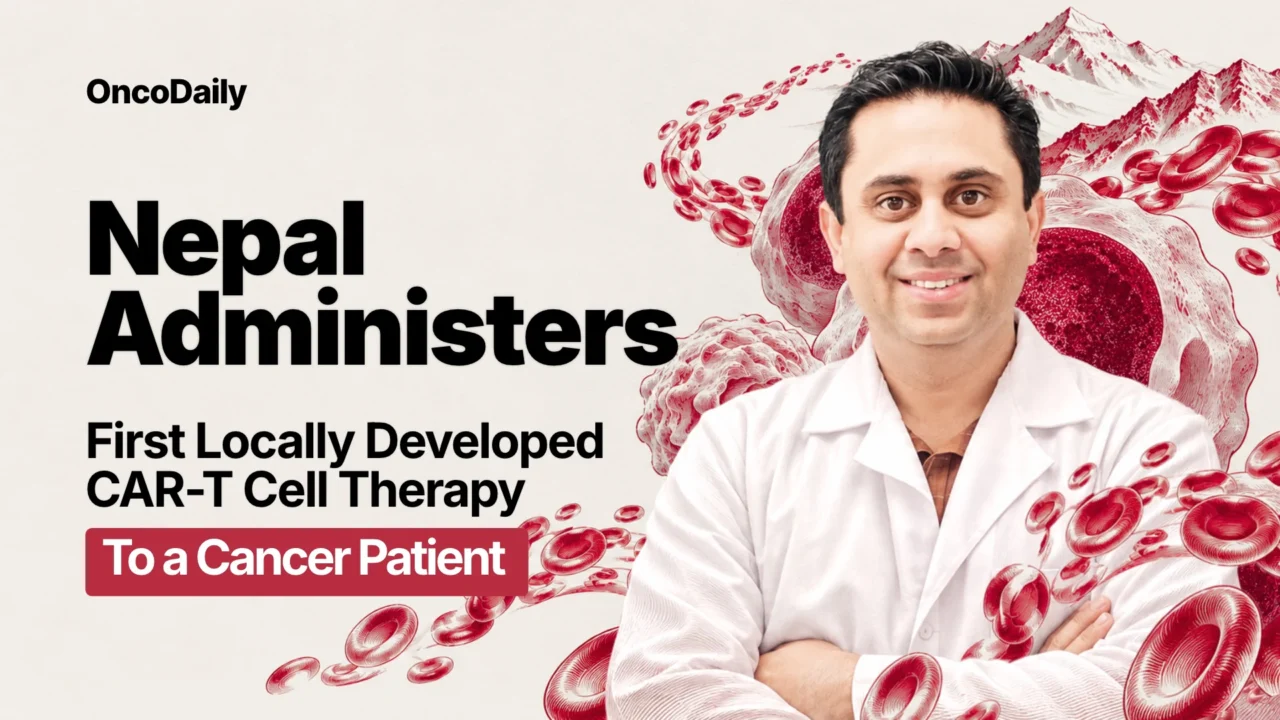
The first clinical use of an indigenously manufactured CD19 CAR-T cell product marks a significant milestone for Nepal, where bone marrow transplantation was introduced nearly five decades after the United States, highlighting the country’s progress in advanced cancer care.
Kathmandu, Nepal – Nepal has taken an important step in cancer care with the first clinical administration of a locally developed CD19-directed chimeric antigen receptor (CAR) T-cell therapy. The treatment was administered in September 2026 to a 20-year-old woman with relapsed acute lymphoblastic leukemia (ALL) at Tribhuvan University Teaching Hospital (TUTH) in Kathmandu.
The CAR-T cell product was manufactured by the Centre for Regenerative Medicine Nepal (CRM Nepal), following several years of scientific development, technology transfer, and collaboration among Nepali and international researchers.
Dr. Sanjivan Gautam, PhD, a US-based Nepali immunologist, played a leading role in initiating the program and guiding its scientific development, technology transfer, and establishment of local manufacturing capabilities.
The initiative began with the goal of building domestic expertise in advanced cellular immunotherapies and improving access to innovative cancer treatments.
Over the following years, the team worked to establish the infrastructure, manufacturing processes, and technical expertise required to produce CAR-T cells locally. In March 2026, Nepal’s Department of Drug Administration approved CRM Nepal’s locally developed CD19 CAR-T cell product for in human use, paving the way for the country’s first patient infusion.
Although CAR-T cell therapies have transformed treatment options for some patients with blood cancers, access remains limited in many low- and middle-income countries due to high costs, complex manufacturing requirements, and the need for specialized clinical facilities
Local manufacturing could help reduce dependence on overseas treatment centers and improve access for eligible patients in Nepal. The estimated cost of treatment is expected to range from US$30,000 to US$40,000, although actual costs may vary depending on manufacturing and clinical care requirements.
The first infusion was performed by a clinical team led by hematologist-oncologist Dr. Anjan Shrestha, alongside Dr. Prashun Upadhyaya and colleagues at Tribhuvan University Teaching Hospital. The patient was reported to be clinically stable following the infusion. Continued clinical monitoring and long-term follow-up is under progress to assess treatment safety, effectiveness, and durability of response.
Nepal’s experience highlights how local expertise, international scientific collaboration, and technology transfer can help bring advanced cancer therapies closer to patients, potentially offering a model for other low- and middle-income countries seeking to develop cellular immunotherapy capabilities.
You can also read: