
Muna Al-Khaifi, GP Oncologist at Mount Sinai Hospital (Toronto), Sinai Health. This article explores the emerging evidence on GLP-1 receptor agonists as a potential new frontier in oncology, extending beyond their established role in diabetes and obesity management. Drawing on recent real-world studies and early clinical data, it examines whether agents such as semaglutide and tirzepatide may influence cancer risk, disease progression, and outcomes across multiple tumor types. It highlights growing signals suggesting reduced incidence of several obesity-related cancers, along with early findings pointing to possible effects on metastatic progression and survival.
The article also discusses potential biological mechanisms linking GLP-1 signaling with metabolism, inflammation, and tumor behavior. Finally, it considers the emerging role of GLP-1 therapies in cancer survivorship, particularly in addressing treatment-related weight gain, metabolic dysfunction, and quality-of-life challenges, while emphasizing the need for further prospective studies to clarify their role in oncology practice.
Could GLP-1 Medications Become the Next Frontier in Cancer Prevention and Survivorship?
For years, GLP-1 receptor agonists (GLP-1 RAs) have been recognized as transformative medications for type 2 diabetes and obesity. Drugs such as semaglutide and tirzepatide work by mimicking glucagon-like peptide-1, a naturally occurring hormone that helps regulate blood sugar, appetite, and metabolism. Their remarkable effectiveness in promoting weight loss has led to widespread use around the world.
Now, researchers are beginning to ask an intriguing question: Could these medications also influence cancer outcomes?
A growing body of evidence suggests the answer may be yes.
Why Cancer Researchers Are Interested
GLP-1 medications were never designed as anti-cancer treatments, however, they affect numerous biological pathways linked to cancer development and progression, including obesity, insulin resistance, chronic inflammation, immune regulation, and cellular metabolism.
Their ability to help patients achieve and maintain meaningful weight loss is particularly relevant because excess body weight is a well-established risk factor for multiple cancers, including breast, colorectal, endometrial, liver, kidney, and pancreatic cancers.
Breast cancer provides a notable example. Being overweight or obese, particularly after menopause, is associated with an increased risk of developing breast cancer. As a result, researchers have become increasingly interested in whether the benefits of GLP-1 medications may extend beyond weight management alone.
In fact, GLP-1 medications are intriguing from a cancer research perspective because they weren’t designed for cancer therapy, but they do affect many different targets and pathways associated with cancer development.
New Evidence Suggests Reduced Cancer Risk
Growing evidence suggests that GLP-1 receptor agonists (GLP-1RAs) may have benefits beyond weight management and diabetes control.
One recent study examined more than 86,000 adults with overweight or obesity using real-world electronic health record data. Researchers compared individuals prescribed GLP-1 receptor agonists with matched non-users and evaluated the incidence of 14 different cancer types over time. Overall, GLP-1RA use was associated with a lower risk of developing cancer, including reduced risks of endometrial, ovarian, and meningioma cancers.
While these findings do not establish a direct causal relationship between GLP-1 medications and cancer prevention, they contribute to a growing body of evidence supporting further investigation into their potential role in reducing cancer risk.
Further evidence was presented at the 2026 ASCO Annual Meeting, where investigators from the Cleveland Clinic reported results from a large propensity-matched analysis involving more than 12,000 patients with seven common solid tumors, including breast, lung, colorectal, liver, pancreatic, kidney, and prostate cancers. Patients who initiated a GLP-1 receptor agonist after their cancer diagnosis were compared with similar patients receiving DPP-4 inhibitors.
The study found that individuals with stage I–III lung, breast, colorectal, or liver cancer who received a GLP-1RA were less likely to progress to stage IV disease than those in the comparator group. Overall, GLP-1RA exposure was associated with reduced metastatic progression across six of the seven cancer types studied, with statistically significant reductions observed in non-small cell lung cancer (NSCLC), breast cancer, colorectal cancer (CRC), and hepatocellular carcinoma (HCC).
Importantly, no significant safety signals or increases in adverse events were observed among patients receiving GLP-1RAs compared with controls.
The investigators also explored tumor biology using data from The Cancer Genome Atlas (TCGA). Higher tumor expression of the GLP-1 receptor was associated with improved overall survival across all seven cancer types. This association was particularly notable in breast cancer, where high GLP-1 receptor expression was linked to a 45% reduction in the risk of death.
Although these findings remain observational and require confirmation in prospective randomized trials, they suggest that GLP-1 receptor agonists may influence not only cancer risk, but potentially cancer progression and survival as well.
Potential Benefits Beyond Cancer Outcomes
Interest in GLP-1 medications is also expanding within the field of cancer survivorship.
Clinicians and researchers have begun reporting improvements in quality of life among some cancer survivors using these medications, particularly those receiving endocrine therapies. Many patients treated with hormone-blocking medications experience weight gain, metabolic dysfunction, fatigue, joint pain, and declines in physical functioning. Emerging evidence suggests that GLP-1 receptor agonists may help address some of these challenges through improvements in weight management, metabolic health, and overall wellbeing.
Potential benefits may extend beyond metabolic outcomes alone. In a recent study of patients receiving immunotherapy, GLP-1 users experienced lower rates of several treatment-related adverse events compared with non-users. Fatigue and malaise occurred in 25% of GLP-1 users compared with 29% of non-users, while sepsis rates were 15% versus 18%, cachexia (cancer-related weight loss) occurred in 4% versus 5%, and pneumonia was reported in 14% versus 18%, respectively. Although some individual outcomes, such as neutropenia (low white blood cell counts), did not reach statistical significance, the overall findings suggest that GLP-1 medications may help reduce symptom burden and improve treatment tolerability in selected patients.
As survivorship specialists increasingly focus on optimizing long-term health after cancer, understanding the impact of GLP-1 therapies on treatment-related toxicities, symptom management, physical functioning, and quality of life has become an important area of ongoing research. While current evidence remains preliminary, these findings raise the possibility that GLP-1 medications may eventually play a role not only in cancer prevention and disease outcomes, but also in improving the survivorship experience for patients living with and beyond cancer.
Future Directions: Where Do We Go From Here?
Although the early findings are promising, many important questions remain unanswered. Several key areas should be prioritized in future research.
- Cancer Prevention and Risk Reduction
Large prospective studies are needed to determine whether GLP-1 receptor agonists can directly reduce the risk of developing cancer. While observational studies have reported lower rates of several obesity-related cancers among GLP-1 users, randomized trials will be necessary to establish whether these associations are causal.
- Recurrence and Metastatic Progression
Emerging evidence suggests that GLP-1 medications may reduce the risk of cancer progression and the development of metastatic disease in certain tumor types. Future studies should evaluate whether these agents can decrease recurrence rates after curative treatment and identify which patients may derive the greatest benefit.
- Understanding the Biology
The mechanisms underlying the observed associations remain poorly understood. Researchers are actively investigating whether the potential benefits are driven primarily by weight loss and improved metabolic health, direct effects on tumor biology, immune modulation, or a combination of these factors.
- Survivorship and Treatment-Related Side Effects
An increasingly important area of research is the role of GLP-1 medications in cancer survivorship. Future studies should examine whether these agents can help manage treatment-related weight gain, fatigue, metabolic dysfunction, physical deconditioning, and other long-term side effects commonly experienced by cancer survivors. Understanding their impact on quality of life and functional outcomes may be just as important as understanding their effects on cancer itself.
- Long-Term Safety and Integration into Oncology Care
As the use of GLP-1 therapies expands, long-term safety data in cancer populations will be essential. Researchers must determine how these medications can be safely integrated into oncology and survivorship care, identify potential risks, and establish which patient populations are most likely to benefit.
Looking Ahead
What began as a treatment for diabetes has rapidly evolved into one of the most significant advances in obesity medicine. Now, GLP-1 receptor agonists are emerging as a promising and rapidly expanding area of investigation in oncology.
Whether these medications ultimately become tools for cancer prevention, adjunctive cancer treatment, or survivorship care remains to be determined. However, the growing body of evidence suggests that their potential impact may extend far beyond weight loss alone.
Interest in this field is growing exponentially. In addition to their possible effects on cancer risk and progression, there is increasing enthusiasm around their potential role in improving survivorship outcomes, reducing treatment-related side effects, and enhancing quality of life for patients living with and beyond cancer. With numerous studies currently underway, the coming years may reveal whether GLP-1 receptor agonists represent one of the most unexpected and transformative developments in modern cancer care.
References (Selected)
McDonald, E. S., Gillis, L. B., Gabriel, P., Xapakdy, K., Young, A., Doucette, A., Schnall, M. D., Buse, J. B., & Pisano, E. D. (2026). GLP-1 Agonists Are Associated With a Significant Reduction in Breast Cancer Incidence in Women. JCO oncology practice, 101200OP2600485. Advance online publication. https://doi.org/10.1200/OP-26-00485
Dai, H., Li, Y., Lee, Y. A., Lu, Y., George, T. J., Donahoo, W. T., Lee, K. P., Nakshatri, H., Allen, J., Guo, Y., Sun, R. C., Guo, J., & Bian, J. (2025). GLP-1 Receptor Agonists and Cancer Risk in Adults With Obesity. JAMA oncology, 11(10), 1186–1193. https://doi.org/10.1001/jamaoncol.2025.2681
Orland MD, et al. Association of GLP-1 receptor agonist use with risk of progression to stage IV disease among patients with cancer and type 2 diabetes. Presented at the 2026 ASCO Annual Meeting, Developmental Therapeutics—Molecularly Targeted Agents and Tumor Biology Poster Session. Journal of Clinical Oncology. 2026;44(suppl 16):Abstract 3143.
The association of GLP-1 receptor agonist use with survival and immune-related adverse events in patients receiving immune checkpoint inhibitors: A multi-institutional real-world analysis. Jajja S, Thukral J, Abdalla A, et al. J Clin Oncol. 2026;
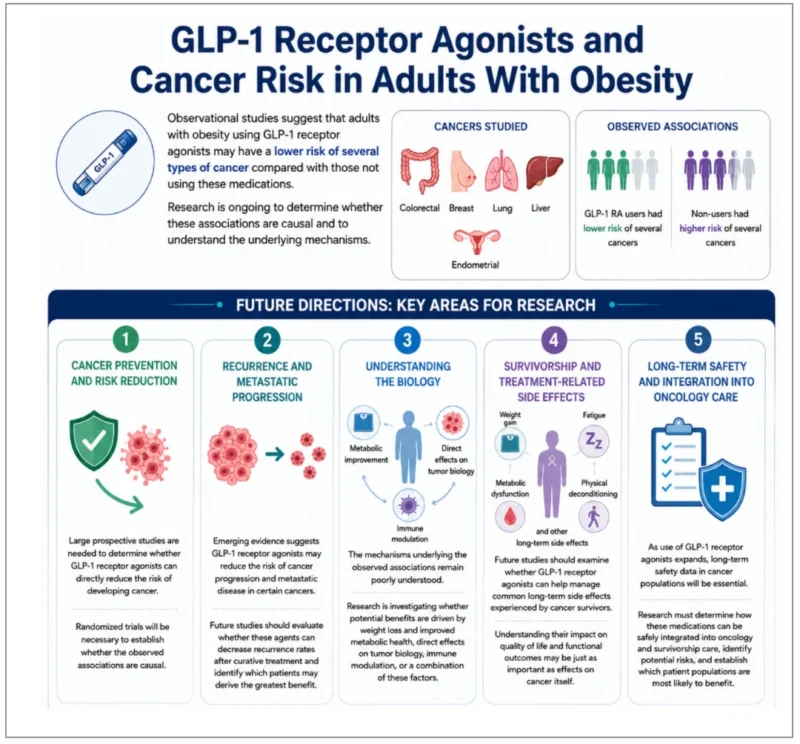
Figure 1. GLP-1 Receptor Agonists and Cancer Risk in Adults With Obesity.
You can also read: Muna Al-Khaifi Explores OncoMenopause: Advancing Menopause Care After Cancer