Muna Al-Khaifi, GP Oncologist at Mount Sinai Hospital (Toronto), Sinai Health, shared a post on LinkedIn:
“This week in my survivorship clinic, I met a remarkable patient who generously gave me permission to share her story.
Following her cancer diagnosis, she stopped all sexual activity for nearly three years. During our consultation, we proactively discussed sexual health, and her response stayed with me:
‘No one ever asked me about this.’
She shared how vaginal dryness, discomfort, and changes in intimacy affected not only her relationship with her partner, but also her confidence, mood, and overall quality of life. Coming from a background where discussions about sexuality were often considered taboo, she never felt comfortable bringing it up herself.
After addressing her symptoms and discussing treatment options, she experienced a profound change. She told me that people around her noticed she seemed happier, more confident, and more like herself again.
This conversation reminded me that sexual health is not a luxury-it is an important component of overall health and well-being.
Up to 70-80% of breast cancer survivors experience symptoms of genitourinary syndrome of menopause (GSM), including vaginal dryness, painful intercourse, and sexual dysfunction related to endocrine therapy, chemotherapy, radiation, and treatment-induced menopause. Yet many continue to suffer in silence because the topic is never discussed.
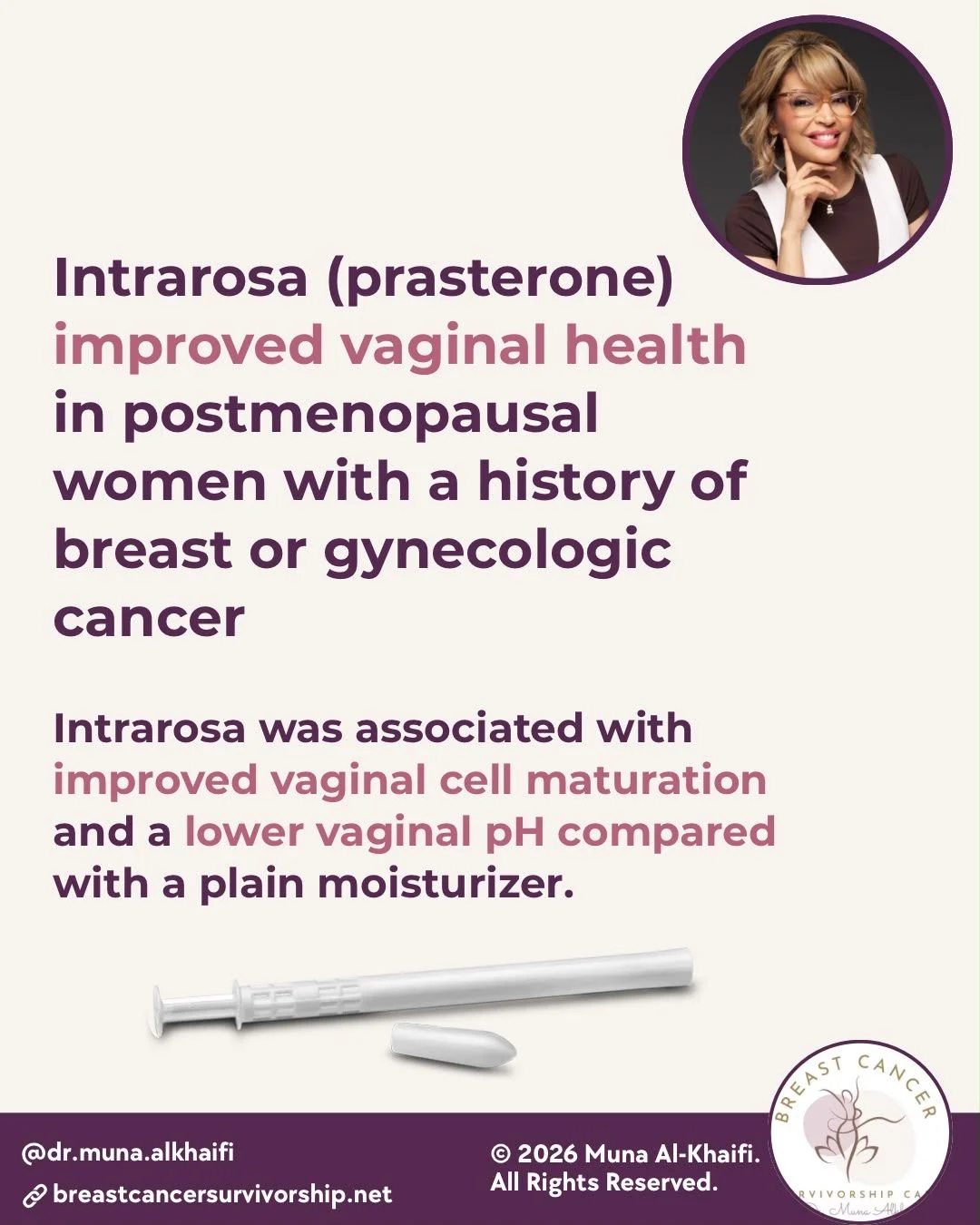
One treatment option receiving increasing attention is vaginal DHEA (prasterone; Intrarosa). DHEA is converted locally within vaginal tissues into active estrogens and androgens, helping improve GSM symptoms while resulting in minimal systemic hormone absorption.
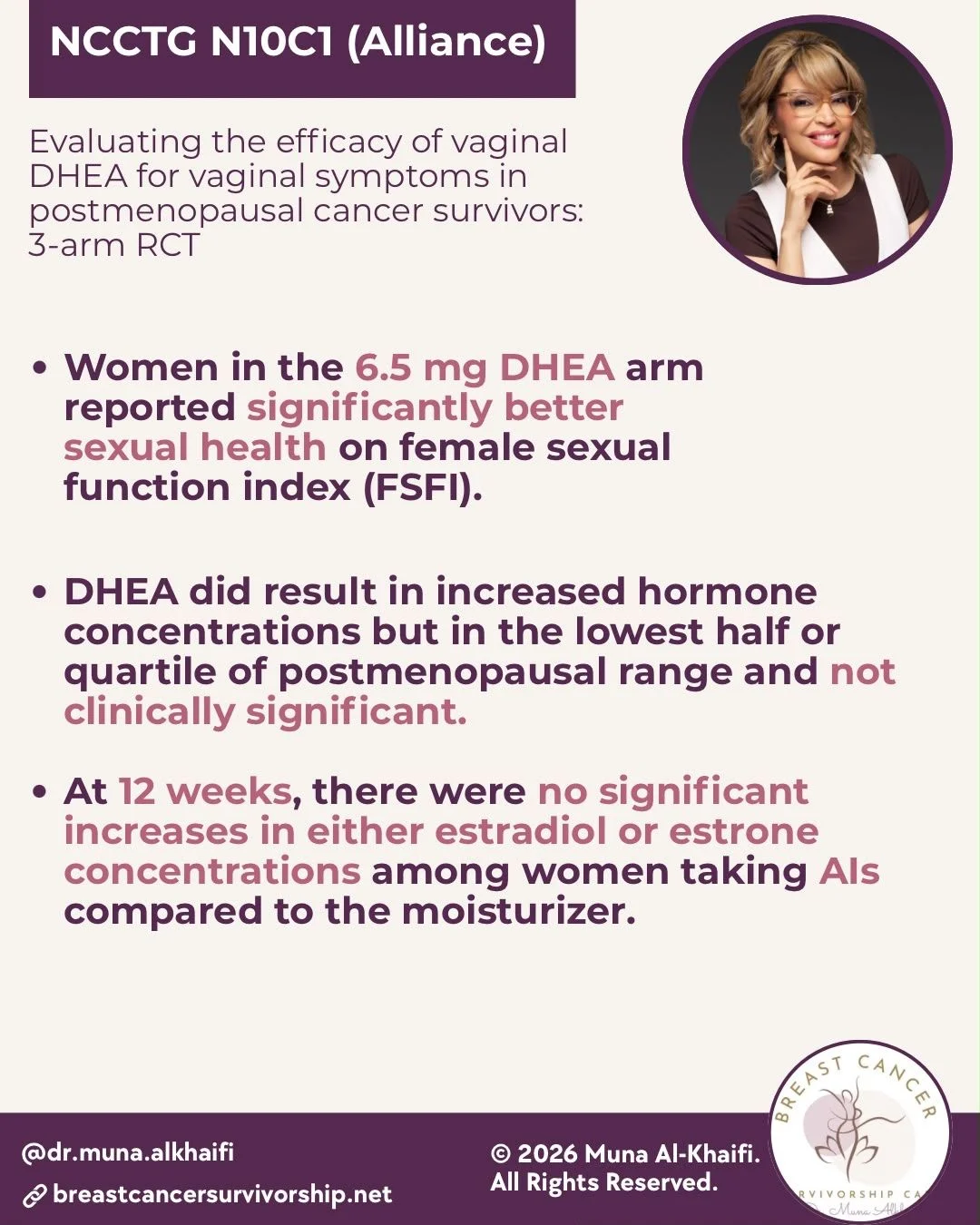
Studies in breast cancer survivors have demonstrated improvements in vaginal health, sexual function, and quality of life, with hormone levels generally remaining within postmenopausal ranges, including among women receiving aromatase inhibitors.
While nonhormonal therapies remain first-line treatment, vaginal DHEA is increasingly being considered for patients with persistent symptoms despite conservative management.
Sometimes the most important intervention begins with a simple question
Do you have any concerns regarding your sexual function, sexual activity, intimate relationships, or sex life?
Read more about this trial.”
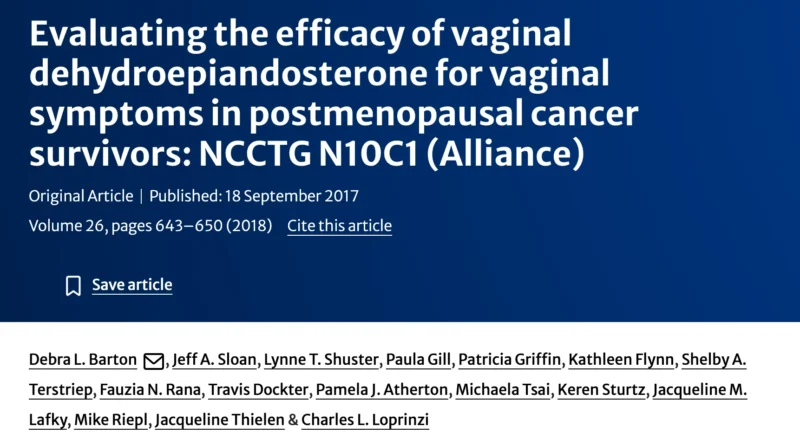
Title: Evaluating the efficacy of vaginal dehydroepiandosterone for vaginal symptoms in postmenopausal cancer survivors: NCCTG N10C1 (Alliance)
Authors: Debra L. Barton, Jeff A. Sloan, Lynne T. Shuster, Paula Gill, Patricia Griffin, Kathleen Flynn, Shelby A. Terstriep, Fauzia N. Rana, Travis Dockter, Pamela J. Atherton, Michaela Tsai, Keren Sturtz, Jacqueline M. Lafky, Mike Riepl, Jacqueline Thielen, Charles L. Loprinzi
Read The Full Article
Other articles featuring Muna Al-Khaifi on OncoDaily.